Hot pack for shoulder pain
To use a hot pack for shoulder pain, wrap it in a towel, lie on your back and rest it on top of the sore front of your shoulder for 15 to 20 minutes, checking your skin every few minutes. The pack rests on you, and you never lie on it. For shoulder pain, the NHS suggests a hot water bottle wrapped in a towel for up to 20 minutes, 2 to 3 times a day. Heat is for comfort, not an exercise. This page covers setting it up safely and who should not use it without a doctor's or physio's go-ahead.
How to do the hot pack for shoulder pain
- Warm the pack exactly as its instructions say. For a hot water bottle, never use boiling water and never overfill it.
- Wrap the pack in a thin towel or dish towel so no part of it touches bare skin.
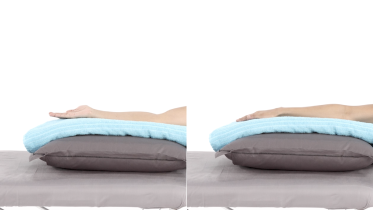
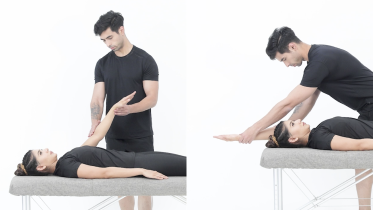
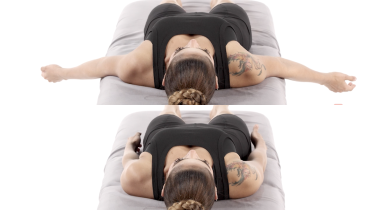
- Lie on your back on a bed or another firm, comfortable surface, with your arms resting by your sides, as in the video. You can have a pillow under your head.
- Lay the wrapped pack over the front of the sore shoulder so it rests on top of you. In the video the edge hangs down over the outside of the upper arm; keep every part of it on top of you, never tucked under your shoulder or arm. Let the arm and shoulder go loose.
- Lift the pack after the first few minutes and look at your skin, then check again every few minutes. If it feels too warm, add another layer of towel. If your skin turns bright red or blotchy, blisters or feels sore, stop using heat for that session.
- Take the pack off after 15 to 20 minutes. A timer helps, so you do not drift off to sleep with it on. Then move the shoulder gently.
What you should feel
Gentle, comfortable warmth over the front of your shoulder. It should never burn, sting or feel too hot to bear.
Common mistakes
- Putting the pack on bare skin with no towel.
- Lying on your side on top of the pack, or tucking it under your shoulder.
- Leaving it on longer, or making it hotter, in the hope of more relief.
- Falling asleep with the pack in place.
- Putting the pack over skin where you have rubbed in a heat rub or a muscle and joint pain cream or gel, which can burn the skin.
- Resting the arm completely for the rest of the day afterward.
How often
The voice guide in the video says 15 to 20 minutes per session, and the NHS shoulder pain page says up to 20 minutes, 2 to 3 times a day. Your physio will adjust this.
Stop and check with your physio if
- The skin under the pack stings, burns, blisters or turns bright red or blotchy. Take the pack off and cool the area with cool running water for a full 20 minutes. Get medical advice the same day for a blister or if you are not sure what to do, and call emergency services or go to an emergency department for a burn that is very large or deep.
- Pins and needles in your arm or hand that do not go away after you stop, or part of your arm or hand goes numb. Get medical advice the same day. If one side of your face or body suddenly goes numb or weak, or your speech becomes slurred or muddled, call emergency services, even if it goes away.
- Chest pain or tightness, which may spread to your arm, neck or jaw, or shoulder or arm pain that comes with shortness of breath, sweating or feeling sick. This can be a heart attack. Call emergency services straight away.
- The shoulder feels as if it has slipped out of place, looks a different shape or suddenly locks so you cannot move the arm, or the pain is severe after a fall or an injury. Go to an emergency department straight away, without driving yourself, and do not try to put the shoulder back in yourself.
From the clinic
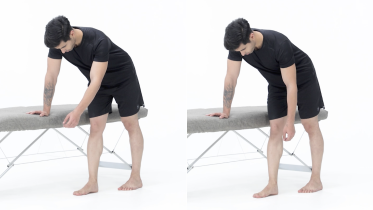
The NHS shoulder pain page, where the heat timing comes from, also tells you to stay active and move the shoulder gently, and warns that stopping using it completely can hold up recovery. Think of heat as a way to take the edge off stiffness before you move, not a replacement for moving. Gentle exercises such as the pendulum exercise can follow once the pack is off.
In the video she lies on her back with the wrapped pack resting on the front of her shoulder, which is the safe way round. The South West Yorkshire NHS ice and heat therapy leaflet says to place a heat pack over the area to be treated, and warns against lying, sitting or sleeping on one, because the burn risk goes up. It gives 15 to 30 minutes and suggests an extra towel if the area starts to feel too warm.
Skin that cannot feel heat properly burns more easily. The same leaflet says not to use heat if you have reduced feeling in the skin, problems with your blood circulation, thin or broken skin or an unhealed wound in the area, a medicine patch on the area, or an unstable medical condition such as diabetes or epilepsy. It adds a heart condition when the heat goes on the upper body, which includes the shoulder. If any of these applies to you, do not use the hot pack unless your doctor or physio has told you it is safe for you, and if you are not sure, ask them first. With diabetes, take extra care and check your skin often while the pack is on.
Heat is not the right choice for every shoulder pain. For a fresh injury or a hot, swollen joint, the leaflet suggests ice, and it keeps heat for joints that are stiff and painful or muscles that feel tight. If you have shoulder pain with a fever, or the shoulder is also hot, red and swollen, go to an emergency department the same day, as this can be a joint infection.
After shoulder surgery, ask your surgical team before you put heat near the wound. If you are pregnant, check with your midwife or physio before you start. The NHS exercise in pregnancy page advises not lying flat on your back for long periods, particularly after 16 weeks, as it can make you feel faint, so rest propped up on pillows instead.
Written and checked by the PocketPhysio editorial team. Last updated 2026-09-28.
This page is general education, not a diagnosis or a personal treatment plan. If you have pain, an injury or a health condition, see a physiotherapist or doctor before starting new exercises.