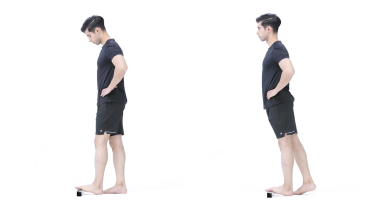
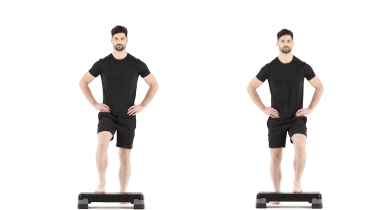
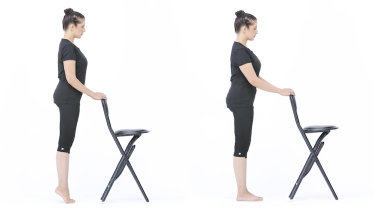
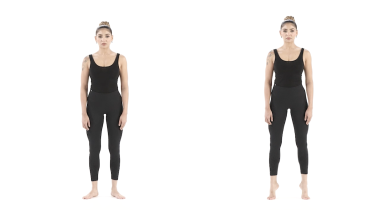
Dynamic wall calf stretch
The dynamic wall calf stretch is a moving take on the wall calf stretch. You lean into a wall with both feet set back and rise onto your toes, then lower one heel to the floor while the other knee bends, swapping sides in a slow walking rhythm. Each calf gets a short stretch many times over, which makes it a handy warm-up before a walk or a run.
How to do the dynamic wall calf stretch
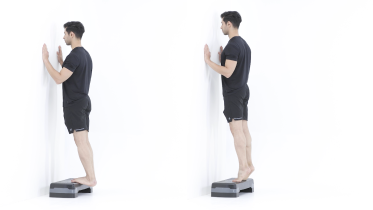
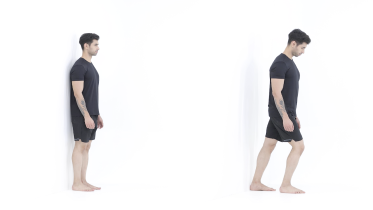
- Stand facing a wall and put both hands flat on it at about shoulder height, arms straight.
- Walk your feet back, side by side and about hip width apart, until you are leaning into the wall. Go as far back as you can while both heels still rest on the floor.
- Rise onto the toes of both feet.
- Slowly lower one heel to the floor with that knee straight, while the other knee bends forward and its heel stays up. You should feel the stretch in the straight leg's calf.
- Lift that heel again and lower the other one, swapping slowly as if walking on the spot. Keep your hands on the wall throughout.
- When you finish, walk your feet back in toward the wall before you stand up tall.
What you should feel
A stretch in the calf of the straight leg that comes and goes as you swap from side to side.
Common mistakes
- Standing so far from the wall that neither heel can stay down.
- Bouncing on the stretching heel instead of pressing it down smoothly.
- Bending at the waist and pushing your bottom back, which takes the stretch away from the calves.
- Turning the feet out. Point both sets of toes at the wall.
How often
Many programs use 10 to 20 slow swaps in total, for 2 to 3 rounds, once or twice a day or before a walk. Your physio will adjust this.
Stop and check with your physio if
- Sharp pain in the Achilles tendon, at the heel or behind the knee.
- Your calf or thigh becomes swollen, warm, tender, red or darker than usual, or has a throbbing or cramping pain that feels different from normal muscle ache. Stop and get medical advice the same day, as this can be a blood clot. If you are also short of breath or have chest pain, call emergency services.
- A sudden pop or snap at the back of your ankle or heel, a feeling that someone kicked you there, or sudden pain there after which you cannot push off or rise onto your toes on that leg. Stop, take the weight off that leg carefully and go to an urgent care center or emergency department the same day, even if you can still walk, as this can be a torn Achilles tendon.
From the clinic
For a longer, steady hold instead, use the standing calf stretch, or the soleus stretch to reach lower in the calf with the back knee bent.
Keep both hands on the wall the whole time, on a floor that does not slip. If your Achilles pain sits right where the tendon meets the heel bone, keep the heel press gentle and ask your physio whether this stretch suits you. After a torn Achilles tendon, repaired or not, ask your surgeon or physio when calf stretching may start. After an ankle fracture or ankle surgery, follow your surgeon's or physio's weight-bearing plan, and start this exercise only when they have cleared you.
Written and checked by the PocketPhysio editorial team. Last updated 2026-09-28.
This page is general education, not a diagnosis or a personal treatment plan. If you have pain, an injury or a health condition, see a physiotherapist or doctor before starting new exercises.