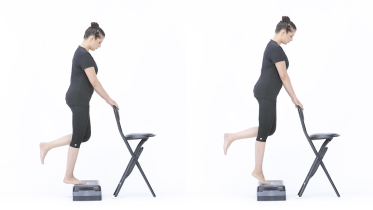
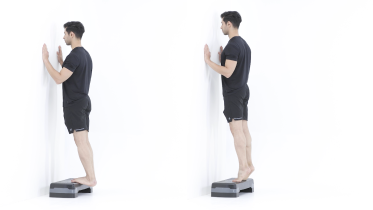
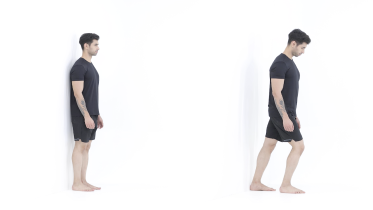
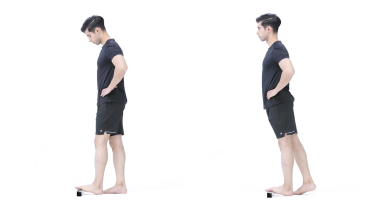
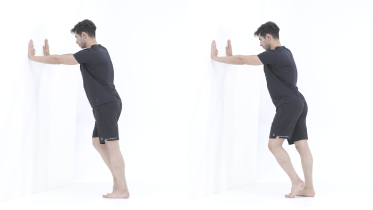
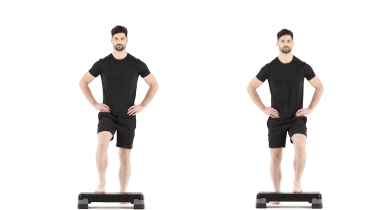
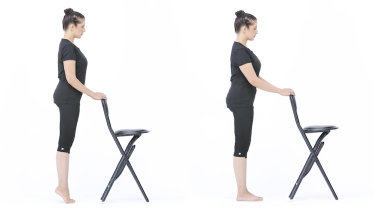
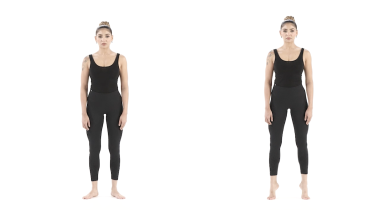
Calf raise with toes turned in
A calf raise with toes turned in is a heel raise done with the front of each foot pointing slightly inward. You stand tall, rise onto the balls of your feet, then lower your heels with control. The calf muscles do most of the work, and a deep muscle behind the shin that supports the arch (tibialis posterior) helps, as it does in any heel raise. In ankle and lower leg programs, physios use it as a variation on the plain calf raise.
How to do the calf raise with toes turned in
- Stand tall with your feet about hip width apart, close to a kitchen counter or the back of a sturdy chair. The video shows it with no support, but resting your fingertips on something steady is fine.
- Turn the front of both feet inward a little, so your toes point slightly toward each other. Let the turn come from your hips, so your knees face the same way as your toes.
- Keeping that foot position, push through the balls of your feet and lift your heels off the floor. Your knees stay straight but not locked.
- Hold briefly at the highest point, weight shared across the balls of both feet.
- Bring your heels down to the floor slowly, taking as long on the way down as on the way up.
What you should feel
Work in both calves, and often along the inner side of the lower leg and ankle. A tired, warm feeling toward the end of the set is expected. Sharp pain in the ankle, heel or knee is not.
Common mistakes
- Turning the toes in so far that the knees twist or knock together. A small turn is enough.
- Losing the toes-in position as you rise, so the feet drift back to straight.
- Letting your weight drift onto the little toe side of the foot as you rise, so the ankle tips outward. Keep the weight over the big toe and the second toe.
- Letting the heels drop fast instead of lowering them under control.
How often
A typical program uses 10 to 15 repetitions, 2 to 3 sets, once a day or on a few days each week. Your physio will adjust this.
Stop and check with your physio if
- Sharp pain in the ankle, Achilles tendon, heel or knee.
- The ankle wobbles badly or gives way, or you start to lose your balance.
- Your calf or thigh becomes swollen, warm, tender, red or darker than usual, or has a throbbing or cramping pain that feels different from normal muscle ache. Stop and get medical advice the same day, as this can be a blood clot. If you are also short of breath or have chest pain, call emergency services.
- A sudden pop or snap at the back of your ankle or heel, a feeling that someone kicked you there, or sudden pain there after which you cannot push off or rise onto your toes on that leg. Stop, take the weight off that leg carefully and go to an urgent care center or emergency department the same day, even if you can still walk, as this can be a torn Achilles tendon.
From the clinic
Stand where a counter, wall or sturdy chair is close enough to grab, and hold on as soon as you feel unsteady. After a fall in the last 12 months, or if your balance is poor, always hold on, and ask your physio whether a standing version suits you yet. Most people learn plain calf raises, with the feet pointing straight ahead, before trying this one.
Go gently after an ankle sprain, because rising with the toes turned in brings the ankle closer to the position it twists into in a typical sprain. Keep the rise small and pain free until your physio says otherwise. If you have had surgery on the ankle or Achilles tendon, check with your physio before you start. Ankle inversion with a band works the turning-in muscles while you sit, with the foot supported on the floor.
Written and checked by the PocketPhysio editorial team. Last updated 2026-09-28.
This page is general education, not a diagnosis or a personal treatment plan. If you have pain, an injury or a health condition, see a physiotherapist or doctor before starting new exercises.