Lying assisted elbow bend
The lying assisted elbow bend uses a short stick so your stronger arm can help a stiff elbow to bend. You lie on your back with your knees bent, hold the stick in both hands with the palms facing up, and bend both elbows to bring the stick up toward your chest and shoulders, then lower it until your arms are straight. Physios often give it when an elbow has lost some of its bend, for example after time in a cast or sling.
How to do the lying assisted elbow bend
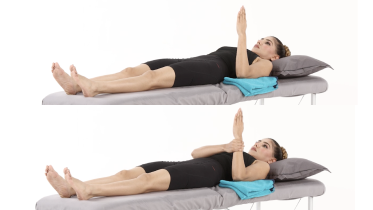
- Lie on your back on a mat with your knees bent and your feet flat. A small rolled towel under your neck, as in the video, or a thin pillow keeps your head comfortable.
- Hold a light stick in both hands, about shoulder width apart, with your palms facing up. Let your arms lie straight by your sides so the stick rests across the front of your hips, as in the video.
- Keep your upper arms on the mat and bend both elbows to bring the stick up toward your chest and shoulders. The stronger arm helps the stiff one along, but the stiff arm keeps working too.
- Stop where you feel a gentle stretch in the stiff elbow and hold for a moment.
- Lower the stick slowly until both arms are straight again. Keep your wrists level with your forearms and your shoulders relaxed the whole time.
What you should feel
A gentle stretch in the stiff elbow as it nears the end of its bend, and light work in the front of both upper arms.
Common mistakes
- Letting the upper arms lift off the mat so the shoulders do the work.
- Levering the stick into sharp pain to squeeze out a little more range.
- Curling the wrists to bring the stick closer instead of bending the elbows.
- Letting the stiff arm go limp and leaving everything to the stronger arm.
How often
Many programs use 10 to 15 slow repetitions, 1 to 3 times a day, with a short hold at the end of the bend. Your physio will adjust this.
Stop and check with your physio if
- Sharp pain in the elbow, or pain that builds with each repetition.
- The elbow is hot, red and swollen, or you have elbow pain with a high temperature or feel hot, cold or shivery. Get medical advice the same day, and go to an emergency department if you feel very unwell. This can be a sign of infection in the joint, which needs treatment quickly.
- Tingling, pins and needles or numbness in your hand, most often in the ring and little fingers (from the nerve behind the elbow, the ulnar nerve) or in the thumb, index and middle fingers (the median nerve).
- Pins and needles in your arm or hand that do not go away after you stop, or part of your arm or hand goes numb. Get medical advice the same day. If one side of your face or body suddenly goes numb or weak, or your speech becomes slurred or muddled, call emergency services, even if it goes away.
From the clinic
The voice guide describes starting with the arms pointing straight up at the ceiling and the stick above your chest. The video starts with the arms resting by your sides and the stick over your hips, and this page follows the video. Whichever start you use, the stiff arm does what it can and the stronger arm adds only the last bit of the bend. Some ache at the end of the range is common and should fade soon after you finish, so if the elbow stays sorer for hours, ease back next time.
After a broken or dislocated elbow, or elbow surgery such as a tendon repair, follow your surgeon's or physio's plan, and start this exercise only when they have cleared you. Some plans limit how far the elbow may bend in the first weeks, and your plan comes before the range in the video.
If you have just hurt your arm and have severe pain, cannot move the elbow or heard a snap, do not exercise it. Go to an urgent care center or emergency department the same day. If the arm looks a different shape or sits at an odd angle, a bone is showing, or your arm or hand tingles, feels numb or turns cold, pale or blue, go to an emergency department straight away or call emergency services, and do not drive yourself.
Bending the elbow right up also presses on and stretches the nerve that runs behind it (the ulnar nerve). If your ring and little fingers start to tingle, stop, lower the stick and leave the exercise for today. When the tingling fades quickly, bend a little less next session, and let your physio know if it returns.
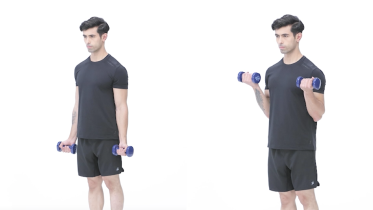
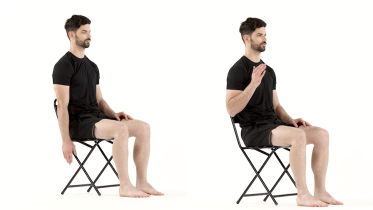
If you are pregnant and past the first three months, check with your physio before exercising flat on your back. Elbow flexion and extension trains the same bend sitting in a chair, one arm at a time.
Written and checked by the PocketPhysio editorial team. Last updated 2026-09-28.
This page is general education, not a diagnosis or a personal treatment plan. If you have pain, an injury or a health condition, see a physiotherapist or doctor before starting new exercises.