
Elbow fracture rehab: exercises after a broken elbow
What is an elbow fracture?
The elbow is where three bones meet: the upper arm bone (humerus) and the two forearm bones, the radius and the ulna. In adults, the most common elbow fracture is a break in the top of the radius, the part called the radial head. OrthoInfo says these breaks make up about 1 in 5 of all sudden elbow injuries, and that they often happen when you try to break a fall with your hands. Typical signs are pain on the outer side of the elbow, swelling, pain when you bend or straighten it, and trouble turning the forearm.
Many radial head fractures are small cracks where the pieces of bone stay in line. OrthoInfo says these are treated without surgery, with an early and gradual return of elbow and wrist movement. Breaks with pieces that have moved out of place, or with several pieces, may need surgery to fix, remove or replace the broken part.
Who this page is for
This page is for adults with an elbow fracture treated without an operation, in a sling, splint or cast, such as a small radial head fracture. It covers early movement, getting the bend, straightening and forearm turning back, and then strength. If your elbow was fixed with screws, plates or wires, the radial head was removed or replaced, or the elbow was also dislocated, follow your surgeon's and physio's plan rather than this page. The same goes for a child or teenager whose bones are still growing: their own fracture clinic, doctor or physio sets the plan.
A broken wrist has its own program, wrist fracture rehab, which starts with the wrist kept still in a cast. Pain on the outer elbow that came on without an injury, often with gripping, is more likely to be tennis elbow, which is managed in a different way.
How an elbow fracture is treated
After an X-ray, a small, stable break is usually treated with a sling for comfort. OrthoInfo says a sling or splint is not usually needed beyond the first few days, if at all, for a crack where the bone has not moved. The Leeds Teaching Hospitals fracture clinic uses the sling only to ease pain, for 2 weeks at most, and asks you to take it off regularly to do your exercises and ease the strain on your neck.
Some elbow fractures are held in a cast or splint for a while instead. Follow your fracture clinic's plan for how long it stays on and when the elbow may start to move. While the elbow is protected, keep your fingers moving as far as the cast or splint allows, unless you have been told otherwise.
Why moving the elbow early helps
Moving the elbow early seems to help it settle sooner, at least at first. In a trial of 60 people with a minimally displaced radial head fracture, one group started moving the elbow straight away and the other waited 5 days (Liow 2002). At 1 week, the early group had less pain, could bend the elbow further and had better elbow function. By 4 weeks the two groups were much the same, every fracture had healed by 3 months, and moving early did not harm the result.
That is a single small trial, so the evidence on the best timing and the best exercises is thin. The stages below follow the plan one NHS fracture clinic uses for small elbow fractures, along with common physio practice. Your own fracture clinic's plan comes first.
Swelling and pain in the first weeks
Swelling and bruising are normal after a break. The Leeds fracture clinic suggests a cold pack or frozen peas wrapped in a towel on the elbow for 15 minutes, 3 to 4 times a day, never with ice straight on the skin, and says it helps most in the first 72 hours. The NHS advises keeping your hand raised above your elbow whenever you can while a broken arm recovers.
Painkillers such as paracetamol (acetaminophen) can make the exercises easier to do. Follow the dose on the packet, and ask a pharmacist or your doctor if you are not sure what is safe for you.
How long does a broken elbow take to heal?
For a small elbow fracture, the Leeds fracture clinic says the bone usually heals in about 6 weeks. Pain and swelling can go on for up to 3 months, and it takes about 3 to 6 months for the elbow to feel back to normal. The NHS says a broken arm usually takes around 6 to 8 weeks to recover, and longer if it was badly damaged.
OrthoInfo notes that even the simplest of these fractures leaves some loss of movement in the elbow. In the trial of early movement above, the loss of straightening at 3 months averaged about 2 degrees (Liow 2002). Do not drive or lift anything heavy until you have been told it is safe (NHS).
How to use this program
Start only when your fracture clinic says the elbow may move, and move through the stages at the pace your clinic and your elbow allow. The weeks given for each stage come from one NHS fracture clinic's plan for small elbow fractures (Leeds), and they are a rough guide, not fixed rules.
Start each exercise only once your fracture clinic or physio has cleared you for it, even if its own page does not say so. If you hurt the elbow again, stop the exercises and use the warning signs below to see how quickly to get help.
The Leeds clinic advises doing the early exercises little and often. Each exercise page gives its own starting range: most programs do the movement exercises 2 to 3 times a day, the holds once or twice a day, and the band and weight work once a day or every other day. Your physio will adjust this to your elbow and to what you need your arm for.
Stiffness and some discomfort while the elbow moves are expected, even in stage 1. Mild discomfort is fine if it settles soon after you stop and the elbow is no worse the next morning. Severe or sharp pain, pain that builds with each repetition, or an elbow that is clearly more painful or swollen the next day means you did too much, so drop back a stage for a few days.
The exercise program
Stage 1: Early movement, out of the sling
Start as soon as your fracture clinic says the elbow may move, often within the first few days, and take the arm out of the sling for every session. Open and close your hand and tip the wrist up and down, then slowly bend and straighten the elbow and turn the palm up and down, with your other hand helping the turn. A common start is 5 to 10 hand movements 3 to 4 times a day and 2 to 3 sets of 10 to 15 wrist movements 1 to 3 times a day. For the elbow, many programs use 10 to 15 slow bends or forearm turns each way, 2 to 3 times a day. Expect stiffness and some discomfort. Severe pain means you are doing too much, so do less and do it more often. In the first weeks, lying face down or keeping the elbow nearly straight is often not comfortable yet. If so, do the forearm turns sitting at a table, with your forearm resting on it and your hand just past the edge.
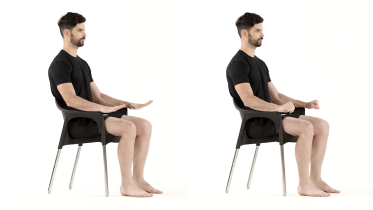 Open and close the hands
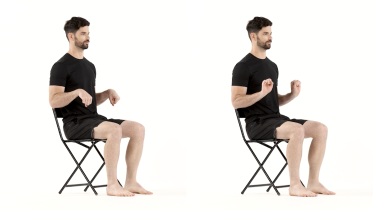 Wrist flexion and extension
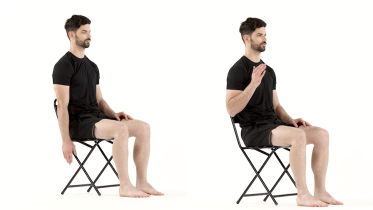 Elbow flexion and extension
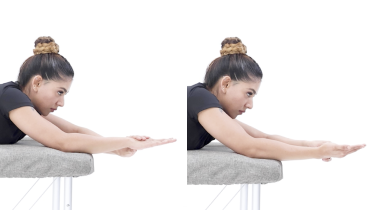 Forearm rotation lying face down
Stage 2: Get the bend, the straightening and the turn back
This stage usually runs from about 2 weeks after the injury, when the sling is put away, to about 6 weeks. Keep up the stage 1 elbow and forearm movements and add two more. In the lying elbow bend, your stronger arm uses a stick to help the stiff elbow bend a little further. The pronator stretch helps the palm turn up. Many programs use 10 to 15 slow stick bends 1 to 3 times a day, and hold the stretch for 15 to 30 seconds, 2 to 4 times, a few times a day. Keep the push gentle. The bone is still healing and is not ready for a strong stretch. Mild discomfort is fine if it settles soon after you stop and the elbow is no worse the next morning.
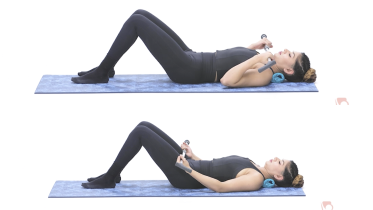 Lying assisted elbow bend
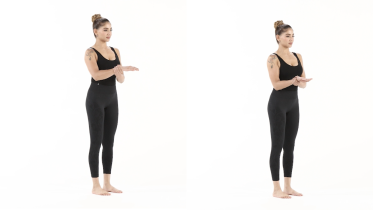 Pronator stretch
Stage 3: First strength for the elbow, forearm and grip
Start from about 6 weeks after the injury, once your fracture clinic or physio says the bone can take some load. The two triceps holds and the ball squeeze work the muscles while the elbow stays still, often 5 to 10 holds of about 5 to 10 seconds once or twice a day, and 10 to 15 squeezes held for 3 to 5 seconds 1 to 3 times a day. The reverse grip curl bends the elbow against the weight of your own forearm, with no weight at first, and the two band exercises strengthen turning the palm down and up, often at 2 to 3 sets of 10 to 15 once a day. Start light. Add more only if the elbow is still settled the next day, and stop any exercise that gives you sharp pain at the elbow.
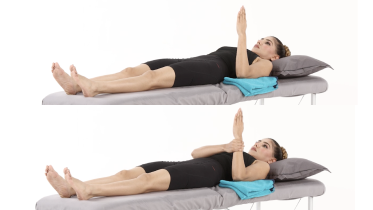 Lying isometric triceps press
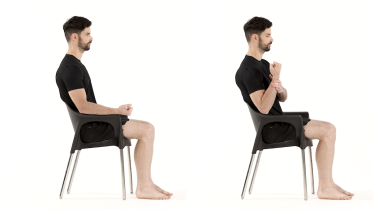 Seated triceps extension
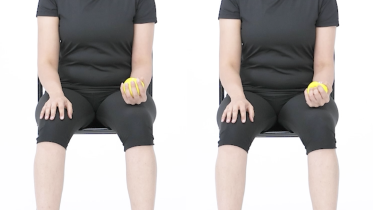 Hand grip squeeze
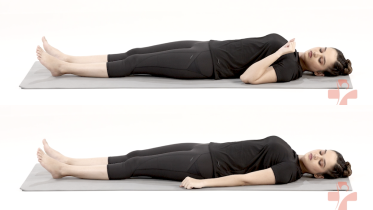 Reverse grip curl
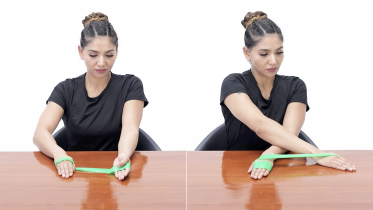 Forearm pronation with band
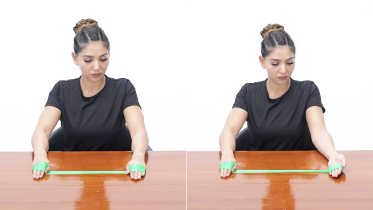 Forearm supination with band
Stage 4: Strength and everyday tasks
Move on when the stage 3 exercises feel easy and the elbow bends, straightens and turns well enough for daily life. The biceps curl and forearm rotation with a light dumbbell or a small water bottle build strength for lifting, carrying and turning, often 2 to 3 sets of 8 to 12 curls 2 to 3 days a week and 2 to 3 sets of 10 to 15 turns once a day. Wall push-ups put some of your body weight through the arm, as when you push up from a chair, so wait until your fracture clinic or physio says the elbow can take weight, then start with your feet close to the wall and build toward 2 to 3 sets of 10 to 15 a few days a week. Only do exercises you could manage before the injury, and practice the real tasks you need, such as carrying shopping or lifting a kettle, in small steps. Some ache with harder tasks is common for a few months, but pain that climbs week by week needs checking.
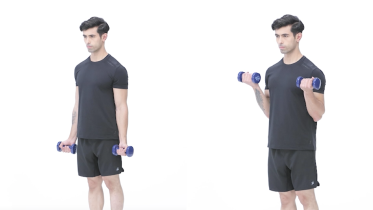 Biceps curl
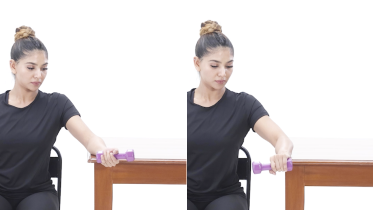 Forearm rotation with a dumbbell
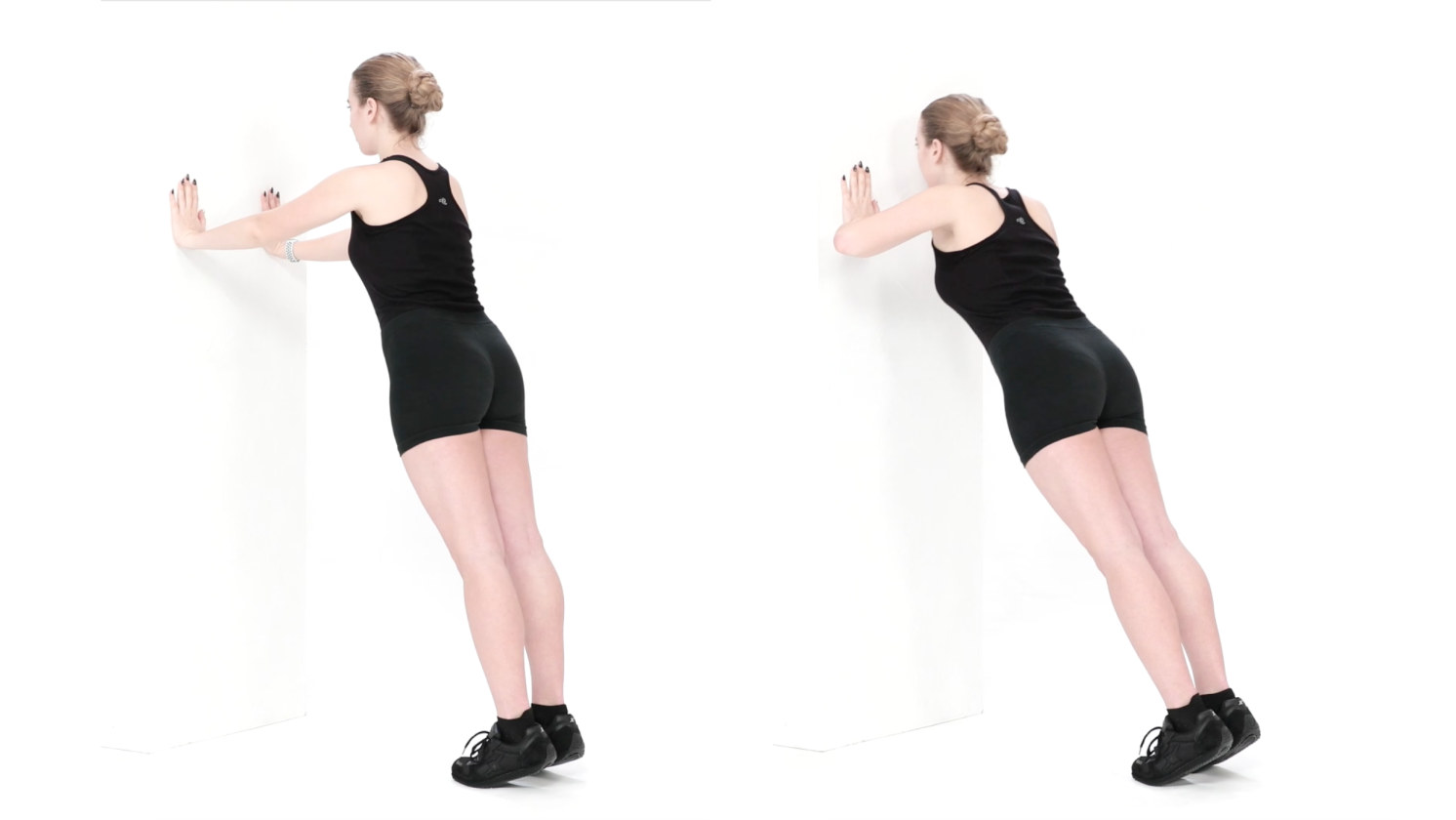 Wall push-ups
Stiffness and getting the last bit of straightening back
Some stiffness is normal. OrthoInfo says you may be given exercises to do on your own or with a therapist to get back as much movement as you can. Keep doing the stage 1 and 2 movements every day, even once you have started the strength work.
Keep every stretch gentle and never force the elbow. If the elbow is still clearly stiff, or turning the palm up or down is still limited, ask your fracture clinic or physio to check it. The Leeds clinic asks you to get back in touch if you still have pain after 3 months.
When to see a physio or doctor
Many people with a small elbow fracture recover well with a home program. A physical therapist (physiotherapist) can help if the elbow is not getting steadily easier, if you cannot bend it far enough to reach your mouth or face, or if you cannot straighten or turn it well enough for your work or daily life. Ask for a referral too if you are unsure how far to push the exercises, or you need to get back to heavy lifting or sport.
If your elbow was operated on, your surgeon and physio set the plan. The warning signs below say how quickly to get help.
For physiotherapists
This page gives patients a starting framework for adult elbow fractures managed non-operatively, mainly undisplaced or minimally displaced radial head fractures. OrthoInfo describes non-operative management of type I fractures as early, gradual increase in elbow and wrist motion, with a sling or splint not usually needed beyond the first few days. The Leeds Teaching Hospitals virtual fracture clinic pathway (last reviewed November 2024) uses a sling for comfort for a maximum of 2 weeks, range of motion little and often from the start, sling discarded from 2 weeks, strengthening, including wall and table press work, from 6 weeks (only exercises the patient could do before the injury), and discharge with open return if pain persists beyond 3 months.
Liow and colleagues (2002) randomized 60 patients with minimally displaced radial head fractures to immediate active mobilization or a 5-day delay, with a blinded assessor. At 7 days the immediate group had less pain (VAS 6 vs 7.6), more flexion (112 vs 98 degrees), greater supination strength and a better Morrey score (54 vs 43). Groups were comparable at 4 weeks, all fractures united by 3 months, and the mean extension deficit at 3 months was 2.3 vs 1.8 degrees (not significant). Evidence beyond this is limited, so progression here follows one NHS trust pathway and the 24-hour symptom response rather than a tested protocol.
Screen at each contact for neurovascular change, compartment syndrome in the first days, CRPS, a mechanical block to rotation or instability, wrist or forearm pain that may point to an interosseous membrane or distal radioulnar joint injury (Essex-Lopresti), and loss of range that is not improving. Operatively managed fractures (fixation, excision or radial head replacement), fracture-dislocations and pediatric elbow fractures follow the treating team's protocol.
See a doctor promptly if
- Emergency: while you are in a cast or splint, your fingers turn blue, white or pale, or feel cold. Do not wait to see if raising your hand helps. Go to an emergency department straight away, and do not drive yourself. The cast or splint may be cutting off the blood supply, or pressure may be building up inside the forearm (compartment syndrome), and both need checking quickly.
- In a cast or splint, the pain gets worse, your fingers feel numb or tingle or look more swollen, or the cast feels too tight. Stop, raise your hand above your head, keep moving your fingers and contact your fracture clinic or get medical advice straight away. If you cannot move your fingers, the pain is severe even after painkillers, or the numbness, tingling or swelling has not settled within 30 minutes of raising your hand, go to your fracture clinic or an emergency department straight away, and do not drive yourself.
- Emergency: sudden, severe pain in your forearm or hand that is much worse than you would expect and keeps getting worse, especially in the first days after the break or with a cast, splint or tight bandage on the arm. It may come with a tight, swollen forearm, pain that gets much worse when your fingers are gently straightened, numbness, pins and needles or weakness. Call emergency services or go to an emergency department straight away, and do not drive yourself. This can be acute compartment syndrome, which needs urgent surgery.
- Your cast or splint feels too loose, cracks, gets wet or soft, or rubs painfully, or there is a bad smell or liquid coming from under the cast. Contact your fracture clinic or plaster room straight away. If they cannot see you that day, go to an emergency department. Get medical advice the same day as well if you feel hot and shivery or have a high temperature.
- Emergency: a new fall or knock on the healing elbow, followed by numbness, tingling or pins and needles in the arm or hand, a hand that turns cold, pale or blue, or an elbow that has changed shape or sits at an odd angle. The same applies to a bone showing through the skin or a cut that is bleeding heavily. Go to an emergency department or call emergency services straight away, and do not drive yourself.
- A new fall or knock that leaves the healing elbow more swollen, bruised or painful, or that stops you moving it as far as before, without numbness or a change in shape. Stop the exercises and get medical advice the same day. If the pain is severe, you cannot move the elbow or you heard a snap, go to an urgent care center or emergency department the same day.
- Since the elbow injury, pain or swelling at the wrist on the same side or along the forearm, or pain there that is getting worse. Tell your fracture clinic within a few days. A fall that breaks the elbow can also injure the forearm or wrist, and this is easier to treat when it is found early.
- Tingling, pins and needles or numbness in your hand, most often in the ring and little fingers (from the nerve behind the elbow, the ulnar nerve) or in the thumb, index and middle fingers (the median nerve). Stop the exercise you are doing straight away.
- Pins and needles in your arm or hand that do not go away after you stop, or part of your arm or hand goes numb. Get medical advice the same day. If one side of your face or body suddenly goes numb or weak, or your speech becomes slurred or muddled, call emergency services, even if it goes away.
- The elbow is hot, red and swollen, or you have elbow pain with a high temperature or feel hot, cold or shivery. Get medical advice the same day, and go to an emergency department if you feel very unwell. This can be a sign of infection in the joint, which needs treatment quickly.
- Your forearm, hand or upper arm is getting more swollen instead of settling, or becomes warm, tender, red or darker than usual, has swollen veins that are sore to touch, or has a throbbing or cramping pain that feels different from normal muscle ache. Some bruising and swelling is expected after a broken elbow and settles over a few weeks, but a blood clot can sometimes form in the arm. Do not massage it. Stop and get medical advice the same day. If you are also short of breath or have chest pain, call emergency services.
- Since the fracture or cast, the hand is getting more painful rather than less, the skin becomes very sensitive to light touch, or the hand changes color, temperature, swelling or sweating compared with the other one, or looks shiny. See your doctor or physio as soon as you can, within a few days at most, as this can be complex regional pain syndrome (CRPS) and early treatment may help.
- The elbow locks or catches when you bend it or turn your palm, something seems to block the movement, or the elbow feels as if it slips or gives way. Stop the exercise that does it and contact your fracture clinic or physio within a few days.
- The elbow hurts at night or at rest and the pain keeps getting worse rather than easing as the weeks go by. See your doctor within a few days. If you have had cancer, now or in the past, or are losing weight without trying, see your doctor sooner, within a day or two, and mention it. This applies even if the pain is not getting worse. If you are being treated for cancer now, contact your cancer team the same day.
- Your elbow is still painful, is not getting steadily easier, or still will not bend, straighten or turn much, 3 months after the injury. This is not an emergency, but contact your fracture clinic or ask your doctor for a review in the next week or two.
- You have fallen two or more times in the past year, or you keep tripping, stumbling or feeling that your legs might give way. Book an appointment with your doctor within a few days and ask about a falls assessment. Tell them about every fall, even the ones where you were not hurt.
- Emergency: you have a new fall and cannot remember the fall or how it happened. Go to an emergency department straight away, and do not drive yourself. You may have blacked out or hit your head without knowing it.
- You blacked out before the fall that broke your elbow, or you cannot remember that fall, and nobody has checked why. Get medical advice the same day. A blackout needs its own check, especially if you are over 65 or it came without warning.
Common questions
How long does a broken elbow take to heal?
For a small fracture such as a crack in the radial head, the Leeds Teaching Hospitals fracture clinic says the bone usually heals in about 6 weeks. Pain and swelling can go on for up to 3 months, and it takes about 3 to 6 months for the elbow to feel back to normal. The NHS says a broken arm usually takes around 6 to 8 weeks to recover, and longer if it was badly damaged. A break that needed surgery follows its own timeline, so ask your surgeon.
How long should I wear a sling for a broken elbow?
Usually not for long. For a small crack in the radial head, OrthoInfo, from the American Academy of Orthopaedic Surgeons, says a sling or splint is not usually needed beyond the first few days, if at all. The Leeds fracture clinic uses the sling only to ease pain, for 2 weeks at most, and asks you to take it off regularly to do the exercises. Your fracture clinic may give different advice for other types of break, so follow theirs.
Is it OK to move my elbow after a fracture?
For small, stable breaks treated without surgery, yes, once your fracture clinic has said so. In a trial of 60 people with a minimally displaced radial head fracture, people who started moving the elbow straight away had less pain, more bend and better function at 1 week than people who waited 5 days, and both groups were similar by 4 weeks (Liow 2002). Discomfort is expected, but severe pain means you are doing too much.
Why can't I fully straighten my arm after an elbow fracture?
Some stiffness is expected after an elbow fracture. OrthoInfo notes that even the simplest of these fractures leaves some loss of elbow movement. In a trial of 60 people with a minimally displaced radial head fracture, the loss of straightening at 3 months averaged about 2 degrees (Liow 2002). Keep up the gentle movement exercises, and if the elbow is still clearly stiff at 3 months, ask your fracture clinic for a review.
When can I drive after a broken elbow?
Only once the sling, cast or splint is off and you can control the car safely. The Leeds fracture clinic says you can drive as soon as you feel able, once the sling is off and you can steer, change gear and do an emergency stop. The general NHS advice after a broken arm is not to drive until you have been told it is safe. Ask your fracture clinic before you drive again, and check with your insurer if you are not sure.
References
- American Academy of Orthopaedic Surgeons. Radial head fractures of the elbow. OrthoInfo. https://www.orthoinfo.org/en/diseases--conditions/radial-head-fractures-of-the-elbow/
- Leeds Teaching Hospitals NHS Trust. Elbow consultant advice, virtual fracture clinic, with phase 1 to 4 pages. Last reviewed 20 November 2024. https://www.leedsth.nhs.uk/services/fracture-clinic/virtual/arm/elbow/
- Liow RY, Cregan A, Nanda R, Montgomery RJ. Early mobilisation for minimally displaced radial head fractures is desirable. A prospective randomised study of two protocols. Injury. 2002;33(9):801-806. https://doi.org/10.1016/s0020-1383(02)00164-x
- NHS. Broken arm or wrist. Page last reviewed 26 May 2023. https://www.nhs.uk/conditions/broken-arm-or-wrist/
- NHS. Complex regional pain syndrome. Page last reviewed 27 October 2022. https://www.nhs.uk/conditions/complex-regional-pain-syndrome/
- NHS. Compartment syndrome. Page last reviewed 4 September 2026. https://www.nhs.uk/conditions/compartment-syndrome/
- NHS. DVT (deep vein thrombosis). Page last reviewed 30 April 2026. https://www.nhs.uk/conditions/deep-vein-thrombosis-dvt/
- North Bristol NHS Trust. Care of plaster casts. October 2024. https://www.nbt.nhs.uk/care-of-plaster-casts
- National Institute for Health and Care Excellence. Transient loss of consciousness ('blackouts') in over 16s. Clinical guideline CG109. 2010, last updated November 2023. https://www.nice.org.uk/guidance/cg109
Written and checked by the PocketPhysio editorial team. Last updated 2026-09-28.
This page is general education, not a diagnosis or a personal treatment plan. See a physiotherapist or doctor for advice about your own situation.