
Broken wrist (wrist fracture) exercises and physiotherapy
What is a broken wrist?
Most broken wrists are a break in the end of the radius, the larger of the two forearm bones, just above the wrist joint. Doctors call it a distal radius fracture. It usually happens when you fall onto an outstretched hand. OrthoInfo notes that many of these breaks in people over 60 come from a fall from standing height, and that with weak bones (osteoporosis) even a minor fall can break the wrist.
This page is for adults whose broken wrist is being treated in a cast or splint, without an operation. If your wrist was fixed with a plate, screws or wires, check with your surgeon or hand therapist before you use anything here, and follow their plan. If the broken wrist belongs to a child or a teenager whose bones are still growing, follow the plan from their own fracture clinic, doctor or physio rather than this page.
How a broken wrist is treated
At the hospital the wrist is X-rayed and supported in a splint. If the bones are out of place, a doctor may push them back into position under an anesthetic before the cast goes on (NHS; NICE NG38). OrthoInfo says a splint is often used for the first few weeks to leave room for swelling, sometimes followed by a cast, and the cast usually comes off about 4 to 6 weeks after the break. UK hospital standards suggest considering taking the cast off and starting movement at 4 weeks (BOAST 2017).
A break that was put back into place can slip in the cast, which is why some people have a second X-ray in the first week or two (BOAST 2017). In a UK trial of 500 adults whose break had been put back into place, wrist function a year later was much the same with a cast as with wires, but about 1 in 8 people in the cast group needed an operation because the bone moved (Costa 2022). If that happens to you, rehab follows your surgeon's plan from then on.
Moving while you are in the cast
The wrist is kept still, but everything else should keep moving. UK hand surgeons advise that a wrist cast should let you make a full fist, and that you can use the hand for light tasks while the wrist heals (BSSH). One NHS leaflet gives movements for everything from the fingers up to the shoulder, each done five times, four times a day. It warns that stiff joints can take many months to get better (Newcastle upon Tyne Hospitals).
OrthoInfo advises telling your doctor if you cannot fully move your fingers within 24 hours because of pain or swelling. Stage 1 of the program below keeps the fingers and thumb moving, along with the elbow and shoulder. If your cast goes above the elbow, leave out the elbow exercise, as NHS cast advice says, until your fracture clinic tells you otherwise (Chelsea and Westminster Hospital).
How to control swelling
Swelling is normal after a break, and moving your fingers is part of the answer. The NHS advises keeping your hand raised above your elbow whenever you can. One NHS leaflet suggests resting the hand on your opposite shoulder as you walk around, and resting the elbow on pillows or a table with the hand up when you sit, while you keep the fingers moving to pump the fluid away (Newcastle upon Tyne Hospitals).
Once the cast is off, the swelling often comes back for a while as you start using the hand. One NHS rehab guide adds a compression bandage, ice for no more than 10 to 15 minutes, and massaging the hand and forearm with moisturizer, working from the hand toward the elbow (Worcestershire Acute Hospitals). Swelling that does not go down with raising the hand and rest should be checked by your fracture clinic or doctor.
What to expect when the cast comes off
Many people are surprised by how stiff and weak the wrist feels at first, and the hand may swell by the end of the day. OrthoInfo says stiffness usually gets better over the month or two after the cast comes off, and the wrist can keep improving for at least 2 years.
One NHS rehab guide advises using the wrist for light tasks as soon as the cast is off, because that helps bring back movement and strength. If you were given a removable splint, the same guide suggests aiming to be out of it by about 8 weeks. Be patient with getting the movement back. The guide says it is normal for good progress to take a few months (Worcestershire Acute Hospitals).
How long does a broken wrist take to heal?
The NHS says recovery usually takes around 6 to 8 weeks, and longer if the wrist was badly damaged. The wrist often takes longer than that to feel normal. OrthoInfo says most people can get back to light activities within 1 to 2 months after the cast comes off and to more demanding ones, such as skiing or football, 3 to 6 months after the injury.
Full recovery takes at least a year, and OrthoInfo notes that some pain with harder activities is normal for that long. One NHS rehab guide says most people are back to normal tasks such as driving by 8 to 12 weeks (Worcestershire Acute Hospitals). Do not drive or lift anything heavy until you have been told it is safe (NHS).
Do you need physiotherapy after a broken wrist?
Not always, and the research does not give a clear answer on the best approach. A Cochrane review of 26 trials with 1,269 people, mostly older women, rated the evidence low or very low quality and concluded there was not enough to say which form of rehab is best (Handoll 2015). In a small Australian trial of 33 adults treated in a cast, adding a progressive exercise program to structured advice over three physio visits gave no extra benefit over the advice alone (Bruder 2016).
Supervision may speed things up. A 2026 review of 13 trials compared supervised therapy with a home exercise program. At 6 weeks the supervised groups had better wrist function and grip strength, and could bend the wrist back further, but this was a short-term benefit. More sessions went with more pain relief and movement (Gutiérrez-Espinoza 2026).
UK hand surgeons advise referral to a physio or occupational therapist when pain, swelling or stiffness are out of proportion, or recovery is slower than expected (BSSH). If you are not making progress, ask your fracture clinic or doctor for a referral.
How to use this program
Follow your fracture clinic's advice on when each stage can start, because the timing depends on the type of break and how it is healing. Stage 1 is for the time in the cast. Move on to the next stage when the current one feels easy and your wrist is no worse the next morning. If you are not sure, stay at the earlier stage.
Each exercise page gives its own starting range. Most programs do the finger and wrist movements a few times a day. The holds and the grip and pinch work usually come once or twice a day, and the stage 4 strength work once a day or every other day. Your physio will adjust this to your wrist and your age, and to what you need your hand for.
In stage 1, every movement should be pain free. From stage 2 on, a stretch or mild discomfort is fine if it settles soon after you stop and the wrist is no worse the next morning. Sharp pain at the break, pain that builds with each repetition, or a wrist that is clearly more painful or swollen the next day means you did too much, so drop back a stage for a few days.
The exercise program
Stage 1: In the cast, keep everything else moving
This stage covers the weeks in the cast or splint, often about 4 to 6 weeks. Open and close your hand, work through the tendon glides and touch your thumb to each fingertip, as far as the cast allows. Then bend and straighten your elbow and lift the stick overhead, holding it lightly with your fingers. This stops the joints around the wrist from stiffening. Many programs use 5 to 10 slow rounds of each hand exercise a few times a day, 10 to 15 elbow bends 2 to 3 times a day and 10 to 15 stick lifts 1 to 3 times a day, though your fracture clinic may give you its own numbers. None of it should hurt: a stretch is fine, a sharp pain at the break never is. If you still cannot fully bend and straighten your fingers a day after the cast or splint goes on, or your fingers stay swollen or change color, check the warning signs below.
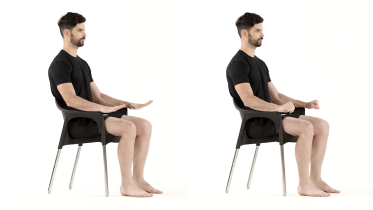 Open and close the hands
 Tendon glides
 Thumb opposition
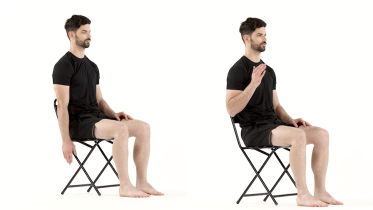 Elbow flexion and extension
 Shoulder flexion with a stick
Stage 2: Cast off, get the wrist moving again
Start when the cast or splint comes off and your fracture clinic has said the wrist can move. Tip the wrist up and down and side to side, draw slow figure 8s with your hands clasped, and move the stiff thumb out to the side. The last two use your other hand to ease the wrist back and to turn the palm up. You need those two movements to push up from a chair and to hold out your hand. Your clinic's plan comes first. One NHS rehab guide typically adds assisted stretches like these from about 6 to 8 weeks after the injury, so ask before you start them and keep the push gentle. Most of the exercises here are done in short sessions a few times a day, and the stretch is often held for 15 to 30 seconds. Each exercise page gives its own starting numbers. Expect stiffness and a pulling feeling, and use the wrist for light tasks such as eating and dressing. Mild discomfort is fine if it settles soon after you stop and the wrist is no worse the next morning.
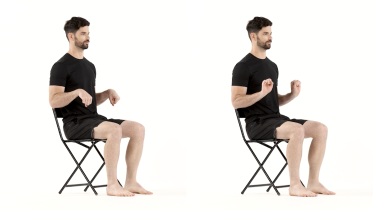 Wrist flexion and extension
 Wrist radial and ulnar deviation
 Wrist figure 8
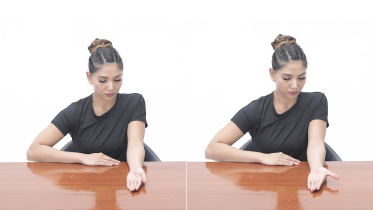 Thumb extension
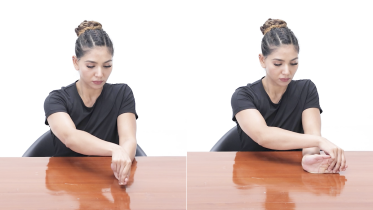 Assisted wrist extension
 Pronator stretch
Stage 3: First strength for the wrist, grip and pinch
Move on when the wrist moves more freely and your fracture clinic or physio says the bone is ready for some load. Your clinic's plan comes first; one NHS rehab guide typically brings in light lifting from about 6 to 8 weeks after the injury. The holds work the wrist muscles while the wrist stays still. Start with a gentle push, often 5 to 10 holds of 5 to 10 seconds once or twice a day. The ball squeeze and the two pinch exercises rebuild the grip you need for opening jars and doing up buttons, and they start light too. Only add more over the next few days if the wrist stays settled. Mild discomfort that settles soon after and is no worse the next morning is fine. Sharp pain at the break means stop.
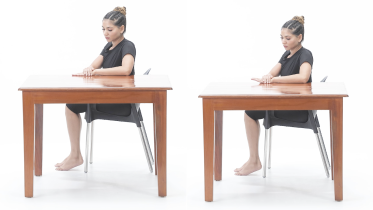 Isometric wrist extension
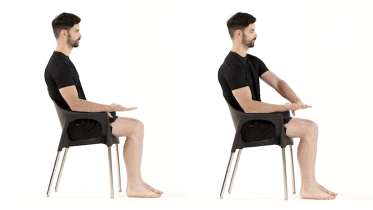 Isometric wrist flexion
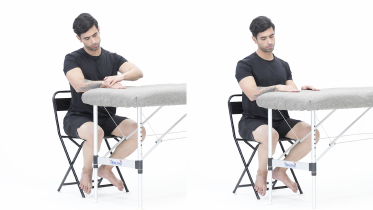 Isometric ulnar deviation
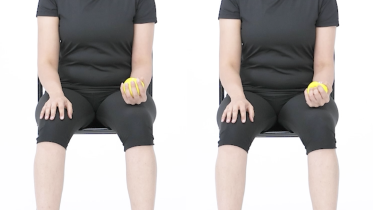 Hand grip squeeze
 Clothespin pinch
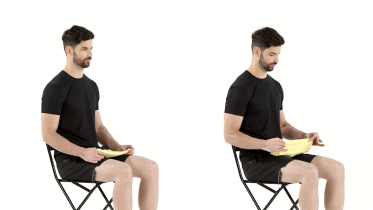 Pinch and pull with a cloth
Stage 4: Strength and everyday tasks
Start once the holds feel easy and your fracture clinic or physio agrees. Your clinic's plan comes first; one NHS rehab guide typically starts strengthening from about 8 weeks after the break. Lift the hand against a light band or dumbbell, turn the forearm with a light dumbbell, and use the gripper and towel wringing for a stronger, twisting grip. Most of these start at 2 to 3 sets of 10 to 15 once a day or every other day, and the wringing at 5 to 10 wrings. The weight shift onto the hands puts some body weight through the wrist, as when you push up from a chair or the floor. Wait until your fracture clinic or physio says the wrist can take some body weight and your hand can rest flat on a table without pain, then start with only a little weight through the hand. That NHS guide leaves this kind of weight through the hands until about 12 weeks after the injury. Go up in small steps and practice the real tasks you need, such as carrying shopping or opening jars. Some ache with harder tasks is common for months, but pain that climbs week by week needs checking.
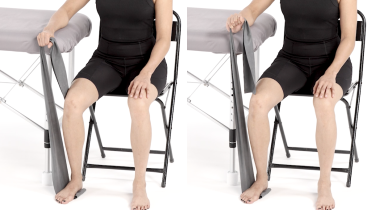 Wrist extension with band
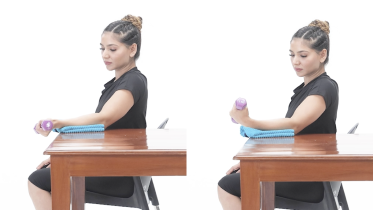 Wrist curl
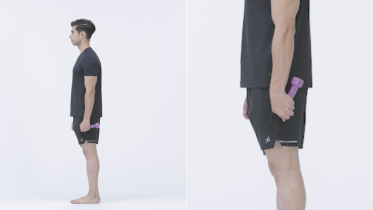 Wrist ulnar deviation with a dumbbell
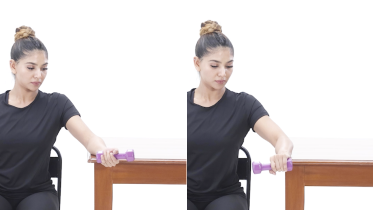 Forearm rotation with a dumbbell
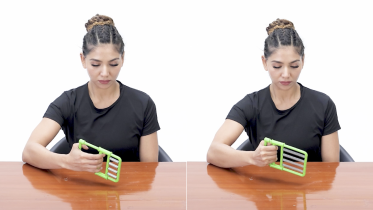 Hand gripper exercise
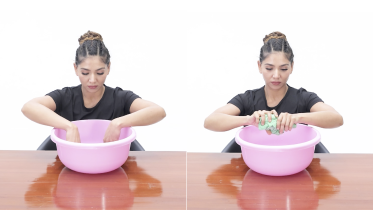 Towel wringing
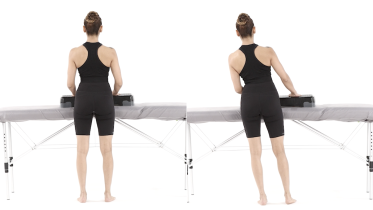 Standing weight shift onto the hands
A broken wrist can be the first sign of osteoporosis
A wrist that breaks in a simple fall can be a sign of weak bones. The NHS lists a broken wrist among the most common injuries in people with osteoporosis, and says a broken bone is often the first sign of it. UK standards for fracture clinics say people with a broken wrist should be assessed for bone health and falls risk, and referred to a fracture liaison service or falls service where needed (BOAST 2017).
UK hand surgeons recommend considering an assessment of fracture risk in all women aged 65 and over and all men aged 75 and over, and for a wrist broken in a minor fall they apply it to everyone aged 50 or over. Fracture liaison services are set up to find people over 50 who have had this kind of break, known as a fragility fracture (BSSH). If that sounds like you and nobody has mentioned your bones, ask your doctor. The osteoporosis program covers exercise for bone health, and decisions about tests and medicine belong with your doctor.
Preventing another fall
A fall that breaks a wrist is a good reason to look at why it happened. UK hand surgeons advise that older people who come for medical help after a fall, have fallen more than once in the past year, or have problems with walking or balance should be offered a full falls risk assessment (BSSH). If you tripped once on an obvious hazard, that may be all it was. If you have fallen before, feel unsteady or have started to avoid going out, tell your doctor. If you blacked out or cannot remember the fall that broke your wrist, and nobody has checked why, get medical advice the same day, because UK guidance suggests a heart check within 24 hours for some people with a blackout, including people over 65 whose blackout came without warning (NICE CG109).
The balance and falls prevention program explains how strength and balance training can lower the chance of another fall. Some of its balance work can start while the wrist heals, holding a sturdy support with your good hand, but check with your physio first.
Complications to know about
A few problems can turn up in the weeks after a broken wrist, and all of them do better when they are found early. The warning signs below list what to look for and how quickly to act.
Complex regional pain syndrome (CRPS) is pain that is far worse, and lasts far longer, than the injury would explain. The NHS describes severe, persistent pain, often with skin so sensitive that a light touch hurts. There can be swelling and stiffness too, and changes in skin color or temperature. The NHS says early treatment may help, and one NHS leaflet notes that CRPS after a wrist fracture needs early physiotherapy (Newcastle upon Tyne Hospitals).
The long tendon that straightens the thumb can snap after a wrist fracture, most often after a break that was not badly out of place (BSSH). You would notice that you suddenly cannot straighten the end of your thumb, or cannot lift your thumb off a table with the hand flat. It needs a surgeon's opinion, although BSSH notes that the repair is not usually urgent.
Pressure on the nerve at the wrist can follow a broken wrist. OrthoInfo describes a sudden form (acute carpal tunnel syndrome) as a rare but serious problem after a broken wrist, and advises going to an emergency department straight away if your fingers feel numb after a wrist injury. Tingling that comes on later, once the cast is off, is less urgent but still worth mentioning. The carpal tunnel syndrome program explains the symptoms.
When to see a physio or doctor
UK standards say you should get information about your expected recovery and be able to contact the fracture service again if you are not progressing as expected (BOAST 2017). Use that. See your fracture clinic, physio or doctor if the wrist is not getting steadily easier after the cast comes off, if swelling does not settle with raising the hand and rest, or if pain is out of proportion to what you are doing.
It is also worth a check if you cannot yet do what you need for work, driving or caring for someone by the times in the recovery section above. The warning signs below say how quickly to get help.
For physiotherapists
This page gives patients a starting framework for adult distal radius fractures managed non-operatively in a cast or splint. The BOAST (BOA and BSSH, December 2017) asks units to consider early mobilization from a removable support for stable fractures once pain allows, to consider cast removal and mobilization at 4 weeks for casted fractures, and to assess every patient for falls risk and bone health with referral to fracture liaison or falls services. It also says a radiograph at the end of immobilization is not needed without clinical concern, and that patients should be able to self-refer back if progress is not as anticipated.
The BSSH best practice points call for advice and education on pain and edema and on preventing loss of motion at the fingers, thumb, elbow and shoulder, a cast that allows a full fist, and light functional use during immobilization. Referral to therapy is advised for disproportionate pain, edema, loss of motion or delayed recovery. The BSSH fragility section suggests considering fracture risk assessment in women aged 65 and over and men aged 75 and over, and in everyone aged 50 or over after a low-energy distal radius fracture, using FRAX or QFracture, and a multifactorial falls assessment for older people presenting after a fall.
The evidence for rehab content is thin. The Cochrane review (Handoll 2015; 26 trials, 1,269 participants) rated the evidence low or very low and could not establish the best interventions. Bruder 2016 (n = 33, cast-managed) found no added benefit from a 6-week progressive exercise program over structured advice, both delivered over three physiotherapy consultations, on PRWE or QuickDASH at 7 and 24 weeks. Gutiérrez-Espinoza 2026 pooled 13 RCTs and found supervised therapy better than a home program at 6 weeks for PRWE (mean difference 11.64 points, moderate certainty), grip strength (low certainty) and wrist extension (moderate certainty), with more sessions associated with greater pain relief and range.
DRAFFT2 (Costa 2022; n = 500, dorsally displaced fractures after manipulation) found no difference in PRWE at 12 months between K-wire fixation and a molded cast, with 13% of the cast group needing fixation for loss of position in the first 6 weeks. NICE NG38 advises considering manipulation and a cast for dorsally displaced distal radius fractures in adults. Progression on this page follows one NHS trust rehab guide (active range after cast removal, passive stretching and light lifting from about 6 to 8 weeks, strengthening from about 8 weeks, weight bearing through the hands from about 12 weeks) and the 24-hour symptom response, not a fixed protocol. Screen for CRPS, late EPL rupture and median nerve compression at each contact, and hand over to the surgical team's protocol for any operatively managed fracture.
See a doctor promptly if
- Emergency: while you are in a cast or splint, your fingers turn blue, white or pale, or feel cold. Do not wait to see if raising your hand helps. Go to an emergency department straight away, and do not drive yourself. The cast or splint may be cutting off the blood supply, or pressure may be building up inside the forearm (compartment syndrome), and both need checking quickly.
- In a cast or splint, the pain gets worse, your fingers feel numb or tingle or look more swollen, or the cast feels too tight. Stop, raise your hand above your head, keep moving your fingers and contact your fracture clinic or get medical advice straight away. If you cannot move your fingers, the pain is severe even after painkillers, or the numbness, tingling or swelling has not settled within 30 minutes of raising your hand, go to your fracture clinic or an emergency department straight away, and do not drive yourself.
- Emergency: in the first weeks after the break, the pain is severe and keeps getting worse, it hurts badly when your fingers are gently straightened, you have new weakness or trouble bending your thumb or index finger, or numbness in your fingers keeps spreading or getting worse. Go to an emergency department straight away, and do not drive yourself. Pressure may be building up inside the forearm (compartment syndrome), or swelling may be pressing on the nerve at the wrist (acute carpal tunnel syndrome), and both need treatment quickly.
- Your cast or splint feels too loose, cracks, gets wet or soft, or rubs painfully, or there is a bad smell or liquid coming from under the cast. Contact your fracture clinic or plaster room straight away. If they cannot see you that day, go to an emergency department. Get medical advice the same day as well if you feel hot and shivery or have a high temperature.
- Emergency: a new fall or knock on the healing wrist, followed by numbness, tingling or pins and needles in the hand, or a wrist that has changed shape or sits at an odd angle. The same applies to a bone showing through the skin or a cut that is bleeding heavily. Go to an emergency department or call emergency services straight away, and do not drive yourself.
- A new fall or knock that leaves the healing wrist more swollen, bruised or painful, without numbness or a change in shape. Get medical advice the same day.
- Since the fracture or cast, the hand is getting more painful rather than less, the skin becomes very sensitive to light touch, or the hand changes color, temperature, swelling or sweating compared with the other one, or looks shiny. See your doctor or physio as soon as you can, within a few days at most, as this can be complex regional pain syndrome (CRPS) and early treatment may help.
- Suddenly being unable to straighten the end of your thumb or lift it back, especially in the weeks after a wrist fracture. A thumb tendon can snap, so stop the thumb exercises and have a doctor check it within a few days.
- Once the cast is off, numbness in the hand that is there all the time, the fleshy muscle at the base of your thumb looks flatter or thinner than on the other hand, or your thumb is getting weaker and you keep dropping things. See a doctor within a few days rather than waiting for it to settle. If the weakness is getting worse from day to day or spreads beyond the thumb, get medical advice the same day. Pressure on the nerve at the wrist (carpal tunnel syndrome) can follow a wrist fracture, and long-standing pressure can damage the nerve for good. If one side of your face or body suddenly goes numb or weak, or your speech becomes slurred or muddled, call emergency services, even if it goes away.
- Tingling or numbness in the thumb, index and middle fingers that comes and goes, often at night, once the cast is off. Tell your fracture clinic or physio at your next visit, and see your doctor if it has not settled within a week or two.
- The wrist hurts at night or at rest and the pain keeps getting worse rather than easing as the weeks go by. See your doctor within a few days. If you have had cancer, now or in the past, or are losing weight without trying, see your doctor sooner, within a day or two, and mention it. This applies even if the pain is not getting worse. If you are being treated for cancer now, contact your cancer team the same day.
- You have fallen two or more times in the past year, or you keep tripping, stumbling or feeling that your legs might give way. Book an appointment with your doctor within a few days and ask about a falls assessment. Tell them about every fall, even the ones where you were not hurt.
- Emergency: you have a new fall and cannot remember the fall or how it happened. Go to an emergency department straight away, and do not drive yourself. You may have blacked out or hit your head without knowing it.
- You blacked out before the fall that broke your wrist, or you cannot remember that fall, and nobody has checked why. Get medical advice the same day. A blackout needs its own check, especially if you are over 65 or it came without warning.
Common questions
How long does a broken wrist take to heal?
The NHS says it usually takes around 6 to 8 weeks to recover from a broken arm or wrist, and longer if it was badly damaged. OrthoInfo, from the American Academy of Orthopaedic Surgeons, says most people get back to light activities within 1 to 2 months after the cast comes off and to more demanding ones, such as skiing or football, between 3 and 6 months after the injury. Full recovery takes at least a year, and some pain with harder activities is normal for up to a year. Most people do go back to all their normal activities.
How long do you wear a cast for a broken wrist?
Often about 4 to 6 weeks. OrthoInfo says a splint is usually used for the first few weeks to allow for swelling, sometimes followed by a cast, and that the cast usually comes off about 4 to 6 weeks after the break. UK standards for hospitals suggest considering taking the cast off and starting movement at 4 weeks (BOAST 2017). Your fracture clinic decides the timing for your wrist.
Is it normal for my wrist to be stiff and swollen after the cast comes off?
Yes. Stiffness, some swelling and a weak grip are expected when the cast first comes off. OrthoInfo says stiffness usually gets better in the month or two afterward and the wrist can keep improving for at least 2 years. Keep the hand raised when it swells and use it for light tasks. Swelling that does not settle with raising the hand and rest, or pain that is getting worse rather than better, needs checking with your fracture clinic, physio or doctor.
When can I drive after a broken wrist?
Only once you have been told it is safe, as the NHS advises. You need to be able to grip the wheel and control the car in an emergency, and one NHS trust advises not driving at all while you are in a cast or splint (North Bristol NHS Trust). One NHS rehab guide says most people are back to normal tasks such as driving by 8 to 12 weeks (Worcestershire Acute Hospitals). Ask your fracture clinic, and check with your insurer if you are not sure.
Do I need physiotherapy after a broken wrist?
Not everyone does. Many people recover well with a clear home exercise program, and a Cochrane review found too little good evidence to say which form of rehab is best (Handoll 2015). A 2026 review found that supervised therapy beat a home program at 6 weeks for wrist function, grip and bending the wrist back, though the gain was short term (Gutiérrez-Espinoza 2026). UK hand surgeons advise referral to therapy when pain, swelling or stiffness are out of proportion or recovery is slow (BSSH). If you are not making progress, ask for a referral.
Can a broken wrist be a sign of osteoporosis?
It can. The NHS lists a broken wrist among the most common injuries in people with osteoporosis and says a broken bone is often the first sign of it. OrthoInfo notes that with osteoporosis even a minor fall can break the wrist. If you are over 50 and broke your wrist in a fall from standing height or less, ask your doctor whether you need a check of your bone health and your risk of falling.
References
- NHS. Broken arm or wrist. Page last reviewed 26 May 2023. https://www.nhs.uk/conditions/broken-arm-or-wrist/
- American Academy of Orthopaedic Surgeons. Distal radius fractures (broken wrist). OrthoInfo. https://www.orthoinfo.org/en/diseases--conditions/distal-radius-fractures-broken-wrist/
- British Orthopaedic Association and British Society for Surgery of the Hand. BOAST: The management of distal radial fractures. December 2017. https://www.boa.ac.uk/resource/boast-16-pdf.html
- National Institute for Health and Care Excellence. Fractures (non-complex): assessment and management. NICE guideline NG38. 2016. https://www.nice.org.uk/guidance/ng38
- British Society for Surgery of the Hand. Best practice for management of distal radial fractures: rehabilitation. https://www.bssh.ac.uk/professionals/drfs_rehabilitation.aspx
- British Society for Surgery of the Hand. Best practice for management of distal radial fractures: fragility fractures. https://www.bssh.ac.uk/professionals/drfs_fragility_fractures.aspx
- British Society for Surgery of the Hand. Thumb extensor tendon (EPL) rupture. Patient information. https://www.bssh.ac.uk/patients/conditions/30/thumb_extensor_tendon_epl_rupture
- Handoll HHG, Elliott J. Rehabilitation for distal radial fractures in adults. Cochrane Database of Systematic Reviews. 2015;(9):CD003324. https://doi.org/10.1002/14651858.CD003324.pub3
- Bruder AM, Shields N, Dodd KJ, Hau R, Taylor NF. A progressive exercise and structured advice program does not improve activity more than structured advice alone following a distal radial fracture: a multi-centre, randomised trial. Journal of Physiotherapy. 2016;62(3):145-152. https://doi.org/10.1016/j.jphys.2016.05.011
- Gutiérrez-Espinoza H, Araya-Quintanilla F, Cuyúl-Vásquez I, et al. Comparing supervised physical therapy to home exercise programs in patients with distal radius fractures: a systematic review with meta-analysis of randomized clinical trials. Journal of Orthopaedic and Sports Physical Therapy. 2026;56(3):158-175. https://doi.org/10.2519/jospt.2026.13561
- Costa ML, Achten J, Ooms A, et al. Surgical fixation with K-wires versus casting in adults with fracture of distal radius: DRAFFT2 multicentre randomised clinical trial. BMJ. 2022;376:e068041. https://doi.org/10.1136/bmj-2021-068041
- Newcastle upon Tyne Hospitals NHS Foundation Trust. Instructions following application of a cast or splint to your wrist. Last updated 7 April 2025. https://www.newcastle-hospitals.nhs.uk/resources/instructions-following-application-of-a-cast-or-splint-to-your-wrist/
- North Bristol NHS Trust. Care of plaster casts. October 2024. https://www.nbt.nhs.uk/care-of-plaster-casts
- Chelsea and Westminster Hospital NHS Foundation Trust. Care of your plaster cast. Patient leaflet. https://www.chelwest.nhs.uk/your-visit/patient-leaflets/care-of-your-plaster-cast
- North Tees and Hartlepool NHS Foundation Trust. Plaster casts. Patient information, review date 29 May 2027. https://www.nth.nhs.uk/resources/plaster-casts/
- Worcestershire Acute Hospitals NHS Trust. Distal radius fracture: a rehabilitation guide. Patient information, version 5.1. https://www.worcsacute.nhs.uk/leaflets/wrist-fracture/
- NHS. Complex regional pain syndrome. Page last reviewed 27 October 2022. https://www.nhs.uk/conditions/complex-regional-pain-syndrome/
- NHS. Osteoporosis. Page last reviewed 13 October 2022. https://www.nhs.uk/conditions/osteoporosis/
- National Institute for Health and Care Excellence. Transient loss of consciousness ('blackouts') in over 16s. Clinical guideline CG109. 2010, last updated November 2023. https://www.nice.org.uk/guidance/cg109
Written and checked by the PocketPhysio editorial team. Last updated 2026-09-28.
This page is general education, not a diagnosis or a personal treatment plan. See a physiotherapist or doctor for advice about your own situation.