Wrist flexion and extension
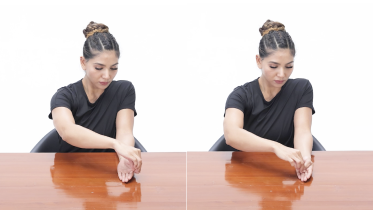
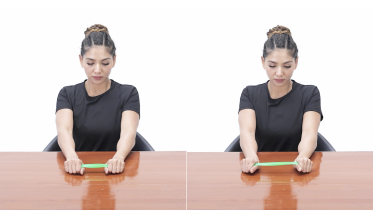
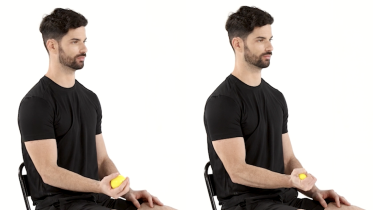
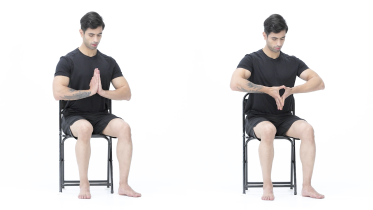
Wrist flexion and extension is a simple movement exercise for the wrist. You sit with your elbows bent at your sides and your palms facing down, then tip both hands up and down from the wrist. Physios often give it to get a stiff wrist moving again, for example once a cast or splint comes off, or as a warm-up before wrist strengthening.
How to do the wrist flexion and extension
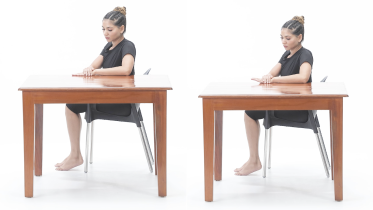
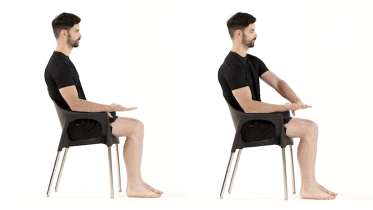
- Sit tall on a chair with your feet flat on the floor.
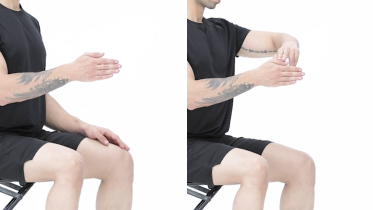
- Bend both elbows to about a right angle and keep your upper arms close to your sides, so your forearms point forward. Turn your palms to face the floor and let your fingers relax, loosely curled as in the video.
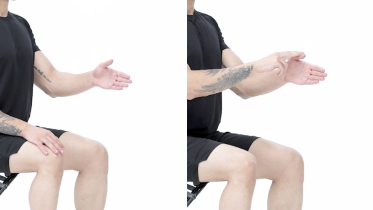
- Lift the backs of your hands up by bending at the wrists, so your fingers point up (wrist extension). Go as far as is comfortable.
- Slowly lower your hands down past the start, so your fingers point toward the floor (wrist flexion).
- Keep your forearms and elbows still, so the movement happens at the wrists only. Carry on up and down at a slow, steady pace.
What you should feel
Light work and a gentle stretch along the top and the underside of your forearms. A stiff wrist may feel tight at the end of each movement, but it should not hurt sharply.
Common mistakes
- Moving the forearms up and down instead of bending at the wrists.
- Letting the elbows drift away from your sides or shrugging the shoulders.
- Clenching the fingers into a tight fist.
- Rushing, or forcing the wrist into a painful end position.
How often
Many programs start with 2 to 3 sets of 10 to 15 slow movements, 1 to 3 times a day. Your physio will adjust this for you.
Stop and check with your physio if
- Sharp or catching pain in the wrist.
- Numbness or tingling in the hand or fingers that builds as you go. If one side of your face or body suddenly goes numb or weak, or your speech becomes slurred or muddled, call emergency services, even if it goes away.
- The wrist is more swollen, hot or stiff after the session.
- Since the fracture or cast, the hand is getting more painful rather than less, the skin becomes very sensitive to light touch, or the hand changes color, temperature, swelling or sweating compared with the other one, or looks shiny. See your doctor or physio as soon as you can, within a few days at most, as this can be complex regional pain syndrome (CRPS) and early treatment may help.
From the clinic
The voice guide describes the arms stretched straight out in front. The video shows the elbows bent at your sides, which is easier on the shoulders, so the steps follow the video. Working both hands together saves time, but if only one wrist is stiff you can do that side on its own.
After a broken wrist, hand or forearm, or surgery on any of them such as a tendon repair, start only when your doctor, surgeon, physio or hand therapist says the bone or repair is ready for this, and follow their plan for how much to do. Once the range comes back, strength is usually the next focus, for example wrist extension with weight. For tightness in the forearm muscles, see the wrist flexor stretch.
Written and checked by the PocketPhysio editorial team. Last updated 2026-09-28.
This page is general education, not a diagnosis or a personal treatment plan. If you have pain, an injury or a health condition, see a physiotherapist or doctor before starting new exercises.