
Ganglion cyst on the wrist: treatment and exercises
Warning signs, and when to get help
What is a ganglion cyst on the wrist?
A ganglion is a sac of thick, slippery fluid, similar to the fluid inside a joint, that bulges out from a joint or a tendon sheath and sits under the skin (OrthoInfo). It stays joined to that joint or sheath by a narrow stalk, and that stalk explains most of what follows on this page. BSSH calls ganglion cysts the commonest swelling in the hand and wrist, and names four usual spots: the back of the wrist, the palm side of the wrist at the base of the thumb, the palm side at the base of a finger, and the back of a finger's end joint.
The two wrist ones behave differently. A cyst on the back of the wrist (dorsal) is the one most people picture, and it often stands out most when the wrist is bent forward. A cyst on the palm side (volar) sits near the artery where you feel your pulse, and BSSH says it is often close to it. That position is why aspirating a palm-side cyst is harder (OrthoInfo) and why its surgery needs more care. Some cysts stay too small to see at all, which OrthoInfo calls an occult ganglion.
It is not cancer. OrthoInfo says plainly that ganglions are not cancerous and that more than half go away on their own. Most are painless, although the NHS says pain can come on during or after moving the joint, and OrthoInfo says a cyst pressing on a nerve nearby can bring pain, tingling and muscle weakness with it.
What makes a lump likely to be a ganglion, and what needs examining
A ganglion usually feels smooth and soft, sits right next to a joint or a tendon, and can change size over weeks. Plenty of people are bothered more by how it looks than by how it feels. A doctor can shine a light on it, because the fluid inside lets light through, and can arrange an ultrasound scan when the diagnosis is not clear, which healthdirect says helps tell a ganglion from other causes of a lump.
What none of that does is tell you what your own lump is, and this is the part of the page worth being firm about. healthdirect advises seeing a doctor about a lump you think is a cyst, so other causes can be ruled out. The NHS says to see a GP if you are worried about a lump, if it gets bigger, or if it is hard and does not move, and to ask for an urgent appointment if a lump is very painful, hot or red. Use those routes instead of settling the question at home.
Will a ganglion cyst go away on its own?
Often, yes, and this is the answer most people come here for. The NHS says ganglion cysts usually get better without treatment, and that this can take from several months up to a year. OrthoInfo puts it as more than half going away by themselves. BSSH says many disappear and many others cause little trouble, so they are harmless and can safely be left alone, and that there are no long term consequences from leaving one untreated. In children the odds are better again: healthdirect says up to 9 in 10 get better on their own within a year.
Longer follow-up supports leaving one alone. Dias and colleagues followed up 236 of 283 people with a cyst on the back of the wrist at a mean of 70 months, comparing surgical excision, aspiration and no treatment at all. Symptoms had settled to a similar degree in all three groups, and the authors concluded that neither excision nor aspiration gave a significant long-term benefit over no treatment. Satisfaction was higher after surgery even when the cyst came back, which says something about why people still choose it.
Their figure for the cysts nobody treated is less cheerful than OrthoInfo's, and it is worth having both in front of you: 23 of the 55 untreated ganglia had resolved by the time they were asked, which is nearer 4 in 10 than more than half. The case for leaving a ganglion alone does not stand or fall on that number. It stands on BSSH's point that nothing is lost by waiting, and on the finding that six years later the people who had an operation were no better off for symptoms than the people who had nothing done.
Two things nobody should try. The NHS says not to attempt to burst or pop a ganglion, because that could cause an infection or damage the skin. healthdirect says the old treatment of striking the cyst with a heavy book is not recommended: it might burst the cyst, but it can injure other things on the way and it hurts a great deal. OrthoInfo is blunter, and says a blow from a heavy object can injure your hand and is unlikely to get rid of the cyst at all.
Pressing it, squeezing it and draining it yourself belong in the same category. You will find all of that advice online, and it was standard once, which is exactly why it is worth saying.
What aspiration and surgery actually do
Aspiration means a needle draws the fluid out, usually at a clinic appointment. It flattens the lump. What it leaves behind is the stalk connecting the cyst to the joint or the tendon sheath, which is why the fluid so often builds up again (OrthoInfo). healthdirect puts the chance of it returning at around 1 in 2. The NHS also lists a steroid injection, given to settle the swelling, among the treatments for a cyst that is causing problems.
In the systematic review by Head and colleagues, the mean recurrence rate across 12 studies of aspiration, covering 489 ganglia, was 59%, and in their analysis of cohort studies aspiration was not significantly better than reassurance for recurrence.
Excision is an operation that removes the cyst along with the stalk it grows from, which can mean taking part of the joint capsule or tendon sheath with it (OrthoInfo). A cyst on the back of the wrist usually grows from the joint between two of the small wrist bones, the scaphoid and the lunate, so that is where the stalk is traced to and where the small piece of capsule comes from. The strong ligament that holds those two bones to each other lies deeper and is left alone, because cutting that is what would leave the wrist unstable (Elahi and colleagues). It is usually a day case, most often under a general anesthetic or a regional block, and some surgeons do it through keyhole portals into the joint instead of one open cut.
Recurrence is lower than after aspiration, though not zero. BSSH gives around 10% after surgery for a cyst on the back of the wrist and around 30% for one on the palm side, and says that because of that risk and the problems that can follow, many surgeons advise against operating on a palm-side cyst. Head and colleagues found a mean of 21% across 14 studies of open excision and 6% across 11 studies of arthroscopic excision, while Dias and colleagues found 39% at a mean of nearly six years.
The low keyhole figure needs care, and for two reasons. Those pooled averages come from separate groups of studies rather than from patients compared head to head, and the same review says the comparative trials are few and have not shown keyhole surgery to be better than open surgery. Where the two have been looked at together, recurrence after them is similar and the keyhole operation gives less relief of pain, possibly because the open operation also takes a small nerve branch that supplies the back of the joint (Elahi and colleagues). So 6% is not a reason to ask for keyhole surgery.
Complications are the other half of that trade, and they are the reason a harmless lump is not operated on by default. Head and colleagues reported mean complication rates of 14% for open excision, 4% for arthroscopic excision and 3% for aspiration. BSSH lists persistent pain, loss of wrist movement, and nerve branches caught in the scar. healthdirect adds ongoing pain and stiffness in a small number of people, along with wound healing problems and scarring, and says that where deeper tissues have to be removed the damage can be permanent.
None of that argues against an operation for a cyst that hurts or gets in your way. It argues against one for a cyst that does neither.
After an aspiration or an operation
OrthoInfo says most people return to normal activities 2 to 6 weeks after the operation. The detail inside those weeks, how long the dressing stays on, whether you are given a splint and for how long, when stitches come out, when you can drive and when you can get back to your job, is set by your surgical team. It varies between surgeons, between jobs, and between a cyst on the back of the wrist and one on the palm side. This page gives no day-by-day protocol, because national guidance does not set one, and your own team's instructions beat anything written here for a stranger.
Whether the wrist is splinted afterward is one of the places surgeons genuinely differ, so do not read anything into which you were given. Wong and colleagues gathered the published protocols for excision of a cyst on the back of the wrist and surveyed hand surgeons in Canada. Some held the wrist still, some used the dressing to limit it part way, some left it free, and where the wrist was held still it was for a short spell, from 48 hours to 2 weeks after open surgery in the studies they found, and 1 to 2 weeks in most of the surgeons who did it. No study showed one approach to work better than another. A splint you were given has a purpose and a timeframe your own team set, and a splint you were not given is not an oversight.
An aspiration is a needle and not a cut, so there is nothing to stitch and there is no wound in the usual sense. Watch the needle mark anyway. Skin that becomes more red, hot, swollen or painful, or that starts to leak, after an aspiration or a steroid injection goes back to the team who did it the same day, exactly as a surgical wound would, because the needle has been alongside a joint. The warning signs on this page are written to cover both, and the ones about a finger turning pale or cold, a finger you suddenly cannot move and a numb patch that outlasts the local anesthetic apply after a needle procedure as much as after an operation.
Even so, the usual shape of the recovery is worth knowing in advance. Swelling and stiffness are the usual early problems rather than pain where the cyst was. Keeping the fingers moving from the start, within whatever limits your team has set, is what keeps that in check, because a hand rested completely stiffens fast. That is why stage 1 below is movement and nothing else.
Grip is normally the last thing to come back, which is the job of stages 2 and 3. If a hand therapist has given you a plan, follow theirs and use this page only for the exercises they have cleared.
One thing is better heard before you agree to an operation on a cyst at the back of the wrist than after it. If your job or your sport needs the wrist bent far back under load, pressing through the heel of the hand or heavy repeated gripping, Elahi and colleagues advise that you should be counseled in advance that some pain and some limit to that position can persist after this operation. It is a good operation for a lump that hurts or gets in the way. It is not a guarantee that the wrist will take everything it took before.
A cyst on the palm side deserves its own paragraph. Because it grows beside the artery at the wrist, the surgeon often has to separate the two. In one series of 40 volar wrist ganglia, the cyst was attached to the radial artery in 26 people and the artery ran into the lesion in 2 more, and the reported complications were recurrence in 9, injury to the small nerve supplying the skin of the palm in 4, injury to the radial artery in 2 and a stiff wrist in 5 (Aydin 2003). That is one small single-center series from 2003, so read those proportions as the reason this operation is treated carefully, not as your own odds. The practical part for you sits in the warning signs: a finger that turns white, pale or blue, or feels cold, after a needle procedure or an operation is not something to wait out.
Do exercises help a ganglion cyst?
Not as a treatment for the cyst, and anybody who tells you otherwise is guessing. No exercise, stretch or massage has been shown to shrink a ganglion or stop one coming back, and none of the patient guidance from the NHS, BSSH, OrthoInfo or healthdirect lists exercise among the treatments. The nearest thing with a named source behind it is a splint: OrthoInfo says a wrist brace or splint may help the symptoms, and that the cyst sometimes shrinks with it.
So the program here has two narrower jobs. If your wrist is sore or stiff alongside the cyst, keeping the wrist moving and the forearm and hand strong is how you keep using the hand while you wait and see. And if you have had an aspiration or an operation, the stiffness and the lost grip afterward are hand therapy work, which is the part of this condition almost nobody writes about. If the pain turns out not to be coming from the cyst at all, the programs for De Quervain's tenosynovitis, a wrist sprain and hand osteoarthritis cover the usual alternatives.
How to use this program
Pick the stage that matches your wrist today, and start at stage 1 if you are unsure. Move up when the current stage feels easy and the wrist settles well afterward. Each exercise page gives its own starting dose, and as a rough guide the movement exercises suit most days of the week while the loaded work in stage 3 is better done every other day, or 2 to 3 days a week, so the muscles recover between sessions. Where an exercise page offers a daily dose, that suits a wrist already used to the load rather than one starting out. Your physio will adjust the exercises and the numbers to suit your wrist and the tasks you need it for.
After any operation or needle procedure on your hand or wrist, start only when your surgeon, hand therapist or physio says the tissues are ready, and follow their plan for how much to do. If you cannot get hold of them, stay on the stage you are already doing rather than guessing at the next one, because nothing in this recovery is lost by waiting another week. Breathe normally through the holds in stage 2 rather than holding your breath, which matters more if your blood pressure is high. If you are pregnant, check with your midwife or doctor before starting. A ganglion in a child is a reason to see a doctor rather than to work from a page written for adults.
Stage 1 should not hurt. In stages 2 and 3 some discomfort during a set is fine if it fades soon after you stop and your wrist is no worse the next morning. Stop the exercise you are on, rather than working through it, if the pain turns sharp or catching, if your hand or fingers start to go numb or tingle while you work, or if the wrist clicks or clunks painfully or a finger catches or locks. A wrist that is more painful, more swollen or stiffer later that day or the next morning means the session was too much, so do less next time or drop back a stage. You will not find any instruction here to press, squeeze, drain or strike the lump, for the reasons given above.
The exercise program
The exercises below carry their own stop signs and precautions. Open the line under an exercise and read them before you try it.
Stage 1: Keep the wrist and hand moving
This stage suits a wrist that is stiff or sore, and it is where most people start after a procedure, once their surgeon or hand therapist says movement can begin. Nothing here loads the wrist. Take each movement to the point where you feel a gentle stretch and no further, and keep it pain free. If your hand is in a bandage or a splint, move the fingers as far as it allows and leave the wrist movements until you are out of it.
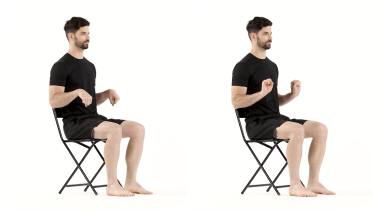 Wrist flexion and extension
Stop signs and precautions for the wrist flexion and extension
Before you start
- After a broken wrist, hand or forearm, or surgery on any of them such as a tendon repair, start only when your doctor, surgeon, physio or hand therapist says the bone or repair is ready for this, and follow their plan for how much to do.
When to stop and get help
- Sharp or catching pain in the wrist.
- Numbness or tingling in the hand or fingers that builds as you go. If one side of your face or body suddenly goes numb or weak, or your speech becomes slurred or muddled, call emergency services, even if it goes away.
- The wrist is more swollen, hot or stiff after the session.
- Since the fracture or cast, the hand is getting more painful rather than less, the skin becomes very sensitive to light touch, or the hand changes color, temperature, swelling or sweating compared with the other one, or looks shiny. See your doctor or physio as soon as you can, within a few days at most, as this can be complex regional pain syndrome (CRPS) and early treatment may help.
 Wrist radial and ulnar deviation
Stop signs and precautions for the wrist radial and ulnar deviation
Before you start
- After a broken wrist, hand or forearm, or surgery on any of them such as a tendon repair, start only when your doctor, surgeon, physio or hand therapist says the bone or repair is ready for this, and follow their plan for how much to do.
When to stop and get help
- Sharp pain on the thumb side or the little finger side of the wrist.
- Painful clicking or clunking in the wrist.
- Pins and needles or numbness in your hand or fingers. If one side of your face or body suddenly goes numb or weak, or your speech becomes slurred or muddled, call emergency services, even if it goes away.
- Since the fracture or cast, the hand is getting more painful rather than less, the skin becomes very sensitive to light touch, or the hand changes color, temperature, swelling or sweating compared with the other one, or looks shiny. See your doctor or physio as soon as you can, within a few days at most, as this can be complex regional pain syndrome (CRPS) and early treatment may help.
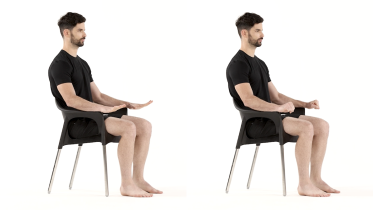 Open and close the hands
Stop signs and precautions for the open and close the hands
Before you start
- After a broken hand or finger, a tendon repair or other hand surgery, how far you may move the fingers and thumb is often limited for several weeks, so do only the movements your surgeon or hand therapist has shown you.
- After a wrist fracture, keep moving your fingers and thumb as far as the cast or splint allows, unless your fracture clinic has told you otherwise.
When to stop and get help
- Sharp pain in a finger joint, the palm or the wrist.
- Tingling or numbness in the fingers that comes on as you work. If one side of your face or body suddenly goes numb or weak, or your speech becomes slurred or muddled, call emergency services, even if it goes away.
- Your fingers puff up or feel stiffer once you have finished.
- Emergency: while you are in a cast or splint, your fingers turn blue, white or pale, or feel cold. Do not wait to see if raising your hand helps. Go to an emergency department straight away, and do not drive yourself. The cast or splint may be cutting off the blood supply, or pressure may be building up inside the forearm (compartment syndrome), and both need checking quickly.
- In a cast or splint, the pain gets worse, your fingers feel numb or tingle or look more swollen, or the cast feels too tight. Stop, rest your hand at about the level of your heart, keep moving your fingers and contact your fracture clinic or get medical advice straight away. Do not lift the hand higher than your heart and do not put ice on it, because if pressure is building up inside the forearm both of those cut down the blood reaching it. If you cannot move your fingers, the pain is severe even after painkillers, or the numbness, tingling or swelling has not settled within 30 minutes, go to your fracture clinic or an emergency department straight away, and do not drive yourself.
- Since the fracture or cast, the hand is getting more painful rather than less, the skin becomes very sensitive to light touch, or the hand changes color, temperature, swelling or sweating compared with the other one, or looks shiny. See your doctor or physio as soon as you can, within a few days at most, as this can be complex regional pain syndrome (CRPS) and early treatment may help.
Stage 2: Light holds and grip
Move on when the stage 1 movements feel easy and the wrist settles well afterward. After an operation or a needle procedure, that is not enough on its own. These holds push against resistance, so they need a second go-ahead and not the one that let you start stage 1: the wound or the needle mark should be closed and dry with nothing leaking from it, and your surgeon or hand therapist should have said you can start working against resistance. If a dressing is still covering it and you were told to leave that dressing alone, do not peel it back for a look: ask the team who put it on instead. The two holds work the forearm muscles with the wrist staying still, which is usually comfortable well before lifting a weight is. Start each hold with a light press and build the effort over the following days rather than within one session. A soft ball is enough for grip at this point, and if a scar or the lump itself is tender, use a softer ball or leave the squeeze out until it is not. Squeezing a ball is grip work, not a way of flattening a cyst, so do not move to a firmer ball in the hope that it will.
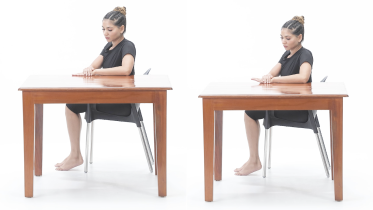 Isometric wrist extension
Stop signs and precautions for the isometric wrist extension
Before you start
- After a broken wrist, hand or forearm, or surgery on any of them such as a tendon repair, start only when your doctor, surgeon, physio or hand therapist says the bone or repair is ready for this, and follow their plan for how much to do.
- If you have high blood pressure, breathe steadily through every hold and never hold your breath.
When to stop and get help
- Sharp pain in the wrist or at the outer elbow while you push.
- Your fingers go numb or start to tingle. If one side of your face or body suddenly goes numb or weak, or your speech becomes slurred or muddled, call emergency services, even if it goes away.
- The wrist aches more, or looks more swollen, by that evening or the next morning.
- Since the fracture or cast, the hand is getting more painful rather than less, the skin becomes very sensitive to light touch, or the hand changes color, temperature, swelling or sweating compared with the other one, or looks shiny. See your doctor or physio as soon as you can, within a few days at most, as this can be complex regional pain syndrome (CRPS) and early treatment may help.
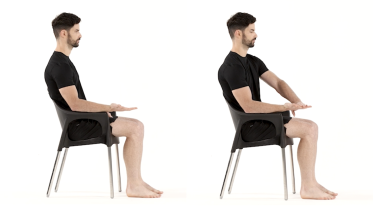 Isometric wrist flexion
Stop signs and precautions for the isometric wrist flexion
Before you start
- After a broken or dislocated elbow, or elbow surgery such as a tendon repair, follow your surgeon's or physio's plan, and start this exercise only when they have cleared you. If you have just hurt your arm and have severe pain or cannot move the elbow, do not exercise it. Go to an urgent care center or emergency department the same day. If you heard a snap or a crack at the moment of the injury, the arm looks a different shape or sits at an odd angle, a bone is showing, or your arm or hand tingles, feels numb or turns cold, pale or blue, go to an emergency department straight away or call emergency services, and do not drive yourself.
- After a broken wrist, hand or forearm, or surgery on any of them such as a tendon repair, start only when your doctor, surgeon, physio or hand therapist says the bone or repair is ready for this, and follow their plan for how much to do.
- If you have high blood pressure, breathe out through each hold rather than straining.
When to stop and get help
- Sharp pain at the inner elbow or in the wrist while you press.
- Pins and needles or numbness in your hand. If one side of your face or body suddenly goes numb or weak, or your speech becomes slurred or muddled, call emergency services, even if it goes away.
- Elbow or wrist pain that is clearly worse later that day or the next morning.
- Since the fracture or cast, the hand is getting more painful rather than less, the skin becomes very sensitive to light touch, or the hand changes color, temperature, swelling or sweating compared with the other one, or looks shiny. See your doctor or physio as soon as you can, within a few days at most, as this can be complex regional pain syndrome (CRPS) and early treatment may help.
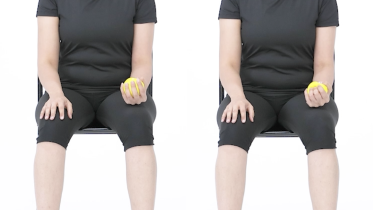 Hand grip squeeze
Stop signs and precautions for the hand grip squeeze
Before you start
- After a broken wrist, hand or forearm, or surgery on any of them such as a tendon repair, start only when your doctor, surgeon, physio or hand therapist says the bone or repair is ready for this, and follow their plan for how much to do.
- Keep breathing through each hold, because holding your breath while you strain can push your blood pressure up.
When to stop and get help
- Sharp pain in the wrist, a finger joint or at the base of the thumb.
- Your hand or fingers go numb or start to tingle. If one side of your face or body suddenly goes numb or weak, or your speech becomes slurred or muddled, call emergency services, even if it goes away.
- Hand joints that are more swollen, hot or stiff afterward.
- Since the fracture or cast, the hand is getting more painful rather than less, the skin becomes very sensitive to light touch, or the hand changes color, temperature, swelling or sweating compared with the other one, or looks shiny. See your doctor or physio as soon as you can, within a few days at most, as this can be complex regional pain syndrome (CRPS) and early treatment may help.
Stage 3: Load the wrist and rebuild grip
This stage comes when the holds feel easy and the wrist is no worse the next morning. After an operation it waits for more than that: the wound should be fully healed and the stitches out, and your surgeon or hand therapist should have cleared you to lift, before you pick up a weight at all. A light dumbbell then takes the wrist through its range under load, up and then down, and the spring gripper picks up where the ball squeeze left off. Go up in small steps rather than jumping a level. If you have rheumatoid arthritis or another inflammatory arthritis in the wrist, ask your physio before you add any weight. If your cyst was taken out from the palm side of the wrist, the scar there lies close to the artery and to a small nerve in the skin, so build the weight slowly and stop short of the very end of the range while the scar is still tight or tender. If it was taken out from the back of the wrist, the two positions that pull hardest on that scar and on the piece of capsule the surgeon took are bending the wrist fully while holding a weight and pressing down through the heel of the hand, so leave both until last and add them only once the scar has settled and your team has cleared loaded work. No study we could find puts a week number on how long that settling takes after this operation, so this page does not invent one and sets no limit in degrees either. Ask your surgeon or hand therapist when the wrist is ready for a full load, and go by their answer rather than by the calendar. Mild muscle tiredness is expected. Wrist pain that is clearly worse the next day means the step was too big, so drop back to the last amount that settled.
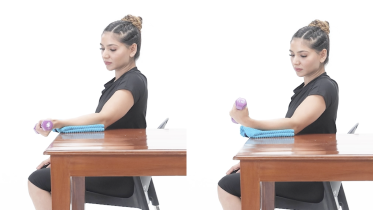 Wrist curl
Stop signs and precautions for the wrist curl
Before you start
- After a broken or dislocated elbow, or elbow surgery such as a tendon repair, follow your surgeon's or physio's plan, and start this exercise only when they have cleared you. If you have just hurt your arm and have severe pain or cannot move the elbow, do not exercise it. Go to an urgent care center or emergency department the same day. If you heard a snap or a crack at the moment of the injury, the arm looks a different shape or sits at an odd angle, a bone is showing, or your arm or hand tingles, feels numb or turns cold, pale or blue, go to an emergency department straight away or call emergency services, and do not drive yourself.
- After a broken wrist, hand or forearm, or surgery on any of them such as a tendon repair, start only when your doctor, surgeon, physio or hand therapist says the bone or repair is ready for this, and follow their plan for how much to do. If you have rheumatoid or another inflammatory arthritis in the wrist, ask your physio before adding weight.
When to stop and get help
- A sharp pain in the wrist or at the inner elbow as you lift or lower.
- Tingling or numbness in your hand or fingers. If one side of your face or body suddenly goes numb or weak, or your speech becomes slurred or muddled, call emergency services, even if it goes away.
- Inner elbow or wrist pain that is clearly worse when you wake the next day.
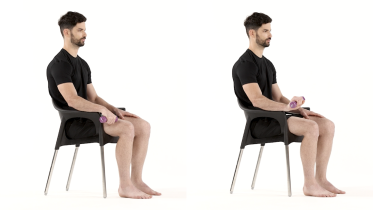 Wrist extension with weight
Stop signs and precautions for the wrist extension with weight
Before you start
- After a broken or dislocated elbow, or elbow surgery such as a tendon repair, follow your surgeon's or physio's plan, and start this exercise only when they have cleared you. If you have just hurt your arm and have severe pain or cannot move the elbow, do not exercise it. Go to an urgent care center or emergency department the same day. If you heard a snap or a crack at the moment of the injury, the arm looks a different shape or sits at an odd angle, a bone is showing, or your arm or hand tingles, feels numb or turns cold, pale or blue, go to an emergency department straight away or call emergency services, and do not drive yourself.
- After a broken wrist, hand or forearm, or surgery on any of them such as a tendon repair, start only when your doctor, surgeon, physio or hand therapist says the bone or repair is ready for this, and follow their plan for how much to do.
When to stop and get help
- Sharp pain at the outer elbow or in the wrist during a repetition.
- Numbness or tingling in the hand or fingers. If one side of your face or body suddenly goes numb or weak, or your speech becomes slurred or muddled, call emergency services, even if it goes away.
- Elbow or wrist pain that is clearly worse the next morning.
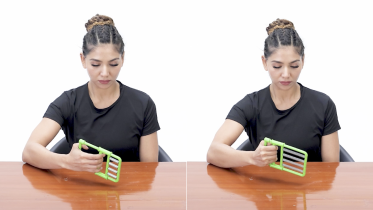 Hand gripper exercise
Stop signs and precautions for the hand gripper exercise
Before you start
- After a broken wrist, hand or forearm, or surgery on any of them such as a tendon repair, start only when your doctor, surgeon, physio or hand therapist says the bone or repair is ready for this, and follow their plan for how much to do.
When to stop and get help
- Sharp pain at the base of the thumb, in a finger joint or in the wrist.
- Your fingers start to tingle or go numb. If one side of your face or body suddenly goes numb or weak, or your speech becomes slurred or muddled, call emergency services, even if it goes away.
- A finger that catches, clicks painfully or locks as you open your hand.
What to change while the lump is there
Most people need to change very little. A cyst on the back of the wrist is usually most noticeable in positions that bend the wrist far back, so pushing up from the floor, leaning on the heel of the hand and some yoga positions can be uncomfortable. Going onto a fist or onto the forearm instead takes the wrist out of that position and is usually enough. If gripping a handle presses straight onto the lump, padding the handle or changing your grip often solves it.
Keeping the hand still for weeks is the change that costs you the most, and it is the commonest one people make on their own. A wrist that is not moved gets stiff, and a stiff wrist is harder to treat than the cyst was. Carry on with what the wrist tolerates, including wrist flexion and extension and opening and closing the hands if it has already gone stiff.
When to see a physio or doctor
See a doctor about any new lump on your hand or wrist, so it can be examined and other causes ruled out (healthdirect). Go sooner, within a few days, if it is getting bigger or feels hard and does not move, and the same day if it is very painful, hot or red (NHS). A physical therapist (physiotherapist) or hand therapist can check what is causing your wrist pain, set up a program, and guide the recovery after an aspiration or an operation.
It is also worth a visit if the lump itself is not the problem. Pain at the base of the thumb, catching in a finger, a palm that is thickening or tingling in the fingers all point elsewhere, and hand osteoarthritis, trigger finger, Dupuytren's contracture and carpal tunnel syndrome each have their own page here. Act on any of the warning signs below as well.
For physiotherapists
The patient text treats the dorsal and volar wrist ganglion as benign and self-limiting in most cases, and says outright that no exercise modifies the cyst. Dias and colleagues (2007) followed 236 of 283 patients at a mean of 70 months, with similar symptom resolution across excision, aspiration and no treatment, recurrence of 58% after aspiration and 39% after excision, and higher satisfaction after excision despite recurrence.
One caution for anyone quoting their natural history figure: the published abstract reports 23 of 55 untreated ganglia resolving spontaneously and labels that 58%, and those two numbers do not agree with each other, so this page cites the fraction and avoids the percentage. 23 of 55 is 41.8%, about 4 in 10, and 58% is the aspiration recurrence rate reported two sentences later in the same abstract (45 of 78), which makes a transcription error the likeliest reading. The difference matters in one direction: the fraction for untreated dorsal ganglia at a mean of 70 months sits below OrthoInfo's "more than half", so the patient text gives both, each attributed, rather than the more optimistic one alone, along with the NHS timeframe of several months up to a year. Neither number is presented as a figure of ours, and the fraction is quoted without the abstract's percentage.
Head and colleagues (2015) is the quantitative source for treatment choice: 35 studies and 2,239 ganglia, with mean recurrence of 59% after aspiration (12 studies, 489 ganglia), 21% after open excision (14 studies, 809 ganglia) and 6% after arthroscopic excision (11 studies, 512 ganglia), and mean complication rates of 3%, 14% and 4% respectively. Open excision had significantly lower recurrence than aspiration in the randomized trials, graded moderate quality, while aspiration was not significantly better than reassurance in the cohort data, graded very low. BSSH's figures by site, around 10% recurrence dorsally and around 30% volarly, are the ones to use when a patient asks about their own cyst.
Post-operative management is surgeon led and this page does not set it, and there is no evidence base for a protection period or a range limit after dorsal excision. Wong and colleagues (2023) reviewed the published protocols and surveyed Canadian hand surgeons: 11 studies immobilized the wrist rigidly, 10 used the dressing to limit motion partly, 2 arthroscopic studies did not restrict it at all, and the duration where it was used ran from 48 hours to 2 weeks after open excision and 5 days to 3 weeks after arthroscopic excision. Their surveyed surgeons split between full, partial and no immobilization, most of those who immobilized used 1 to 2 weeks, and the authors found no compelling data that one strategy is superior. Read their three survey proportions with care: as printed in the abstract they are 41%, 14% and 55%, which total more than 100.
The reason none of this needs a protection period is anatomical. The capsular cuff goes, the scapholunate interosseous ligament does not, and excising the ligament is what would produce scapholunate dissociation (Elahi and colleagues, 2023); Hwang and colleagues (1999) found a preoperative painful scaphoid shift became negative in 17 of 19 wrists after excision and 2 weeks of immobilization, so excision is not a destabilizing procedure. That is why the patient text sets no week number and no degree limit. Stage 3 gates on a healed wound, sutures out and the surgeon's or hand therapist's clearance to load, with loaded end-range flexion and axial loading through the heel of the hand named as the last additions; stage 2 isometrics carry their own clearance for resisted work, separate from the stage 1 motion clearance, and wait for a closed dry wound.
Screen for the volar complications specifically: digital and radial perfusion, palmar cutaneous branch sensation, flexor function, scar adherence and loss of extension. Aydin and colleagues (2003), a single-center series of 40 volar ganglia, found the cyst adherent to the radial artery in 26 and the artery incorporated in 2, with recurrence in 9, palmar cutaneous nerve injury in 4, radial artery injury in 2 and wrist stiffness in 5; it is small, old and in Turkish with an English abstract, so treat it as a description of the hazard rather than a risk estimate.
Early active finger and wrist motion within the surgeon's limits, edema management and graded grip loading cover most of the hand therapy need. Refer back for an unexplained lump that is enlarging, fixed or hard; NICE NG12 (1.11.4) advises considering an urgent direct access ultrasound for an unexplained lump that is increasing in size. Remember too that a painless lump is not a reason to operate, and that BSSH records that many surgeons advise against operating on palmar cysts at all.
Warning signs
Get emergency help now
- Emergency: any sign of a stroke, even if it goes away. That means a face that droops on one side, an arm you cannot lift or keep up, slurred or muddled speech, weakness or numbness on one side of your body or face, sudden blurred vision, double vision or loss of sight, trouble swallowing, sudden dizziness with unsteadiness or falling over, a sudden severe headache, or a sudden fall where your legs give way but you do not black out (a drop attack). Call emergency services straight away. With neck pain, these can rarely come from a tear in an artery in the neck.
- Emergency: since having the cyst drained with a needle (an aspiration), a steroid injection or an operation on your hand or wrist, a finger turns white, pale or blue, or feels cold compared with the others. Go to an emergency department straight away, and do not drive yourself. The blood supply to the finger may have been damaged. The one exception is a hand still numb from the anesthetic that your team told you would look pale until the numbness wore off. Once the numbness has gone, or if you are not sure what you were told, go anyway.
- A finger that becomes swollen along its length, red, hot and tender, and hurts a lot when you try to straighten it, so you keep it slightly bent, or a palm that becomes red, hot and swollen, especially after a cut, splinter, bite, injection or operation on the hand. Go to an emergency department straight away, and do not wait to see if it settles. An infection in the sheath around the tendon can spread quickly and often needs antibiotics through a drip and an operation. If you have a very high or very low temperature, shivering you cannot control, you are breathing very fast or finding it hard to breathe, you are confused or your speech is slurred, your skin, lips or tongue look blue, gray, pale or blotchy (on brown or black skin this can be easier to see on the palms of the hands or soles of the feet), or you have a rash that does not fade when you press it, call emergency services, as this can be sepsis.
- Emergency: numbness, tingling or pins and needles in the hand after a fall or injury to the wrist, or a wrist that has changed color, changed shape or sits at an odd angle. The same applies to a bone showing through the skin or a cut that is bleeding heavily. Go to an emergency department or call emergency services straight away, and do not drive yourself. The wrist may be broken.
- Emergency: while you are wearing a wrist support or a compression wrap that you put on yourself, your fingers turn white, pale or blue, or feel cold. Take it off at once, and if the color and the feeling do not come straight back, go to an emergency department straight away, and do not drive yourself. Do not wait to see whether raising your hand helps, because a hand held higher than your heart gets less blood rather than more. A support or wrap that is too tight can press on the blood supply to the hand.
- Emergency: while you are in a dressing, splint or cast on your hand or wrist, your fingers turn blue, white or pale, or feel cold. Do not wait to see if raising your hand helps. Go to an emergency department straight away, and do not drive yourself. The dressing, splint or cast may be cutting off the blood supply, or pressure may be building up inside the forearm (compartment syndrome), and both need checking quickly.
- Emergency: new problems walking, for example your legs feel stiff, heavy or weak or you have become unsteady on your feet, new trouble controlling your bladder or bowels, or hands that suddenly become clumsy, for example you can no longer do up buttons. Call emergency services straight away. These can be signs of pressure on the spinal cord in the neck.
Get help now, day or night
- In a dressing, splint or cast on your hand or wrist, or in a wrist support or compression wrap you put on yourself, the pain gets worse, your fingers feel numb or tingle or look more swollen, or it feels too tight. Take off anything you put on yourself. Leave a dressing, splint or cast your team fitted on, and do not cut it or unwrap it. Stop, rest your hand at about the level of your heart, keep moving your fingers and contact your surgical team or get medical advice straight away. Do not lift the hand higher than your heart and do not put ice on it, because if pressure is building up inside the forearm both of those cut down the blood reaching it. If you cannot move your fingers, the pain is severe even after painkillers, or the numbness, tingling or swelling has not settled within 30 minutes, go to an emergency department straight away, and do not drive yourself.
- Since having the cyst drained with a needle (an aspiration), a steroid injection or an operation on your hand or wrist, you suddenly cannot bend or straighten a finger or your thumb, or a numb patch in the hand is still there once any numbing injection has worn off. Contact the team that treated your hand straight away, day or night, or get urgent medical advice straight away if you cannot reach them. A tendon or a small nerve can rarely be injured during the procedure itself, a tendon can also give way weeks afterward, and swelling or pressure under the dressing can press on a nerve, so this is not something to wait out or to grade for yourself.
Get help today
- Since a needle procedure, injection or operation on your hand or wrist, the skin or wound where it was done becomes more red, hot, swollen or painful, starts to leak fluid or pus, smells unusual, or its edges come apart, or the pain in that area is new or getting worse quickly. Contact your medical team the same day. Redness can be harder to see on brown or black skin. An aspiration leaves a needle mark rather than a cut, and the same signs at a needle mark count the same way, because the needle has been next to a joint. If redness is spreading up your wrist or arm, go to an emergency department the same day. If you also have a high temperature, feel hot and shivery or feel unwell, use the infection and sepsis line on this page.
- The wrist is hot, red and swollen, or you have wrist pain with a high temperature or feel hot, cold or shivery. Get medical advice the same day, and go to an emergency department if you feel very unwell. Redness can be harder to see on brown or black skin. This can be a sign of infection in the joint or tendon, which needs treatment quickly. If you feel hot and shivery or unwell with it, use the infection and sepsis line on this page.
- A lump on your wrist or hand that is very painful, hot or red. Get medical advice the same day, which is what the NHS advises for a ganglion that becomes painful, hot or red, because an infection and other causes of a lump have to be ruled out. Redness can be harder to see on brown or black skin.
- Wrist pain that started with a fall onto your hand or another injury, rather than with a lump that grew slowly. Get medical advice the same day, and have it checked before you start these exercises.
- Numbness or tingling in both hands together with hands that have slowly become clumsy, for example trouble doing up buttons or dropping things. Get medical advice the same day. These can be signs of pressure on the spinal cord in the neck (cervical myelopathy) rather than a problem at the wrist. If the clumsiness or numbness gets worse quickly, call emergency services straight away.
- The pain is there at night or at rest and keeps getting worse. If you are being treated for cancer now, contact your cancer team the same day.
Book an appointment
- Since a needle procedure, injection or operation on your hand or wrist, the hand is getting more painful rather than less, the skin becomes very sensitive to light touch, or the hand changes color, temperature, swelling or sweating compared with the other one, or looks shiny. See your doctor or physio as soon as you can, within a few days at most, as this can be complex regional pain syndrome (CRPS) and early treatment may help.
- A lump on your wrist or hand that is getting bigger, or that feels hard and does not move. See your doctor within a few days to have it examined. This is the NHS advice for a lump you are worried about, and it matters here because not every lump in this area is a ganglion. NICE advises doctors to consider an urgent ultrasound scan for an unexplained lump that is getting bigger, so a scan is often the next step rather than a wait.
- Numbness, tingling or pins and needles in your hand, or a hand that is getting weaker, that did not start after a procedure. A ganglion can press on a nerve, and a trapped nerve at the wrist (carpal tunnel syndrome) or a problem in the neck can look much the same, so see a doctor or physio within a week or two to find the cause. If the numbness is there all the time, your hand or thumb is getting weaker, you keep dropping things, or the fleshy muscle at the base of your thumb looks flatter or thinner than on the other hand, see a doctor within a few days. If the weakness is getting worse from day to day, get medical advice the same day.
- The pain is there at night or at rest and keeps getting worse. If you have had cancer, now or in the past, or are losing weight without trying, see your doctor sooner, within a day or two, and mention it. This applies even if the pain is not getting worse.
- The pain is there at night or at rest and keeps getting worse. See your doctor within a few days.
Common questions
How do you get rid of a ganglion cyst naturally?
By waiting, most of the time. The NHS says ganglion cysts usually get better without treatment and that this can take from several months up to a year, and OrthoInfo says more than half go away on their own. The longest follow-up on this page is less optimistic: Dias and colleagues found 23 of 55 untreated cysts had resolved at a mean of nearly six years, which is about 4 in 10. No cream, supplement, exercise or massage has evidence behind it for shrinking one. What you should not do is burst, squeeze or hit the lump: the NHS says not to try to burst or pop a ganglion, because it could cause an infection or damage the skin.
Can I drain a ganglion cyst at home?
No. Draining one (aspiration) is a needle procedure done in a clinic with sterile equipment, and even then healthdirect says around 1 in 2 come back. Doing it yourself risks pushing bacteria into a sac that sits right beside a joint, and a cyst on the palm side of the wrist lies close to the artery where you feel your pulse (BSSH). The old treatment of hitting the cyst with a heavy book is not recommended either: healthdirect says that while it might burst the cyst, it can injure other structures and is very painful, and OrthoInfo says a blow like that is unlikely to get rid of the cyst anyway.
What causes a ganglion cyst on the wrist?
Nobody knows. healthdirect says the cause is unknown, describes it as benign, and says it is more common in women and usually affects young and middle-aged adults. The sac holds the same thick, slippery fluid that lubricates a joint, and it stays joined to the joint or tendon sheath by a stalk (OrthoInfo). BSSH says most appear for no reason at all, though occasionally there has been an injury or the joint is starting to develop arthritis, and the NHS says they sometimes follow an injury that lets fluid leak out of a joint. OrthoInfo also sees them often in gymnasts, who load the wrist hard and repeatedly. For most people, though, it is not something they did to themselves.
Does a ganglion cyst come back after surgery?
Sometimes. BSSH puts the risk of it returning after surgery at around 10% for a cyst on the back of the wrist and around 30% for one on the palm side, and those are the figures to go by for your own cyst, because they are the only ones that separate the two sites. Across the studies Head and colleagues reviewed, the mean recurrence rate was 21% after open excision and 6% after arthroscopic excision, against 59% after aspiration, although the same review says the keyhole figure rests on few comparative trials and has not been shown to beat open surgery. Dias and colleagues, who followed people for a mean of nearly six years, found 39% after excision. The numbers differ because the studies followed people for different lengths of time and counted a recurrence in different ways, so read them as a range rather than one answer.
How long is the recovery after ganglion cyst removal?
OrthoInfo says most people return to normal activities 2 to 6 weeks after the operation, which is usually done as a day case. The timings inside those weeks, how long a dressing stays on, any splint, when stitches come out, driving and work, come from your surgical team, and they vary between surgeons and between a cyst on the back of the wrist and one on the palm side. Whether the wrist is splinted at all is one of those differences: Wong and colleagues found surgeons divided on it, with no evidence that one way works better, and a short spell of 1 to 2 weeks where it was done. Expect swelling and stiffness more than pain, and expect grip to be the last thing back.
Does a wrist brace help a ganglion cyst?
It can help the symptoms. OrthoInfo says a wrist brace or splint may help symptoms, and that sometimes the cyst shrinks with it. The NHS suggests the same sort of thing for a cyst that hurts when you use your hand: a wrist support or a compression wrap, and anti-inflammatory painkillers such as ibuprofen if they suit you. If you are pregnant, the NHS advises avoiding ibuprofen unless a doctor or pharmacist tells you to take it. Ask a pharmacist if you are not sure a medicine is safe for you. The NHS says a pharmacist can also advise you on how to use a wrist support or a compression wrap, which is worth asking for, because a wrap put on too tight is the one way this backfires: if your fingers go numb, tingle, swell or change color, take it off. None of that is a cure, and there is no reason to live in a splint. If you are given a splint after an operation, wear it the way your team tells you and no longer, because a wrist held still for weeks gets stiff, and stiffness is what hand therapists spend most of their time undoing.
Is a ganglion cyst on the wrist dangerous?
Usually not. OrthoInfo states that ganglions are not cancerous, and BSSH says they are harmless and can be left alone. The warning signs on this page are long for two other reasons: not every lump on a wrist is a ganglion, and the procedures used to treat one carry their own small risks. A lump that is getting bigger, is hard and does not move, or is very painful, hot or red needs a doctor rather than a wait (NHS).
Can a ganglion cyst press on a nerve?
It can. OrthoInfo says a cyst pressing on nearby nerves can cause pain, tingling and muscle weakness, and that is one reason a cyst that would otherwise be left alone gets treated. Numbness and tingling in the hand have other common causes, including carpal tunnel syndrome and a trapped nerve in the neck, so the symptom is worth working out properly rather than pinning on the lump you can see.
References
- NHS. Ganglion. Page last reviewed 16 July 2025. https://www.nhs.uk/conditions/ganglion/
- American Academy of Orthopaedic Surgeons. Ganglion cyst of the wrist and hand. OrthoInfo. https://www.orthoinfo.org/en/diseases--conditions/ganglion-cyst-of-the-wrist-and-hand/
- British Society for Surgery of the Hand. Ganglion cysts. Patient information. https://www.bssh.ac.uk/patients/conditions/20/ganglion_cysts
- healthdirect Australia. Ganglion cyst. https://www.healthdirect.gov.au/ganglion-cyst
- Head L, Gencarelli JR, Allen M, Boyd KU. Wrist ganglion treatment: systematic review and meta-analysis. The Journal of Hand Surgery. 2015;40(3):546-553.e8. https://doi.org/10.1016/j.jhsa.2014.12.014
- Dias JJ, Dhukaram V, Kumar P. The natural history of untreated dorsal wrist ganglia and patient reported outcome 6 years after intervention. Journal of Hand Surgery (European Volume). 2007;32(5):502-508. https://doi.org/10.1016/j.jhse.2007.05.007
- Aydin A, Kabakas F, Erer M, Ozkan T, Tuncer S. Surgical treatment of volar wrist ganglia. Acta Orthopaedica et Traumatologica Turcica. 2003;37(4):309-312. Article in Turkish, English abstract. https://pubmed.ncbi.nlm.nih.gov/14578652/
- Wong CR, Karpinski M, Hatchell AC, McRae MH, Murphy J, McRae MC. Immobilization of the Wrist After Dorsal Wrist Ganglion Excision: A Systematic Review and Survey of Current Practice. Hand (New York, N.Y.). 2023;18(2):254-263. https://doi.org/10.1177/15589447211014631
- Elahi MA, Moore ML, Pollock JR, Haglin JM, Lai C, Hinckley NB, Renfree K. Open Excision of Dorsal Wrist Ganglion. JBJS Essential Surgical Techniques. 2023;13(2):e21.00043. https://doi.org/10.2106/JBJS.ST.21.00043
- Hwang JJ, Goldfarb CA, Gelberman RH, Boyer MI. The effect of dorsal carpal ganglion excision on the scaphoid shift test. Journal of Hand Surgery (British Volume). 1999;24(1):106-108. https://doi.org/10.1016/s0266-7681(99)90053-0
- National Institute for Health and Care Excellence. Suspected cancer: recognition and referral (NG12). Last updated 15 April 2026. https://www.nice.org.uk/guidance/ng12
- NHS. Ibuprofen for adults. Page last reviewed 27 August 2025. https://www.nhs.uk/medicines/ibuprofen-for-adults/
- NHS. Septic arthritis. Page last reviewed 3 September 2026. https://www.nhs.uk/conditions/septic-arthritis/
- NHS. Sepsis. Page last reviewed 14 May 2026. https://www.nhs.uk/conditions/sepsis/
- NHS. Causes: Complex regional pain syndrome. Page last reviewed 27 October 2022. https://www.nhs.uk/conditions/complex-regional-pain-syndrome/causes/
- NHS. Symptoms of a stroke. Page last reviewed 12 September 2024. https://www.nhs.uk/conditions/stroke/symptoms/
- NHS. Broken arm or wrist. Page last reviewed 2 October 2026. https://www.nhs.uk/conditions/broken-arm-or-wrist/
Written and checked by the PocketPhysio editorial team. Last updated 2026-10-29.
This page is general education, not a diagnosis or a personal treatment plan. See a physiotherapist or doctor for advice about your own situation.