
Trigger finger exercises and physiotherapy
What is trigger finger?
The tendons that bend your fingers and thumb run along the palm side of the hand. Near the base of each finger they pass through a tight band that holds them close to the bone (the A1 pulley). With trigger finger the tendon and this band no longer fit well together, so the tendon catches at the mouth of the tunnel. When it finally slips through, the finger clicks or snaps straight, like a trigger being released. Its medical name is stenosing tenosynovitis, and the same thing in the thumb is called trigger thumb (OrthoInfo).
The typical picture is a finger or thumb that clicks, catches or gets stuck bent, often with pain at its base. The NHS also lists stiffness and needing to press on the finger to straighten it, and says symptoms can be worse in the morning. OrthoInfo describes a tender lump at the base of the finger or thumb on the palm side. It also says stiffness and locking tend to be worse after rest, such as when you wake up.
The NHS says you are more likely to get it if you are over 40 or have diabetes or rheumatoid arthritis, and that the cause is not always known. OrthoInfo adds that it is most common in women between 40 and 60 and in people whose work or hobbies involve repeated gripping or pinching. The British Society for Surgery of the Hand (BSSH) says there is little evidence that work causes trigger finger, although using the hand at work, at home or in the garden can make the pain worse.
Trigger finger or something else?
Two other hand problems are easy to mix up with it. De Quervain's tenosynovitis is also a problem of tendons in a tight tunnel, but it sits on the thumb side of the wrist, and it hurts when you grip or lift the thumb rather than catching at the base of a finger. It has its own De Quervain's program.
Dupuytren's contracture starts with lumps, dimples or ridges in the palm and slowly pulls one or more fingers into a bent position over months or years. The NHS says it is not usually painful, and the finger does not click free the way a trigger finger does. Numbness or tingling in the thumb, index and middle fingers points to a nerve rather than a tendon: see the carpal tunnel syndrome program.
Do exercises help trigger finger?
Not as well as other treatments, going by the few trials that have tested exercise. In a trial of 74 people with mild trigger finger, 97.4% of those given a steroid injection were free of pain and triggering at 3 months, against 68.6% of those given a physiotherapy program (Salim 2012). Among the people whose finger settled, the physiotherapy group had no return of symptoms at 6 months, and the authors suggested physiotherapy may help stop it coming back.
Two newer trials point the same way. A splint worn day and night for 6 weeks, holding the middle joint of the finger straight, cleared the symptoms in just over half of the people who wore it, while hand therapy without a splint cleared them in none (Nadar 2024). In another trial, doing tendon glides at home after a steroid injection made no difference at 24 weeks compared with the injection alone (Choi 2025).
So the exercises on this page are not the treatment. They keep the finger and thumb moving while the splint, the injection or time does the work, and they rebuild grip once the catching has settled. OrthoInfo says gentle stretching exercises can help decrease stiffness and improve range of motion. An NHS hand therapy leaflet gives tendon glide positions alongside a night splint (North Tees and Hartlepool), and moving the fingers early is part of the usual advice after a release operation.
Splints, injections and other first steps
Start by easing off what sets it off. The NHS advises avoiding or reducing the activities that make your symptoms worse until they improve, and OrthoInfo names repetitive gripping and pinching. Painkillers such as ibuprofen can help with the pain. Ask a pharmacist if you are not sure a medicine is safe for you, including if you are pregnant.
A splint is the other common first step. It holds the finger straight, or holds one of its joints still, and BSSH says keeping the finger straight at night keeps the roughened part of the tendon in the tunnel and makes it smoother. OrthoInfo suggests wearing one at night. A review of splinting studies found moderate to large reductions in pain and recommended holding a single joint still for 6 to 10 weeks (Lunsford 2019).
A 2026 review of 13 studies found splints worked best when worn 24 hours a day, and it recommended wearing one for at least 6 weeks. In that review, a splint holding the middle joint of the finger did better than one holding the big knuckle (McKenna 2026). Your physio or hand therapist can advise which kind suits your finger and how long to wear it.
If that is not enough, or the finger locks often, a steroid injection at the base of the finger is the usual next step. BSSH says it relieves the pain and triggering in about 70% of cases, though less often in people with diabetes. A Cochrane review found only two small trials, but in both an injection with local anesthetic worked better than local anesthetic alone at 4 weeks (Peters-Veluthamaningal 2009). OrthoInfo says up to three injections may be given if the first does not work or the symptoms come back.
If you have diabetes and take insulin, OrthoInfo notes that the steroid typically raises blood sugar for about 10 to 14 days. Check your levels more closely in that time, and ask your diabetes team or doctor if you are unsure what to do.
How to use this program
Pick the stage that matches your hand today. If you are not sure, start at stage 1. Move on when the current stage feels easy and the finger catches no more over the next day or two. This program is for trigger finger managed without surgery, alongside the splint, injection or other advice your doctor or physio has given you.
After a release operation, follow the plan your surgeon or hand therapist gives you. OrthoInfo says most people are told to start moving their fingers straight after surgery, and BSSH says light use of the hand is possible from the day of the operation. The stage 1 movements are often part of that, but use them only once your surgeon or hand therapist has said so. OrthoInfo adds that the cut usually heals within a few weeks. Swelling and stiffness can take 4 to 6 months to go completely.
The program is written for adults. A child with a thumb or finger that stays bent or clicks should see a doctor first. If you are pregnant, check with your midwife or doctor before starting.
As a rough guide, many programs go through the tendon glide sequence 5 to 10 times, holding each position for about 3 to 5 seconds, 2 to 4 times a day. Opening and closing the hand is often 5 to 10 slow repetitions, 3 to 4 times a day. Thumb bending is often 2 to 3 sets of 10 slow bends, 2 to 3 times a day, and thumb opposition 5 to 10 rounds through all four fingers, 2 to 3 times a day. In stage 2, the rubber band and putty exercises often start at 2 to 3 sets of 10 to 15, once or twice a day, and the ball squeeze at 10 to 15 squeezes held for about 3 to 5 seconds, 1 to 3 times a day. Each exercise page gives its own starting range, and your physio will adjust this to your hand and what you need it for.
In stage 1, every movement should be pain free. From stage 2 on, mild discomfort is fine if it settles soon after you stop and the hand is no worse the next morning. Stop each movement just short of the point where the finger catches, and do not push it through the click with your other hand. If the catching or the morning stiffness is clearly worse the next day, you did too much, so cut back or drop back a stage.
This program leaves out hard gripping, such as a stiff hand gripper, and repeated firm pinching, because OrthoInfo lists repetitive gripping and pinching among the things to avoid while the finger settles. Your physio may add them later if they suit you.
The exercise program
Stage 1: Keep the finger moving while it settles
This stage is for a finger or thumb that clicks, catches or is stiff in the morning, and it often covers the weeks you wear a splint or the first weeks after a steroid injection. Tendon glides take the fingers through the positions an NHS hand therapy leaflet uses for trigger finger, and opening and closing the hand is a simpler version of the same idea. For a trigger thumb, bending the thumb across the palm and touching it to each fingertip do the same job. Keep every movement pain free and stop just short of the point where the finger or thumb catches, rather than forcing it to click through. If your splint is meant to be worn day and night, ask your physio or hand therapist which of these movements to do and whether to take the splint off for them.
 Tendon glides
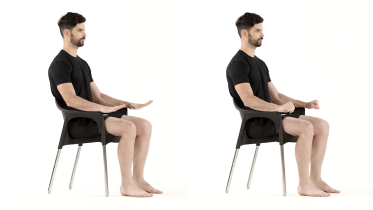 Open and close the hands
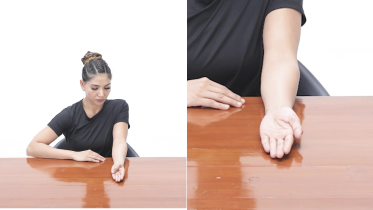 Thumb flexion
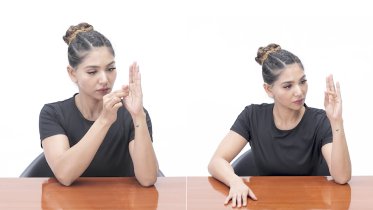 Thumb opposition
Stage 2: Light strength for gripping and daily tasks
Move on when the finger has stopped catching, or catches only now and then, and the stage 1 movements feel easy. This stage does not treat the tendon; it rebuilds strength after weeks of resting the hand, so gripping and carrying feel normal again. Finger extension with a rubber band and finger spreads with putty work the muscles that open the hand without hard gripping, and the soft ball squeeze adds light work for closing it. Mild discomfort is fine if it settles soon after you stop and the hand is no worse the next morning. If the catching comes back, go back to stage 1.
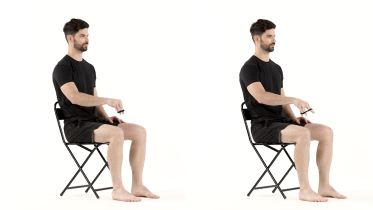 Finger extension with a rubber band
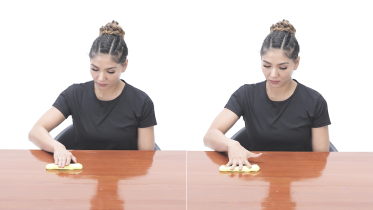 Finger spread with putty
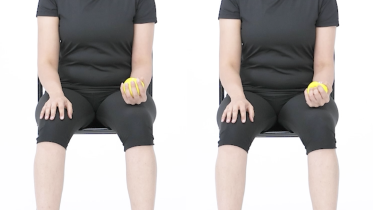 Hand grip squeeze
When is surgery considered for trigger finger?
The NHS says surgery is only done if other treatments have not worked. OrthoInfo adds that it is considered when symptoms are severe or have not improved with non-surgical treatment, or when the finger is stuck bent and cannot be straightened. The surgeon opens the tight band at the base of the finger, either through a small cut in the palm or with the tip of a needle, so the tendon has room to glide. BSSH says pain relief is usually rapid and that the problem seldom comes back after surgery.
A Cochrane review of 14 trials found low-quality evidence that open surgery led to fewer relapses than a steroid injection over 6 to 12 months, but more pain in the first week (Fiorini 2018). A 2026 review of 27 trials found surgery, and the needle release in particular, more likely to succeed than non-surgical treatment (Chiang 2026). The NHS still puts surgery after other treatments, so most people try a splint or an injection first. Rehab after the operation is not covered on this page, so follow your surgeon or hand therapist.
What to change at work and at home
Notice which tasks set the catching off and change how you do them. Many people find tools and kitchen utensils with thicker or padded handles easier to use. Use your whole hand rather than a tight pinch where you can, swap hands for longer jobs, and take short breaks from long spells of gripping, such as gardening or using hand tools.
Mornings are often the worst time. A night splint aims to stop the finger locking while you sleep (North Tees and Hartlepool). Many people like to move the fingers gently a few times before gripping anything.
When to see a physio or doctor
See a doctor or physio if you think you have trigger finger and it is not getting better, or it stops you doing your usual daily activities, as the NHS advises. They can check the diagnosis and talk you through a splint, an injection or a referral to a hand surgeon. See someone sooner if the finger locks bent and will not straighten. The warning signs below need prompt medical attention.
For physiotherapists
This page gives patients a starting framework for trigger finger managed without surgery. Exercise evidence is thin and mostly negative as a stand-alone treatment. Salim and colleagues (2012) randomized 74 patients with mild trigger finger to corticosteroid injection or physiotherapy: success (no pain and no triggering) at 3 months was 97.4% against 68.6%, with better pain, satisfaction and grip in the injection group. Among successfully treated patients at 6 months, the injection group had significant recurrence of pain but not triggering, and the physiotherapy group had no recurrence. Nadar (2024) randomized 55 participants with Green grade 2 or 3 idiopathic trigger finger to a PIP-blocking orthosis worn day and night for 6 weeks or to hand therapy without an orthosis, and reported complete resolution in 53.6% with the orthosis and no successful outcomes with hand therapy alone.
Choi and colleagues (2025) randomized 76 patients after corticosteroid injection to home finger gliding exercises or usual care and found no significant differences at 24 weeks in pain, triggering grade, recurrence, repeat injection or new trigger digits, with 68.6% exercise compliance. Lunsford and colleagues' 2019 review of orthoses reported moderate to large effect sizes for pain (0.49 to 1.99) and recommended immobilizing a single joint for 6 to 10 weeks. McKenna and colleagues (2026) reviewed 13 studies and found 24-hour wear most effective, recommended at least 6 weeks of continuous wear, and found PIP-blocking orthoses outperformed MCP-blocking orthoses.
For injection, the Cochrane review (Peters-Veluthamaningal 2009) found two small RCTs (63 participants): corticosteroid with lidocaine beat lidocaine alone at 4 weeks (RR 3.15, 95% CI 1.34 to 7.40, NNT 3). Fiorini and colleagues (2018, 14 trials, 1,260 participants) found low-quality evidence that open release reduced recurrence at 6 to 12 months compared with injection, at the cost of more pain in the first week. Chiang and colleagues (2026, 27 RCTs, 2,099 participants) ranked percutaneous release highest for treatment success (OR 22.82 against steroid injection, 95% CI 7.69 to 67.72) and found steroid injection, NSAID injection and ESWT better than placebo among non-surgical options. OrthoInfo notes lower injection response in diabetes, long-standing triggering and trigger thumb, and a rise in blood glucose for about 10 to 14 days in insulin-treated diabetes.
Use gliding and range of motion to limit stiffness during orthosis wear or after injection, dosed below the point of triggering, and treat grip work as a return to function rather than treatment of the pulley. Screen for flexor sheath infection (tenderness over the digit, swelling, pain on straightening and a flexed resting posture), Dupuytren's disease, inflammatory arthritis and coexisting nerve symptoms. Refer for injection or a surgical opinion when a well-fitted orthosis and load changes have not helped, or the digit is locked and cannot be straightened.
See a doctor promptly if
- Emergency: any sign of a stroke, even if it goes away. That means a face that droops on one side, an arm you cannot lift or keep up, slurred or muddled speech, weakness or numbness on one side of your body or face, sudden blurred vision, double vision or loss of sight, trouble swallowing, sudden dizziness with unsteadiness or falling over, a sudden severe headache, or a sudden fall where your legs give way but you do not black out (a drop attack). Call emergency services straight away.
- Emergency: after an injury, a finger or thumb that points at an odd angle, looks blue or feels numb, or has a cut with bone showing or poking out. Go to an emergency department straight away, and do not drive yourself. The finger may be broken.
- A finger or thumb that became painful, swollen, bruised, stiff or hard to move after an injury, rather than slowly over weeks. Get medical advice the same day, and have it checked before you start these exercises.
- A finger that becomes swollen along its length, red, hot and tender, and hurts a lot when you try to straighten it, so you keep it slightly bent, or a palm that becomes red, hot and swollen, especially after a cut, splinter, bite, injection or operation on the hand. Go to an emergency department straight away, and do not wait to see if it settles. An infection in the sheath around the tendon can spread quickly and often needs antibiotics through a drip and an operation. If you have a very high or very low temperature, shivering you cannot control, you are breathing very fast or finding it hard to breathe, you are confused or your speech is slurred, your skin, lips or tongue look blue, gray, pale or blotchy (on brown or black skin this can be easier to see on the palms of the hands or soles of the feet), or you have a rash that does not fade when you press it, call emergency services, as this can be sepsis.
- Since a release operation, your wound becomes more red, hot, swollen or painful, or starts to leak. Contact your medical team the same day.
- A finger or thumb that has locked bent and will not straighten, even with gentle help from your other hand. Do not force it. See your doctor within a few days, because a finger that stays stuck is one of the reasons surgery is considered.
- Numbness, tingling or pins and needles in your fingers. Trigger finger does not usually cause these, so see a doctor or physio within a week or two to find the cause, such as a trapped nerve at the wrist (carpal tunnel syndrome). If the numbness is there all the time, your hand or thumb is getting weaker, you keep dropping things, or the fleshy muscle at the base of your thumb looks flatter or thinner than on the other hand, see a doctor within a few days. If the weakness is getting worse from day to day, get medical advice the same day.
- Emergency: new problems walking, for example your legs feel stiff, heavy or weak or you have become unsteady on your feet, new trouble controlling your bladder or bowels, or hands that suddenly become clumsy, for example you can no longer do up buttons. Call emergency services straight away. These can be signs of pressure on the spinal cord in the neck.
- Numbness or tingling in both hands together with hands that have slowly become clumsy, for example trouble doing up buttons or dropping things. Get medical advice the same day. These can be signs of pressure on the spinal cord in the neck (cervical myelopathy) rather than a problem at the wrist. If the clumsiness or numbness gets worse quickly, call emergency services straight away.
- Several joints in your hands or feet are painful, swollen and stiff, not just one finger. This is not an emergency, but see your doctor in the next week or two, because it can be a sign of an inflammatory arthritis such as rheumatoid arthritis, and early treatment helps.
- The pain is there at night or at rest and keeps getting worse. See your doctor within a few days. If you have had cancer, now or in the past, or are losing weight without trying, see your doctor sooner, within a day or two, and mention it. This applies even if the pain is not getting worse. If you are being treated for cancer now, contact your cancer team the same day.
Common questions
Can trigger finger go away on its own?
Sometimes. The NHS says trigger finger can sometimes get better on its own without any treatment. An NHS hand therapy leaflet says that with its advice, exercises and a night splint, symptoms are very likely to improve, but this may take up to 12 weeks (North Tees and Hartlepool). If it is not getting better, or it stops you doing your usual daily activities, see a doctor or physio.
Do exercises help trigger finger?
Not as well as other treatments, going by the few trials so far. In one trial of mild trigger finger, a steroid injection cleared the pain and triggering at 3 months in 97.4% of people, against 68.6% with a physiotherapy program (Salim 2012). In another, hand therapy without a splint cleared the symptoms in nobody at 6 weeks, while a splint cleared them in just over half (Nadar 2024), and adding tendon glides after an injection made no difference at 24 weeks (Choi 2025). Gentle movement still helps keep the finger from stiffening, which is why it sits alongside a splint or injection rather than replacing them.
How long should I wear a splint for trigger finger?
It varies with the splint and your finger. OrthoInfo suggests wearing one at night to keep the finger or thumb straight while you sleep. A review of splinting studies recommended holding one joint still for 6 to 10 weeks (Lunsford 2019), and a 2026 review found splints worked best when worn 24 hours a day and recommended wearing one for at least 6 weeks (McKenna 2026). Ask your physio or hand therapist which splint and which wearing schedule suit you.
Is a steroid injection good for trigger finger?
It is one of the main treatments. The British Society for Surgery of the Hand says it relieves the pain and triggering in about 70% of cases, though less often in people with diabetes. OrthoInfo says up to three injections may be given if the first does not work or the symptoms come back, and that in people with diabetes who take insulin the steroid typically raises blood sugar for about 10 to 14 days. The decision is one to make with your doctor.
Why is trigger finger worse in the morning?
The NHS says symptoms can be worse in the morning, and OrthoInfo says stiffness and locking tend to be worse after periods of rest, such as when you wake up. Neither gives a firm reason. A night splint that keeps the finger straight is one of the usual first treatments, and many people like to move the fingers gently a few times before gripping anything.
When do you need surgery for trigger finger?
The NHS says surgery is only done if other treatments have not worked. OrthoInfo adds that it is considered when symptoms are severe or have not improved with non-surgical treatment, or when the finger is stuck bent and cannot be straightened. A 2026 review of 27 trials found surgery more likely to succeed than non-surgical treatment (Chiang 2026), and BSSH says the problem seldom comes back after it. Your doctor or hand surgeon will talk it through with you.
References
- NHS. Trigger finger. Page last reviewed 17 November 2025. https://www.nhs.uk/conditions/trigger-finger/
- American Academy of Orthopaedic Surgeons. Trigger finger. OrthoInfo. https://www.orthoinfo.org/en/diseases--conditions/trigger-finger/
- British Society for Surgery of the Hand. Trigger finger/thumb. Patient information. https://www.bssh.ac.uk/patients/conditions/18/trigger_fingerthumb
- North Tees and Hartlepool NHS Foundation Trust. Hand therapy: trigger finger. Patient leaflet PIL1517, review date July 2027. https://www.nth.nhs.uk/resources/hand-therapy-trigger-finger/
- Lunsford D, Valdes K, Hengy S. Conservative management of trigger finger: a systematic review. Journal of Hand Therapy. 2019;32(2):212-221. https://doi.org/10.1016/j.jht.2017.10.016
- McKenna ES, Co N, Brancaccio H, et al. Efficacy of splinting in managing adult trigger finger: a systematic review of short-term outcomes. Journal of Hand Surgery Global Online. 2026;8(1):100881. https://doi.org/10.1016/j.jhsg.2025.100881
- Nadar MS. Orthosis vs. exercise for the treatment of adult idiopathic trigger fingers: a randomized clinical trial. Prosthetics and Orthotics International. 2024;48(6):713-719. https://doi.org/10.1097/PXR.0000000000000294
- Salim N, Abdullah S, Sapuan J, Haflah NH. Outcome of corticosteroid injection versus physiotherapy in the treatment of mild trigger fingers. Journal of Hand Surgery (European Volume). 2012;37(1):27-34. https://doi.org/10.1177/1753193411415343
- Choi YK, Sit RW, Wang B, et al. Clinical effectiveness of finger gliding exercise for patients with trigger fingers receiving steroid injection: a randomized clinical trial. Scientific Reports. 2025;15(1):5141. https://doi.org/10.1038/s41598-025-89436-9
- Peters-Veluthamaningal C, van der Windt DA, Winters JC, Meyboom-de Jong B. Corticosteroid injection for trigger finger in adults. Cochrane Database of Systematic Reviews. 2009;(1):CD005617. https://doi.org/10.1002/14651858.CD005617.pub2
- Fiorini HJ, Tamaoki MJ, Lenza M, Gomes Dos Santos JB, Faloppa F, Belloti JC. Surgery for trigger finger. Cochrane Database of Systematic Reviews. 2018;(2):CD009860. https://doi.org/10.1002/14651858.CD009860.pub2
- Chiang CH, Liu WC, Wu ZH, Wang JH, Shih CL. Evidence-based management strategies for adult trigger digits: a systematic review and network meta-analysis of randomized controlled trials. Annals of Physical and Rehabilitation Medicine. 2026;69(4):102074. https://doi.org/10.1016/j.rehab.2025.102074
- NHS. Dupuytren's contracture. Page last reviewed 18 June 2024. https://www.nhs.uk/conditions/dupuytrens-contracture/
- NHS. Broken finger. Page last reviewed 20 November 2025. https://www.nhs.uk/conditions/broken-finger/
- Goyal K, Speeckaert AL. Pyogenic flexor tenosynovitis: evaluation and management. Hand Clinics. 2020;36(3):323-329. https://doi.org/10.1016/j.hcl.2020.03.005
- Gloucestershire Hospitals NHS Foundation Trust. Flexor sheath infection (pyogenic flexor tenosynovitis). Hand clinic. https://www.gloshospitals.nhs.uk/our-services/services-we-offer/trauma-orthopaedics/hand-clinic/infection-in-the-hand-and-wrist/flexor-sheath-infection-pyogenic-flexor-tenosynovitis/
- NHS. Sepsis. Page last reviewed 14 May 2026. https://www.nhs.uk/conditions/sepsis/
- NHS. Rheumatoid arthritis. Page last reviewed 8 March 2023. https://www.nhs.uk/conditions/rheumatoid-arthritis/
- NHS. Symptoms of a stroke. Page last reviewed 12 September 2024. https://www.nhs.uk/conditions/stroke/symptoms/
Written and checked by the PocketPhysio editorial team. Last updated 2026-09-26.
This page is general education, not a diagnosis or a personal treatment plan. See a physiotherapist or doctor for advice about your own situation.