
Carpal tunnel syndrome exercises and physiotherapy
What is carpal tunnel syndrome?
The carpal tunnel is a narrow passage on the palm side of your wrist. The median nerve runs through it, alongside the tendons that bend your fingers, and carries feeling to the thumb side of the hand. When the space gets tighter and the nerve is squeezed, you get carpal tunnel syndrome. It is the most common nerve entrapment in the world (Padua 2016).
The typical picture is numbness, tingling, burning or pain in the thumb, index, middle and ring fingers. The NHS says symptoms often start slowly, come and go, and are usually worse at night. Many people are woken by it. Some notice a weak thumb or trouble gripping, and find they drop things more often.
The NHS lists the things that make it more likely: being overweight or pregnant, repeatedly bending your wrist or gripping hard at work or in a hobby, arthritis, diabetes, a family history of it, and a previous wrist injury.
Do exercises help carpal tunnel syndrome?
A little, for some people, and the evidence is weak. A Cochrane review looked at 16 trials of exercise and hands-on (mobilization) treatments, with 741 people in total, and found only limited, very low quality evidence of benefit (Page 2012). The authors advised that patients be told about this uncertainty. The NHS puts it the same way: a small amount of evidence suggests hand exercises help ease the symptoms.
So the exercises on this page are not a cure. Nerve and tendon glides are gentle and need no equipment, which is one reason many programs include them. Think of them as one part of the plan, next to a night splint and doing less of whatever brings the tingling on. If things are not settling, get it checked.
Night splints and other first steps
A wrist splint worn at night is a common first step. It keeps your wrist straight while you sleep, so you do not lie for hours with it bent. The NHS says you may need to wear one for up to 6 weeks before it starts to feel better, and you can buy them from pharmacies.
How well do splints work? A 2023 Cochrane review of 29 trials found too little evidence to say for sure whether splints help (Karjalainen 2023). Low-certainty evidence suggests people are more likely to feel better overall with a night splint than with no treatment, although any gain in symptoms may be small. The reviewers noted that splints are cheap with no likely long-term harm, so a small benefit could justify one, particularly for people who do not want surgery or an injection. It is not clear whether wearing it at night only or for longer is better.
The US physical therapy guideline for carpal tunnel syndrome, revised in 2026, recommends a wrist splint worn at night that holds the wrist close to straight, for people with mild to moderate symptoms. If night wear alone is not enough, it suggests wearing it for longer, including during the day (Erickson 2026). Ask your physio to check that yours holds the wrist close to straight.
The NHS also advises stopping or cutting down on anything that makes you bend your wrist often or grip hard, such as using vibrating tools or playing an instrument. Paracetamol or ibuprofen may help the pain in the short term, but the NHS notes there is little evidence they treat the cause. Ask a pharmacist if you are not sure a medicine is safe for you.
If a splint does not help, a steroid injection into the wrist may be offered. In a UK trial, one injection eased symptoms faster than night splints over 6 weeks, and by 6 months the two were similar (Chesterton 2018). The NHS notes that symptoms can come back after a few months.
How to use this program
Pick the stage that matches your hand today. If you are not sure, start at stage 1. Move up when the current stage feels easy and your night symptoms are no worse over the next day or two. This program is for carpal tunnel syndrome managed without surgery. If you have had carpal tunnel release surgery, follow the program your surgeon or hand therapist gives you rather than this one.
As a rough guide, many programs use 5 to 10 slow nerve glides, 1 to 3 times a day, and go through the tendon glide sequence 5 to 10 times, holding each position for about 3 to 5 seconds, 2 to 4 times a day. The hand exercises in stage 2 are often done as 1 to 3 sets of 10 to 15, once or twice a day. The forearm exercises in stage 3 are often done as 2 to 3 sets of 10 to 15, once a day. Each exercise page gives its own starting range, and your physio will adjust this to your hand and what you need it for.
Tingling is the thing to watch. During the glides, aim for no tingling at all. If a faint tingle comes on, make the movement smaller; it should settle within a few seconds of stopping. Tingling or numbness that builds with each repetition, lasts after you stop, or makes your night symptoms worse means the exercise is too much. Leave it out or drop back a stage.
This program leaves out stretches that hold the wrist bent fully back or fully forward for a long time, such as the prayer stretch and the wrist flexor stretch. The aim for now is to keep the wrist nearer straight, which is also how a night splint eases the pressure on the nerve. Your physio may add them later if they suit you.
The exercise program
Stage 1: Settle night symptoms and keep the hand moving
This stage is for hands that tingle, ache or go numb, often worse at night, and it goes alongside a wrist splint worn at night to keep your wrist straight while you sleep. Tendon glides take your fingers through five positions and the median nerve glide slides the nerve gently through the wrist; keep both well short of your symptoms and aim for no tingling. If a faint tingle comes on, make the movement smaller; it should settle within a few seconds of stopping. If the tingling builds with each repetition or lingers afterward, leave that exercise out for now. Easy wrist bending in a comfortable range and touching your thumb to each fingertip keep the joints moving without any load.
 Tendon glides
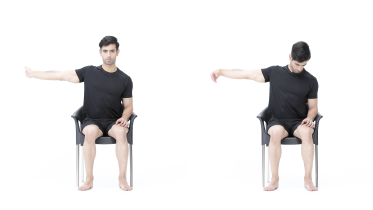 Median nerve glide
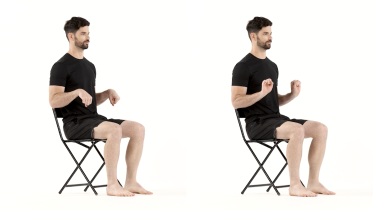 Wrist flexion and extension
 Thumb opposition
Stage 2: Light work for the small hand muscles
Move on when night symptoms are settling and the stage 1 movements feel easy. Finger spreads with putty and finger extension with a rubber band work the muscles that open the hand, and the grip squeeze adds light work for closing it. Use the softest putty and a soft ball, and keep every squeeze well short of your hardest, because the NHS advises cutting down on anything that makes you grip hard. Stop any exercise that brings on numbness or tingling in the fingers. If your thumb feels weak or clumsy rather than just sore, get it checked before you start this stage (see the warning signs below).
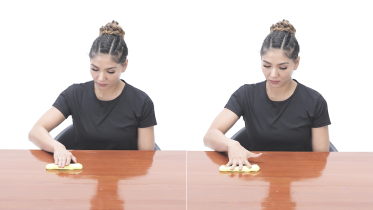 Finger spread with putty
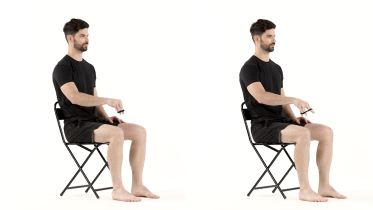 Finger extension with a rubber band
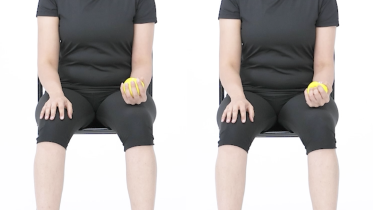 Hand grip squeeze
Stage 3: Forearm strength for work and home
When symptoms are mild or gone and you want your wrist and forearm ready for lifting and carrying again. Strengthening has not been shown to treat the nerve, so this stage is about getting back to your usual tasks. Start with a very light weight or the lightest band, keep each lift within a comfortable range rather than forcing the wrist to the end of its bend, and hold the handle only as firmly as you need to. Stop if your fingers start to tingle. If night symptoms come back, drop back a stage.
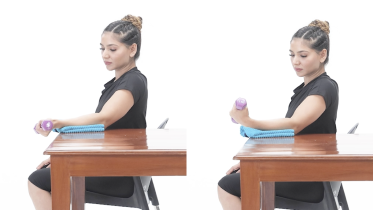 Wrist curl
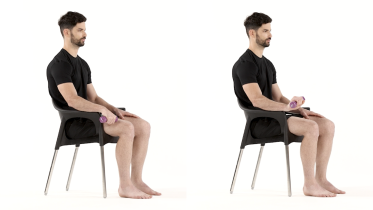 Wrist extension with weight
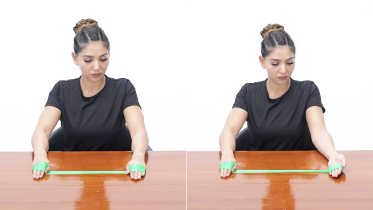 Forearm supination with band
When is surgery considered for carpal tunnel?
The NHS says that if your symptoms are getting worse and other treatments have not worked, you may be referred to a specialist to discuss surgery. The American Academy of Orthopaedic Surgeons patient guide adds that in long-standing cases with constant numbness and wasting of the thumb muscles, surgery may be recommended to prevent permanent damage. That is why those signs are on the warning list below.
The operation, carpal tunnel release, is usually done under a local anesthetic through a small cut in the hand. The NHS says it usually cures carpal tunnel syndrome and that it can take about a month to get back to normal activities.
A 2024 Cochrane review compared surgery with non-surgical treatment (Lusa 2024). Surgery probably led to clinical improvement in more people than splinting did, but the reviewers found the overall benefit of surgery uncertain. They suggested that people with severe symptoms may choose surgery, while people whose symptoms are tolerable can start with non-surgical treatment and have surgery only if needed. Rehab after the operation is not covered on this page. Follow your surgeon or hand therapist.
What to change at work and at home
Notice which tasks bring the tingling on, then change how you do them. Keep the wrist closer to straight when you can, grip only as hard as the job needs, and take short breaks to move your hand and fingers. The NHS gives using vibrating tools and playing an instrument as examples of tasks to cut down on.
Desk work gets a lot of blame. The 2024 guideline from the American Academy of Orthopaedic Surgeons and the American Society for Surgery of the Hand found no reliable evidence on keyboard use, and its expert panel's view is that heavy keyboard use is not linked to carpal tunnel syndrome (Shapiro 2025). A comfortable desk setup is still worth having if typing brings your symptoms on.
When to see a physio or doctor
See a doctor or physio if your symptoms are getting worse or not going away, or if treatment at home is not working, as the NHS advises. If the numbness is constant or your thumb is getting weak, see a doctor within a few days rather than waiting. It is also worth a proper assessment if you are not sure the problem is at the wrist, because tingling in the hand can come from a nerve in the neck or elsewhere in the arm.
If you are pregnant and have tingling or numbness in your hands, tell your midwife or doctor. The NHS notes that carpal tunnel syndrome sometimes gets better by itself in a few months, particularly when it comes on in pregnancy, but this page does not give a pregnancy program. Your midwife, doctor or physio can advise you.
Tingling in both hands needs a closer look, especially if your hands have become clumsy. New problems walking, such as stiff legs or feeling unsteady, need emergency help. The other warning signs below need prompt medical attention.
For physiotherapists
This page gives patients a starting framework for carpal tunnel syndrome managed without surgery. The 2026 revision of the APTA CPG (Erickson 2026) recommends a forearm-based wrist orthosis that keeps the wrist near neutral, worn at night, for mild to moderate CTS. It allows longer wear time or a change in joint position when night use alone does not control symptoms.
The 2024 AAOS/ASSH guideline (Shapiro 2025) has 9 recommendations (6 strong, 3 moderate), down from 35 statements in 2016, plus a set of limited and consensus options. It supports the CTS-6 for diagnosis in place of routine ultrasound or nerve conduction studies (strong) and advises against MRI and upper limb neurodynamic testing for diagnosis (moderate). It found strong evidence that corticosteroid injection does not give long-term improvement. A limited-strength option lists exercise, manual therapy and several other non-operative treatments as not improving long-term patient-reported outcomes. It makes no statement on night orthoses for non-surgical care.
The 2023 Cochrane splinting review (Karjalainen 2023, 29 trials) found insufficient evidence to conclude whether splinting helps, with low-certainty evidence for a higher rate of overall improvement with night splints than no treatment. The Cochrane exercise review (Page 2012) covered a diverse set of interventions, including nerve and tendon gliding, and rated the evidence very low quality throughout. Present glides to patients as an adjunct and dose them by symptom response. INSTINCTS (Chesterton 2018) used the Boston Carpal Tunnel Questionnaire as its primary outcome in mild to moderate CTS in primary care, and it is one option for tracking change.
Screen for cervical causes. Davies and colleagues (2018) report that many people with degenerative cervical myelopathy are first diagnosed, and sometimes treated, for carpal tunnel syndrome. In their clinical experience, a CTS diagnosis in these patients, especially a bilateral one, is often wrong. Ask about gait, balance, dexterity and lower limb symptoms, and refer promptly if myelopathy is suspected. Constant numbness and thenar wasting point toward surgical opinion rather than a longer trial of conservative care.
See a doctor promptly if
- Emergency: any sign of a stroke, even if it goes away. That means a face that droops on one side, an arm you cannot lift or keep up, slurred or muddled speech, weakness or numbness on one side of your body or face, sudden blurred vision, double vision or loss of sight, trouble swallowing, sudden dizziness with unsteadiness or falling over, a sudden severe headache, or a sudden fall where your legs give way but you do not black out (a drop attack). Call emergency services straight away.
- Emergency: numbness, tingling or pins and needles in the hand after a fall or injury to the wrist, or a wrist that has changed shape or sits at an odd angle. The same applies to a bone showing through the skin or a cut that is bleeding heavily. Go to an emergency department or call emergency services straight away, and do not drive yourself. The wrist may be broken.
- A wrist injury that has left the wrist swollen, bruised or so painful you cannot use the hand, without numbness or a change in shape. Get medical advice the same day.
- Emergency: new problems walking, for example your legs feel stiff, heavy or weak or you have become unsteady on your feet, new trouble controlling your bladder or bowels, or hands that suddenly become clumsy, for example you can no longer do up buttons. Call emergency services straight away. These can be signs of pressure on the spinal cord in the neck.
- Numbness or tingling in both hands together with hands that have slowly become clumsy, for example trouble doing up buttons or dropping things. Get medical advice the same day. These can be signs of pressure on the spinal cord in the neck (cervical myelopathy) rather than a problem at the wrist. If the clumsiness or numbness gets worse quickly, call emergency services straight away.
- Numbness in the hand that is there all the time, the fleshy muscle at the base of your thumb looks flatter or thinner than on the other hand, or your thumb is getting weaker and you keep dropping things. See a doctor within a few days rather than waiting for it to settle. If the weakness is getting worse from day to day or spreads beyond the thumb, get medical advice the same day. In long-standing cases the nerve can be damaged for good, and surgery may be recommended to prevent that.
Common questions
Can carpal tunnel syndrome go away on its own?
Sometimes. The NHS says it sometimes gets better by itself in a few months, particularly when it comes on in pregnancy. A night splint and changes to the activities that bring it on are the usual first steps. If the numbness is there all the time or your thumb is getting weak, do not wait for it to settle: see a doctor.
Should I wear a wrist brace for carpal tunnel at night?
It is a common first step: a night splint keeps your wrist straight so you do not sleep with it bent, and the NHS says you may need to wear it for up to 6 weeks before it starts to feel better. How much it helps is less certain. A 2023 Cochrane review found too little evidence to say for sure, although low-certainty evidence suggests people are more likely to feel better overall with a night splint than with no treatment, and any gain in symptoms may be small. Splints cost little and carry no likely long-term harm, so the reviewers felt a small benefit could justify one (Karjalainen 2023). Your physio or doctor can check that yours holds the wrist close to straight rather than bent back.
Do carpal tunnel exercises work?
The evidence is weak. A Cochrane review of 16 trials found only limited, very low quality evidence of benefit for a wide mix of exercise and mobilization treatments, and said patients should be told about that uncertainty (Page 2012). The 2024 US orthopedic and hand surgery guideline found limited evidence that exercise does not improve long-term results (Shapiro 2025). The NHS says there is a small amount of evidence that hand exercises help ease the symptoms. Nerve and tendon glides are gentle and need no equipment, so many programs use them alongside a night splint rather than on their own.
Does typing cause carpal tunnel syndrome?
Probably not on its own. The 2024 guideline from the American Academy of Orthopaedic Surgeons and the American Society for Surgery of the Hand found no reliable evidence on this, and its expert panel's view is that heavy keyboard use is not linked to carpal tunnel syndrome. The NHS lists jobs or hobbies where you repeatedly bend your wrist or grip hard among the things that make it more likely, along with being overweight, pregnancy, arthritis, diabetes, a family history and a previous wrist injury.
Are steroid injections good for carpal tunnel?
They can give faster relief, but often not lasting relief. In a UK trial of people with mild or moderate symptoms, a single steroid injection gave better results than night splints at 6 weeks, and by 6 months the two groups were similar (Chesterton 2018). The NHS notes that an injection is not always a cure and symptoms can come back after a few months. The 2024 US orthopedic and hand surgery guideline found strong evidence that injections do not give long-term improvement. The decision is one to make with your doctor.
When do you need surgery for carpal tunnel?
The NHS says that if your symptoms are getting worse and other treatments have not worked, you may be referred to a specialist to discuss surgery. It may also be recommended in long-standing cases with constant numbness and wasting of the thumb muscles, to prevent lasting nerve damage. A 2024 Cochrane review found that surgery probably leads to clinical improvement in more people than splinting, but it also found the overall benefit of surgery uncertain, and suggested that people whose symptoms are tolerable can start with non-surgical treatment and have surgery only if needed (Lusa 2024). Your doctor or hand surgeon will talk this through with you.
References
- Karjalainen TV, Lusa V, Page MJ, O'Connor D, Massy-Westropp N, Peters SE. Splinting for carpal tunnel syndrome. Cochrane Database of Systematic Reviews. 2023;(2):CD010003. https://doi.org/10.1002/14651858.CD010003.pub2
- Page MJ, O'Connor D, Pitt V, Massy-Westropp N. Exercise and mobilisation interventions for carpal tunnel syndrome. Cochrane Database of Systematic Reviews. 2012;(6):CD009899. https://doi.org/10.1002/14651858.CD009899
- Lusa V, Karjalainen TV, Pääkkönen M, Rajamäki TJ, Jaatinen K. Surgical versus non-surgical treatment for carpal tunnel syndrome. Cochrane Database of Systematic Reviews. 2024;(1):CD001552. https://doi.org/10.1002/14651858.CD001552.pub3
- Chesterton LS, Blagojevic-Bucknall M, Burton C, et al. The clinical and cost-effectiveness of corticosteroid injection versus night splints for carpal tunnel syndrome (INSTINCTS trial): an open-label, parallel group, randomised controlled trial. The Lancet. 2018;392(10156):1423-1433. https://doi.org/10.1016/S0140-6736(18)31572-1
- Shapiro LM, Kamal R, Brault J, et al. American Academy of Orthopaedic Surgeons/ASSH clinical practice guideline summary: management of carpal tunnel syndrome. Journal of the American Academy of Orthopaedic Surgeons. 2025;33(7):e356-e366. https://doi.org/10.5435/JAAOS-D-24-01179
- Erickson M, Lawrence M, Lazinski MJ, Scott K, Martin RL. Hand pain and sensory deficits: carpal tunnel syndrome: revision 2026. Clinical practice guidelines linked to the International Classification of Functioning, Disability and Health from APTA Orthopedics and APTA Hand and Upper Extremity Academies of the American Physical Therapy Association. Journal of Orthopaedic and Sports Physical Therapy. 2026;56(4):CPG1-CPG79. https://doi.org/10.2519/jospt.2026.0301
- Padua L, Coraci D, Erra C, et al. Carpal tunnel syndrome: clinical features, diagnosis, and management. The Lancet Neurology. 2016;15(12):1273-1284. https://doi.org/10.1016/S1474-4422(16)30231-9
- Davies BM, Mowforth OD, Smith EK, Kotter MR. Degenerative cervical myelopathy. BMJ. 2018;360:k186. https://doi.org/10.1136/bmj.k186
- NHS. Carpal tunnel syndrome. Page last reviewed 17 April 2024. https://www.nhs.uk/conditions/carpal-tunnel-syndrome/
- American Academy of Orthopaedic Surgeons. Carpal tunnel syndrome. OrthoInfo. https://www.orthoinfo.org/en/diseases--conditions/carpal-tunnel-syndrome/
- NHS. Symptoms of a stroke. https://www.nhs.uk/conditions/stroke/symptoms/
- NHS. Broken arm or wrist. https://www.nhs.uk/conditions/broken-arm-or-wrist/
Written and checked by the PocketPhysio editorial team. Last updated 2026-09-28.
This page is general education, not a diagnosis or a personal treatment plan. See a physiotherapist or doctor for advice about your own situation.