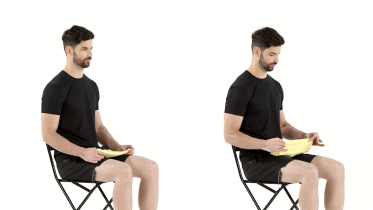
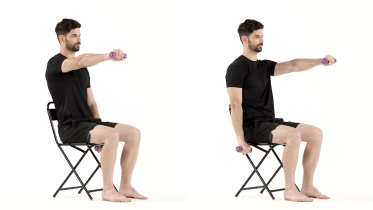
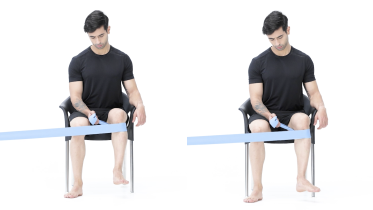
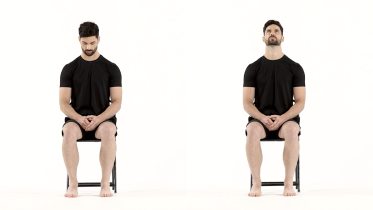
Median nerve glide
The median nerve glide is a gentle movement that slides the median nerve back and forth. This is the nerve that runs down the middle of your arm, through the wrist (carpal tunnel) and into the thumb side of your hand. You sit with one arm out to the side at shoulder height and move your wrist up and down while tilting your head, so the nerve moves without being pulled tight. Physios and hand therapists often include it in programs for carpal tunnel symptoms, such as tingling in the thumb and first two fingers.
How to do the median nerve glide
- Sit tall on a chair with your feet flat on the floor and your shoulders relaxed.
- Lift the arm you are working out to the side to about shoulder height. Keep the elbow straight and turn the palm to face forward.
- Bend your wrist back so your fingers point up toward the ceiling. Keep your head upright.
- Now let the wrist bend down so your fingers point toward the floor, and at the same time gently tilt your head away from that arm, ear toward the other shoulder.
- Bring your head back to upright as the wrist bends back up. Keep moving slowly between the two positions without holding at either end, then lower the arm to rest after the set.
- The video also shows a second version: as the wrist bends down, gently drop your chin toward your chest instead of tilting, then lift your head as the wrist bends back up.
What you should feel
A light pull along the inside of the arm is fine. Aim for no tingling. If a faint tingle shows up in the palm or fingers, make the glide smaller; it should be gone within a few seconds. If it builds or lingers, stop. Many people feel very little, and that is fine too.
Common mistakes
- Pushing on into tingling or pain. The glide stays gentle, well short of your symptoms.
- Tilting the head away from the arm, or dropping the chin, while the wrist is bent back. That pulls the nerve from both ends at once instead of gliding it.
- Letting the shoulder hitch up toward the ear, or the elbow bend.
- Moving fast or bouncing at the end of the movement.
How often
Many programs use 5 to 10 slow glides, 1 to 3 times a day, starting at the lower end. Your physio will adjust this for you.
Stop and check with your physio if
- Tingling, numbness or pain that builds with each glide or lasts more than a few seconds after you stop.
- You feel dizzy, faint or unsteady. Stop and get medical advice the same day. If you faint, it does not settle within a few minutes of sitting still, or you cannot stand or walk steadily, call emergency services.
- Pain spreading from the neck down the arm, or new weakness in the hand.
- Hand or arm symptoms that are clearly worse later that day or the next morning.
- Things look double, your vision suddenly blurs or goes, your speech slurs or becomes muddled, swallowing becomes hard, your face or lips go numb, one side of your face droops or one side of your body goes weak or numb, you suddenly become so dizzy or unsteady that you fall or cannot stand or walk, your legs suddenly give way but you do not black out (a drop attack), or you get a sudden severe headache. Stop and call emergency services, even if it goes away.
- An electric shock feeling runs down your back or into your arms or legs as your head bends forward. Stop and get medical advice the same day.
From the clinic
This one is meant to feel easy, with no tingling. If even the starting position brings a tingle on, make it smaller: keep the arm lower or let the elbow bend a little, and move only the wrist. A tingle that builds or does not fade within a few seconds is your cue to stop. Your physio can show you how to make the glide smaller or bigger to suit your symptoms.
See a doctor or physio soon if the numbness in your hand is there all the time, if you keep dropping things, or if the muscle at the base of your thumb looks flatter than on the other hand. After carpal tunnel surgery, a wrist fracture or any other hand surgery, check with your surgeon or hand therapist before starting nerve glides. After neck surgery or a broken bone in the neck, check with your surgeon or physio before you start. Tendon glides for the fingers are another hand movement exercise you may see in the same program.
Written and checked by the PocketPhysio editorial team. Last updated 2026-09-28.
This page is general education, not a diagnosis or a personal treatment plan. If you have pain, an injury or a health condition, see a physiotherapist or doctor before starting new exercises.