Bend and reach
Bend and reach is a rhythmic drill: you reach both arms overhead, swing them down as you sink into a deep squat to touch the floor, then stand and reach up again. It takes the hips, knees, ankles, back and shoulders through a big range, which is why it often appears in warm-ups and fitness drills. Done briskly it is fairly vigorous, and the repeated bend toward the floor is not right for every back, so read the precautions before you start.
How to do the bend and reach
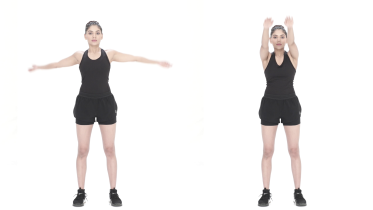
- Stand tall with your feet shoulder width apart and stretch both arms up above your head.
- Swing your arms down and forward while your hips move back and your knees bend.
- Sink into a deep squat and reach down to touch the floor between or just in front of your feet. Your heels stay down the whole time.
- Push through your feet to stand back up, sweeping your arms up overhead again.
- Start slowly and settle into a steady rhythm. Go only as low as you can with your heels down and no pain in your back.
What you should feel
Your thighs and buttocks work as you lower and rise, with a stretch through the backs of your legs and your lower back at the bottom. At a brisk pace your breathing and heart rate pick up.
Common mistakes
- Coming up onto your toes to reach the floor.
- Keeping the legs nearly straight and bending only at the waist to reach down.
- Speeding up so much that you crash into the low position and spring back up.
- Holding your breath instead of breathing in time with the movement.
How often
Many programs use 1 to 3 sets of 5 to 10 slow, controlled repetitions as part of a warm-up, and pick up the pace only once the movement feels comfortable. Your physio will adjust this.
Stop and check with your physio if
- Sharp pain in your lower back, hips or knees, or pain or tingling that travels down a leg.
- Chest pain or pressure, dizziness or feeling faint, a racing or irregular heartbeat, or being far more out of breath than the effort should cause.
From the clinic
Every repetition curls your back forward toward the floor. If you have low bone density (osteoporosis) or have had a spine fracture, check with your physio before you start, since people with fragile bones are usually advised to limit repeated bending of the spine. Ask first as well if bending forward makes your back pain or leg pain worse, or you have a disc problem. Reaching only to your knees or shins keeps your back more upright, and the plain squat is a gentler way to practice the leg part.
Coming up quickly from a deep bend can make some people light-headed, so keep the pace slow at first and stand near a counter you can grab. If you have high blood pressure, breathe steadily through every repetition and never hold your breath. With a heart condition or high blood pressure, check with your doctor before you start.
If you have had a hip or knee replacement, get the go-ahead from your surgeon or physio before you try bend and reach. Touching the floor from a deep squat takes the hip far past a right angle, and many surgeons ask you to avoid that for the first months after some operations.
If chest pain, pressure or tightness does not ease quickly when you rest, spreads to your arm, neck, jaw, stomach or back, or comes with sweating, feeling sick, feeling light-headed or being short of breath, call emergency services straight away, as this can be a heart attack. If it eases quickly and none of these happen, get medical advice the same day, and do not exercise again until you have been checked. If you faint while exercising, call emergency services, even if you feel fine again quickly.
Written and checked by the PocketPhysio editorial team. Last updated 2026-09-26.
This page is general education, not a diagnosis or a personal treatment plan. If you have pain, an injury or a health condition, see a physiotherapist or doctor before starting new exercises.