
Squat
A squat is sitting down onto a chair and standing up again, just without the chair. You bend your hips and knees together, lower yourself, then push back up. The thighs and buttocks do the work. Getting up from a seat is something you do all day, which is why squats turn up in so many knee, hip and back rehab programs.
How to do the squat
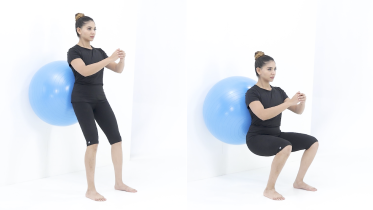
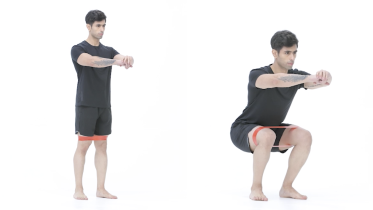
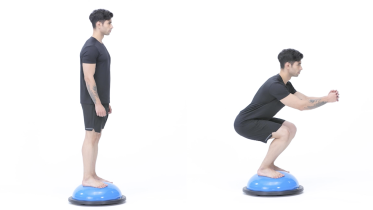
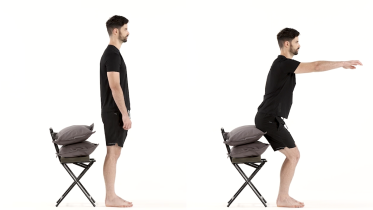
- Stand with your feet shoulder width apart, toes pointing forward or turned out slightly. Raise your hands in front of you to chest height and clasp them together.
- Push your hips back and bend your knees at the same time, as if sitting down onto a chair behind you.
- Keep your chest up and your heels on the floor. Your body will lean forward a little, and that is normal.
- Let your knees travel in line with your second toe. Go as low as you can control, down to about where your thighs are level with the floor.
- Hold the bottom position for a count of one.
- Push through your whole foot to stand back up tall.
What you should feel
Your thighs and buttocks should be doing the work. Some effort around the knees is common. If it is mostly your lower back working, check your chest is up and try a shallower squat.
Common mistakes
- Knees falling inward on the way down or on the way up.
- Heels lifting off the floor. Keep your weight spread across the whole foot.
- Rounding the back and dropping the chest toward the knees at the bottom.
- Dropping fast into the bottom and bouncing out of it.
How often
Many programs start with 2 to 3 sets of 8 to 12, a few days a week, at a depth that feels controlled. Your physio will adjust the depth and the numbers to suit you.
Stop and check with your physio if
- Sharp pain in the knee, hip or lower back, or pain that keeps building through the set.
- The knee gives way, locks or catches.
- The knee swells after the session.
From the clinic
If a full squat is too much right now, squat to a chair and touch the seat lightly with your bottom before you stand. You get the same depth every rep, and you can move to a lower seat as you get stronger. Still too hard? Start with the mini squat, which only bends the knees a little.
People often ask whether the knees are allowed past the toes. In a deeper squat some forward knee travel is normal for many people. What matters more is that the knees follow the line of the toes and the movement stays comfortable. If your knee is the problem, your physio may ask you to limit that forward travel for a while.
Not steady on your feet? Squat next to a kitchen counter or in front of a sturdy chair you can grab. If you have had a hip or knee replacement, get the go-ahead from your surgeon or physio before you try squats. A deeper squat bends the hip well past a right angle, and many surgeons ask you to avoid that for the first months after some operations. Ask them how deep you may go.
Reviewed by the PocketPhysio by VirtueLife expert physiotherapy team. Last reviewed 2026-09-25.
This page is general education, not a diagnosis or a personal treatment plan. If you have pain, an injury or a health condition, see a physiotherapist or doctor before starting new exercises.
.png)