
Mini squat
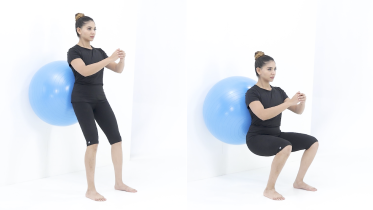
A mini squat is a small, controlled bend at the hips and knees. It builds thigh and hip strength for everyday jobs like getting out of a chair, without the deep bend of a full squat.
How to do the mini squat
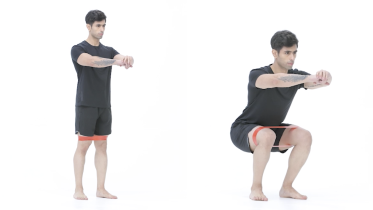
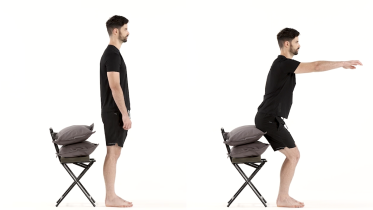
- Stand with your feet under your hips and your toes pointing forward. Put your hands on your hips, or hold a counter or sturdy chair back if your balance is not steady.
- Push your hips back a little, as if you are starting to sit down, so your knees do not move far forward past your toes.
- Bend your knees only a small amount, about 30 to 40 degrees. That is roughly a quarter of the way to a full squat. Keep your heels on the floor.
- Keep your knees in line with the middle of your feet, pointing the same way as your second toe.
- Push through your whole foot to stand back up straight.
What you should feel
Work in the front of your thighs and your buttocks. Mild effort around the knee is common. Sharp pain is not.
Common mistakes
- Knees falling inward toward each other.
- Going deeper than the pain-free range.
- Rising onto the toes. Keep weight spread across the whole foot.
How often
A typical start is 2 to 3 sets of 10 to 15 reps, once a day. Your physio will tune the depth, speed, support and reps for you. If you have had knee or hip surgery, your surgeon's and physio's plan comes first.
Stop and check with your physio if
- Knee pain is sharp or keeps getting worse through the set.
- The knee swells, gives way or feels unstable afterwards.
- You feel dizzy or unsteady. Hold on to something firm and sit down. If you faint while exercising, call emergency services, even if you feel fine again quickly.
- Your calf or thigh is getting more swollen, or becomes warm, tender, red or darker than usual, or has a new throbbing or cramping pain. This can be a blood clot, especially after an operation, an injury, time in a cast, boot or brace, or a spell of being much less mobile than usual, and after an operation it can also be an infection. Stop and contact your medical team or get medical advice the same day. If you are also short of breath or have chest pain, call emergency services.
From the clinic
In many knee programs some discomfort during the exercise is acceptable, as long as it settles fairly quickly afterwards. Your physio will tell you how much is fine for you.
Written and checked by the PocketPhysio editorial team. Last updated 2026-09-26.
This page is general education, not a diagnosis or a personal treatment plan. If you have pain, an injury or a health condition, see a physiotherapist or doctor before starting new exercises.
.png)