
Single leg mini squat with band
The single leg mini squat with band is a small knee bend on one leg, with a resistance band tied at knee height pulling the standing knee inward. A chair beside you helps with balance while you resist the band and keep the kneecap pointing over your second toe. It trains the thigh and the outer hip muscles (gluteus medius) to control the knee. You will find it in a lot of knee rehab programs.
How to do the single leg mini squat with band
- Anchor a resistance band at knee height, for example around the leg of a heavy table or with a door anchor.
- Put the loop around your standing leg just above the knee, so the band pulls from the inner side of that knee. Stand with the anchor on the side of your other leg and a sturdy chair on the side of your standing leg, one hand on the chair back.
- Step sideways away from the anchor until the band pulls gently on the knee.
- Shift your weight onto the banded leg and lift the other foot off the floor, bending that knee so the foot is just behind you.
- Slowly bend your standing knee a small amount, keeping the kneecap pointing over your second toe as the band tries to pull it in. Straighten back up with the same control.
- Finish your reps, then turn around, move the band to your other knee and repeat if your program includes both legs.
What you should feel
Your standing thigh and the outside of that hip do the work, holding the knee out against the band. The hand on the chair should feel light.
Common mistakes
- The kneecap giving in to the band and drifting toward the other leg.
- Bending further than you can hold the knee line.
- Leaning heavily on the chair so the leg does little of the work.
- Letting your pelvis sag on the side of the lifted foot.
How often
Programs often begin with a light band and 6 to 10 small bends on each leg, repeated for 2 or 3 sets. Your physio will adjust this.
Stop and check with your physio if
- The knee buckles, or you get a sharp pain in it.
- Pain around the kneecap that grows with each bend.
- You wobble so much that the chair cannot keep you steady.
From the clinic
He holds the chair the whole time in the video. Start that way. Stand on a non-slip floor with the area around you clear, and make sure the anchor cannot slide or come loose, because a band that lets go can knock you off balance. If you have fallen in the last year, often feel unsteady, or are on medication that can cause dizziness, keep a firm grip on the chair, have someone nearby, and mention it to your physio, who can check your falls risk.
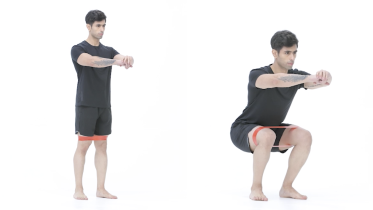
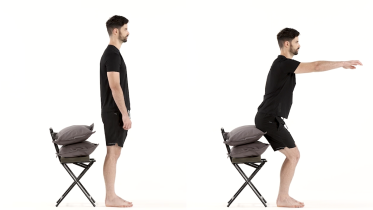
If the band pulls the knee in no matter how hard you try, drop the band and practice the mini squat or single leg stance until the knee feels steadier. The lateral step-down with band uses a similar band pull on a step and is a common next stage. If you have had a hip or knee replacement, get the go-ahead from your surgeon or physio before you try this exercise. Some operations limit this kind of work for the first months, so the timing depends on your surgery. Standing on the operated leg alone comes at a set stage of rehab.
Written and checked by the PocketPhysio editorial team. Last updated 2026-09-26.
This page is general education, not a diagnosis or a personal treatment plan. If you have pain, an injury or a health condition, see a physiotherapist or doctor before starting new exercises.
.png)