
Hip arthroscopy recovery and rehab, stage by stage
Warning signs, and when to get help
What is hip arthroscopy and what does it fix?
Hip arthroscopy is keyhole surgery on the hip joint. The surgeon works through small cuts with a camera, usually while the leg is held under traction to open the joint enough to get instruments in. Most of these operations are done for hip impingement, for a torn labrum, or for both, and the decision to have one is a separate question from this page.
Several different jobs go under the same name, and that is the first reason recovery varies so much between people. The labrum, the ring of cartilage round the socket, can be trimmed, stitched back onto the rim or rebuilt with a graft. Bone can be reshaped at the rim of the socket, at the top of the thighbone, or both. The capsule that wraps the joint may be stitched closed. Some of those decisions are made during the operation, from what the surgeon finds inside.
Which of them you had changes the plan, which is why your operation note and your surgeon's instructions sit above everything written here. If you are still deciding whether to have surgery at all, the trials comparing it with physiotherapy are set out on the hip impingement page, and the non-surgical program for a tear is on the hip labral tear page.
Three other pages are the ones people land on by mistake. A hip arthroscopy is not a hip replacement, and rehabilitation after a new joint is a different program with different precautions: that is total hip replacement rehab. If an X-ray has shown established wear in the joint, hip osteoarthritis is the better fit, because arthroscopy is generally not the operation for that. And pain that settles on the bony point at the side of the hip after surgery, rather than in the groin, often behaves like greater trochanteric pain syndrome and is worth raising with your physio.
Why do the hip arthroscopy recovery timelines disagree?
Search for a recovery timeline and you will find a dozen hospital protocol documents giving different answers for the same operation. That is not carelessness. It is what happens when the research has not settled the question.
Hemstock and colleagues (2023) went looking for an answer specifically about weight bearing. They found 24 studies covering 2,231 patients, counted seven different terms used to describe what the patient was allowed to put through the leg, and concluded that there is not enough comparative evidence to recommend any particular instruction. Only three quarters of the studies even reported their rehabilitation protocol.
The international physiotherapy agreement published in 2026 is the strongest document to date, and it is honest about what it is: 11 physiotherapists and 8 surgeons from five countries working through a structured consensus process, producing six phases with time and milestone markers, written to reduce the variation in practice. Its authors state plainly that it is expert opinion and has not been tested in outcome studies, that using it in practice needs the referring surgeon's approval, and that it does not cover several things often done inside the same operation: biologics, microfracture or cartilage repair, stitching the capsule closed, revision surgery, or a hip that is also borderline dysplastic (Disantis and colleagues, 2026).
So when your protocol differs from the one your friend was given, neither of you has been short-changed. What you both need is to follow your own.
Hip arthroscopy rehab protocol: which numbers are yours, and which are your surgeon's
Three things on this page come from your surgical team and from nowhere else. How much weight you may put through the leg and for how long. How long you use crutches. And any limit on how far the hip may bend, turn outward or stretch backward, and for how many weeks.
We are not being evasive about those. The published protocols contradict each other on all three, so any number we printed would be one unit's choice presented as a rule, and a reader who followed ours instead of their own surgeon's would be worse off. If you cannot find your instructions, ring the team and ask before your next session.
There is one limit we can give you, and the reason we can give it is that it only ever asks you to do less. Nothing in the early weeks should be forced to the end of its range, and that goes double for letting the hip drop backward past straight or turn outward while you stretch the front of it. The agreement's own first phase has the hip moved gently and within a protected range, keeps the active lifting to the knee and ankle, and asks for a front-of-thigh stretch done with the hip kept at neutral rather than extended, to protect the front of the hip capsule (Disantis and colleagues, 2026). That is where the surgeon went in, and where a stitched capsule or a repaired labrum sits.
This is not the same thing as the extension you are getting back in stage 2: recovering the movement as the weeks pass is a goal, and pulling the hip into it in week one is not. Until you have reached your team, take the smaller version of anything you are unsure about and keep the crutches. A few days of doing less than your protocol allows costs you nothing. Doing more than it allows is the mistake that is hard to undo.
What this page can give you is everything else: what each phase is trying to achieve, what the exercises are for, the gates to pass before running, and the symptoms that mean stop and phone somebody. That is the part that is the same whoever operated on you.
The first few weeks, practically
Sitting is the thing people are least prepared for. A soft, low sofa drops the hip into a deep bend and is uncomfortable for weeks, so a firm dining chair, or a cushion on a firmer seat, makes most of the day easier. Long car journeys and cinema seats are worth postponing.
Sleeping takes a while to sort out. Lying on the operated side is usually sore for some weeks. On your back with a pillow under the knee, or on the other side with a pillow between the knees to stop the operated leg dropping across the body, are what most people settle on.
Crutches are a skill, and nobody is taught it properly. Get the height set by your physio, take stairs one step at a time, and go up with the unoperated leg first and down with the operated one first, so the stronger leg does the controlling. Carrying anything in your hands while on crutches is how people fall, so a small rucksack is worth having.
Swelling and bruising that spread down the thigh over the first week are common after this operation, and they settle. Swelling that keeps increasing instead, or a calf that becomes swollen, warm or tender, is on the warning list below and needs advice the same day.
How to use this program
Start where your surgical team says, not where this page starts. Nothing in stage 1 begins before they clear it, and if their list differs from ours, theirs wins.
The staging below was written for one operation: a hip arthroscopy done for impingement. Its authors say in as many words that it does not cover several things that are often done at the same time, and if any of these was part of your operation your plan is likely to be slower and in places different, so follow your surgeon's and not this one. The ones it names are a cartilage repair or a microfracture, where the bare bone is drilled to grow a new surface; biologics, meaning an injection of your own blood products or cells; stitching the joint capsule closed; a second or revision operation on the same hip; and a socket that is shallow or borderline (borderline hip dysplasia) (Disantis and colleagues, 2026). Read that as the examples and not the whole list, because the wording the authors use is "including but not limited to", so an operation that involved something else again sits outside this framework too.
If you do not know what was done inside your hip, that is the question to ask before you start, not after. Several of these change how much weight you may put through the leg and for how long, which is another reason that number has to come from the person who did the operation.
If your capsule was stitched closed, there is one exercise worth naming rather than leaving inside that general warning, because it is the one in this program that can quietly stretch the stitched tissue. The front plank and the side plank arrive in stages 3 and 4. Held well, both keep the hip at straight and neither is a stretch.
Held tired, with the hips sagging, the front plank takes the hip backward past straight, which pulls on the front of the capsule where the surgeon went in and where those stitches are. Nobody has published a plan for a stitched capsule, so this page will not tell you the plank is safe for you or that it is not. Ask your surgeon about the planks specifically, by name, before you start them, and until then do the rest of the stage.
Within a stage, move up when the current work is easy and the hip is no worse the next day. The agreement's own gates are worth knowing because they are more useful than dates: walking normally without an aid before you start a walking program, hip extension and front-of-hip length restored before that, pelvic control on one leg before loading it hard, and measured strength above 80% of the other side plus a sport questionnaire score above 85% before running (Disantis and colleagues, 2026).
Each exercise page gives a typical starting dose. Across this program that is mostly 1 to 3 sets of 8 to 15 in the early stages and 2 to 3 sets of 6 to 12 for the single leg work later, with holds of 5 to 10 seconds and planks of 10 to 30 seconds. Your physio will adjust the exercises, the numbers and the range to suit your operation.
Some discomfort while you exercise is usually fine, as long as it eases soon afterward and the hip is no worse the next morning. A sharp pinch at the front of the hip means the movement went too deep or turned too far: make it smaller rather than pushing through, and tell your physio.
If you have high blood pressure, breathe steadily through every hold and never hold your breath. Check with your doctor before you start if you have a heart or lung condition, or blood pressure that is not under control. If you have fallen in the past year or feel unsteady on your feet, keep a hand on a kitchen counter through the standing and one-leg exercises. If you are over 50, or you have been told you have low bone density, keep to your weight bearing instructions exactly rather than by feel, because that is the group the rare fractures after this operation happened in. If you are pregnant, the planks, the abdominal work and the exercises done flat on your back need changing as pregnancy goes on, so plan those with your physio and your maternity team.
Read the warning signs on this page before you start rather than after something happens. They are printed under the program, at the end of the page. The ones to know while you are working through the stages: new severe pain in the groin, hip or thigh, a hip that catches, clicks, gives way or feels as if it is slipping, or being unable to put your weight through the leg, any of which means stop the exercises, go back to your crutches and ring your surgical team the same day.
A wound that leaks or opens, or a temperature, the same day too. A calf or thigh that becomes swollen, warm or tender, the same day. And numbness or altered feeling around your genitals or bottom, or new trouble peeing or controlling your bladder or bowels, is the one that means emergency services or an emergency department straight away rather than a phone call. The full routes for all of them are in that list.
The exercise program
Stage 1: Protect the hip, weeks 0 to 2
Only start anything here once your surgical team has cleared it, and use their list if it differs from this one. The aim in the international agreement's first phase is protecting the operated hip while keeping the leg working, with gentle assisted movement, ankle and knee movement in lying, and submaximal holds for the muscles around the hip (Disantis and colleagues, 2026). Holds mean the muscle works while the joint barely moves, which is why they come first. Keep them gentle: enough to feel the muscle switch on, not enough to hurt. Do the side lying hold lying on your unoperated side, so the operated leg is the one on top. Lying on the operated side is often uncomfortable for a few weeks, so leave that side until it is bearable rather than working through it. The two seated holds, for turning the hip inward and for the inner thigh, are written for a chair that puts your knees at about a right angle, and in the first fortnight that may be more bend than you have or more than your surgeon allows. Use the highest firm seat in the house, so your hips sit above your knees, and if that still bends the hip further than you have been told to go, leave both seated holds out and ask your physio for a version done lying down. Many programs use 5 to 10 holds of 5 to 10 seconds, several times a day, and your physio will adjust this. Your crutches, your weight bearing and how far the hip may bend come from your surgeon, not from here, and nothing in this stage is taken to the end of its range or stretched into it.
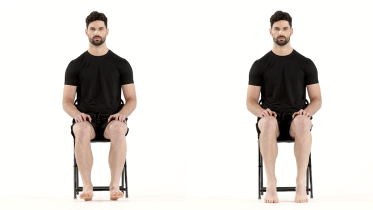 Ankle pumps
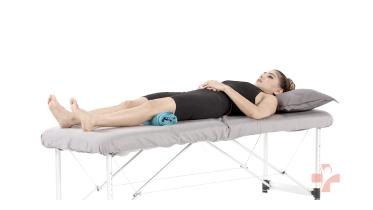 Quad sets (towel under knee)
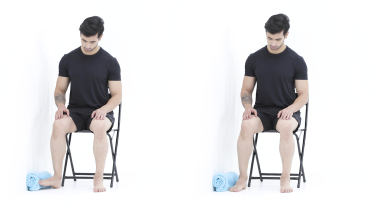 Seated isometric hip internal rotation
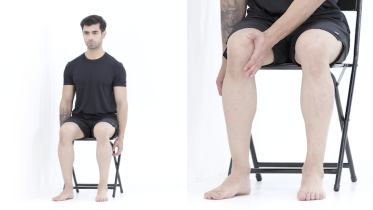 Seated isometric hip adduction
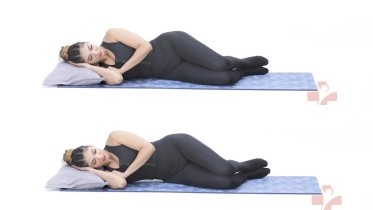 Isometric clamshell
Stage 2: Weight bearing and walking, weeks 2 to 4
This is the phase where crutches are gradually left behind, and in the international agreement its goals are pain-free hip flexion to about 90 degrees, about 10 degrees of hip extension, and walking short distances with a normal pattern by the end of it (Disantis and colleagues, 2026). When you come off the crutches is your surgical team's call. The exercises here build the base for walking: the deep abdominal hold, bridging, standing hip abduction and heel raises. Most start at 1 to 3 sets of 8 to 15, daily or most days, and the hold work at 5 to 10 seconds. Three technique points matter more than the numbers here. In the bridge, lift until there is a straight line from your knees through your hips to your shoulders and stop at that line, rather than pushing higher, because arching on past it takes the hip backward beyond straight. If you cannot tell, stop lower: a bridge that is a little short does the same job for the buttock muscles. Do the standing hip abduction with the operated leg as the lifting leg, standing on the other leg with a hand on a counter, so you are not loading the operated side while you still have weight bearing limits. Hold a counter for the heel raises too, and keep whatever goes through the operated leg inside the limit you were given. Breathe steadily through every hold and never hold your breath, particularly if you have high blood pressure. Walking is the main exercise in this phase, built up in minutes rather than distance, and a limp means you have done too much rather than that you need to try harder.
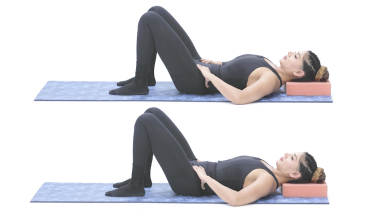 Transverse abdominis activation
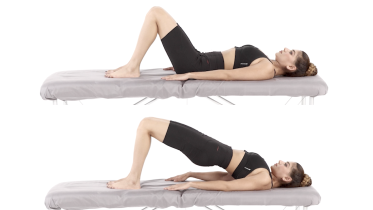 Glute bridge
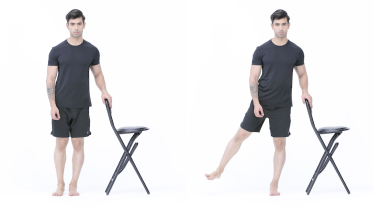 Standing hip abduction
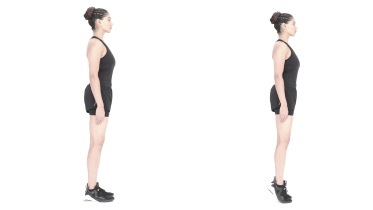 Calf raises
Stage 3: Start strengthening, weeks 4 to 8
The agreement's third phase aims at full, even movement and walking without an aid, and it brings in a walking program, deep hip rotator and side lying abduction work, planks, body weight squats to about 90 degrees and standing on one leg (Disantis and colleagues, 2026). Start the squat shallow, and raise the seat behind you with cushions so you stop above a deep bend. If your surgeon has given you a limit on how far the hip may bend, that limit sets the depth, not how the hip feels on the day. A right angle is the commonest limit given, and the way to keep to it without measuring anything is to build the cushions up until your bottom touches while your hips are still level with or above your knees. Do the side lying abduction and the clamshell lying on your unoperated side, as in stage 1. The clamshell is the exercise that turns the thigh outward, so if your surgeon has limited how far the hip may turn out, this is the one to ask about by name, and keep the lift small until you have an answer. In the plank, your job is a straight line from shoulders to ankles: the moment your hips start to drop toward the floor, come down onto your knees and finish the hold there, because a sagging plank takes the hip backward past straight and that is the one direction this page asks you to protect. Starting the plank from your knees is a reasonable place to begin and the hold still counts. The bird dog is the other exercise in this stage that moves the hip the same way, because the leg reaches out behind you. Its own page caps the lift at the height of your body and says the back must not arch, which comes to the same thing as holding the hip at straight, so treat that cap as the point of the exercise rather than as a beginner's version. Keep a counter within reach for the one-leg balance work, and stand on the operated leg while you lift the other, which is the way round that trains the hip you are rehabilitating. If you find it easier the other way and lift the operated leg, keep that lift low rather than bringing the knee up to a right angle as the exercise page shows, because a right angle is as far as the commonest flexion limit goes and this is an active lift rather than a position you are placed in. Normal practice here is 2 to 3 sets of 8 to 15 for the strength work, 2 or 3 days a week, with planks held 10 to 30 seconds. Discomfort that settles soon after you stop and leaves the hip no worse the next morning is fine. A pinch at the front of the hip means you bent too deep, so make the movement smaller rather than pushing on, and tell your physio.
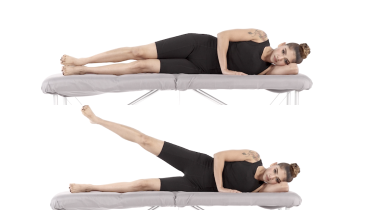 Side lying hip abduction
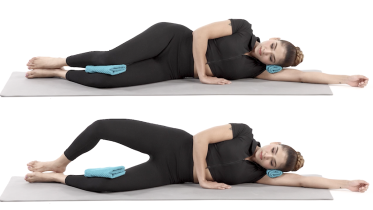 Clamshell
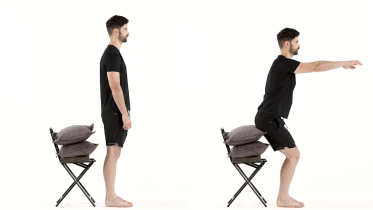 Chair squat
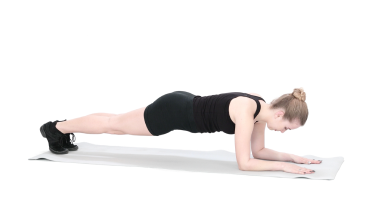 Plank
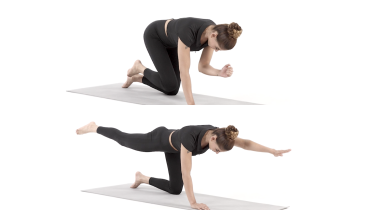 Bird dog
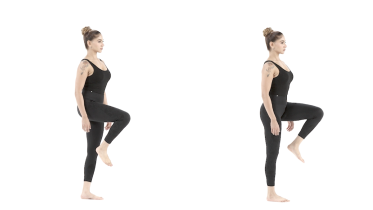 Single leg stance
Stage 4: One leg at a time, weeks 8 to 12
The fourth phase is about control of the pelvis when you are standing on one leg, which is what stairs, walking and every sport need. It brings in weighted squats, deadlifts, lunges and step downs alongside the bike, the elliptical and swimming without kicking (Disantis and colleagues, 2026). Most of this work loads one leg at a time, and the band walk and the side plank train the hip and trunk muscles that hold the pelvis level while it does. Put the operated leg in front for the split squat, so that hip bends rather than stretches backward, and keep the step length moderate. A long stride with the back heel high carries the back hip past straight, and the full version on the exercise page lowers the back knee almost to the floor, so stop the lowering while your hips are still level with or above your knees as in stage 3. In the single leg deadlift the hip bends as you lean forward, so lean a little at first and keep a hand on a counter, and if your surgeon still has a limit on how far the hip may bend, the lean stops inside it. Those two instructions have an order to them: body weight only while you still need the counter, and a weight in your free hand only once you do not. Holding a weight in each hand and balancing on one leg with nothing to grab is a later version of this exercise, not the starting one. Start the side plank with your unoperated side underneath and add the operated side once lying on it is comfortable, and if the full version on straight legs is too much, do it with the bottom knee bent and resting on the mat. Side plank is held 10 to 30 seconds, and the one-leg strength work is usually 2 to 3 sets of 6 to 12 each side, 2 or 3 days a week. Build the weight you hold in small steps and judge it by the next morning, not by how it feels mid-set.
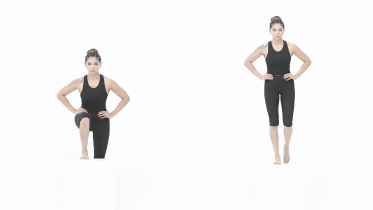 Step up
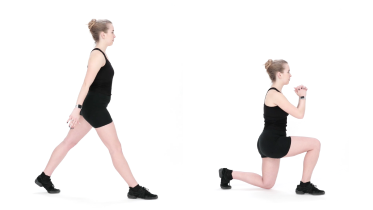 Split squat
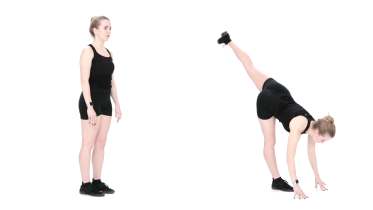 Single leg deadlift
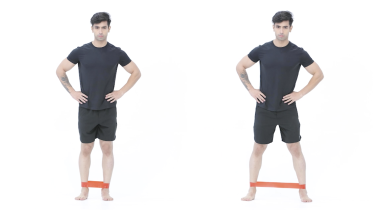 Lateral band walk
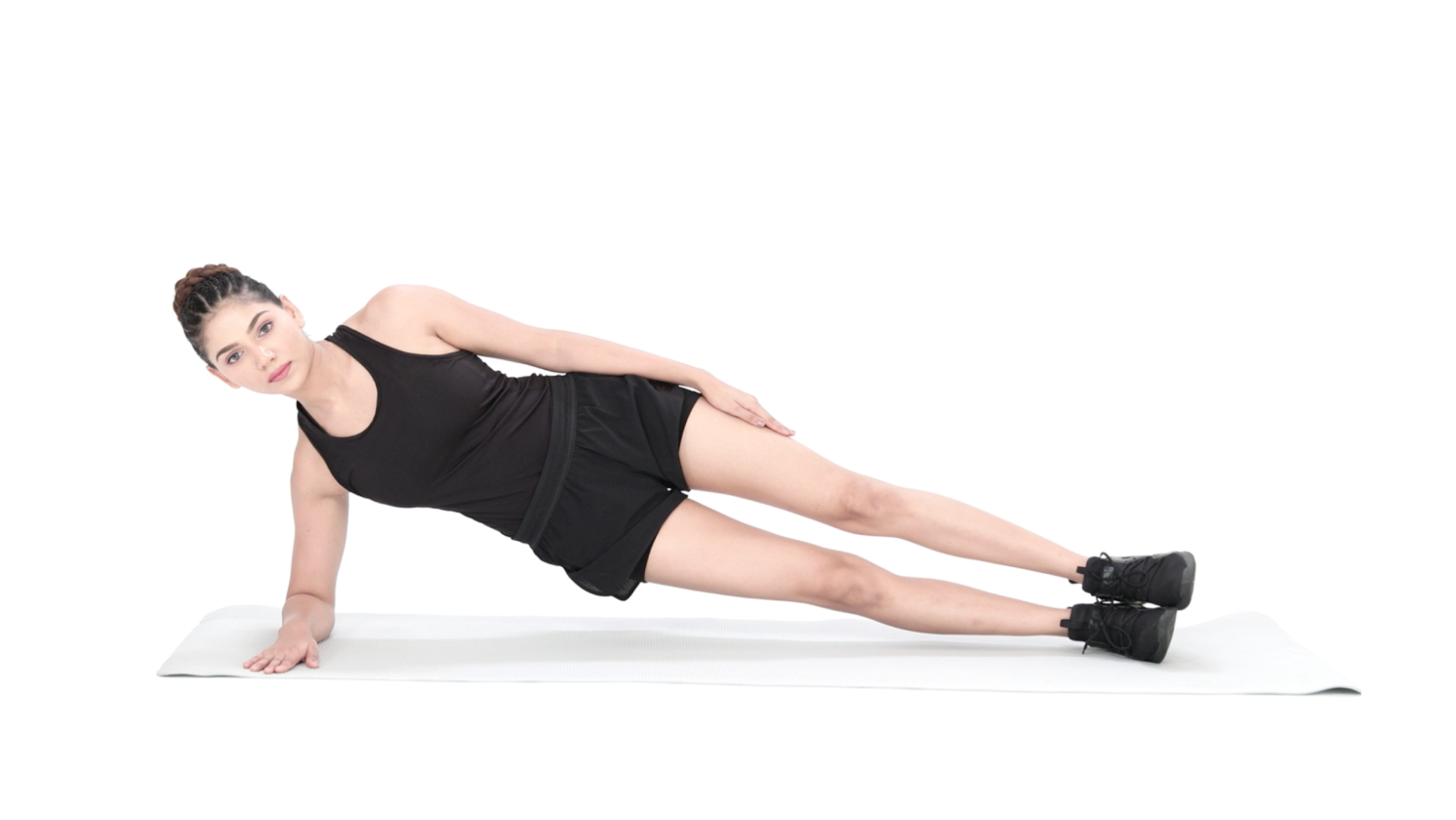 Side plank
Stage 5: Late stage strength and control, weeks 12 to 18
This phase prepares for running and for sport, and the agreement sets measurable gates before running starts: good control standing on one leg, strength above 80% of the other side, and a sport-focused hip questionnaire score above 85% (Disantis and colleagues, 2026). Those are measured by your physio rather than guessed at home, which is the point of them. Most of the work here is slow, controlled single-leg loading with the hip bending under load, which is the hardest thing you have asked it to do so far. The single leg bridge is the exception and is there for the buttock muscle on its own, with the knee doing little. Stop it at the same line the stage 2 bridge stops at, straight from knee through hip to shoulder, because lifting on one leg makes it easier to push past that line than it was with both feet down. Usually 2 to 3 sets of 6 to 12 each side, 2 or 3 days a week. Running, agility and jumping are added after this stage, on a plan you build with your physio. Be clear about where that differs from the agreement, because the agreement is on this page everywhere else. It starts a straight-line running program inside weeks 12 to 18 for the person who has already met those three gates, and adds light agility and jumping once running is going well, keeping cutting and pivoting for its return to sport phase from about week 18. We put all of it after the gates rather than inside the weeks for one reason: nobody measures 80% strength at home, so for a reader working alone the date arrives long before the evidence that the hip is ready does.
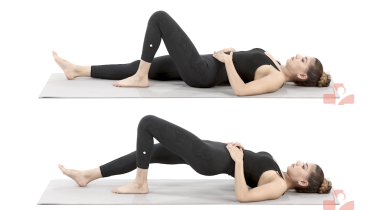 Single leg bridge
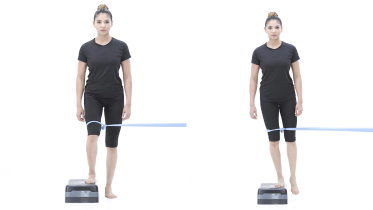 Lateral step-down with band
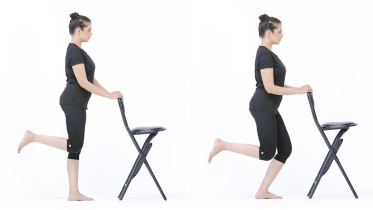 Supported single leg squat
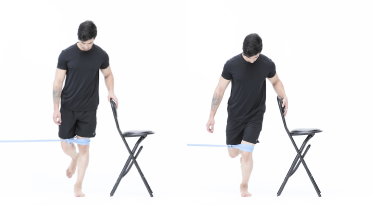 Single leg mini squat with band
Getting back to running and sport
The agreement puts the return to sport phase at about week 18 onward, and it says openly that it does not set out the detail of that progression (Disantis and colleagues, 2026). What it does give you are the things to have in place before you start: control of the pelvis and leg on one leg, strength above 80% of the other side, and a sport-focused score above 85%.
Those gates are better news than they sound. They give you something to work toward that is not a date, and they explain why two people operated on in the same week can start running months apart. If nobody has measured your strength and you are thinking about running, that measurement is the appointment to book.
Kemp and colleagues (2020) recommend that a physiotherapist leads rehabilitation after hip surgery, and this is the stage where that matters most. Running, cutting and jumping load a hip in ways no home program can judge from the outside.
What we notice in the clinic
The first two mistakes we see are opposites of each other.
One is doing too little for too long. The hip is sore, the limits are frightening, and people sit still for six weeks, so the gluteal muscles fade and the hip flexors stiffen. By the time the restrictions lift there is a second problem on top of the first, and the next three months are spent catching up.
The other is the week 6 surge. Pain settles, crutches go, the hip feels surprisingly good, and someone fits a long walk, a bike ride and a day out into the same week. That is also roughly when the rare femoral neck fractures in the surgeon survey cited on this page tended to occur, and most followed weight bearing instructions that had not been kept to (Merz and colleagues, 2015). Feeling good is not evidence that the bone has caught up.
A third pattern is subtler. People walk with the operated leg doing as little as possible for months without knowing it: a shorter step, the weight shifted to the other side at every stop, getting out of chairs on one leg. Watching yourself stand up from one chair usually shows it, and it is the reason stage 3 insists on walking normally before anything else is added.
When to contact your surgical team
Contact them the same day for a wound that is leaking, a hip that becomes hot, red and swollen, a temperature, or new severe pain, catching, slipping or an inability to put weight through the leg. Those routes are written out in full in the warning signs below, and they are the ones not to sit on overnight.
Contact them at the next sensible opportunity about a patch of numbness or burning on the thigh or groin, about a hip that aches after activity without swelling or catching, and about anything on your plan that you cannot do yet. None of those is an emergency, and all of them are worth saying out loud rather than discovering at a three-month review.
One thing is worth saying plainly, because it frightens people and because the obvious answer to it is the wrong one. Your leg was held under traction during the operation, often with a padded post between the legs, and the nerves that carry feeling to the thigh and to the area between the legs can be bruised by that.
In one prospective series of 100 hip arthroscopies, where every patient was asked directly rather than left to raise it, 13 reported a nerve symptom afterward: the pudendal nerve in 9 of them, the nerve to the outer thigh in 2, and the sciatic nerve and a nerve at the outer ankle in one each. Eight of the 13 had settled within two weeks and all had settled by nine months (Kern and colleagues, 2018). That was one surgeon's first 100 cases, so read it as a rough guide rather than a rate. The last two of those four nerves carry movement as well as feeling, which is why a foot that drags, catches or slaps down is on the warning list at the same-day level rather than being filed with the numb patches here.
What none of that does is change the warning on this page. Numbness or altered feeling around your genitals or bottom, and new trouble peeing or controlling your bladder or bowels, have causes that need treating within hours, and a bruised nerve and a dangerous cause feel the same from the inside. So that symptom keeps the emergency route, and a bruised nerve from the traction is the reassuring thing you get told after you have been seen, not a reason to wait and see.
Ask your physio for a reassessment if progress has flattened for more than two or three weeks, or if you have reached a stage and cannot meet its goals. The warning signs below say what needs help faster, and how fast.
For physiotherapists
The staging on this page follows the ISHA 2024 physiotherapy agreement (Disantis and colleagues, 2026): six phases, time and milestone based, with the phase goals and interventions as published and its stated limitations carried through to the patient text. The page reproduces its progression criteria (normalised gait without an aid before a walking program, restored hip extension and anterior hip flexibility before that, pelvic control on single leg tasks, and strength above 80% with Hip Outcome Score Sport subscale above 85% before running) and its week 18 entry to the return to sport phase. Table 2 carries a third phase five goal, 80% limb symmetry index on the Star Excursion Balance Test, which the discussion does not name among its running criteria; it is kept out of the patient text for that reason and recorded here so a clinician measuring the gates has the full set.
The one place the page is deliberately stricter than the agreement is the start of running: the agreement's phase five discussion begins a straight-line running program within weeks 12 to 18 once the single leg control, strength and Hip Outcome Score Sport gates are met, and the page defers running until after its stage 5 instead. The page now states the agreement's position alongside its own and says why it differs, rather than leaving a reader to infer that the agreement defers running to week 18, which it does not. The restriction was not loosened to match the source, because the gates it turns on are measured in a clinic and this reader may have nobody measuring them.
Two further items from the agreement are not on the page and are noted so their absence is a choice: Tampa Scale of Kinesiophobia monitoring in phase four with a score above 37 taken as significant, and the phase two quadruped progression of hip flexion range, which the discussion gives as the position that protects the anterior joint. It does not reproduce weight bearing percentages, crutch durations or degree limits on flexion, external rotation or extension, which are handed to the operating surgeon throughout.
The one limit the page does set is a direction rather than a number, on the principle that a restriction cannot exceed anybody's protocol while a permission can: no end-range loading or stretching in the early weeks, and specifically no stretching the anterior hip into extension or external rotation, which follows the agreement's own instruction that early quadriceps stretching be done in a modified Thomas position at neutral hip extension to protect the anterior capsule, and its restriction of phase one active movement to the knee and ankle with hip PROM kept within a protected range. The page states explicitly that this is not in conflict with the phase two goal of 10 degrees of extension, so the two statements cannot be read as an internal contradiction.
That omission is deliberate and sourced. Hemstock and colleagues (2023) pooled 24 studies and 2,231 patients, identified seven distinct descriptors of postoperative weight bearing with about 83% being a variant of partial weight bearing, judged reporting of weight bearing status and rehabilitation parameters to be poor, and concluded that the comparative evidence does not support a specific recommendation. Bistolfi and colleagues (2021) reached a comparable conclusion on duration, restriction and goals. Merz and colleagues (2015) is the reason the page argues for adherence rather than for reassurance: 11 proximal femur fractures across 14,945 arthroscopic femoroplasties in a 28-surgeon survey, mean 40.5 days postoperatively, more than half preceded by violation of weight-bearing precautions, predominantly in women and patients over 50.
Technique cues carried on this page rather than on the library exercise pages, which are written for hips in general: the bridge is stopped at hip neutral rather than at the end of available extension, standing hip abduction is done with the operated leg as the moving leg while weight bearing is restricted, heel raises and the one-leg work are done with a hand support, the side lying isometric and side lying abduction are done lying on the unoperated side, and the chair squat is depth-limited by a raised seat and by the surgeon's flexion limit rather than by comfort. Five more were added on a patient-use reading.
The two phase one isometrics in our library (content/exercises/seated-isometric-hip-internal-rotation.md and content/exercises/seated-isometric-hip-adduction.md) are both written for a chair with the knees at 90 degrees, which is the flexion the agreement sets as a phase TWO goal, so the page now asks for the highest firm seat with the hips above the knees and offers an opt-out to a supine version. The surgeon's flexion limit is translated into something a reader can see, bottom touching the cushions while the hips are level with or above the knees, because a reader told "90 degrees" and handed a chair cannot apply it. The clamshell is named as the external rotation exercise for a reader carrying an ER restriction, since content/exercises/clamshell.md gates only on hip replacement. The front plank is given a stop rule on hip sag rather than on trunk fatigue, because content/exercises/plank.md frames sag as a lumbar problem and for this reader it is anterior capsular extension; the knees-down version is offered as a start, which is consistent with the agreement wording "forward and side plank hip progression".
And the stage 4 instruction to hold a weight was in direct conflict with the instruction to keep a hand on a counter, so the two are now sequenced. Side plank is started on the unoperated side with a bent-knee option.
The doses are a starting range only, from 1 to 3 sets of 8 to 15 early to 2 to 3 sets of 6 to 12 for single leg work, with 5 to 10 second isometric holds and 10 to 30 second planks. Stage entry is written as criterion based within the agreement's week bands, so a reader whose surgeon has slowed the plan is not pushed on by a date.
Scope boundaries with the two live hip pages are deliberate. The decision between arthroscopy and physiotherapy, and the trial evidence behind it, sits on the hip impingement page. Non-surgical management of a labral tear, including the asymptomatic prevalence data, sits on the hip labral tear page. This page is the postoperative pathway.
Operative detail changes the plan and the page says so: labral debridement, repair, reconstruction or augmentation, rim or femoral osteoplasty, and capsular closure all carry different constraints, and several are decided intraoperatively. The ISHA agreement explicitly excludes biologics, microfracture, cartilage repair, capsular closure, revision surgery and concurrent borderline dysplasia from its scope, so those patients need their surgeon's own protocol rather than this framework.
The front plank is named individually for the capsular closure patient rather than left inside that general exclusion, and the reasoning is on the page: the agreement's own Table 2 puts "forward and side plank hip progression" in phase three at 4 to 8 weeks, which is where this page has it, but the agreement does not cover a closed capsule, and the plank's standard failure mode in an unsupervised hold is pelvic drop into relative hip extension, loading the anterior capsule at the repair site. No evidence either permits or forbids it in that patient, so the page neither clears it nor withdraws it and asks for the surgeon's answer on that exercise by name, which is the course the reviewers took where the evidence does not settle a question.
Traction-related neuropathy of the lateral femoral cutaneous or pudendal nerve is routed on the page at a few-days level with a same-day escalation for spread, weakness or severe pain, and with perineal and sphincter symptoms held at the cauda equina line rather than normalised. The surgical reasoning for not tiering those symptoms down for a post-operative reader is that the post-operative reader has more time-critical causes of saddle numbness and sphincter disturbance than the general reader, not fewer, and that pudendal neurapraxia cannot be distinguished from them without assessment. Kern and colleagues (2018) is cited for prognosis, not for permission to wait: 13 of 100 consecutive hip arthroscopies requiring traction reported a nerve symptom on direct questioning, 9 pudendal and 2 lateral femoral cutaneous, 8 of 13 resolved within two weeks and all within nine months, in one surgeon's first 100 cases and therefore quoted as a proportion and not a rate. The line also instructs that ice be kept off numb skin, because cryotherapy sits in phase one of the agreement and anaesthetic skin cannot report a cold burn.
Warning signs
Get emergency help now
- Emergency: you have had a fall or an injury and now have severe hip pain, or you cannot walk or put weight on the leg. Call emergency services or go to an emergency department. This can be a sign of a broken hip (hip fracture).
- Emergency: tingling or loss of feeling in the hip or leg after a fall or injury. Call emergency services or go to an emergency department.
- Emergency: pain, tingling, numbness or weakness in both legs, numbness or altered feeling around your genitals or bottom, or new trouble peeing or controlling your bladder or bowels. The same applies if you lose feeling in one leg. Call emergency services or go to an emergency department straight away. These can be signs of pressure on the nerves at the base of the spine (cauda equina syndrome).
Get help today
- Same day: since keyhole surgery on your hip, you have new severe pain in the groin, hip or thigh, you cannot put your full weight through the leg, or the hip catches, clicks, gives way or feels as if it is slipping again, whether that followed a twist, a knock, a deep bend or simply doing more than your plan allows. Stop the exercises, go back to your crutches if you were given them and keep your full weight off that leg, and contact your surgical team the same day, or get assessed the same day at urgent care or an emergency department if you cannot reach them. If you cannot put any weight on the leg, go to an emergency department, and if that followed a fall or an injury, follow the first emergency warning above instead. A labral repair can come apart before it has healed, and bone that was reshaped at the top of the thighbone is weaker for a while, so a break there is possible even though it is rare. If the hip is only a little achy after a busy day, with no swelling and nothing catching, it is not an emergency, but tell your physio or surgeon in the next few days.
- Same day: since your operation, your wound is oozing, leaking or has pus coming out of it, or its edges start to come apart, or your hip is tender, swollen, painful or red and it is not getting better or is getting worse, or you have a high temperature or feel hot and cold or shivery. Redness can be harder to see on brown or black skin. Contact your surgical team the same day, or get urgent medical advice if you cannot reach them. These can be signs of an infection in the wound or the hip joint. If you feel very unwell, go to an emergency department. If you have a very high or very low temperature, shivering you cannot control, you are breathing very fast or finding it hard to breathe, you are confused or your speech is slurred, your skin, lips or tongue look blue, gray, pale or blotchy (on brown or black skin this can be easier to see on the palms of the hands or soles of the feet), or you have a rash that does not fade when you press it, call emergency services, as this can be sepsis.
- Same day: the hip is hot and swollen, the skin around it has changed color, or you have hip pain with a high temperature or feel hot, cold or shivery. Get medical help the same day, and go to an emergency department if you feel very unwell. A joint infection needs treatment quickly. If you have a very high or very low temperature, shivering you cannot control, you are breathing very fast or finding it hard to breathe, you are confused or your speech is slurred, your skin, lips or tongue look blue, gray, pale or blotchy (on brown or black skin this can be easier to see on the palms of the hands or soles of the feet), or you have a rash that does not fade when you press it, call emergency services, as this can be sepsis.
- Same day: a calf or thigh that is newly swollen or getting more swollen, warm, tender, red or darker than usual, has swollen veins that are sore to touch, or has a throbbing or cramping pain that does not fit your injury or condition, or that feels different from normal muscle soreness after exercise. This can be a sign of a blood clot (deep vein thrombosis), especially after surgery, an injury, time in a cast or boot, a long trip or a spell of being much less mobile than usual. Get medical advice the same day. If you are also short of breath or have chest pain, call emergency services.
- Same day: severe hip pain that came on suddenly without a fall, or pain that is getting worse quickly over a few days. Get medical advice the same day.
- Same day: groin pain that built up with running, marching or jumping, often after you increased your training, and now hurts when you walk, makes you limp, or aches at rest or at night. Stop running and jumping and keep walking to a minimum until it has been checked. Get medical advice the same day and mention your training. If you cannot put weight on the leg, go to an emergency department. This can be a stress fracture in the neck of the thighbone (femoral neck stress fracture), which is easy to miss at first and can become a full break if you keep loading it.
- Same day: new hip or groin pain after a fall, even a small one, if you are older, have low bone density (osteoporosis) or have taken steroid tablets for a long time, even if you can still walk. Get medical advice the same day. A broken hip is not always obvious at first.
- Same day: a leg or foot that is getting weaker, for example your foot drags, catches on the ground or slaps down when you walk (foot drop). Get medical advice the same day. If the weakness is getting worse by the hour, go to an emergency department.
- Same day: hip or groin pain that is worse at night or does not ease with rest, and keeps getting worse. If you are being treated for cancer now, contact your cancer team the same day.
Book an appointment
- Within a day or two: hip or groin pain that is worse at night or does not ease with rest, and keeps getting worse. If you have had cancer, now or in the past, or are losing weight without trying, see your doctor sooner, within a day or two, and mention it. This applies even if the pain is not getting worse.
- Within a few days: since your operation, a patch of numbness, burning, pins and needles or altered feeling on the front or outer thigh, or over the groin. Tell your surgical team within a few days. Keep ice off skin that feels numb, and keep a cloth between an ice pack and your skin, because numb skin cannot feel a cold burn. Get medical advice the same day instead if the numb area is spreading, if the leg or foot is getting weaker, or if the pain is severe or stopping you sleeping. The nerves that carry feeling to the skin here can be stretched or pressed on by the traction used to hold the leg during a hip arthroscopy, and most of these patches settle. If you have numbness or altered feeling around your genitals or bottom, or new trouble peeing or controlling your bladder or bowels, call emergency services or go to an emergency department straight away, as the emergency warning sign above says.
- Within a few days: hip or groin pain that is worse at night or does not ease with rest, and keeps getting worse. See your doctor within a few days.
- Within a few days: new groin or hip pain and you take steroid tablets long term, or have in the past, or you regularly drink a lot of alcohol. This can be a sign of a problem with the blood supply to the top of the thighbone (avascular necrosis). Book an appointment with your doctor within a few days and mention the steroids or alcohol.
- Within 2 weeks: pain that spreads down the leg below the knee, especially with numbness or tingling in the leg or foot. The pain may be coming from your lower back rather than the hip. Book an appointment with a doctor or physio.
Common questions
How long does hip arthroscopy recovery take?
The published staging runs further than most people expect. In the international physiotherapy agreement, the return to sport phase does not begin until about week 18, and the phases before it occupy weeks 0 to 2, 2 to 4, 4 to 8, 8 to 12 and 12 to 18 (Disantis and colleagues, 2026). That is a framework for a hip arthroscopy done for impingement, and the authors are clear that it is expert agreement rather than something tested in outcome studies, and that it does not cover a cartilage repair or microfracture, biologics, a capsule stitched closed, revision surgery or a borderline shallow socket. Your own timetable depends on what was done inside the hip and on what your surgeon has asked you to avoid, so it can be shorter or considerably longer. Nobody can give you a date for full recovery from a web page.
Why do the hip arthroscopy protocols I have read disagree with each other?
Because the evidence does not settle it. A systematic review of 24 studies covering 2,231 patients found seven different terms used to describe weight bearing after this operation, with about 83% of them some version of partial weight bearing, and concluded that there is not enough comparative evidence to recommend any specific weight bearing instruction (Hemstock and colleagues, 2023). An earlier review of rehabilitation after hip arthroscopy found the same picture across the restrictions, their duration and what each stage aimed at (Bistolfi and colleagues, 2021). So the protocol you were given is your surgeon's judgement applied to your operation, which is exactly why it beats anything you read elsewhere, including this page.
How long will I be on crutches after a hip arthroscopy?
Your surgical team decides, and the published protocols genuinely differ on it. The international agreement describes flat-foot weight bearing with a walking aid in the first phase and weaning off the aid during weeks 2 to 4, with a normal walking pattern over short distances as the goal by the end of that phase (Disantis and colleagues, 2026). What it does not do, and what we will not do either, is give you a percentage of body weight or a number of weeks. If you have lost your instructions, ring your surgical team and ask rather than guessing from somebody else's plan.
Why do the weight bearing limits matter if the hip feels fine?
Because the hip feeling fine is not a measure of how strong the bone is. Twenty-eight high-volume hip surgeons were surveyed about 14,945 operations in which the bone at the top of the thighbone had been reshaped. Eleven of those patients later broke that bone, which is roughly 1 in 1,400, and the breaks came on average around 6 weeks after surgery. In more than half of them the weight bearing instructions had not been kept to, and most happened in women and in people over 50 (Merz and colleagues, 2015). It is a rare event, and it is the reason a limit that feels unnecessary is still worth keeping.
When can I drive after a hip arthroscopy?
Ask your surgical team, and check with your insurer. There is no trial that sets a date, and the honest position is that it depends on which hip was operated on, whether your car is automatic, what pain relief you are taking and whether you can perform an emergency stop without hesitating. The practical test everyone uses is whether you could stamp on the brake hard, right now, without thinking about your hip. If the answer is no, you are not ready, whatever week it is.
When can I go back to work?
It depends far more on what your job asks of your hip than on the date. Desk work with the ability to stand up and move regularly usually comes back first, and people often underestimate how tiring the first couple of weeks back are. Jobs that need kneeling, squatting, ladders, driving, lifting or long periods sitting in a car are a different matter, and those go through your surgical team. Ask for specifics about what you cannot yet do rather than for a return date, because that is what an employer can actually work with.
What if my hip clicks or catches after the operation?
Tell somebody. A click that comes with new severe pain, with an inability to put your weight through the leg, or with a feeling that the hip is slipping, is a same-day call to your surgical team, and the warning signs on this page give the full route. A hip that is only a little achy after a busy day, with no swelling and nothing catching, is not an emergency, but it still goes on the list for your next appointment. Guessing is the thing to avoid: a repair that has come apart and a hip that is simply tired can feel similar for the first day.
Do I need physiotherapy after a hip arthroscopy?
The international consensus on hip-related pain recommends that a physiotherapist leads rehabilitation after hip surgery (Kemp and colleagues, 2020), and the staging on this page is built on an agreement written by physiotherapists and surgeons together. The practical argument is the gates in stages 4 and 5: strength as a percentage of the other side, and a sport questionnaire score, are measured rather than estimated. If you are managing without supervision, at least get the hip assessed before you start running.
References
- Disantis A, Bonin N, Byrd T, et al. The 2024 International Society for Hip Preservation physiotherapy agreement on post-operative rehabilitation following hip arthroscopy for femoroacetabular impingement syndrome. Journal of Hip Preservation Surgery. 2026;13(3):288-294. https://doi.org/10.1093/jhps/hnaf055
- Hemstock R, Mulhall D, Didyk J, Ogborn D, Lemmex D. Postoperative weight-bearing restrictions and rehabilitation protocols after hip arthroscopy for femoroacetabular impingement: a systematic review. Journal of Hip Preservation Surgery. 2023;10(3-4):220-227. https://doi.org/10.1093/jhps/hnad023
- Bistolfi A, Guidotti C, Aprato A, et al. Rehabilitation protocol after hip arthroscopy: a 2015-2020 systematic review. American Journal of Physical Medicine and Rehabilitation. 2021;100(10):958-965. https://doi.org/10.1097/PHM.0000000000001677
- Merz MK, Christoforetti JJ, Domb BG. Femoral neck fracture after arthroscopic femoroplasty of the hip. Orthopedics. 2015;38(8):e696-700. https://doi.org/10.3928/01477447-20150804-57
- Kemp JL, Risberg MA, Mosler A, et al. Physiotherapist-led treatment for young to middle-aged active adults with hip-related pain: consensus recommendations from the International Hip-related Pain Research Network, Zurich 2018. British Journal of Sports Medicine. 2020;54(9):504-511. https://doi.org/10.1136/bjsports-2019-101458
- Kern MJ, Murray RS, Sherman TI, Postma WF. Incidence of nerve injury after hip arthroscopy. Journal of the American Academy of Orthopaedic Surgeons. 2018;26(21):773-778. https://doi.org/10.5435/JAAOS-D-17-00230
- Clough TM. Femoral neck stress fracture: the importance of clinical suspicion and early review. British Journal of Sports Medicine. 2002;36(4):308-309. https://doi.org/10.1136/bjsm.36.4.308
- NHS. Hip pain in adults. Page last reviewed 20 November 2025. https://www.nhs.uk/symptoms/hip-pain/
- NHS. Deep vein thrombosis (DVT). Page last reviewed 30 April 2026. https://www.nhs.uk/conditions/deep-vein-thrombosis-dvt/
Written and checked by the PocketPhysio editorial team. Last updated 2026-10-27.
This page is general education, not a diagnosis or a personal treatment plan. See a physiotherapist or doctor for advice about your own situation.