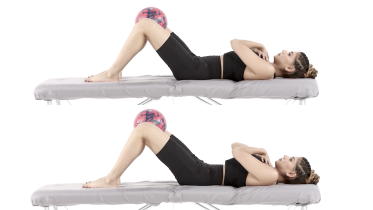
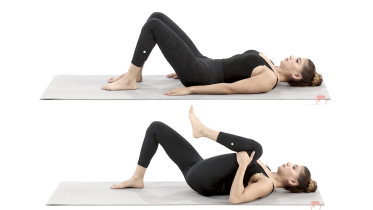
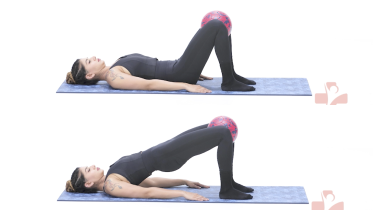
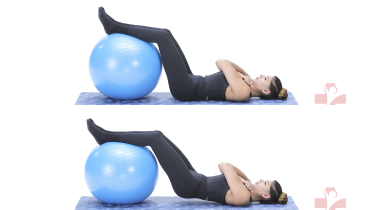
Glute bridge
The glute bridge lifts your hips off the floor while you lie on your back with knees bent. It strengthens the buttocks and the back of the thighs, and it turns up in a lot of rehab programs for the back as well as the hip and knee.
How to do the glute bridge
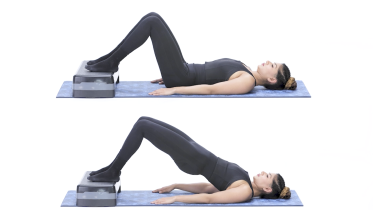
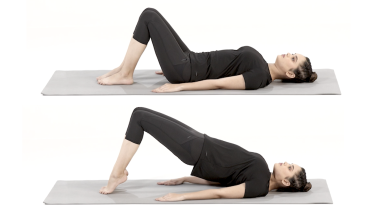
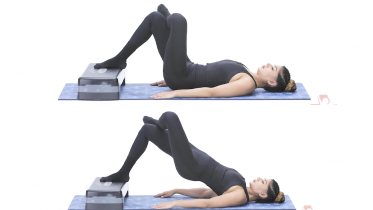
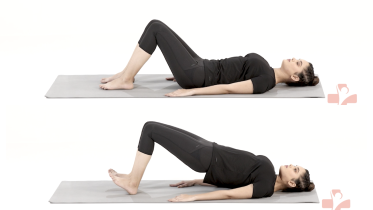
- Lie on your back with knees bent, feet flat and about hip width apart. Rest your arms by your sides.
- Tighten your stomach gently.
- Squeeze your buttocks, push through your heels and lift your hips until your shoulders, hips and knees are in a straight line.
- Hold for 3 to 5 seconds at the top and keep breathing.
- Lower your hips slowly back down.
What you should feel
The buttocks and the back of the thighs should do the work, not the lower back.
Common mistakes
- Arching the lower back to lift higher.
- Pushing through the toes, which moves the work into the front of the thighs.
- Letting the knees fall apart or together.
How often
Often 2 to 3 sets of 10 to 12 with a short hold at the top. Your physio will adjust this, and later can move you on to single leg bridges.
Stop and check with your physio if
- You feel back pain rather than buttock work, even when you lift a little lower.
- Pain spreads down the leg or you get numbness or tingling.
- Your hamstrings (the back of the thighs) cramp. This is a common complaint with bridges, and bringing your feet a little closer to your bottom often eases it.
From the clinic
After hip, knee or back surgery, your surgeon's protocol decides when you can start bridges. Once you are past the first three months of pregnancy, check with your physio before exercising flat on your back.
Written and checked by the PocketPhysio editorial team. Last updated 2026-09-25.
This page is general education, not a diagnosis or a personal treatment plan. If you have pain, an injury or a health condition, see a physiotherapist or doctor before starting new exercises.