Adductor ball squeeze
The adductor ball squeeze is an inner thigh hold done lying on your back. Knees bent, a soft ball between them, squeeze, hold, then let go, with nothing moving at the hip. Both legs work together, and it is one of the first exercises many groin and hip programs use.
How to do the adductor ball squeeze
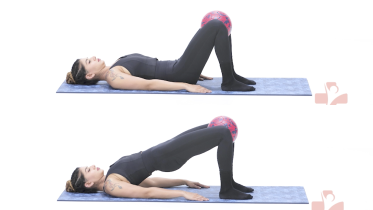
- Lie on your back on a firm bed or mat. Bend both knees and put your feet flat, about hip width apart. Fold your arms across your chest or rest them by your sides.
- Place a soft ball between your knees. A firm pillow folded in half works if you do not have a ball.
- Let your back and shoulders relax onto the bed and breathe normally.
- Squeeze the ball with your knees, using the muscles on the inside of your thighs. Hold the squeeze for several seconds and keep breathing.
- Slowly let go, rest for a moment, and repeat.
What you should feel
A firm tightening along the inside of both thighs, up toward the groin. Nothing should pinch at the front of the pelvis.
Common mistakes
- Squeezing as hard as you can from the first rep. Start with a moderate squeeze and build up only if it stays comfortable.
- Holding your breath while you squeeze.
- Lifting your hips or arching your back to push harder. Only the knees press in.
How often
A common start is holds of 5 to 10 seconds, repeated 5 to 10 times, once or twice a day. Your physio will adjust this to you.
From the clinic
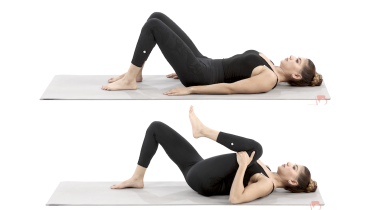
The voice guide mentions straight legs. Follow the video: knees bent, feet flat and the ball between your knees, which is the usual way to do this exercise. You can also do it sitting on a firm chair with the ball between your knees.
Lying down, nothing to balance, both legs pressing at once: not much is being asked of you, which is why this tends to be the first inner thigh exercise in a program for a groin strain, hip impingement or a hip labral tear. The same thing is the reason a physio later moves you off it: with both knees pressing into one ball, nothing stops the stronger side doing more of the work, and you cannot tell from the inside which side is. When only one leg is the problem, the hand resisted hold in seated isometric hip adduction tells you what that leg is actually doing.
The ball keeps your knees apart, so your legs do not cross the middle of your body. For the same muscles working through a range instead of a hold, side lying hip adduction lifts the bottom leg off the floor.
Before you start
- If you have had a hip replacement or other hip surgery, get the go-ahead from your surgeon or physio before you try the adductor ball squeeze. Some operations limit this kind of work for the first months, so the timing depends on your surgery.
- Pregnant, or have pain over the pubic bone at the front of your pelvis? Squeezing the inner thighs puts effort through that joint, so check with your physio before you start.
- If you are pregnant and past the first three months, check with your physio before exercising flat on your back. The sitting version is often the better choice.
When to stop and get help
- You feel sharp pain in the groin or over the pubic bone at the front of the pelvis.
- Groin pain builds during the holds or is worse the next morning.
Written and checked by the PocketPhysio editorial team. Last updated 2026-10-11.
This page is general education, not a diagnosis or a personal treatment plan. If you have pain, an injury or a health condition, see a physiotherapist or doctor before starting new exercises.