Bridge with heel raise
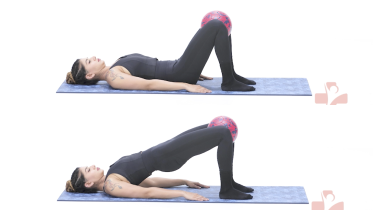
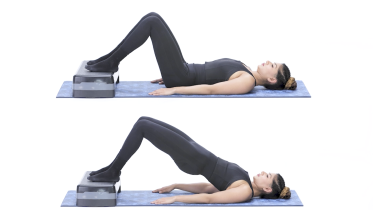
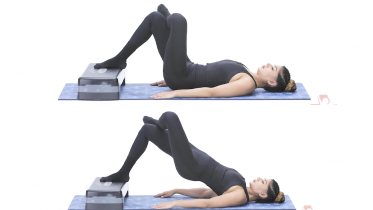
The bridge with heel raise adds a calf lift to a normal hip bridge. Once your hips are up, you rise onto your toes and hold for a moment without letting the hips sink or tilt, then lower your hips and heels. It works the buttocks, the back of the thighs and the calves together, and it asks for more control than a plain bridge.
How to do the bridge with heel raise
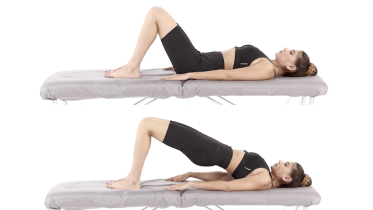
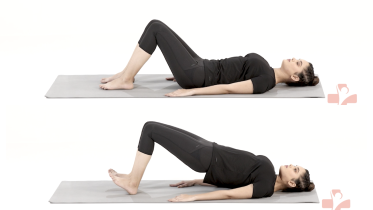
- Lie face up on a mat with your knees bent, feet flat on the floor about hip width apart, and your arms resting by your sides.
- Squeeze your buttocks and press through your feet to lift your hips until your shoulders, hips and knees form a line.
- Keeping your hips high and level, lift both heels so you come up onto your toes. Your shoulders stay on the mat.
- Hold for a moment and keep breathing.
- Lower your hips slowly to the mat, then put your heels back down.
What you should feel
Strong work in your buttocks and the back of your thighs, with your calves joining in as the heels come up. The lift should not come from your lower back.
Common mistakes
- Letting the hips sink as the heels rise.
- One side of the pelvis dropping lower than the other.
- Arching your lower back to push the hips higher.
- Bouncing the heels up and down instead of holding briefly at the top.
How often
Many programs use 2 to 3 sets of 8 to 12, holding for 3 to 5 seconds on your toes, a few days a week. Your physio will adjust this.
Stop and check with your physio if
- Back pain instead of the feeling of your buttocks and calves working, even with the hips a little lower.
- Cramp in the back of the thigh or in the calf. Lower down, rest and stretch it out before you try again.
- Pain, tingling or numbness spreading down a leg.
From the clinic
Coming up onto your toes leaves less of your foot on the floor, so holding the hips high and level is harder work. Get comfortable with the glute bridge first. If the hips drop as soon as the heels lift, raise the heels only a little, or hold the bridge a bit lower. From here, the single leg bridge is a common next step.
If you have had a hip replacement, get the go-ahead from your surgeon or physio before you try the bridge with heel raise. Some operations limit this kind of work for the first months, so the timing depends on your surgery. After knee or back surgery, ask your surgeon or physio when bridging work can start. If you are pregnant and past the first three months, check with your physio before exercising flat on your back.
Written and checked by the PocketPhysio editorial team. Last updated 2026-09-26.
This page is general education, not a diagnosis or a personal treatment plan. If you have pain, an injury or a health condition, see a physiotherapist or doctor before starting new exercises.