Hamstring bridge
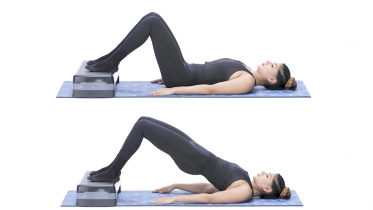
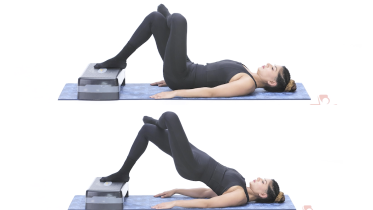
The hamstring bridge is a bridge done with your toes pulled up, so only your heels touch the floor. It works the muscles at the back of your thighs (hamstrings) and your buttocks, and balancing on your heels makes it feel quite different from a flat foot bridge. How far your heels sit from your bottom also counts: the further away they are, the harder the hamstrings tend to work. It needs no equipment.
How to do the hamstring bridge
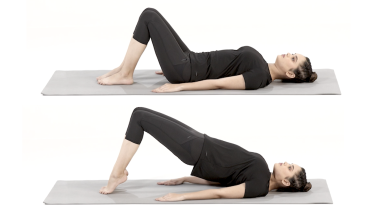
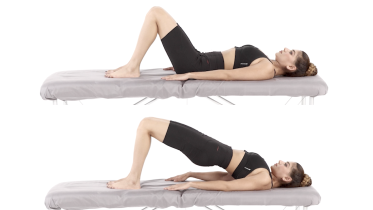
- Lie on your back with your knees bent and your feet about hip width apart. Put your arms down by your sides with the palms on the floor.
- Pull your toes and the front of each foot up off the floor, so only your heels stay down.
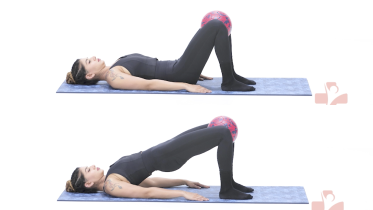
- Press your heels into the floor, squeeze your buttocks and lift your hips until your shoulders, hips and knees form a straight line.
- Pause for a moment at the top, with your lower back long rather than arched.
- Lower your hips slowly to the floor, keeping the toes up, and repeat.
What you should feel
The back of the thighs and the buttocks. You may feel the front of the thighs working a little too.
Common mistakes
- Letting the toes drop back down, which turns it into an ordinary bridge.
- Driving the hips so high that the lower back arches.
- Coming down fast instead of lowering slowly.
How often
Often 2 to 3 sets of 8 to 12, with a short pause at the top. Your physio will adjust this.
From the clinic
Ask someone where they feel a floor bridge and you often hear the front of the thighs. Lifting the forefoot leaves only the heels to press through, so the push cannot drift onto the toes and the hamstrings take more of the lift. A little work at the front of the thighs is still normal, and nothing has gone wrong if you notice it. We pick this version when the back of the thigh is the target rather than the buttock, and while a hamstring is being built back up after a strain.
Only your heels touch the floor. That makes the surface under them matter more here than in a normal bridge. A bare heel on a mat stays put. A sock on a wooden floor or a loose rug slides forward as soon as you press, and you feel it as the knee straightening halfway through the lift. Bare feet on a mat, or a towel under the heels if the floor is hard and they feel bony against it.
Nobody notices the toes creeping back down, and looking for them from up there is hopeless. Let the toes report on themselves. At the top of a lift, wiggle them. If they tap the floor they have sunk, and you are back to an ordinary bridge. Reset them before the next repetition instead of fighting them through the whole set.
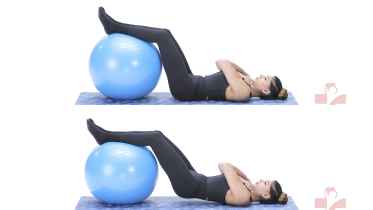
Get steady with the glute bridge before you move onto your heels. When this feels easy, the bridge with feet on a step and the stability ball hamstring curl ask more of the same muscles.
Bridging on the heels puts load straight through the hamstrings, so after a recent hamstring strain your physio should set the pace.
Before you start
- After hip, knee or back surgery, your surgeon's protocol decides when you can start bridging exercises.
- From the second trimester of pregnancy on, ask your physio before you exercise lying on your back.
When to stop and get help
- Your hamstrings cramp, or you feel a sudden sharp pull at the back of the thigh. Come down and rest. Bringing your heels a little closer to your bottom takes some of the load off before you try again.
- Back pain replaces the work in your legs, or pain, numbness or tingling spreads down a leg.
Written and checked by the PocketPhysio editorial team. Last updated 2026-10-06.
This page is general education, not a diagnosis or a personal treatment plan. If you have pain, an injury or a health condition, see a physiotherapist or doctor before starting new exercises.