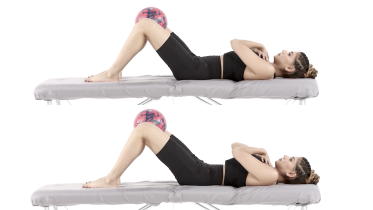
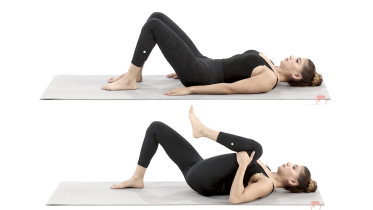
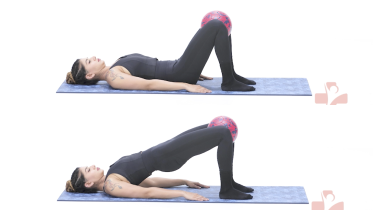
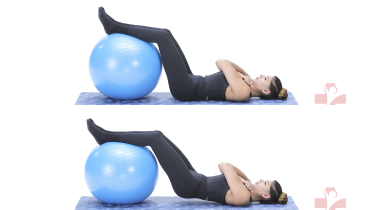
Bridge with feet on a step
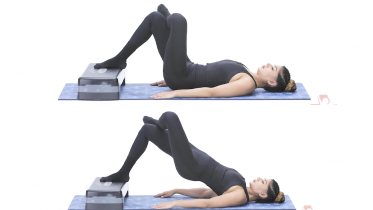
This is a bridge with both feet resting on a low step instead of the floor. Raising the feet changes the angle of the lift, and many people feel the back of the thighs working more than in a floor bridge. Physios usually bring it in once the basic glute bridge feels easy.
How to do the bridge with feet on a step
- Put a low, sturdy step at the end of your mat, like the exercise step in the video. Lie on your back and rest both feet flat on top of it, knees bent and about hip width apart. Arms go by your sides.
- Gently tighten your stomach muscles and squeeze your buttocks.
- Push down through your feet and lift your hips until your shoulders, hips and knees make a straight line.
- Hold the top for a few seconds and keep breathing.
- Lower your hips slowly back to the mat, then repeat.
What you should feel
Work in the buttocks and the back of the thighs, with your stomach holding the trunk steady. Your lower back should not ache.
Common mistakes
- Using a step that slides or tips. Check it is steady before you start.
- Arching the lower back at the top instead of stopping at a straight line.
- Letting the knees fall in toward each other or drift apart.
- Rushing the lowering, so the hips thump back onto the mat.
How often
Often 2 to 3 sets of 8 to 12, holding each lift for 3 to 10 seconds. Your physio will adjust this.
Stop and check with your physio if
- Hamstring cramp, or a sudden sharp pulling pain at the back of the thigh. Lower down, straighten your legs and rest.
- Low back pain that stays even with a smaller lift, or pain, tingling or numbness running into a leg.
From the clinic
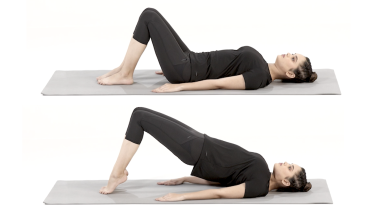
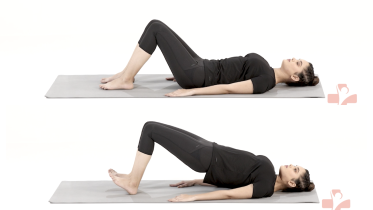
If you have not done bridges before, start with the glute bridge on the floor. The hamstring bridge on your heels is another bridge that works the back of the thighs without a step.
With a recent hamstring strain, let your physio decide when to add the step, as bridges load the back of the thigh. During pregnancy, after the first three months, ask your physio before doing exercises that have you lying flat on your back.
Written and checked by the PocketPhysio editorial team. Last updated 2026-09-25.
This page is general education, not a diagnosis or a personal treatment plan. If you have pain, an injury or a health condition, see a physiotherapist or doctor before starting new exercises.