
Groin strain exercises and physiotherapy
What is a groin strain?
The adductors are the muscles on the inside of your thigh. They run from the pubic bone at the front of the pelvis down the inner thigh, and they pull the leg in toward the other one, which you use every time you kick, change direction or push off sideways. A groin strain, often called a pulled groin, is an injury to these muscles.
It usually starts at one moment during sport, with sudden pain in the groin or inner thigh. Afterward the inner thigh is sore to press, and squeezing your knees together or taking a wide step hurts. Most of the athletes in the main rehab study on this page played soccer or futsal (Serner and colleagues, 2020).
An international group of groin pain experts met in Doha in 2014 and agreed a shared set of terms (Weir and colleagues, 2015). They call pain from these muscles adductor-related groin pain: the adductors are sore to press, and it hurts when you squeeze your legs together against resistance. The group advised dropping labels such as sports hernia, athletic pubalgia and osteitis pubis, because the mix of names had added confusion.
This page covers mild to moderate groin strains and adductor-related groin pain in adults, treated without surgery. It is written for sport, but the early stages suit anyone with a strained inner thigh. A doctor should see any child or teenager with a limp, or with pain in the groin, hip, thigh or knee, before they start a program. After hip or groin surgery, follow your surgeon's program.
Is it a groin strain or something else?
The Doha agreement sorts groin pain in athletes into three groups (Weir and colleagues, 2015). The first holds four common sources: the adductors, the hip flexor that runs over the front of the hip (iliopsoas), the area of the groin crease above the leg (inguinal-related, where there is no hernia you can feel) and the pubic bone itself. The second is pain from the hip joint, which the experts said should always be considered. The third is a long list of other causes, including problems with the bones, the nerves, the bowel or the urinary tract.
Pain from the hip joint tends to sit deep in the groin. Deep bending and twisting bring it on, and the hip may click or catch. If that sounds like your pain, the hip impingement or hip labral tear programs will suit you better. Groin pain that built up with running and now makes you limp can be a stress fracture of the thighbone, and needs checking the same day, as the warning signs below explain.
A hernia usually shows as a bulge or lump where the leg joins the body or in the upper thigh. The NHS says it may grow when you cough or sneeze and go down when you lie down. A lump needs a doctor's check, and a painful one needs help the same day. Pain in a testicle is also not a groin strain and has its own warning signs below.
If you are pregnant or have recently had a baby, check with your physio or midwife before you start this program. Squeezing the inner thighs puts effort through the joint at the front of the pelvis.
Why does exercise help a groin strain?
This program draws on two studies. The first is a Danish trial of 68 athletes whose adductor-related groin pain had gone on for a median of 40 weeks (Hölmich and colleagues, 1999). One group did an 8 to 12 week active training program aimed at the strength and coordination of the muscles around the pelvis, especially the adductors. The other had physio treatment without active training. Four months after treatment, 23 athletes in the training group were back at their sport at the same level without groin pain, against 4 in the other group.
The second is a study of 81 male athletes with a sudden adductor injury, who followed a rehab program built around inner thigh strength work plus running and changes of direction. They moved on only when they met set criteria (Serner and colleagues, 2020). Those with mild to moderate injuries on MRI, or none that the scan could show, were pain free on the checks after a median of 13 days and back in full team training after 18 days. Those with the most severe injuries took a median of 78 days. The study had no comparison group, so it shows what happened with this approach rather than proving it was better than another.
Meeting the checks was linked to fewer repeat injuries. A year later, 8% of the athletes had injured the groin again. Among those who met all the pain-free checks before returning, the figure was 5%, against 21% among those who went back without meeting them.
The first few days after a groin strain
For the first days, ease off sport and anything that brings on the pain, such as kicking, sharp turns or wide steps. Keep walking as far as it is comfortable, so the leg does not stiffen. In the rehab study above, athletes started their program a median of 4 days after the injury (Serner and colleagues, 2020), and stage 1 below uses gentle squeezes that suit those early days. Ask a pharmacist which painkillers are right for you.
How to use this program
Your starting point is the stage that matches your groin right now. When in doubt, stage 1 is the safe place to begin. Step up when your stage feels easy and the groin is no sorer the morning after. These signs mix common practice with the checks from the rehab study above, so use them as a guide rather than fixed rules.
The dose on each exercise page is a typical starting point. Squeezes in the early days are usually done once or twice a day. Once the strength work gets harder, 2 to 3 sets of 6 to 15 a few days a week is a common range. Your physio will tailor the exercises and numbers to your groin and the sport you are going back to.
Stage 1 stays pain free. After that, a little discomfort while you exercise is usually fine if it eases soon after the session and the groin is no worse by the next morning. The load was too much if you get a sharp or tearing pain, pain that grows with each repetition, or a groin that is sorer the next day. Then go back one step rather than stopping everything.
If you have high blood pressure, breathe steadily through every hold and never hold your breath.
The exercise program
Stage 1: Settle the groin and start gentle squeezes
This stage covers the first days after the strain, while walking, getting out of a car or squeezing your knees together still hurts. The adductor ball squeeze and the two isometric holds make the inner thigh muscles work without the hip moving. Start with a moderate squeeze, not a hard one. The glute bridge and dead bug keep your hips and trunk working in the meantime. Many programs start with holds of 5 to 10 seconds, repeated 5 to 10 times, once or twice a day, with 2 to 3 sets of 6 to 12 bridges and dead bugs and 10 to 20 minutes of walking on most days. Your physio will adjust this. None of it should hurt. Stretches, wide steps and side to side movements wait until later. Move on when you walk normally without pain and a firm squeeze of the ball no longer hurts.
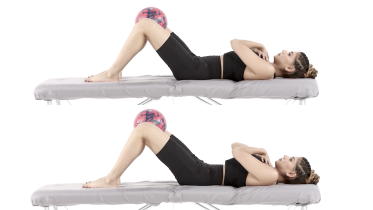 Adductor ball squeeze
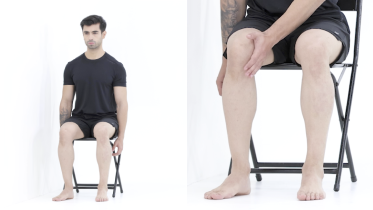 Seated isometric hip adduction
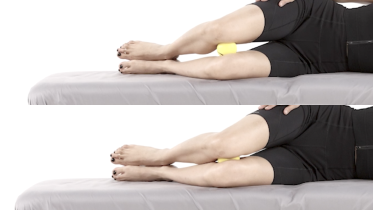 Side lying isometric hip adduction
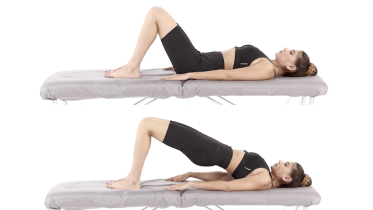 Glute bridge
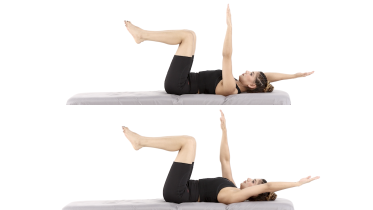 Dead bug
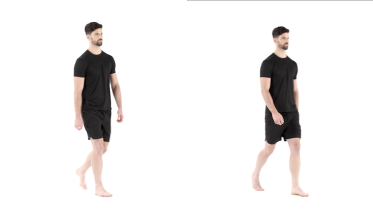 Brisk walking
Stage 2: Build strength through movement
Once you walk normally and the squeezes are pain free, side lying hip adduction moves the inner thigh through its range. The bridge and squat with a ball squeeze then bring that squeeze into bigger movements. Single leg stance and the kneeling side plank train balance and the muscles that steady the pelvis and trunk. That follows the Hölmich program, which trained strength and coordination around the pelvis as well as in the inner thigh. Do single leg stance next to a kitchen counter and grab it if you wobble. You can start the two stretches now: go to a gentle pull, never into pain. A common range is 2 to 3 sets of 8 to 15 for the strength exercises, 10 to 30 seconds for each side plank hold, and 20 to 30 seconds for each stretch, repeated 2 to 4 times. Your physio will adjust this. Runners can try easy jogging on the spot, or a slow jog in a straight line, as long as it stays pain free. Move on when side lying hip adduction feels about as strong as the other leg, and easy jogging, or brisk walking for non-runners, feels comfortable.
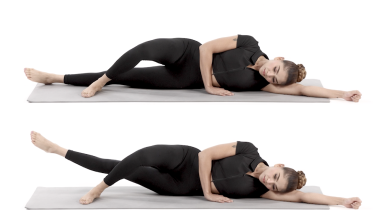 Side lying hip adduction
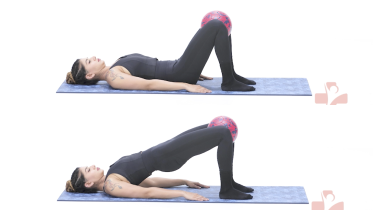 Bridge with ball squeeze
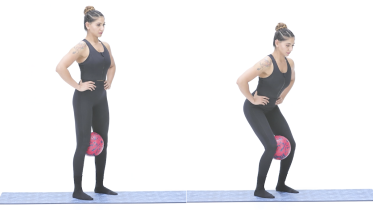 Squat with ball squeeze
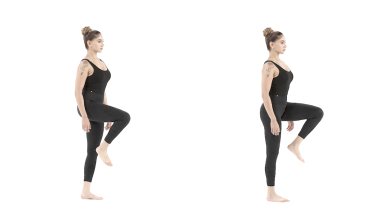 Single leg stance
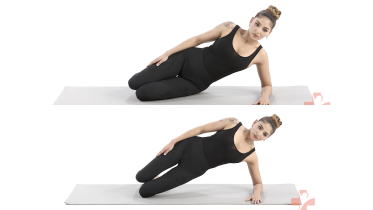 Kneeling side plank
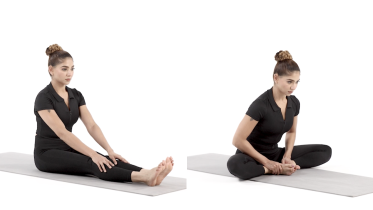 Butterfly stretch
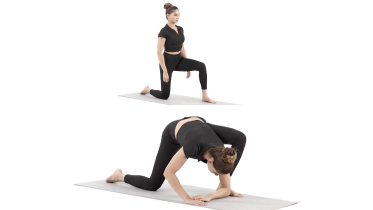 Half kneeling adductor stretch
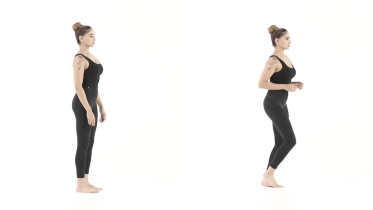 Jogging on the spot
Stage 3: Strength at longer lengths and across the body
When stage 2 feels strong and easy jogging is comfortable, the lateral lunge and sumo squat load the inner thigh while it lengthens, which is what kicking, sliding and wide cutting steps ask of it. The curtsy lunge brings the leg across the body under control. The full side plank and the step up build the hip and trunk strength that side to side sport needs. Once the side plank is easy, your physio may add the Copenhagen adduction exercise described below. Only go as wide and as low as you can control. A mild pulling feeling is common. A sharp or tearing pain is not: stop and go back a step. A common dose is 2 to 3 sets of 6 to 12, and side planks held for 10 to 30 seconds, on a few days each week. Your physio will adjust this. If you do not play a sport with running or kicking, the program ends here. 2 to 3 sessions a week of these exercises help keep the groin strong.
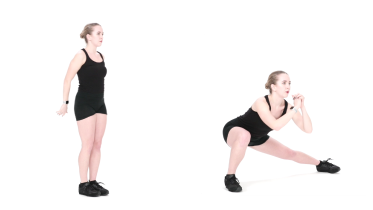 Lateral lunge
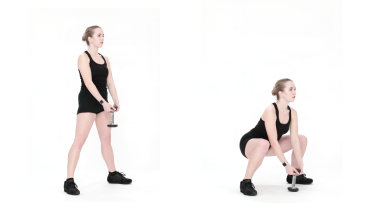 Sumo squat
.png) Curtsy lunge
Curtsy lunge.png) Side plank
Side plank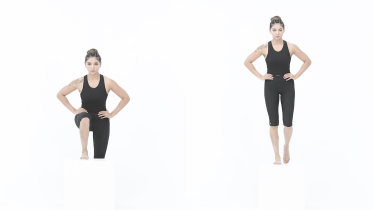 Step up
Stage 4: Running, cutting and back to sport
Start when the stage 3 exercises are pain free, the inner thigh is no longer sore to press or to stretch fully, squeezing your knees together as hard as you can no longer hurts, and a straight-line jog is easy. Side stepping and the grapevine bring back side to side movement at walking pace. Fast feet and skater hops then add speed and landing on one leg. Many programs use 2 to 5 rounds of 10 to 30 seconds for the drills and 2 to 3 sets of 10 to 20 skater hops. Your physio will adjust this. Outside, build straight-line running up to full sprints first. Changes of direction come next, planned ones before ones you react to, and kicking comes back last, starting with short passes. Carry on with the stage 3 strength work once you are back playing. The prevention trial kept the Copenhagen adduction exercise going once a week in season, so ask your physio about doing the same. Your physio will fit the running and cutting plan to the demands of your sport.
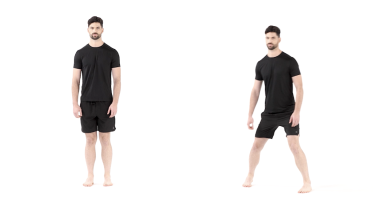 Side stepping
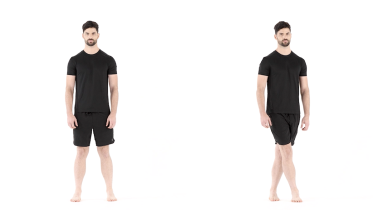 Grapevine drill
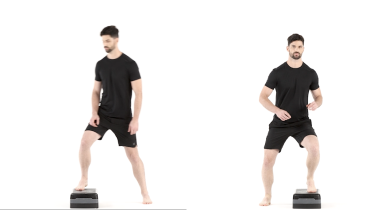 Fast feet side to side
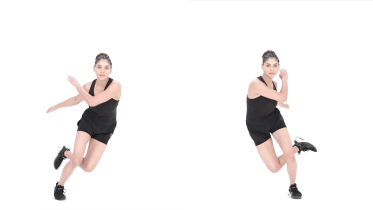 Skater hops
How to prevent another groin strain
One prevention exercise has been tested in a large trial: the Copenhagen adduction exercise, a side plank with the top leg resting on a bench or held by a partner. In a Norwegian trial, 35 semiprofessional soccer teams were split into two groups (Harøy and colleagues, 2019). Of these, 18 did an Adductor Strengthening Programme built on this one exercise, with three levels of difficulty, 3 times a week for 6 to 8 weeks before the season and once a week during it. On average during the season, 13.5% of players in those teams reported groin problems at any one time, against 21.3% in the teams that trained as usual.
The players were all men playing soccer, and the trial looked at stopping groin problems across whole squads, not at treating a strain that had already happened. The Copenhagen exercise loads the groin hard, so it is not part of the early stages of this program. Ask your physio whether and when to add it, and at which level.
Once you are back playing, do not drop the strength work. If you have strained the groin before, tell your physio or coach, so your training can build back up in steps.
When to see a physio or doctor
See a physio or doctor if the pain is not easing after a week or so of looking after it yourself, if you cannot tell whether it comes from the inner thigh muscles, or if the groin keeps getting strained. A physical therapist (physiotherapist) can check which of the causes above fits and pick your starting stage. They can also plan your return to sport step by step, with kicking last.
Groin pain that has lasted for months, or came on slowly without an injury, is also worth an assessment. It has more possible causes than a sudden strain, including the hip joint, and the Doha experts advised that the hip is always considered.
Some groin problems need help faster than a strain does. Each warning sign below says how soon to act, from an emergency down to booking a visit within 2 weeks.
For physiotherapists
This page is a starting framework for patients with acute adductor injury and adductor-related groin pain as defined in the Doha agreement: adductor tenderness and pain on resisted adduction testing (Weir and colleagues, 2015). The agreement recommends passive range of motion and FADIR and FABER testing in every case, because hip-related groin pain should always be considered. It acknowledges that evidence on acute groin injuries is limited, and that some of them, proximal rectus femoris injuries for example, do not fit the classification readily.
The staging draws on the criteria-based protocol of Serner and colleagues (2020). Their nine groin exercises, including the Copenhagen adduction, were dosed as a pain-controlled repetition maximum at about 2 out of 10 on a numerical rating scale, with load increased at 1 or less and reduced at 3 or more. Running and sports function progressed separately and could advance daily. A sports physical therapist supervised the program, with sessions offered 5 times a week, and athletes started a median of 4 days after injury.
The clinically pain-free criteria were pain-free adductor palpation, maximal isometric adduction in outer-range abduction, maximal passive adductor stretch, elastic hip adduction at 10 repetition maximum and 10 repetitions of the Copenhagen adduction. Controlled sports training then required pain-free linear sprinting at full self-reported intensity (10 x 30 m) and pain-free T, Illinois and spider agility tests, before sport-specific drills and kicking. The cohort was all male, 80% soccer and futsal, with no control group.
Because patients use it without supervision, this page is more conservative than that protocol. Stage 1 is pain free and stretching waits for stage 2. The Copenhagen adduction is left to the physio because the library has no video of it yet. Hölmich and colleagues (1999) support active training aimed at pelvic and adductor strength and coordination for long-standing adductor-related groin pain, and Harøy and colleagues (2019) support the Copenhagen-based Adductor Strengthening Programme for prevention in male soccer players.
In runners and recruits with exertional groin pain and a limp, consider femoral neck stress fracture, which is often missed at first (Clough, 2002). Also screen for inguinal and femoral hernia, for testicular causes, for lumbar referral and, in adolescents, for apophyseal avulsion at the pubic bone, all listed among the other causes in the Doha agreement. Refer as the warning signs below describe.
See a doctor promptly if
- Emergency: sudden, severe pain in a testicle, testicle pain that comes with feeling sick, being sick or pain in your tummy, or testicle pain that has lasted more than an hour or carries on while you rest. Go to an emergency department straight away or call emergency services. The testicle may have twisted (testicular torsion), which needs treatment quickly.
- Emergency: you have had a fall or an injury and now have severe hip pain, or you cannot walk or put weight on the leg. Call emergency services or go to an emergency department. This can be a sign of a broken hip (hip fracture).
- Emergency: tingling or loss of feeling in the hip or leg after a fall or injury. Call emergency services or go to an emergency department.
- Emergency: pain, tingling, numbness or weakness in both legs, numbness or altered feeling around your genitals or bottom, or new trouble peeing or controlling your bladder or bowels. The same applies if you lose feeling in one leg. Call emergency services or go to an emergency department straight away. These can be signs of pressure on the nerves at the base of the spine (cauda equina syndrome).
- Same day: a lump or bulge in your groin or upper thigh has become painful or tender, or you have a groin lump and a bloated tummy, you feel or are being sick, you are constipated, or you have a high temperature or feel hot, cold or shivery. This can be a hernia that has become trapped. Get medical help straight away, the same day, for example at urgent care or an emergency department. If the pain is severe or came on suddenly, you cannot poo or pass wind at all, you are vomiting blood or your vomit looks like coffee grounds, or you have suddenly become confused, call emergency services or go to an emergency department straight away.
- Same day: aching or discomfort in a testicle that worries you, a lump or swelling in a testicle, or a change in its shape or in how it feels. Get an urgent appointment with your doctor the same day.
- Same day: you felt a pop or snap in the groin or inner thigh and now have large bruising spreading down the inner thigh, a dip or gap you can feel in the muscle, or you cannot squeeze your knees together at all. Get assessed the same day, for example at an urgent care center, and ask whether you need a scan. The muscle may be badly torn or pulled away from the bone, which takes much longer to recover and needs its own plan.
- Same day: the groin or inner thigh is very painful or the pain is getting worse, the bruising or swelling is large or growing, you cannot walk more than a few steps, or the leg feels very stiff and hard to move. Get medical advice the same day.
- Same day: a calf or thigh that is newly swollen, warm, tender, red or darker than usual, has swollen veins that are sore to touch, or has a throbbing or cramping pain that does not fit your injury or condition, or that feels different from normal muscle soreness after exercise. This can be a sign of a blood clot (deep vein thrombosis), especially after surgery, an injury, time in a cast or boot, a long trip or a spell of being much less mobile than usual. Get medical advice the same day. If you are also short of breath or have chest pain, call emergency services.
- Same day: groin pain that built up with running, marching or jumping, often after you increased your training, and now hurts when you walk, makes you limp, or aches at rest or at night. Stop running and jumping and keep walking to a minimum until it has been checked. Get medical advice the same day and mention your training. If you cannot put weight on the leg, go to an emergency department. This can be a stress fracture in the neck of the thighbone (femoral neck stress fracture), which is easy to miss at first and can become a full break if you keep loading it.
- Same day: the hip or groin is hot and swollen, the skin around it has changed color, or you have groin pain with a high temperature or feel hot, cold or shivery. Get medical help the same day, and go to an emergency department if you feel very unwell. An infection in the joint or bone needs treatment quickly.
- Same day: a child or teenager has sudden pain in the hip, thigh or knee, is limping, or cannot put weight on one leg. Get an urgent appointment with a doctor the same day. If they have a high temperature or seem very unwell, go to an emergency department. This page is for adults, and hip pain in children has different causes.
- Same day: a leg or foot that is getting weaker, for example your foot drags, catches on the ground or slaps down when you walk (foot drop). Get medical advice the same day. If the weakness is getting worse by the hour, go to an emergency department.
- Same day: new hip or groin pain after a fall, even a small one, if you are older, have low bone density (osteoporosis) or have taken steroid tablets for a long time, even if you can still walk. Get medical advice the same day. A broken hip is not always obvious at first.
- Within a few days: hip or groin pain that is worse at night or does not ease with rest, and keeps getting worse. See your doctor within a few days. If you have had cancer, now or in the past, or are losing weight without trying, see your doctor sooner, within a day or two, and mention it. This applies even if the pain is not getting worse. If you are being treated for cancer now, contact your cancer team the same day.
- Within a few days: new groin or hip pain and you take steroid tablets long term, or have in the past, or you regularly drink a lot of alcohol. This can be a sign of a problem with the blood supply to the top of the thighbone (avascular necrosis). Book an appointment with your doctor within a few days and mention the steroids or alcohol.
- Within a few days: the strain is not getting any better after a week or so of looking after it yourself, or your groin keeps getting strained again. Book an assessment with a physio or doctor in the next few days.
- Within 2 weeks: a lump in your groin or upper thigh that is not painful, especially one that gets bigger when you cough or sneeze and smaller when you lie down. This can be a hernia. Book an appointment with your doctor.
- Within 2 weeks: pain that spreads down the leg below the knee, especially with numbness or tingling in the leg or foot. The pain may be coming from your lower back rather than the groin. Book an appointment with a doctor or physio.
- Within 2 weeks: groin pain that came on slowly without a clear injury, or sits deep in the groin with clicking, catching or locking of the hip. Book an appointment with a physio or doctor. Groin pain has several possible causes, including the hip joint itself.
Common questions
How long does a groin strain take to heal?
That depends mostly on how badly the muscle is hurt. In a study of 81 male athletes with a sudden adductor injury, those with mild to moderate injuries on MRI were back in full team training after a median of 18 days, while the most severe injuries took a median of 78 days, about 2 and a half months (Serner and colleagues, 2020). Most of the athletes played soccer or futsal and all were men, so times for other people and sports may differ. Groin pain that has built up over months is a different problem and usually takes longer: in the Hölmich trial, the program ran for 8 to 12 weeks.
Should I stretch a pulled groin?
Gently, and not into pain. There is little trial evidence on stretching a strained groin, and the programs tested in trials focused on strength and control rather than stretching. In one rehab study, being able to take a full inner thigh stretch without pain was one of the checks before returning to sport (Serner and colleagues, 2020). This program plays it safe. Stretches come in at stage 2, once you are walking normally, and go only to a gentle pull.
Is it a groin strain or a hernia?
A strain tends to begin at a single moment in sport. After that, the inner thigh is tender to press and squeezing your knees together hurts. A hernia, as the NHS puts it, is a bulge or lump, often where the leg joins the body. It may grow when you cough or sneeze and go down when you lie down. Some groin pain sits in the lower tummy area just above the crease without a lump you can feel; an international agreement calls this inguinal-related groin pain (Weir and colleagues, 2015). If you find a lump, see a doctor, and get help the same day if it is painful.
Can I keep running with a groin strain?
Not straight away. Jogging comes back once you walk normally and the squeezes are pain free, and it starts slow and in a straight line. Sprinting, sharp turns and kicking come last. In one rehab study, athletes had to sprint and do agility tests at full effort without pain before going back to full training (Serner and colleagues, 2020).
What is the Copenhagen adduction exercise?
It is a harder inner thigh exercise, done as a side plank with your top leg resting on a bench or held by a partner, so the inner thigh of that leg helps hold you up. In a trial of 652 male semiprofessional soccer players, teams that did an Adductor Strengthening Programme based on this one exercise reported groin problems less often during the season than teams that trained as usual (Harøy and colleagues, 2019). It loads the groin heavily, so it is not part of the early stages here. Ask your physio when it suits you.
References
- Weir A, Brukner P, Delahunt E, et al. Doha agreement meeting on terminology and definitions in groin pain in athletes. British Journal of Sports Medicine. 2015;49(12):768-774. doi:10.1136/bjsports-2015-094869
- Hölmich P, Uhrskou P, Ulnits L, Kanstrup IL, Nielsen MB, Bjerg AM, Krogsgaard K. Effectiveness of active physical training as treatment for long-standing adductor-related groin pain in athletes: randomised trial. The Lancet. 1999;353(9151):439-443. doi:10.1016/S0140-6736(98)03340-6
- Serner A, Weir A, Tol JL, Thorborg K, Lanzinger S, Otten R, Hölmich P. Return to sport after criteria-based rehabilitation of acute adductor injuries in male athletes: a prospective cohort study. Orthopaedic Journal of Sports Medicine. 2020;8(1):2325967119897247. doi:10.1177/2325967119897247
- Harøy J, Clarsen B, Wiger EG, Øyen MG, Serner A, Thorborg K, Hölmich P, Andersen TE, Bahr R. The Adductor Strengthening Programme prevents groin problems among male football players: a cluster-randomised controlled trial. British Journal of Sports Medicine. 2019;53(3):150-157. doi:10.1136/bjsports-2017-098937
- NHS. Hernia. Page last reviewed 19 May 2026. https://www.nhs.uk/conditions/hernia/
- NHS. Testicle pain. Page last reviewed 26 June 2025. https://www.nhs.uk/symptoms/testicle-pain/
- Clough TM. Femoral neck stress fracture: the importance of clinical suspicion and early review. British Journal of Sports Medicine. 2002;36(4):308-309. doi:10.1136/bjsm.36.4.308
- NHS. Hip pain in adults. Page last reviewed 20 November 2025. https://www.nhs.uk/symptoms/hip-pain/
- NHS. Sprains and strains. Page last reviewed 23 April 2024. https://www.nhs.uk/conditions/sprains-and-strains/
- NHS. Deep vein thrombosis (DVT). Page last reviewed 30 April 2026. https://www.nhs.uk/conditions/deep-vein-thrombosis-dvt/
- American Academy of Orthopaedic Surgeons. Osteonecrosis of the hip. OrthoInfo. https://www.orthoinfo.org/en/diseases--conditions/osteonecrosis-of-the-hip/
Written and checked by the PocketPhysio editorial team. Last updated 2026-09-28.
This page is general education, not a diagnosis or a personal treatment plan. See a physiotherapist or doctor for advice about your own situation.