
Sumo squat
A sumo squat is a squat with your feet set wide and your toes turned out. In the video she holds one dumbbell in both hands with her arms hanging straight, so the weight sits between her legs as she lowers and rises. The front of the thighs and the buttocks do most of the work, and the wide stance gives the muscles on the inside of your thighs (adductors) a bigger share than a standard squat.
How to do the sumo squat
- Stand with your feet set wide, clearly wider than your shoulders, and turn your toes out a little.
- Hold one dumbbell upright with both hands around the top end. Let your arms hang straight down so the weight sits between your legs.
- Keep your chest up, then bend your knees and hips and lower yourself straight down. Push your knees out so they stay over your toes.
- Go as low as you can control with your heels flat on the floor. The weight hangs straight down and does not touch the floor.
- Hold the bottom for a count of one, then push through your whole foot to stand back up.
What you should feel
Work in the front of your thighs, your buttocks and along the inside of your thighs. Your arms only hold the weight. They should not be lifting it.
Common mistakes
- Knees caving in toward each other, especially on the way up.
- Heels lifting, or rolling onto the inside edges of your feet.
- Leaning far forward and rounding your back to reach the weight lower.
- Setting the feet so wide that your knees can no longer stay over your toes.
How often
Many programs start with no weight or a light one and 2 to 3 sets of 8 to 12, a few days a week. Your physio will adjust the weight, depth and numbers to suit you.
Stop and check with your physio if
- Sharp pain in the groin, hip or inner thigh, or pain that keeps building through the set.
- Knee or lower back pain that gets sharper as you go down.
- The knee gives way, locks, or swells afterward.
From the clinic
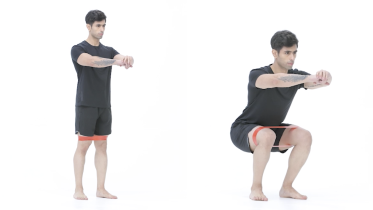
Start without a weight. Clasp your hands together at your chest and learn the wide stance first, then add a light dumbbell once the movement feels steady. The sumo squat is a different exercise from the standard squat, where the feet sit about shoulder width apart and the toes point forward or only slightly out.
Your hips decide how wide and how turned out your feet can go. If the groin pulls or the front of the hip pinches at the bottom, bring your feet in a little and do not go as low. If you have had a hip replacement, get the go-ahead from your surgeon or physio before you try sumo squats. A wide squat with the toes turned out bends the hip past a right angle and turns the leg out, and many surgeons ask you to avoid that for the first months after some operations.
Written and checked by the PocketPhysio editorial team. Last updated 2026-09-26.
This page is general education, not a diagnosis or a personal treatment plan. If you have pain, an injury or a health condition, see a physiotherapist or doctor before starting new exercises.
.png)