Side stepping
Side stepping is walking sideways. One foot steps out to the side, the other follows it in, and you keep going in the same direction before coming back the other way. You face forward the whole time. It works the muscles at the side of both hips (gluteus medius and minimus), and physios often use it as an early standing hip and balance exercise, before adding a band.
How to do the side stepping
- Stand tall beside a kitchen counter or along a clear wall, with your feet slightly apart and your arms relaxed at your sides. Clear the floor in the direction you will walk.
- Step one foot out to the side, keeping your toes pointing forward.
- Bring the other foot in to join it, without crossing your feet or knocking them together.
- Keep repeating the step out and the step in, moving in the same direction. Look straight ahead and keep your body upright.
- When you reach the end of your space, do not turn around. Stay facing the same way and step back in the other direction.
What you should feel
Light work at the side of both hips, often more noticeable after a few lengths. Each step should feel steady and unhurried.
Common mistakes
- Turning your body or your toes toward the direction you are moving.
- Leaning the upper body sideways with each step.
- Crossing one foot over the other or catching your own feet.
- Watching your feet the whole time instead of looking ahead.
How often
Many programs start with 2 to 3 lengths of about 10 to 15 steps each way, once or twice a day. Your physio will adjust this.
Stop and check with your physio if
- You feel dizzy, lightheaded, faint or sick, or the room seems to spin. Hold your support, sit down and get medical advice the same day before you practice again. If you faint, it does not settle within a few minutes of sitting still, your vision suddenly blurs or goes double, or you cannot stand or walk steadily, call emergency services.
- You start to lose your balance.
- Sharp pain in the hip, groin or knee.
- Pain running down the leg, or the leg going numb or tingly.
From the clinic
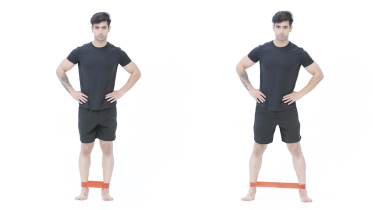
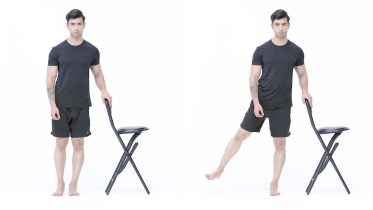
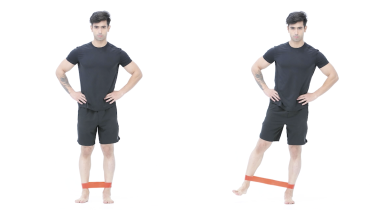
The man in the video walks in open space, but at home it is safer to walk along a kitchen counter so a hand can reach it at once. Move rugs, cables and furniture out of your path. Wear flat shoes that fit well and grip the floor, not socks, tights or bare feet. If you have fallen in the past year or feel unsteady on your feet, keep a hand on the counter the whole way and practice when someone else is at home. Once plain side steps feel easy, your physio may add a loop band, as in the lateral band walk.
If you have had a hip replacement or other hip surgery, get the go-ahead from your surgeon or physio before you try side stepping. Some operations limit this kind of work for the first months, so the timing depends on your surgery. If the operation was done through the side of the hip (a lateral approach), the muscles at the side of the hip were detached and repaired. Exercises that make them work hard, like this one, are then often held back for around the first 6 weeks.
Written and checked by the PocketPhysio editorial team. Last updated 2026-09-26.
This page is general education, not a diagnosis or a personal treatment plan. If you have pain, an injury or a health condition, see a physiotherapist or doctor before starting new exercises.