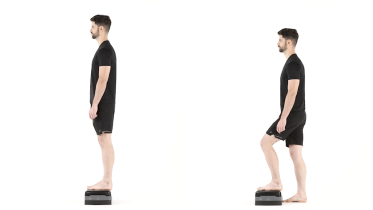
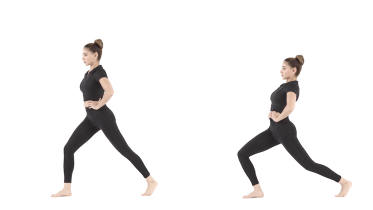
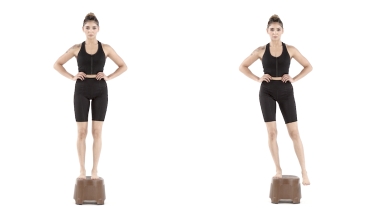
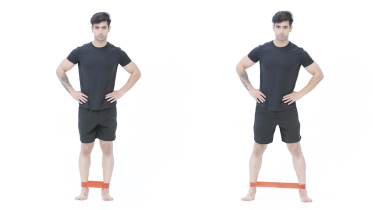
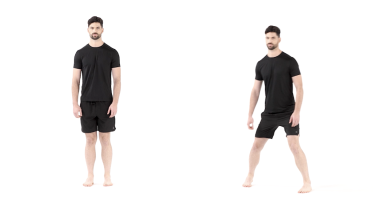
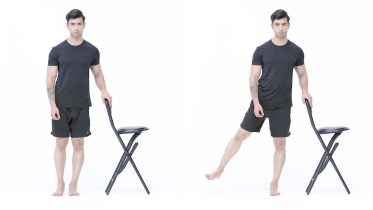
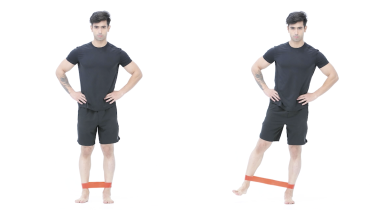
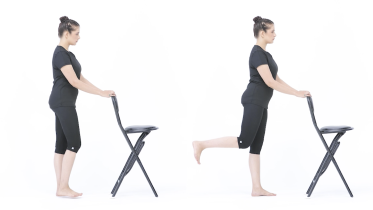
Squat with ball squeeze
The squat with ball squeeze is a shallow squat done while you press a small ball between your knees. You bend your hips and knees to about 45 degrees, hold for a few seconds while squeezing, then stand back up with the squeeze still on. It works the front of your thighs, your buttocks and the muscles on the inside of your thighs (adductors) at the same time.
How to do the squat with ball squeeze
- Stand on a mat with your feet about hip width apart and your toes pointing forward. Put a small exercise ball or a volleyball between your knees and rest your hands on your hips.
- Gently draw your belly button in toward your spine to brace your trunk. Stand tall with your chest lifted.
- Push your hips back and bend your knees to lower into a shallow squat, to about 45 degrees of knee bend. Keep pressing the ball so it stays put.
- Hold the bottom position for a few seconds, squeezing the ball firmly and breathing steadily.
- Push through your whole foot to stand back up slowly, keeping the squeeze on until you are upright. Relax for a moment, then repeat.
What you should feel
Work in the front of your thighs and your buttocks, with a steady tightening along the inside of both thighs from the squeeze. The knees may feel the effort, but they should not hurt sharply.
Common mistakes
- Squatting deeper than the video shows before the shallow version is easy and pain free.
- Letting the ball go slack at the bottom or on the way up.
- Lifting your heels or tipping your weight onto your toes.
- Rounding your back or letting your chest drop forward.
- Holding your breath while you squeeze at the bottom.
How often
Many programs use 2 to 3 sets of 8 to 12 squats, with a hold of 3 to 5 seconds at the bottom of each one, a few days a week. Your physio will adjust this.
Stop and check with your physio if
- Sharp pain in or around the kneecap, or knee pain that builds with every repetition.
- Your knee gives way, catches or locks, or is swollen later that day.
- A sharp or pinching pain in your groin, or pain over the bone at the very front of your pelvis where the two sides meet.
From the clinic
The voice guide offers two depths: thighs level with the floor, or a 45 degree angle. The video shows the shallower one, with the knees bent to roughly 45 degrees, so that is the depth used here. Going deeper comes later, and your physio decides when.
Pick a ball that fits between your knees when they sit straight over your feet. A ball that is too big pushes the knees apart, and one that is too small lets the squeeze draw them inward. Your knees should stay roughly over your second toes the whole time. If the front of your knee is sore, a smaller bend is usually easier to manage, and your physio will tell you how much discomfort is fine during and after the set. After knee surgery or a knee replacement, check with your surgeon or physio before you start, and follow their plan for how deep you may go.
If your balance is not steady, rest one hand on a kitchen counter or the back of a sturdy chair. If you have had a hip replacement, get the go-ahead from your surgeon or physio before you try the squat with ball squeeze. Some operations limit this kind of work for the first months, so the timing depends on your surgery. The ball keeps your knees apart, so your legs do not cross the middle of your body.
If you are pregnant or have pain over the pubic bone, check with your physio first, since squeezing the inner thighs puts effort through the joint at the front of the pelvis. If you have high blood pressure, breathe steadily through every hold and never hold your breath.
The adductor ball squeeze trains the same squeeze lying down, and the mini squat trains a similar shallow bend without a ball. Both often come before this one in a program.
Written and checked by the PocketPhysio editorial team. Last updated 2026-09-26.
This page is general education, not a diagnosis or a personal treatment plan. If you have pain, an injury or a health condition, see a physiotherapist or doctor before starting new exercises.