Standing hip abduction with band
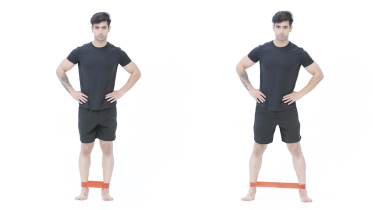
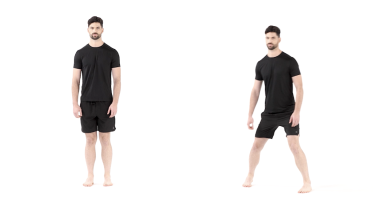
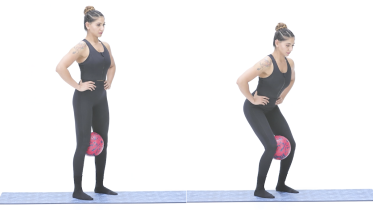
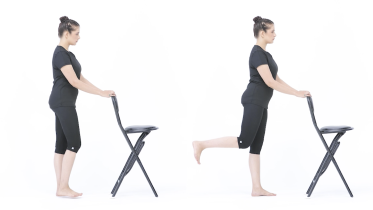
This is standing hip abduction with a loop band around your ankles: you lift one leg out to the side against the pull of the band. It works the muscles at the side of your hip (gluteus medius and minimus), the ones that hold your pelvis level when you stand on one leg. You will find it in many hip, knee and lower back programs, often once side lying leg lifts get easy.
How to do the standing hip abduction with band
- Put a loop band around both ankles. Stand tall with your feet a little apart so the band is just snug.
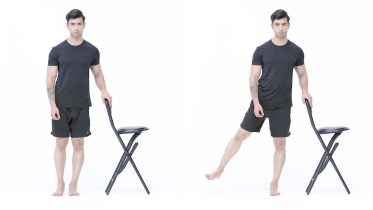
- Hold a kitchen counter or the back of a sturdy chair lightly with one hand, as the voice guide says. The video shows it with hands on hips, but save that for when your balance on one leg is steady.
- Keep your hips level and your body upright, with your toes pointing forward.
- Lift the working leg straight out to the side against the band, knee straight. Only go as far as you can without leaning your body the other way.
- Bring the leg back in slowly, controlling the pull of the band, then repeat.
What you should feel
Work at the side of the hip on the leg that lifts. You will often feel the side of the standing hip too, because it is holding your pelvis level.
Common mistakes
- Leaning the upper body away from the moving leg to get it higher.
- Turning the foot out as you lift. Keep the toes pointing forward.
- Hitching the hip up toward your ribs.
- Letting the band snap the leg back in.
How often
Many programs start with a light band and 2 to 3 sets of 10 to 15 on each side, once a day. Your physio will pick the band and the numbers for you.
Stop and check with your physio if
- Sharp pain in the hip, groin or lower back.
- You feel unsteady or close to falling. Hold on to a support or stop.
- Pain spreads down the leg or you get numbness or tingling.
From the clinic
The lift in the video is small, and that is right. A small lift with your body upright is better practice than a big swing with a lean. If you cannot stay upright, try a lighter band or no band at all, or start with side lying hip abduction.
Where the band sits changes how hard it feels. Around the ankles, as shown here, is harder than just above the knees because the band pulls farther from the hip. Moving it up is an easy way to make the exercise lighter.
If you have had a hip replacement or other hip surgery, get the go-ahead from your surgeon or physio before you try this exercise. Some operations limit this kind of work for the first months, so the timing depends on your surgery. With some surgical approaches, resisted side leg lifts wait until the tissues at the side of the hip have healed.
Written and checked by the PocketPhysio editorial team. Last updated 2026-09-26.
This page is general education, not a diagnosis or a personal treatment plan. If you have pain, an injury or a health condition, see a physiotherapist or doctor before starting new exercises.