
Postnatal core and pelvic floor exercises and physiotherapy
What changes in your core and pelvic floor after birth
Pregnancy stretches the muscles at the front of your tummy and the pelvic floor underneath your bladder, womb and bowel. A vaginal birth stretches the pelvic floor further, and POGP, the UK group of pelvic health physios, notes that this stretching can lead to problems such as leaking. The two long muscles down the middle of your tummy often move apart as well, leaving a gap along the midline (diastasis recti). Healing takes months, not weeks. The return to running guideline notes that recovery of the pelvic floor muscle and its tissues is generally at its fullest by about 4 to 6 months after the birth (Goom 2019).
Leaking, a heavy feeling low down, a soft or weak tummy and back ache are all common in the early weeks. Common is not the same as normal, though, and the running guideline puts it exactly that way: "common but not normal". Many improve with time and the right exercises, and a pelvic health physio can help when they do not.
Your midwife, health visitor and GP come first
The team who looked after you at the birth sets the plan for the first days and weeks, especially after a cesarean, a tear or stitches, heavy bleeding or high blood pressure. NICE advises that at the first contact after the birth, your midwife tells you which symptoms need medical advice without delay, and gives you information about pelvic floor exercises before you go home (NICE NG194). Your health visitor, obstetrician or family doctor are the people to ask as the weeks go on. This page adds to their advice and does not replace it.
In the UK, your GP surgery should offer you a postnatal check 6 to 8 weeks after the birth (NHS). It usually includes a talk about how you are feeling, questions about any discharge from your vagina, and an offer to check your stitches or cesarean wound. The NHS asks you to tell the doctor if you have trouble holding in pee, wind or poo, or if sex is painful. Mention leaking, heaviness, pain during sex or a tummy gap that is not closing, even if nobody asks. POGP suggests this is also a good time for an assessment with a pelvic health physio, if you can get one.
Pelvic floor exercises after birth
You can usually start pelvic floor exercises, along with gentle breathing, within the first few hours after the birth (POGP). If you have a catheter, which is usual after a cesarean, wait until it has been taken out and you are passing urine normally. If you are sore or have stitches, lying on your side is often the most comfortable position. Gentle squeezing and relaxing, in a steady rhythm, may ease pain and swelling and can help healing after a tear or stitches (POGP).
To find the muscles, imagine stopping yourself passing wind and stopping the flow of pee at the same time. You should feel a squeeze and a lift inside the vagina, then a full let-go. Keep breathing and leave your buttocks relaxed. If you feel a push down or a bulge instead, or you cannot feel anything happening, ask for help from a pelvic health physio (POGP).
POGP suggests working up to 10 long squeezes, holding each for 10 seconds with 10 seconds of rest between them, followed by 10 quick squeezes, at least 3 times a day. If you can only hold for a moment or manage a few, start with little and often. Begin lying down or sitting, then move on to standing and to active positions such as walking and bending. POGP says that if the muscles were weak you should notice an improvement in 3 to 5 months, and after that you keep practicing to hold on to it. Your physio will adjust this.
Use the squeeze in daily life too. Tighten and lift just before you cough, sneeze, laugh, bend or pick up your baby, and hold it until the effort is over. POGP calls this the knack.
Does pelvic floor training help after birth?
Training that starts in pregnancy helps prevent leaking. A Cochrane review of 46 trials with 10,832 women found that, in women who were not leaking, pelvic floor training in pregnancy lowered the risk of leaking by 62% in late pregnancy and by 29% at 3 to 6 months after the birth (Woodley 2020). For training that starts after the birth, the evidence is less clear. In groups of women with and without leaking, the review was uncertain whether it lowered leaking 6 to 12 months later, and for women who were already leaking after the birth it found no evidence of a difference at that point, from low quality evidence.
So the trials have not yet settled how much training started after the birth helps. Supervised pelvic floor training is still the usual first treatment for stress leaking in women in general, as the pelvic floor weakness program explains, and NICE advises encouraging pelvic floor training during routine postnatal care. NICE also suggests considering a 3-month supervised program after birth for women who had a forceps or ventouse birth, a vaginal birth with the baby lying face up, or a tear that involved the ring of muscle around the back passage (NICE NG210). The running guideline goes further and recommends that every mother is offered a pelvic health assessment from 6 weeks, whatever kind of birth she had (Goom 2019).
The gap in your tummy muscles (diastasis recti)
The two halves of the long muscle down the front of your tummy (rectus abdominis) are joined by a band of tissue along the midline, and in pregnancy this band stretches as the halves move apart. POGP says up to 60% of women may have symptoms of this separation during pregnancy or after the birth. The NHS says the gap usually goes back to normal by the time your baby is 8 weeks old. A Norwegian study of 300 first-time mothers found a gap of 2 finger widths or more in 60.0% at 6 weeks, 45.4% at 6 months and 32.6% at 12 months after the birth (Sperstad 2016). So for many women the gap narrows over the first year, but not for everyone.
The NHS says regular pelvic floor and deep stomach muscle exercises can help reduce the separation. The research on specific exercises is thin, though. A review of 7 trials with 381 women pooled 2 of them and found very low quality evidence that deep tummy muscle training narrowed the gap by about 0.63 cm on average, and its authors concluded there is not yet good enough evidence to recommend any particular program (Gluppe 2021). In the Norwegian study, women with a gap at 12 months were no more likely to report low back or pelvic pain than women without one (Sperstad 2016).
That is why the aim is a tummy that works well under load, rather than a gap that closes completely. The running guideline says a mother can return to running with a gap if she can control the pressure and load across her tummy wall (Goom 2019). The sign to watch is doming or sinking along the middle of your tummy during an exercise. If you see it, the exercise is too hard for now.
In the early weeks, avoid sit-ups, planks and high-impact exercise, and avoid straining on the toilet and heavy lifting (NHS). POGP suggests rolling onto your side to get up from lying rather than sitting straight up. If the gap is still obvious after 8 weeks, the NHS suggests seeing your GP, and POGP suggests asking your GP or midwife to refer you to a pelvic health physio.
Recovering after a cesarean
A cesarean is major surgery on top of having a baby, so recovery is often slower and more painful (POGP). In the early days, lean forward and support the wound with your hands, a pillow or a small towel whenever you cough, sneeze or laugh. To get out of bed, bend your knees, roll onto your side in one piece with one hand on your tummy, then push yourself up to sitting with your arm as your legs go over the edge. The NHS encourages gentle activity such as a daily walk while you recover, to lower the risk of blood clots.
POGP advises avoiding anything that strains the wound for the first few weeks, such as standing for long spells, vacuuming or carrying heavy bags, and not lifting anything heavier than your baby for at least 6 weeks. The NHS says you can drive and exercise again, and lift heavier things, when you feel able and it does not hurt. That may not be for 6 weeks or so. Before you drive, POGP suggests checking with your insurer and making sure you can wear a seat belt comfortably, look over your shoulder and do an emergency stop without pain.
The pelvic floor exercises matter after a cesarean too, because pregnancy itself loads the pelvic floor, and POGP's advice applies whichever way your baby was born. Start them once the catheter is out. The national exercise guidelines reviewed in the running guideline all allow more recovery time after a cesarean (Goom 2019). So stay with stage 1 until your midwife or GP is happy with your wound, often around the 6 to 8 week check, and take stage 3 more slowly.
Once the wound has fully healed, a physio may show you how to gently move the skin and tissue around the scar. The running guideline lists this from around 6 to 8 weeks as good practice (Goom 2019), but the research behind it is limited. Never press on or massage a wound that is still open, oozing or tender.
How to use this program
Start at stage 1, whatever kind of birth you had. Move on when the current stage feels easy, you are not leaking during it, and it does not bring on heaviness, dragging or pain. The timings in the stage names are rough guides: your healing, your midwife or GP, and your physio set the pace. Keep the pelvic floor squeezes going at every stage.
Each exercise page gives a typical starting dose. As a rough guide, POGP suggests building up the basic tummy exercises to a maximum of 10 repetitions 3 times a day, and the harder ones to 2 sets of 5 to 10 every other day. Walking can build a little every day over the first 6 weeks (POGP). Over the first months, the UK Chief Medical Officers suggest aiming for at least 150 minutes a week of moderate activity and building back up to muscle-strengthening activities twice a week, starting gently depending on your delivery. Your physio will adjust this.
Stop the exercise and go back a step if you leak, feel heaviness, dragging or a bulge in your vagina, get pain in your pelvis, back or scar, or see a ridge or dip along the middle of your tummy. The running guideline treats leaking, heaviness and pain during or after exercise as signs that you are not ready to progress (Goom 2019).
A small increase in bleeding after a walk or light chores is common in the early weeks. If exercise makes your bleeding heavier and it does not settle with rest, or it turns bright red again, stop the exercise and contact your midwife or GP the same day. Stop at once if you get chest pain, sudden breathlessness or a racing heartbeat, or you feel faint, and use the warning signs below. If you faint while exercising, call emergency services, even if you feel fine again quickly.
The exercise program
Stage 1: The first days and weeks
Start when you feel ready after the birth, and after a cesarean once the catheter is out and you are passing urine normally. Begin with the pelvic floor exercise lying down and the gentle tummy draw-in, and lie on your side instead if lying on your back is sore. The draw-in with a light book gives you something to feel. After a cesarean, rest a light hand above the scar instead of the book until the wound has healed, and never press on a scar that is still healing. Add pelvic tilts once the squeeze and draw-in are easy to find. Walk a little further each day, starting with short, easy walks and building toward a brisk pace over the first 6 weeks.
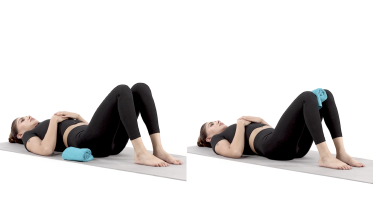 Pelvic floor exercise lying down
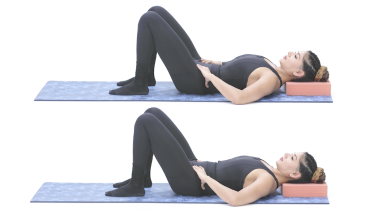 Transverse abdominis activation
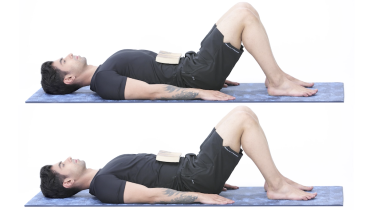 Resisted tummy draw-in
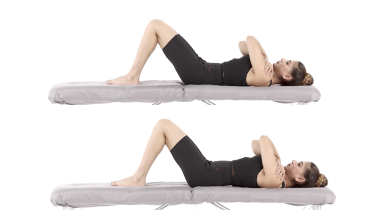 Pelvic tilt
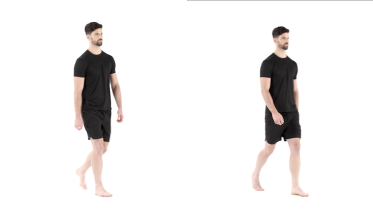 Brisk walking
Stage 2: Moving while you hold, often from a few weeks
When stage 1 feels easy and your bleeding is settling, not getting heavier. These keep a light pelvic floor lift and tummy draw-in going while your legs slide, your arms move overhead or your hips lift into a bridge. Sit on the ball only once sitting is comfortable on your stitches or scar, with something solid to hold. Sit to stand practices getting up the way you do many times a day with your baby, with a pelvic floor squeeze just before you push up. After a cesarean, let your midwife, GP or physio say when you are ready, which is often around the 6 to 8 week check. If a ridge or dip appears along the middle of your tummy, make the movement smaller or go back to stage 1.
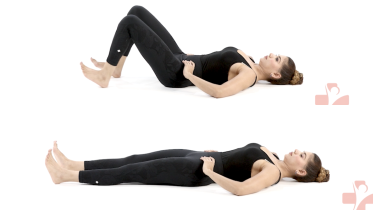 Double heel slide
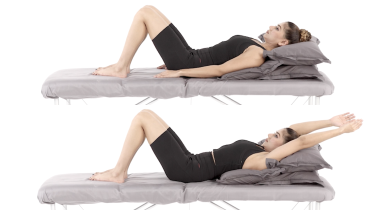 Lying arm lifts with core control
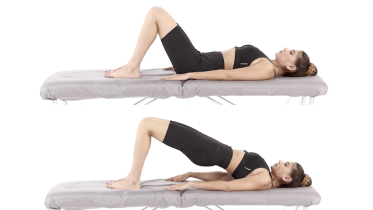 Glute bridge
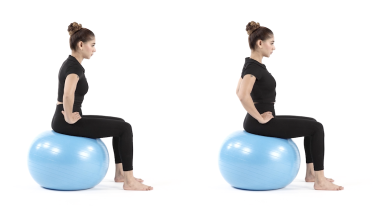 Seated pelvic tilt on a ball
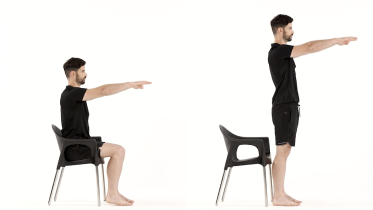 Sit to stand
Stage 3: More load for the tummy wall, only after your 6 to 8 week check
When stage 2 feels easy and you have no leaking, heaviness or bulging. Start this stage only after your 6 to 8 week check. Lifting both legs, or lowering one leg out long, puts much more load on the tummy wall, so watch the middle of your tummy and go back to a smaller range or to stage 2 if it domes or sinks. The foam roll adds a balance challenge while you keep the light hold. The squat with a ball squeeze practices getting down low and back up the way you will lift your baby, with a pelvic floor squeeze just before you push up. Leave out the ball squeeze if it hurts over the pubic bone at the front of your pelvis. If there is still a clear gap in your tummy muscles, or you have had a cesarean, ask a pelvic health physio before you start this stage.
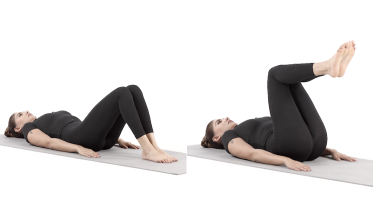 Double bent leg lift
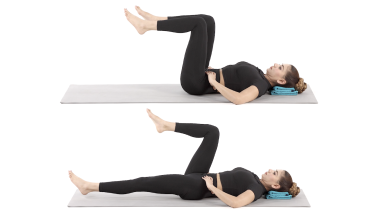 Leg lowering with a tummy draw-in
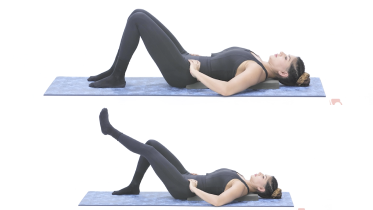 Foam roll core stability
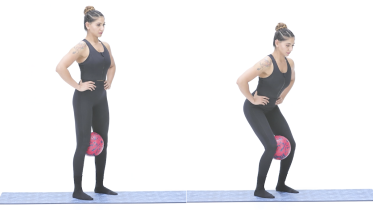 Squat with ball squeeze
Bladder and bowel changes after birth
POGP advises passing urine within 6 hours of the birth and telling your midwife if you have not. If you find it hard to pee, or the feeling of needing to go has changed, tell your doctor straight away. Sit fully on the toilet rather than hovering, so your bladder empties properly. Drink normally, around 1.5 to 2 liters a day with water the best choice, and avoid going just in case (POGP).
Constipation and straining put extra pressure on your pelvic floor and on any stitches or cesarean wound. POGP suggests sitting with your feet apart and raised on a low stool, arms resting on your thighs, tummy relaxed and breathing steadily, without pushing hard. Some women find it helps to support the area between the vagina and the back passage with a clean pad. If you are constipated, ask your doctor or pharmacist about medicines that can help.
After a tear that involved the muscle around the back passage (a third- or fourth-degree tear), bowel control may not be as good as usual for the first few days. RCOG advises avoiding strenuous activity and heavy lifting for 4 to 6 weeks after this kind of tear. It says 6 to 8 in 10 women with this kind of tear have no long-lasting problems after it has been repaired and had time to heal. Doing pelvic floor exercises as soon as you can helps healing, and physiotherapy is one of the treatments if control does not come back (RCOG).
Raise these early: leaking pee that is not getting better, any leaking of poo, or wind you cannot hold in. Tell your midwife, health visitor or GP, and ask about a pelvic health physio (POGP). The NHS lists all of these among the things to tell your doctor at the 6 to 8 week check, so there is no need to feel embarrassed. The warning signs below say which bladder and bowel changes need help the same day or straight away.
Getting back to exercise and running
The UK Chief Medical Officers say it is safe to be active after birth, with no evidence of harm, and that you can be active while breastfeeding. Start gently, depending on your delivery, and build up gradually whether you are new to exercise or getting back to it. In the running guideline's example plan, low-impact exercise such as a static bike or cross-trainer comes in from around 4 to 6 weeks, once sitting on a saddle is comfortable (Goom 2019).
POGP suggests swimming once you have had 7 days with no bleeding or discharge, and after a cesarean you may need to wait until your 6 week check. Wait until any stitches or wound have healed as well. The running guideline's example plan brings swimming in later, from 8 to 12 weeks, once bleeding has stopped and there are no wound problems (Goom 2019).
High-impact exercise means both feet leave the ground at once, as in jumping, jogging or running sports. POGP advises against starting it too soon. The running guideline advises a low-impact plan for the first 3 months, then a return to running between 3 and 6 months after the birth at the earliest, and later if you have signs of pelvic floor problems (Goom 2019). The authors are clear that this rests on expert opinion, because no trials have yet tested when postnatal women should start running.
Before you run, the guideline suggests you should be able to do all of these without pain, heaviness, dragging or leaking: walk for 30 minutes, balance on one leg for 10 seconds, do 10 single leg squats on each side, jog on the spot for 1 minute, and do 10 forward bounds, 10 hops on each leg and 10 single leg "running man" movements on each side. It also suggests working toward 20 repetitions each of single leg calf raises, single leg bridges, single leg sit to stands and side-lying leg lifts. Weakness in those strength tests is not a reason to stop you running, but it shows where to focus your training (Goom 2019). A pelvic health physio can take you through the tests.
When you start, the guideline suggests about 1 to 2 minutes of easy running at a time, with walk breaks, building the time before the speed (Goom 2019). Heaviness, dragging, leaking or moderate to severe pain mean the running is too much for now. It suggests waiting until your baby is at least 6 to 9 months old before running with a buggy, and using one designed for running. POGP adds that the hormonal changes of pregnancy can still affect your joints for up to 5 months after the birth.
When to see a pelvic health physio
POGP suggests asking to see a pelvic health physio if you have pelvic girdle pain, leaking of pee or poo, wind you cannot control, sudden discomfort in your vagina, back ache, or bulging of your tummy muscles. The running guideline adds a sudden urge to pee or poo that is hard to hold, heaviness, pressure or dragging in the pelvis, pain during sex, trouble emptying your bowels, and a gap in your tummy that does not settle (Goom 2019). A check with one before you go back to running, jumping or heavy lifting is worth having too.
In the UK, your GP or midwife can refer you, and some areas let you refer yourself. If sex is still painful after the first weeks, see your GP (POGP). If an exercise in this program is hard to get right, or your symptoms are not improving, POGP suggests asking for a referral rather than pushing on alone.
Looking after your mood
Many new mothers feel tearful, anxious or low for a few days after the birth, and the NHS says these baby blues usually pass within 2 weeks. Low mood that lasts longer or gets worse, finding it hard to enjoy anything, or feeling hopeless or that you cannot cope can be postnatal depression, and the NHS advises speaking to your GP, midwife or health visitor. POGP notes that becoming active again may make postnatal depression less likely, as long as exercise relieves stress rather than adding to it. Exercise does not replace treatment, though. The warning signs below say when to get help the same day or straight away.
For physiotherapists
This page is a starting point for patients, not a full plan. NICE NG194 covers the symptoms women should be told to report without delay at the first postnatal midwife contact, information about pelvic floor exercises before transfer from the maternity unit, and the GP check at 6 to 8 weeks. NICE NG210 recommends encouraging PFMT during routine postnatal care and considering a 3-month program of supervised pelvic floor muscle training postnatally after assisted vaginal birth, occipito-posterior vaginal birth or anal sphincter injury. Woodley 2020 (46 trials, 10,832 women) found that antenatal PFMT in continent women reduced the risk of urinary incontinence in late pregnancy (RR 0.38, moderate-quality evidence) and in the mid-postnatal period, more than 3 to 6 months postpartum (RR 0.71, high-quality evidence). PFMT started after delivery in a mixed population had an uncertain effect on UI in the late postnatal period (RR 0.88, 95% CI 0.71 to 1.09, moderate-quality evidence), and there was no evidence of an effect of postnatal PFMT for women with persistent postnatal incontinence at more than 6 to 12 months postpartum (low-quality evidence).
For diastasis recti, Sperstad 2016 (300 primiparous women; palpated inter-recti separation of 2 fingerbreadths or more 4.5 cm above, at or 4.5 cm below the umbilicus) reported prevalence of 33.1% at 21 weeks' gestation, 60.0% at 6 weeks, 45.4% at 6 months and 32.6% at 12 months postpartum, with no difference in lumbopelvic pain at 12 months. Gluppe 2021 (7 RCTs, 381 women) found very low quality evidence, from a meta-analysis of 2 trials, that transversus abdominis training reduced inter-recti distance (MD -0.63 cm, 95% CI -1.25 to -0.01) and concluded that current evidence does not support recommending specific exercise programs. Goom 2019 describes doming or sinking at the midline, lateral trunk shift or marked rib flare during load transfer tests such as an active straight leg raise to 30 degrees, resisted trunk rotation or chin to chest as signs of failed load transfer.
Goom 2019 recommends a low-impact timeline for the first 3 months, return to running between 3 and 6 months postpartum at the earliest, and a pelvic health assessment from 6 weeks for every mother regardless of delivery mode (level 4 evidence for the timing and testing). It suggests a standing pelvic floor baseline of 10 fast contractions, 8 to 12 maximal contractions of 6 to 8 seconds and a 60-second submaximal hold at 30 to 50%, and considers running less advisable below grade 3 on the Modified Oxford scale or with GH+PB of 7 cm or more on Valsalva, while allowing clinical reasoning where fascial support is intact and load testing is symptom-free. Its load and impact tests and strength tests are listed above. It also notes that abdominal fascia is still well short of its original tensile strength at 6 weeks after a cesarean and not fully recovered at 6 to 7 months (Ceydeli 2005, as cited in Goom 2019).
POGP Fit for the Future (2024) sets the basic early program: transversus abdominis activation in neutral spine held for 2 or 3 breaths, then pelvic tilt, knee rolls, one leg stretch and head lift up to 10 repetitions 3 times a day, progressing to alternate knee bends, single knee fallout and bridging at 2 sets of 5 to 10 every other day. The UK Chief Medical Officers' postpartum infographic (birth to 12 months), which summarizes their 2019 physical activity guidelines and was replaced with an updated version in July 2026, advises aiming for at least 150 minutes of moderate activity a week, building back up to muscle strengthening twice a week, and daily pelvic floor exercises started as soon as possible.
See a doctor promptly if
- Emergency: heavy bleeding from your vagina that is bright red and flowing constantly, soaking your pad and your clothes, or you suddenly lose a lot of blood, or you are bleeding and feel faint or dizzy or have a racing heartbeat. Call emergency services straight away. This can be heavy bleeding after birth (postpartum hemorrhage), which can happen at any time up to 12 weeks after the birth.
- You pass a blood clot the size of a 50p coin (about 3 cm across) or larger, you soak a maternity pad within an hour, your bleeding gets heavier instead of settling or is still heavy after the first week, or you feel breathless or faint doing everyday things such as walking to the toilet or getting dressed. Contact your midwife, maternity unit or GP straight away, the same day, and do not wait for your next check.
- A high temperature or feeling hot and shivery, discharge from your vagina that smells unpleasant, flu-like symptoms, tummy or pelvic pain that is new or getting worse, or, after a cesarean, a new cough or feeling short of breath. Get medical advice the same day from your midwife, maternity unit or GP, as these can be signs of an infection. If you have a very high or very low temperature, shivering you cannot control, you are breathing very fast or finding it hard to breathe, you are confused or your speech is slurred, your skin, lips or tongue look blue, gray, pale or blotchy (on brown or black skin this can be easier to see on the palms of the hands or soles of the feet), or you have a rash that does not fade when you press it, call emergency services, as this can be sepsis.
- Your cesarean wound, or the stitches from a tear or a cut (episiotomy), become red, swollen, hot or more painful, ooze pus or fluid, smell unusual, or start to come apart. Contact your midwife or GP straight away, the same day. If you also have a fever or feel unwell, use the line above.
- Wind or poo coming out of your vagina. Get medical advice the same day, as this needs checking urgently.
- A calf or thigh that is newly swollen, warm, tender, red or darker than usual, has swollen veins that are sore to touch, or has a throbbing or cramping pain that does not fit your injury or condition, or that feels different from normal muscle soreness after exercise. This can be a sign of a blood clot (deep vein thrombosis), especially after surgery, an injury, time in a cast or boot, a long trip or a spell of being much less mobile than usual. Get medical advice the same day. If you are also short of breath or have chest pain, call emergency services. Pregnancy and the first 6 weeks after giving birth also make a clot more likely, so if you gave birth in the last 6 weeks, contact your maternity unit, midwife or GP straight away.
- Emergency: you suddenly become short of breath, you get chest pain or pain in your upper back that may be worse when you breathe in, you cough up blood, your heart is beating very fast, or you faint. Call emergency services straight away, even if your leg looks normal. These can be signs of a blood clot in the lungs (pulmonary embolism).
- Emergency: chest pain that spreads to your jaw, arm or back, a heartbeat that keeps racing, or severe breathlessness when you are resting, especially when you lie down. Call emergency services straight away. Heart problems can start for the first time after having a baby.
- Emergency: any sign of a stroke, even if it goes away. That means a face that droops on one side, an arm you cannot lift or keep up, slurred or muddled speech, weakness or numbness on one side of your body or face, sudden blurred vision, double vision or loss of sight, trouble swallowing, sudden dizziness with unsteadiness or falling over, a sudden severe headache, or a sudden fall where your legs give way but you do not black out (a drop attack). Call emergency services straight away.
- A severe headache that does not go away with simple painkillers, vision problems such as blurred vision or flashing lights, pain below your ribs, heartburn that does not go away with heartburn medicines, sudden swelling of your face, hands or feet, being sick, or feeling very unwell. Contact your maternity unit, midwife or GP straight away, or NHS 111 in the UK if you cannot reach them. Pre-eclampsia can develop in the days or weeks after the birth, and it needs checking immediately. The same applies to a headache after an epidural or spinal anesthetic that gets worse when you sit or stand up and eases when you lie down. Call emergency services if you have a fit (seizure), or a headache came on suddenly and is very severe. Call emergency services too if you have a headache with a stiff neck and either a high temperature or bright light hurting your eyes, as this can be meningitis.
- Emergency: you cannot pee at all, especially if your lower tummy feels full and painful. Call emergency services or go to an emergency department straight away.
- Since the birth, you find it hard to start peeing, your stream is weak or stop-start, you cannot feel when your bladder is full, it hurts or burns when you pee, or, after a cesarean, you leak pee. Tell your midwife or doctor straight away, the same day.
- Emergency: new numbness, tingling or altered feeling around or under your genitals, between your inner thighs, or around your bottom (anus), for example it feels different when you wipe after using the toilet, if it comes with back pain, sciatica, or pain, tingling, numbness or weakness in one or both legs, if it is spreading or getting worse, or if your baby was born by cesarean. Call emergency services or go to an emergency department straight away. This can be a sign of pressure on the bundle of nerves at the base of the spine (cauda equina syndrome), which needs emergency treatment. Some numbness or soreness around the vagina and any stitches or bruising is common in the first days after a vaginal birth and should slowly get better. If it has not started to improve after a few days, get medical advice the same day.
- Emergency: you suddenly cannot control your bladder or bowels at all. The same applies to new leaking of pee or poo, new trouble starting to pee, not being able to feel yourself peeing, not noticing when you need to poo, or a new change in how your genitals feel during sex, if it comes with back pain, sciatica, or pain, tingling, numbness or weakness in one or both legs. Call emergency services or go to an emergency department straight away. These can also be signs of cauda equina syndrome.
- Emergency: after an epidural or spinal anesthetic, your legs are still numb or weak when your team said the feeling should be back, or numbness or weakness in your legs comes back or gets worse, especially with back pain, a fever, or a red, swollen or tender spot where the needle went in. The same applies at any time after the birth to new weakness or numbness in both legs, or losing feeling in one leg. Call emergency services or go to an emergency department straight away. Rarely, bleeding or an infection near the spine can press on the nerves.
- A leg or foot that is getting weaker, for example your foot drags, catches on the ground or slaps down when you walk (foot drop). Get medical advice the same day. If the weakness is getting worse by the hour, go to an emergency department.
- Emergency: tummy pain that came on very suddenly or is severe, especially if you also feel faint, have a racing heartbeat or feel very unwell, or tummy pain when you cannot poo or pass wind at all. Call emergency services or go to an emergency department straight away.
- You cannot control wind or poo, you leak poo, or you cannot hold on when you need to poo, without any of the emergency signs above. Tell your midwife, health visitor or GP within a few days, rather than waiting for your 6 to 8 week check, and ask about a pelvic health physio.
- A bulge or lump you can feel or see inside or coming out of your vagina, or a feeling of heaviness or pressure in your lower tummy or vagina. Book an appointment with your doctor. This can be a sign of pelvic organ prolapse, and pelvic floor exercises are often part of the treatment once it has been checked.
- A soft lump at or near your belly button, along the middle of your tummy or at your cesarean scar that gets bigger when you cough or strain. This can be a hernia, so see your doctor. If the lump becomes painful or tender, or you have a bloated tummy, you feel or are being sick, you are constipated, or you have a high temperature or feel hot, cold or shivery, get medical help straight away, the same day, for example at urgent care or an emergency department. If the pain is severe or came on suddenly, you cannot poo or pass wind at all, you are vomiting blood or your vomit looks like coffee grounds, or you have suddenly become confused, call emergency services or go to an emergency department straight away.
- Emergency: you have thoughts of ending your life or of harming yourself or your baby and feel you might act on them, you have already harmed yourself, or you do not feel you can keep yourself or your baby safe. Call emergency services or go to an emergency department straight away.
- Thoughts of suicide or of harming yourself or your baby, even if you do not plan to act on them. Get urgent help the same day from your GP, midwife or health visitor, or NHS 111 in the UK. In the UK, you can also talk to Samaritans on 116 123.
- In the first weeks after the birth, you, or the new mother you care for, suddenly see or hear things that are not there, have strange beliefs or fears, feel very high or overactive, become confused, or have moods that change very fast. See a GP straight away and ask for an urgent assessment the same day, or call NHS 111 in the UK if you cannot reach one. If you already have a care plan because you were at high risk, call your crisis team. If anyone may be in danger of harm, call emergency services. This can be postpartum psychosis, which is a medical emergency, and the person may not realize they are ill.
- Low mood that lasts beyond the first 2 weeks after the birth or keeps getting worse, finding it hard to enjoy anything, or feeling hopeless or that you cannot cope. Speak to your GP, midwife or health visitor within a few days. This can be postnatal depression, and it can be treated.
Common questions
When can I start exercising after giving birth?
Pelvic floor exercises and gentle breathing can usually start within the first few hours, and after a cesarean once the catheter is out (POGP). Short walks can start in the first days and build up over the first 6 weeks. Harder tummy work usually waits until your bleeding has settled and, after a cesarean, until your midwife or GP is happy with the wound, often around the 6 to 8 week check. The UK Chief Medical Officers say it is safe to be active after birth, and suggest starting gently and aiming for at least 150 minutes of moderate activity a week.
Can I do sit-ups or planks after having a baby?
Not at first. The NHS advises avoiding sit-ups, planks and high-impact exercise to start with, and POGP says the same, especially straight after the birth. Build up through the deep tummy and pelvic floor exercises first. If you later add harder moves, watch the middle of your tummy: a ridge or dip along the midline means the exercise is too much for now.
Does diastasis recti go away on its own?
Often it narrows, but not always. The NHS says the gap usually goes back to normal by the time your baby is 8 weeks old, while a Norwegian study of 300 first-time mothers found a gap of 2 finger widths or more in 60.0% at 6 weeks, 45.4% at 6 months and 32.6% at 12 months (Sperstad 2016). If the gap is still obvious after 8 weeks, the NHS suggests seeing your GP, and POGP suggests asking for a referral to a pelvic health physio.
When can I start running after having a baby?
The 2019 return to running guideline advises against running before about 3 months after the birth, and later than that if you have leaking, heaviness, dragging or pelvic pain (Goom 2019). It suggests a return between 3 and 6 months at the earliest, after a pelvic health check and a set of load and strength tests. This timing is based on expert opinion, because there are no trials yet on when postnatal runners should start.
When can I exercise after a C-section?
Pelvic floor exercises, the gentle tummy draw-in and short daily walks can start early, once the catheter is out. The NHS says exercise, driving and heavier lifting can start again when you feel able and they do not hurt, which may not be for 6 weeks or so, and POGP advises not lifting anything heavier than your baby for at least 6 weeks. For swimming, POGP says you may need to wait until your 6 week check, and the wound should have healed first. Guidelines allow more recovery time after a cesarean than after a vaginal birth, so take each stage more slowly.
Is it normal to leak urine after giving birth?
It is common, especially in the early weeks, but it is worth treating rather than putting up with. Pelvic floor exercises are the first step, and POGP says to expect an improvement in 3 to 5 months if the muscles were weak. If leaking carries on, POGP suggests asking to be referred to a pelvic health physio, or referring yourself where you can. Tell your GP at the 6 to 8 week check, as the NHS lists trouble holding in pee among the things to tell your doctor about.
References
- National Institute for Health and Care Excellence (NICE). Postnatal care. NICE guideline NG194. Published 20 April 2021, last updated 9 June 2026. https://www.nice.org.uk/guidance/ng194
- National Institute for Health and Care Excellence (NICE). Pelvic floor dysfunction: prevention and non-surgical management. NICE guideline NG210. Published 9 December 2021. https://www.nice.org.uk/guidance/ng210
- Goom T, Donnelly G, Brockwell E. Returning to running postnatal: guidelines for medical, health and fitness professionals managing this population. March 2019. https://absolute.physio/wp-content/uploads/2019/09/returning-to-running-postnatal-guidelines.pdf
- Pelvic, Obstetric and Gynaecological Physiotherapy (POGP). Fit for the Future: essential advice and exercises following childbirth. 2024. https://thepogp.co.uk/resources/119/fit_for_the_future/
- Pelvic, Obstetric and Gynaecological Physiotherapy (POGP). Fit and Safe: exercise in the childbearing year. 2013. https://thepogp.co.uk/Resources/127/fit_and_safe_exercise_in_the_childbearing_year/
- Pelvic, Obstetric and Gynaecological Physiotherapy (POGP). Tummy muscle separation. https://thepogp.co.uk/patient_information/womens_health/tummy_muscle_separation.aspx
- UK Chief Medical Officers, Department of Health and Social Care. Physical activity for women after childbirth: birth to 12 months (text of the infographic). Infographic first published 7 September 2019 with the UK Chief Medical Officers' physical activity guidelines, replaced with an updated version 10 July 2026, page updated 16 July 2026. https://www.gov.uk/government/publications/physical-activity-guidelines-pregnancy-and-after-childbirth/physical-activity-for-women-after-childbirth-birth-to-12-months-text-of-the-infographic
- Woodley SJ, Lawrenson P, Boyle R, Cody JD, Mørkved S, Kernohan A, Hay-Smith EJC. Pelvic floor muscle training for preventing and treating urinary and faecal incontinence in antenatal and postnatal women. Cochrane Database of Systematic Reviews. 2020;(5):CD007471. https://doi.org/10.1002/14651858.CD007471.pub4
- Sperstad JB, Tennfjord MK, Hilde G, Ellström-Engh M, Bø K. Diastasis recti abdominis during pregnancy and 12 months after childbirth: prevalence, risk factors and report of lumbopelvic pain. British Journal of Sports Medicine. 2016;50(17):1092-1096. https://doi.org/10.1136/bjsports-2016-096065
- Gluppe S, Engh ME, Bø K. What is the evidence for abdominal and pelvic floor muscle training to treat diastasis recti abdominis postpartum? A systematic review with meta-analysis. Brazilian Journal of Physical Therapy. 2021;25(6):664-675. https://doi.org/10.1016/j.bjpt.2021.06.006
- NHS. Your post-pregnancy body. Page last reviewed 20 July 2026. https://www.nhs.uk/baby/support-and-services/your-post-pregnancy-body/
- NHS. Your 6-week postnatal check. Page last reviewed 28 November 2022. https://www.nhs.uk/baby/support-and-services/your-6-week-postnatal-check/
- NHS. Caesarean section: recovery. Page last reviewed 4 January 2023. https://www.nhs.uk/tests-and-treatments/caesarean-section/recovery/
- NHS. Episiotomy and perineal tears. Page last reviewed 9 June 2023. https://www.nhs.uk/pregnancy/labour-and-birth/episiotomy-and-perineal-tears/
- Royal College of Obstetricians and Gynaecologists (RCOG). Care of a third- or fourth-degree tear that occurred during childbirth (also known as obstetric anal sphincter injury, OASI). October 2019. https://www.rcog.org.uk/for-the-public/browse-our-patient-information/care-of-a-third-or-fourth-degree-tear-that-occurred-during-childbirth-also-known-as-obstetric-anal-sphincter-injury-oasi/
- Royal College of Obstetricians and Gynaecologists (RCOG). Heavy bleeding after birth (postpartum haemorrhage). December 2016. https://www.rcog.org.uk/for-the-public/browse-our-patient-information/heavy-bleeding-after-birth-postpartum-haemorrhage/
- NCT. Bleeding after birth and postpartum haemorrhage (PPH). Reviewed 10 December 2024. https://www.nct.org.uk/information/labour-birth/recovery-birth/bleeding-after-birth-and-postpartum-haemorrhage-pph
- NHS Black Country Healthier Together. Blood loss: what to expect after birth. https://www.blackcountry0-18.nhs.uk/pregnant-women/after-you-have-had-your-baby-2/blood-loss-what-expect-after-birth
- Milton Keynes University Hospital NHS Foundation Trust. Postnatal care: important symptoms. https://www.mkuh.nhs.uk/maternity-services/your-pregnancy-journey/postnatal-care/important-symptoms
- NHS. Pre-eclampsia. Page last reviewed 23 March 2026. https://www.nhs.uk/conditions/pre-eclampsia/
- NHS. Deep vein thrombosis (DVT). Page last reviewed 30 April 2026. https://www.nhs.uk/conditions/deep-vein-thrombosis-dvt/
- NHS. Pulmonary embolism. Page last reviewed 25 May 2023. https://www.nhs.uk/conditions/pulmonary-embolism/
- NHS. Sepsis. Page last reviewed 14 May 2026. https://www.nhs.uk/conditions/sepsis/
- NHS. Stroke: symptoms. Page last reviewed 12 September 2024. https://www.nhs.uk/conditions/stroke/symptoms/
- NHS. Stomach ache. Page last reviewed 26 May 2023. https://www.nhs.uk/symptoms/stomach-ache/
- NHS. Hernia. Page last reviewed 19 May 2026. https://www.nhs.uk/conditions/hernia/
- NHS. Meningitis. Page last reviewed 12 June 2026. https://www.nhs.uk/conditions/meningitis/
- NHS. Pelvic organ prolapse. Page last reviewed 3 July 2025. https://www.nhs.uk/conditions/pelvic-organ-prolapse/
- Getting It Right First Time (GIRFT), NHS England. National suspected cauda equina syndrome (CES) pathway. February 2023, updated March 2026. https://gettingitrightfirsttime.co.uk/wp-content/uploads/2026/04/National-Suspected-Cauda-Equina-Pathway-March-2026.pdf
- Patient.info. Urinary retention. Last updated 16 September 2024. https://patient.info/mens-health/prostate-and-urethra-problems/urinary-retention
- NHS. Postnatal depression. Page last reviewed 18 March 2026. https://www.nhs.uk/mental-health/conditions/postnatal-depression/
- NHS. Postpartum psychosis. Page last reviewed 18 October 2023. https://www.nhs.uk/mental-health/conditions/post-partum-psychosis/
- NHS. Where to get urgent help for mental health. Page last reviewed 26 April 2023. https://www.nhs.uk/nhs-services/mental-health-services/where-to-get-urgent-help-for-mental-health/
- NHS. Epidural: side effects and complications. Page last reviewed 1 February 2023. https://www.nhs.uk/tests-and-treatments/epidural/side-effects/
Written and checked by the PocketPhysio editorial team. Last updated 2026-09-29.
This page is general education, not a diagnosis or a personal treatment plan. See a physiotherapist or doctor for advice about your own situation.