Pelvic tilt
A pelvic tilt is a small movement done lying on your back with your knees bent. You draw your belly button in and squeeze your buttocks so your pelvis tips back and your lower back presses into the surface. It is often one of the first exercises in a lower back program, because it teaches you to control your pelvis with your stomach muscles.
How to do the pelvic tilt
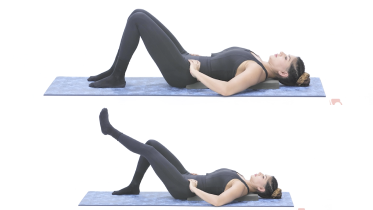
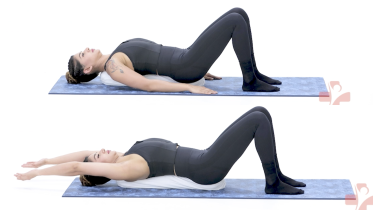
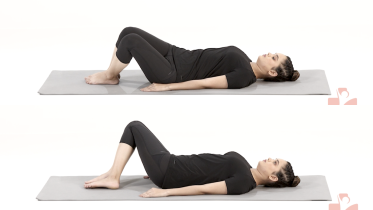
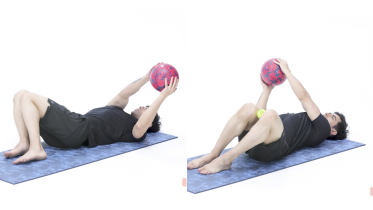
- Lie on your back with your knees bent and feet flat, about hip width apart. Cross your arms over your chest.
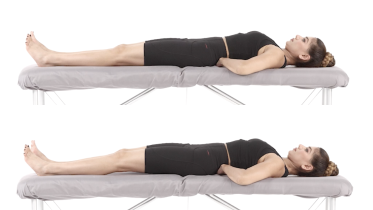
- Notice the small gap between your lower back and the surface under you. That is where you start.
- Breathe out and draw your belly button in toward your spine. At the same time, squeeze your buttocks so your pelvis tips back and your tailbone curls up just off the surface.
- Your lower back should now be pressed firmly into the surface. Most of the effort comes from your stomach and buttocks, not from pushing through your feet.
- Keep it small. Your lower back stays down the whole time, so your hips do not lift into a bridge.
- Hold for a few seconds while you keep breathing, then relax back to the start and repeat.
What you should feel
Your lower stomach and buttock muscles working, with your lower back feeling supported rather than strained.
Common mistakes
- Pushing through the feet so the hips and lower back lift off the surface. That turns it into a bridge.
- Holding your breath while you hold the tilt.
- Going straight into the next tilt without relaxing in between. Relax your stomach and buttocks fully, then start again.
How often
Many programs start with 2 to 3 sets of 10, holding each tilt for about 5 seconds, once or twice a day. Your physio will fine tune this for you.
Stop and check with your physio if
- Pain spreads down the leg or you get numbness or tingling.
- Your back pain gets sharper during the movement instead of easing.
- You are pregnant and notice bleeding or fluid leaking from your vagina, regular painful tightenings, tummy pain that does not settle when you rest or comes with lower back pain, or a change in your baby's usual movements, such as moving less than usual. Stop and contact your midwife or maternity unit straight away. Do the same for a severe headache, problems with your vision such as blurring or flashing lights, pain just below your ribs, or sudden swelling of your face, hands or feet, which can be signs of pre-eclampsia. Call emergency services if the bleeding is heavy, the tummy pain is severe, bleeding or tummy pain comes with pain in your shoulder or feeling sick, faint or dizzy, or a headache comes on suddenly and is very severe.
From the clinic
Pelvic tilts look simple, but plenty of people cannot feel them at first. A quick check: slide one hand under the small of your back. As you tilt, the pressure on your hand should build, then ease again when you relax.
Once you can tilt without pushing through your feet or lifting your lower back, you can take the same stomach control into harder exercises such as the glute bridge and the dead bug.
After the first trimester of pregnancy, check with your physio before doing tilts flat on your back. You can do the same tilt standing with your back against a wall, or on your hands and knees.
Reviewed by the PocketPhysio by VirtueLife expert physiotherapy team. Last reviewed 2026-09-25.
This page is general education, not a diagnosis or a personal treatment plan. If you have pain, an injury or a health condition, see a physiotherapist or doctor before starting new exercises.