Foam roller snow angels
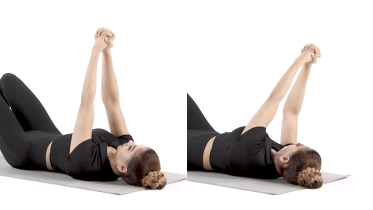
Foam roller snow angels are a balance and core control exercise done lying on your back along a long foam roller. You gently tighten your deep tummy and pelvic floor muscles, then sweep your arms from your sides up past your head and back, like making a snow angel, without rolling off. As the arms move, the roller wants to tip, and your trunk has to hold you steady.
How to do the foam roller snow angels
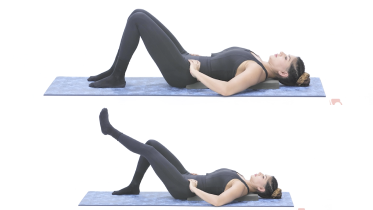
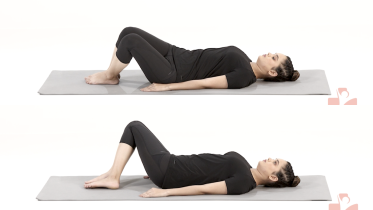
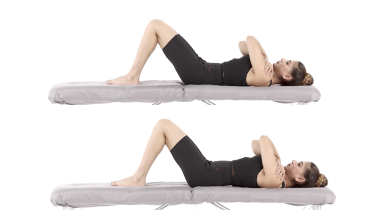
- Place a long foam roller on the floor. Sit at one end, then lie back along it so it supports your whole spine from your bottom to your head. Bend your knees and plant both feet on the floor, hip width apart.
- Let your arms lie alongside your body, hands touching the floor. Settle until you feel balanced.
- Draw your belly button gently in and lightly lift your pelvic floor, at about 20 to 30 percent of your full effort. Keep breathing normally.
- Slowly sweep both arms out to the sides and up past your head, keeping them low, close to the floor.
- Sweep them back down to your sides just as slowly, keeping your body still on the roller the whole time.
What you should feel
A light, steady effort low in your tummy and around your trunk as you keep the roller from tipping. The chest may feel a gentle stretch as the arms go overhead.
Common mistakes
- Holding your breath to stay balanced.
- Arching your lower back off the roller as your arms go past your head.
- Squeezing the tummy as hard as you can. A light hold is the aim.
- Moving the arms so fast that you wobble or slide off the roller.
How often
Many programs use 1 to 3 sets of 6 to 10 slow arm sweeps, once a day. Your physio will adjust this.
Stop and check with your physio if
- Sharp pain in your back, shoulders or ribs.
- Pins and needles or numbness in your arms or hands as they go overhead.
- Pins and needles in your arm or hand that do not go away after you stop, or part of your arm or hand goes numb. Get medical advice the same day. If one side of your face or body suddenly goes numb or weak, or your speech becomes slurred or muddled, call emergency services, even if it goes away.
- Lying on the roller makes you dizzy or lightheaded. If you faint while exercising, call emergency services, even if you feel fine again quickly.
From the clinic
Start with small sweeps that stay close to your sides, and only take the arms higher once you can keep still on the roller. The voice guide gives the next step: bring your feet together. A narrower base makes the roller harder to keep level. If a stiff shoulder will not let your arms reach overhead, go only as far as is comfortable.
Use a roller long enough to support your head as well as your bottom, and give yourself space on both sides in case you tip. To get off, bring your arms back to your sides, keep your knees bent and roll gently to one side onto the floor. Push up from there rather than sitting straight up.
If you have osteoporosis, a sore back at the moment or a recent shoulder injury, check with your physio first. If you are pregnant, ask your physio first as well. Balance can change as the bump grows, and after the first three months lying on your back may not suit you. The foam roller thoracic extension uses a roller in a different way, across the upper back.
Written and checked by the PocketPhysio editorial team. Last updated 2026-09-28.
This page is general education, not a diagnosis or a personal treatment plan. If you have pain, an injury or a health condition, see a physiotherapist or doctor before starting new exercises.