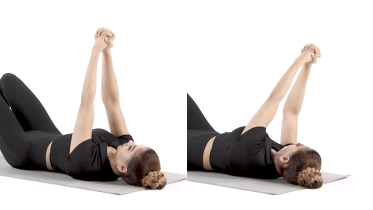
Foam roll core stability
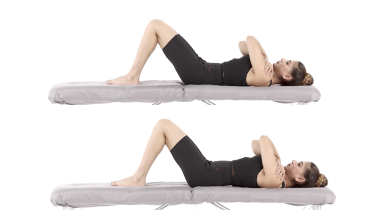
Foam roll core stability is a balance exercise for the deep trunk muscles, done lying on your back along a low, narrow foam support. You set your lower tummy and pelvic floor lightly, take your arms off the floor, and then straighten one knee to lift that foot, all without tipping off the foam. The narrow support shows up every small shift in weight, so your trunk has to keep working quietly to hold you centered.
How to do the foam roll core stability
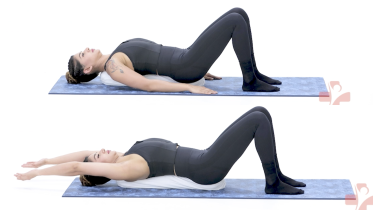
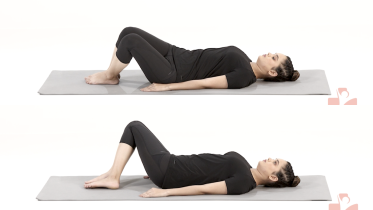
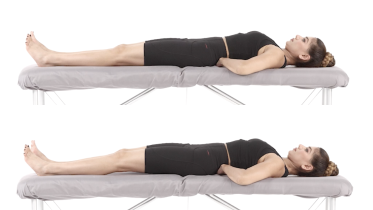
- Lay a low foam support lengthwise on a mat, such as the flat foam strip in the video. Sit on the end of it and lower yourself back along it, so it runs under your spine from your bottom to your shoulders. Knees bent, feet on the floor.
- Rest your arms on the floor beside you while you find your balance. In the video the head rests on the mat past the end of the foam. If your chin tips up, put a folded towel under your head.
- Gently draw in your lower tummy and lift your pelvic floor a little, at a low effort, around 20 to 30 percent of what you could do. Keep breathing easily.
- Lift your arms off the floor and rest your hands on your lower stomach, as in the video. Bring your feet closer together if you can stay steady.
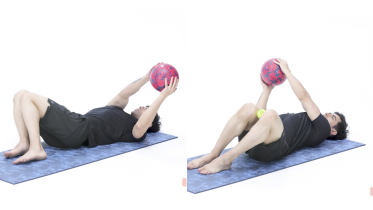
- Now straighten one knee so that foot lifts off the floor, keeping that thigh in line with the other one. Hold for a few breaths, lower the foot, then swap legs.
What you should feel
A light, constant effort deep in your lower tummy and around your trunk as you stay centered on the foam, and work in the front of the hip and thigh on the lifted leg.
Common mistakes
- Bracing hard or holding your breath to stay on the foam.
- Letting your hips sag or rotate toward the lifted leg.
- Letting your lower back lift into an arch as the foot comes up.
- Adding the next step before the last one feels steady.
How often
A typical program is 5 to 10 leg lifts on each side, holding each for a few breaths, for 1 to 3 sets. Staying at an earlier step, such as arms off the floor, is fine until it feels steady. Your physio will adjust this.
Stop and check with your physio if
- Sharp back or rib pain on the foam, or pain, tingling or numbness spreading down one leg.
- Numbness around your genitals or bottom, new trouble with your bladder or bowels, pain, tingling, numbness or weakness in both legs, or loss of feeling in one leg. Call emergency services or go to an emergency department straight away.
- Your leg or foot gets weaker, for example your foot drags, catches on the ground or slaps down when you walk (foot drop). Get medical advice the same day. If the weakness is getting worse by the hour, go to an emergency department.
From the clinic
Each step makes the balance harder: arms off the floor, then feet together, then one foot up. Stay at the step where you can stay centered and breathe easily, and move on only when it feels steady. In the video the lifted leg straightens out in line with the other thigh. If that is too much, lift the foot just a little way off the floor with the knee still bent. The dead bug and supine marching train similar control on the floor.
Leave clear space on both sides of the foam in case you tip. A low, flat foam strip like the one in the video, or a half roller with its flat side down, is the place to start. A full round roller sits higher and is much harder to balance on. When you are done, put your hands back on the floor, slide off the foam sideways onto the mat, then roll onto your side and push yourself up from there.
If you have low bone density (osteoporosis) or trouble with balance, ask your physio first, because tipping off the foam onto a hard floor matters more for you. If you have had a fracture in your spine, check with your physio before you begin. If you have had surgery on your spine, chest or heart in recent months, get the go-ahead from your surgical team or physio first. If you have high blood pressure, breathe steadily through every hold and never hold your breath.
If you are pregnant and past the first three months, check with your physio before exercising flat on your back. If you have recently given birth, including by cesarean section, or you have a gap down the middle of your stomach muscles (diastasis recti), ask your physio, midwife or doctor first.
If you have had a hip replacement, get the go-ahead from your surgeon or physio before you try foam roll core stability. Some operations limit this kind of work for the first months, so the timing depends on your surgery.
Written and checked by the PocketPhysio editorial team. Last updated 2026-09-26.
This page is general education, not a diagnosis or a personal treatment plan. If you have pain, an injury or a health condition, see a physiotherapist or doctor before starting new exercises.