Supine marching
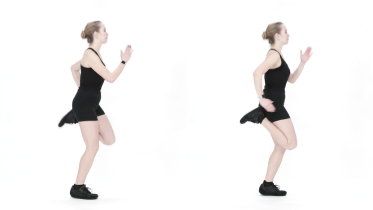
Supine marching is a gentle core exercise done lying on your back with your knees bent. You lift one foot until the hip and knee are both bent to a right angle, then lower it to tap your toes on the floor, while your pelvis and lower back stay still. In Pilates it is called a single leg lift, and it often comes before harder moves such as the dead bug.
How to do the supine marching
- Lie face up with your spine relaxed in its natural shape. A small gap under your lower back is normal. Bend your knees, feet flat and hip width apart, arms by your sides.
- Breathe out and lift one foot off the mat, bringing the knee up over your hip. The knee stays bent at 90 degrees and the foot is gently pointed.
- Breathe in as you lower the leg and tap your toes lightly on the floor.
- Lift again. Move only at the hip, keeping the same knee bend each time.
- Keep your pelvis level and still throughout. Do all your reps on one leg, then change sides.
What you should feel
Light work low in the stomach as it holds your pelvis steady, and at the front of the hip on the lifting leg.
Common mistakes
- Letting the pelvis tip or rock toward the lifting side. Slow the lift down.
- Arching the lower back as the leg comes up, or flattening it hard into the floor. Keep it as it was at the start.
- Opening or closing the knee angle, so the foot swings instead of the thigh moving.
- Dropping the foot heavily to the floor.
How often
Many programs use 2 to 3 sets of 8 to 12 lifts per leg, daily or on most days. Your physio will adjust this.
Stop and check with your physio if
- The lower back starts to ache and gets worse lift by lift.
- A sharp pinch in the front of your hip or groin.
- Pain, pins and needles or numbness spreading into a leg.
From the clinic
The name says marching, but in the video and voice guide all the reps are done on one leg before switching. A simple check: rest your fingertips on the bony points at the front of your pelvis. If one side rises or drops as the leg moves, slow down or lift less. Once one leg at a time feels steady, you can swap legs with each lift. The dead bug and the marching bridge are the usual next steps.
If you have had a hip replacement, get the go-ahead from your surgeon or physio before you try supine marching. Some operations limit this kind of work for the first months, so the timing depends on your surgery. If you are pregnant, check with your midwife or physio first. From about 16 weeks the NHS advises against lying flat on your back for long periods because it can make you feel faint.
Written and checked by the PocketPhysio editorial team. Last updated 2026-09-26.
This page is general education, not a diagnosis or a personal treatment plan. If you have pain, an injury or a health condition, see a physiotherapist or doctor before starting new exercises.