Dead bug
The dead bug is a core exercise done lying on your back. You move your arms and legs slowly, and your lower back stays still against the floor the whole time.
How to do the dead bug
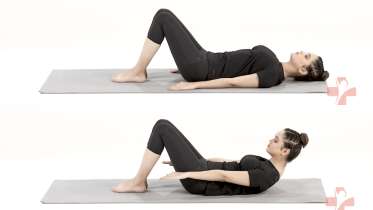
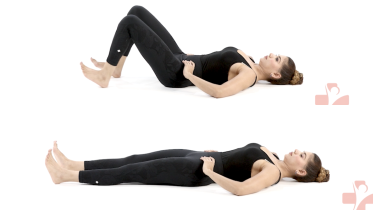
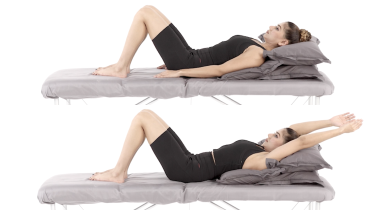
- Lie on your back on the floor or a firm bed with your knees bent and feet flat. This is called crook lying.
- Gently draw your belly button in and keep your lower back still and resting on the surface. Keep breathing.
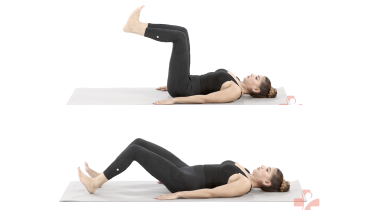
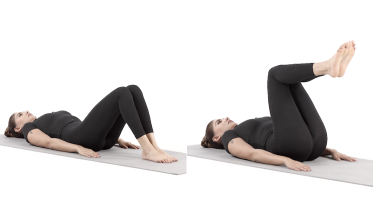
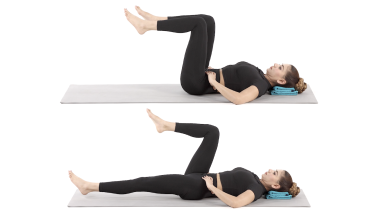
- Lift one leg, then the other, so your hips and knees are bent to about 90 degrees and your shins are level with the floor.
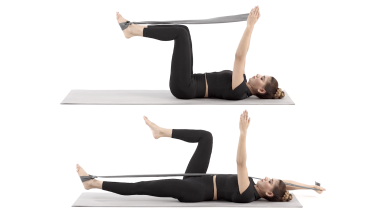
- Reach both arms straight up toward the ceiling.
- Slowly lower one arm back past your head, only as far as you can without your lower back lifting. Your legs stay still.
- Bring the arm back up and repeat with the other arm. Lower your feet one at a time when you finish.
What you should feel
Your stomach muscles working to hold your back still. Your breathing may get harder. That is normal.
Common mistakes
- The lower back arching off the surface as the arm or leg goes down. Make the movement smaller.
- Moving too fast. Slow is harder and better.
- Straining the neck. Keep your head relaxed on the surface.
How often
Many programs use 2 to 3 sets of 6 to 10 slow reps each side. Your physio will set the level.
Stop and check with your physio if
- Your back hurts and the pain does not settle after the set.
- You get numbness, tingling or pain spreading down a leg.
- Your stomach wall bulges or you feel pressure there. Tell your physio about it.
From the clinic
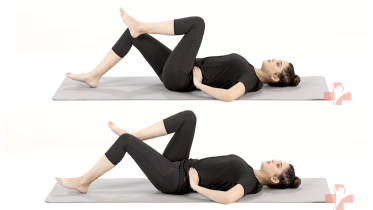
The video shows the easiest version, where only your arms move and your legs hold still. When that feels steady, the usual next step is heel taps: one foot lowers to touch the floor with the knee still bent. In the hardest version, one leg straightens out toward the floor while the opposite arm reaches back.
Pregnant and past the first trimester? Ask your physio before you do exercises lying flat on your back.
Written and checked by the PocketPhysio editorial team. Last updated 2026-09-25.
This page is general education, not a diagnosis or a personal treatment plan. If you have pain, an injury or a health condition, see a physiotherapist or doctor before starting new exercises.