Double bent leg lift
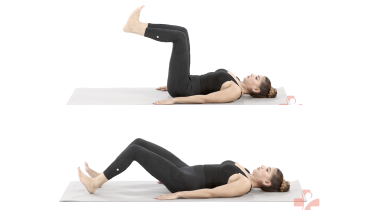
The double bent leg lift is a core exercise done lying on your back with your knees bent. You lift both feet off the floor together until your knees are over your hips, hold for a moment, then lower both feet back down slowly. Your stomach muscles work to keep your pelvis and lower back steady against the weight of both legs.
How to do the double bent leg lift
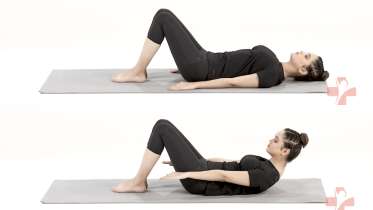
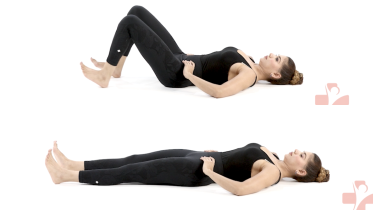
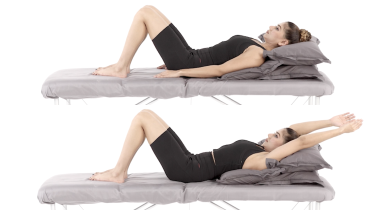
- Lie face up on a mat with your knees bent, feet flat and touching, and your arms along your sides with the palms down.
- Tilt your pelvis back a little so your lower back rests gently on the mat, without pressing hard. Lift your pelvic floor lightly. Let your lower tummy draw in gently with it, without pulling it in hard.
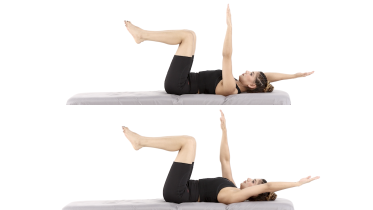
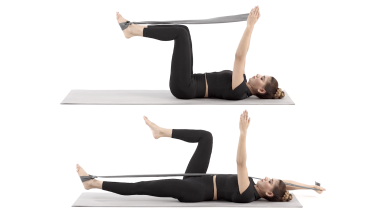
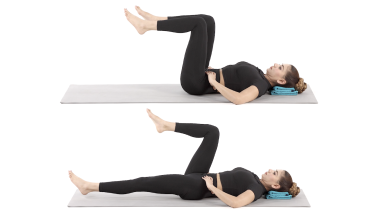
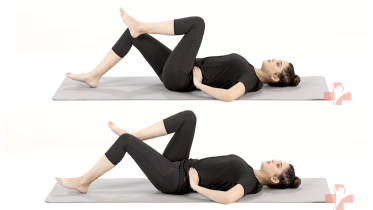
- Breathe out and lift both feet off the floor together, bringing your knees up until they are over your hips and your shins are roughly level with the floor.
- Hold there for a few seconds, breathing steadily and keeping your lower back resting on the mat.
- Lower both feet back to the floor slowly and quietly, with your knees bent all the way down.
What you should feel
Strong work across the front of your stomach, especially low down, and effort at the front of both hips.
Common mistakes
- Swinging the legs up with a jerk instead of lifting them smoothly.
- Letting the lower back arch off the mat as the feet leave the floor or come back down.
- Pushing hard into the floor with your hands to help the lift.
- Bringing the knees past your hips toward your chest. Stop with them over your hips.
How often
Many programs use 1 to 3 sets of 5 to 10 lifts, holding for about 3 to 6 seconds at the top, a few days a week. Your physio will adjust this.
Stop and check with your physio if
- Lower back pain during the lift, or back pain that is worse afterward.
- Tingling, numbness or pain that travels down into a leg.
- A bulge along the middle of your stomach or in your groin, or leaking or heaviness from the pelvic floor. Stop, and raise it with your physio.
From the clinic
Lifting both legs at once is a big step up from lifting one. If your back arches as the feet come up, go back to one knee at a time, as in supine marching or the tabletop leg lift, until your pelvis stays still. Lower the feet as slowly as you lift them, because the way down is where control most often slips. If you have high blood pressure, breathe steadily through every hold and never hold your breath.
If you have had a hip replacement, get the go-ahead from your surgeon or physio before you try the double bent leg lift. Some operations limit this kind of work for the first months, so the timing depends on your surgery. Keep your knees over your hips rather than drawing them toward your chest.
Lifting both legs raises the pressure inside your stomach more than most early core moves. With a hernia, a recent stomach or back operation, or leaking or heaviness in the pelvis, check with your physio first. If you have recently given birth, including by cesarean section, or you have a gap down the middle of your stomach muscles (diastasis recti), ask your physio, midwife or doctor first. If you are pregnant, check with your midwife or physio before you start. If you are pregnant and past the first three months, check with your physio before exercising flat on your back.
Written and checked by the PocketPhysio editorial team. Last updated 2026-09-26.
This page is general education, not a diagnosis or a personal treatment plan. If you have pain, an injury or a health condition, see a physiotherapist or doctor before starting new exercises.