Marching bridge
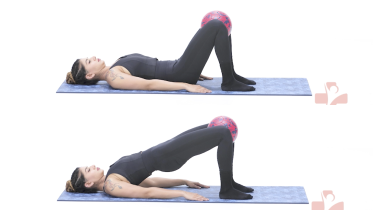
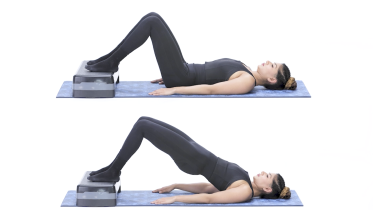
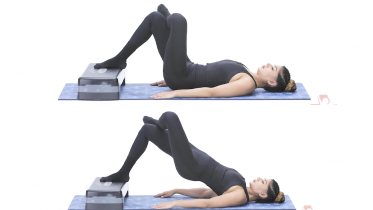
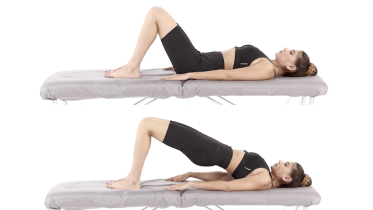
The marching bridge starts as a normal bridge. Once your hips are up, you lift one foot and then the other, like marching, without letting the pelvis drop or twist. It asks more of the buttocks and the muscles around the hips and trunk than a plain bridge.
How to do the marching bridge
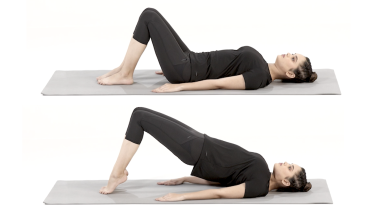
- Lie on your back with your knees bent and your feet flat on the floor, about hip width apart. Rest your arms by your sides, palms down.
- Gently tighten your stomach. Squeeze your buttocks and lift your hips until your shoulders, hips and knees are in a line.
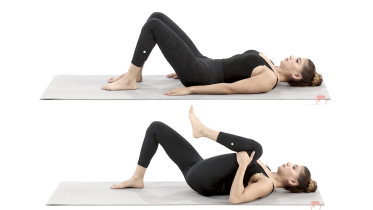
- Keeping your hips up, lift one foot off the floor and bring that knee up toward you, keeping it bent.
- Put the foot back down, then lift the other one. Your pelvis stays up and level the whole time.
- Keep marching slowly from one leg to the other. When you finish, lower your hips back to the floor with control.
What you should feel
Your buttocks, especially on the side of the foot that stays down, and the back of the thighs. Your stomach works to stop the pelvis tipping.
Common mistakes
- Letting the hip drop on the side of the leg that lifts. Lift the foot lower or slow down.
- Arching the lower back to keep the hips high.
- Rushing the marches, which lets the pelvis rock from side to side.
How often
Often 2 to 3 sets of 6 to 10 marches on each leg, with a rest between sets. Your physio will adjust this.
Stop and check with your physio if
- You feel back pain rather than buttock work, even with smaller, slower marches.
- Pain runs down a leg, or a leg goes numb or tingles.
- Cramp in your hamstrings (the back of the thighs). Lower down and rest. Then bring your feet a little closer to your bottom before you try again.
From the clinic
This is a step up from the glute bridge. If you cannot yet hold a steady bridge for several seconds, work on that first. When the marching feels easy and your pelvis stays level, the single leg bridge is a usual next step.
After hip, knee or back surgery, your surgeon's protocol decides when you can start bridging exercises. Past the first trimester of pregnancy? Get your physio's advice before exercising flat on your back.
Written and checked by the PocketPhysio editorial team. Last updated 2026-09-25.
This page is general education, not a diagnosis or a personal treatment plan. If you have pain, an injury or a health condition, see a physiotherapist or doctor before starting new exercises.