Seated pelvic tilt
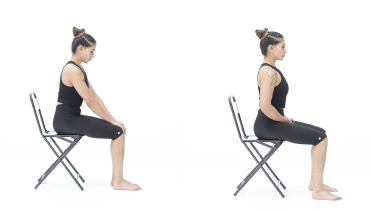
The seated pelvic tilt is a gentle lower back movement done in a chair. You roll your pelvis back so you slouch and your lower back rounds, then roll it forward so you sit tall with a small hollow in your lower back. Physios often use it to get a stiff lower back moving and to practice finding a comfortable upright sitting position.
How to do the seated pelvic tilt
- Sit on a firm chair close to a table, with your feet flat on the floor about hip width apart.
- Rest your hands on the table in front of you and let your arms relax. They are there for support, not to push or pull.
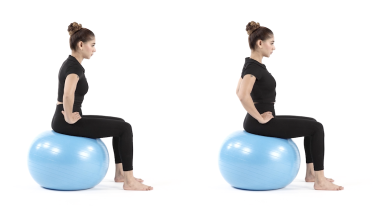
- Round your lower back and let yourself slouch, so your pelvis rolls back. Keep your bottom where it is on the seat rather than sliding it forward.
- Then roll your pelvis forward and sit up tall, drawing your lower back in so it makes a small hollow. Go a little further than your normal upright position.
- Keep looking straight ahead the whole time, so the movement comes from your lower back and pelvis, not your head.
- Move slowly between the slouched and upright positions.
What you should feel
Gentle movement in your lower back, with light work in your stomach as you slouch and in your back muscles as you sit tall.
Common mistakes
- Sliding your bottom forward on the seat as you slouch.
- Pushing or pulling with your arms.
- Dropping your head and chin to make the slouch look bigger.
- Forcing the upright position until you feel a pinch in your lower back.
How often
The voice guide uses 5 repetitions. Many programs use 5 to 10 slow repetitions, several times a day, for example as a break from long spells of sitting. Your physio will adjust this.
Stop and check with your physio if
- Pain travels into your buttock or leg, or numbness or tingling starts.
- You feel sharp or pinching pain in your lower back at either end of the movement.
- You are pregnant and notice bleeding or fluid leaking from your vagina, regular painful tightenings, tummy pain that does not settle when you rest or comes with lower back pain, or a change in your baby's usual movements, such as moving less than usual. Stop and contact your midwife or maternity unit straight away. Do the same for a severe headache, problems with your vision such as blurring or flashing lights, pain just below your ribs, or sudden swelling of your face, hands or feet, which can be signs of pre-eclampsia. Call emergency services if the bleeding is heavy, the tummy pain is severe, bleeding or tummy pain comes with pain in your shoulder or feeling sick, faint or dizzy, or a headache comes on suddenly and is very severe.
From the clinic
This is a small movement you can do at a desk, which makes it handy during a long day of sitting. If one direction bothers your back, for example the slouch, work only in the comfortable part of the range and tell your physio. The lying version is the pelvic tilt, and the cat-camel stretch moves the whole spine in the same two directions on your hands and knees.
After recent back surgery, check with your physio before you add bending and arching movements like this one. If you have osteoporosis or have had a fracture in your spine, keep the slouch small and ask your physio how far to go. If you are pregnant, check with your midwife or physio before you start.
Written and checked by the PocketPhysio editorial team. Last updated 2026-09-28.
This page is general education, not a diagnosis or a personal treatment plan. If you have pain, an injury or a health condition, see a physiotherapist or doctor before starting new exercises.