
Pelvic pain in men: a staged exercise program
Warning signs, and when to get help
Read this first, and then the other page
This page is a program and nothing else. Everything a man usually wants to know first already has a thorough page of its own, and sending you there is more use than summarizing it badly here.
Pelvic pain in men covers what causes it and why an infection is the less likely explanation, the names you will be given for it in a clinic, what the European Association of Urology's chronic pelvic pain guideline recommends and at what strength, what a pelvic health physiotherapist does at an assessment, what else the pain can be, and the symptoms that need urgent attention rather than exercise. If your pain started after an operation such as a hernia repair or a vasectomy, that page has the answer for that too. Read it before you start the program here, especially the warning section.
Two more routing lines and then this page gets on with its job. If you are recovering from prostate surgery, the pelvic floor after prostate surgery and after prostate surgery were written for you and this page was not, and the squeezes your surgical team or your continence physiotherapist gave you are part of that recovery rather than something to stop because of what stage 1 says here. If leaking rather than pain is your main problem, that is pelvic floor weakness, and the squeeze work there is the opposite of what stage 1 below is for.
The warning list on this page carries every warning from that longer page, word for word, because a warning that reads differently in two places is a warning somebody will talk themselves out of. In a few places it goes further than that page does, which is the only direction this ever moves: never fewer warnings here, sometimes more. It sits at the foot of this page, where every warning list on this site sits, and the link directly under the summary at the top goes straight to it. Use that link and read the list before you start stage 1, not after.
Why does the first stage start with letting go?
A pelvic floor that has been guarding for months is short, tender and busy, and asking it to work harder is asking the wrong thing of it.
There is a measurement behind this, in men, which is worth more than the usual explanation. Ninety men were studied, 42 with chronic prostatitis or chronic pelvic pain syndrome and 48 without. The men with the diagnosis had more pelvic floor activity when they were asked to rest between voluntary contractions than when they were simply asked to relax, and the men without the diagnosis did not show that pattern. The effect was strongest in the men who reported pain with ejaculation, which was 70 percent of the affected group (Yani 2022).
In plain terms: the problem was not producing a contraction, it was switching off afterward. That is a different target from strength, and it is why stage 1 is breathing and relaxation rather than exercise in the usual sense. It is also why the single pelvic floor exercise in our library is deliberately left out of the program below.
What does the evidence behind this program show?
This is where this page differs most from what you will read elsewhere, so it is worth reading even if you skip the rest.
The Cochrane review of non-drug treatments for chronic prostatitis and chronic pelvic pain syndrome included 38 studies and 3,290 men across 23 comparisons. Acupuncture and extracorporeal shockwave therapy came out best of anything in it, and the review's own conclusion rates that evidence moderate quality. Hands-on pelvic floor physical therapy appears in it once, in the trial the next paragraph is about, and the review's own summary puts myofascial trigger point release among the treatments whose effects it was uncertain about. The nearest thing in it to the last stage of the program on this page is a single physical activity program in 85 men, which may cause a small reduction in symptoms: a mean reduction of 2.50 points on the NIH chronic prostatitis symptom index, with a 95 percent confidence interval running from a 4.69 point reduction to a 0.31 point reduction, at low quality of evidence (Franco 2018).
The trial that physiotherapy pages usually quote for this needs its limits stated with it. FitzGerald and colleagues randomized 47 patients at six centers to myofascial physical therapy or global therapeutic massage, and 57 percent in the myofascial group reported a global response against 21 percent in the massage group. Three things about that number: 23 of the patients were men and 24 were women, they had either chronic prostatitis or interstitial cystitis rather than one condition, and the authors called it a feasibility trial whose findings warrant further study (FitzGerald 2009). So it is not a men's figure, it is not a figure for one condition, and it is not a definitive result. Anyone presenting it as the first of those has not read the trial.
There is more, and it is the part nobody quotes. Cochrane went back to that same trial, pulled out the men who had this diagnosis, and looked at the symptom index rather than at the global response. On that measure the myofascial group scored 1.00 point worse at 12 weeks, with a 95 percent confidence interval running from 6.45 points better to 8.45 points worse, at very low quality of evidence, and there was no difference in sexual function or in quality of life either (Franco 2018). That is the same trial read a different way, which is why the 57 against 21 figure should never travel on its own.
What is better established is where the tender muscles are. In 72 men with the diagnosis who were already in a physiotherapy program, pressing the external oblique brought on pain in the suprapubic area, the testicle and the groin in at least 80 percent of the men who had pain at those sites, and trigger points in the puborectalis and the rectus abdominis reproduced penile pain more than three quarters of the time (Anderson 2009). Note which of those a home program can reach, and be exact about it. Stage 2 reaches the hip and adductor muscles from the outside, with stretches. It does not treat a trigger point in your own external oblique or rectus abdominis, because releasing one is a hands-on skill rather than something a page can teach, and neither are the muscles inside the pelvis, which are the ones that reproduced pain most often. Both of those need a clinician's hands.
There is also a published intensive protocol combining myofascial release with paradoxical relaxation training over six days, for men whose pain has not responded to anything else (Anderson 2011). It is named here so you know that intensive clinician-delivered programs exist and can be asked about, not as something to attempt at home.
What our exercise library cannot give you
Honesty about the tools matters more than a tidy program, so here is what is missing.
Our library holds exactly one pelvic floor exercise, and it is a lift on the out-breath, which is a contraction. It is not in the program below. If a clinician has examined you and found a weak floor rather than an overactive one, pelvic floor exercise lying down is the right exercise and its page gives the dose, which starts at 8 to 10 slow breaths, lifting on each breath out and relaxing on each breath in, three times a day. Without that examination, it stays out.
There is no filmed down-training or reverse kegel exercise in the library, and no happy baby, child's pose, deep squat hold or 90-90 breathing page either. So the relaxation half of this program is served by general breathing and relaxation work and by hip and pelvic mobility, which gets at the same thing from the outside rather than directly. Saying that is more use than dressing up a hip stretch as pelvic floor release.
How to use this program for pelvic pain in men
Work through the stages in order and keep stage 1 going underneath the others. Nothing here should be painful while you do it, and the test of whether a session was right is how you are the next day rather than how it felt at the time.
The doses on the exercise pages are the ones to follow and they are deliberately gentle. Breathing work runs at 5 to 10 slow breaths or a few minutes, 1 to 3 times a day. The stretches are held 20 to 30 seconds, 2 to 3 times each side, once or twice a day, and the reclined butterfly can be held longer.
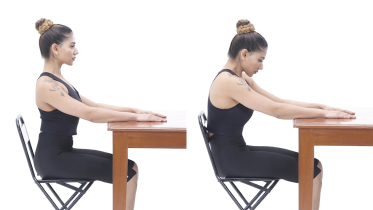
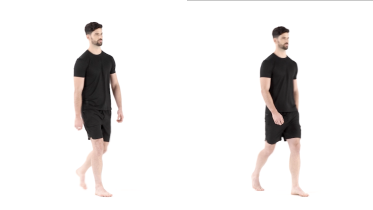
The seated pelvic tilt is 5 to 10 slow repetitions, several times a day, with no hold at either end. Walking starts at 10 to 20 minutes on most days and builds by time before speed. Your physio will adjust all of it.
Two rules that matter more than the numbers. Do not brace or hold your breath in any of it, because that is the pattern the program is trying to unwind. And if an exercise reproduces your pelvic pain rather than easing it, leave that one out and say which one it was at your next appointment, because that information is useful rather than a failure.
One gate before the stages, for a man who has had an operation. If you have had prostate or other urological surgery, Continence Health Australia's advice is to wait until your surgeon has checked your healing before starting pelvic floor exercises, and the timings and the program come from the team that operated. Nothing in stage 1 asks you to squeeze, so breathing and relaxation are not what that gate is about, but stage 2 is a different matter: after a hernia repair, a vasectomy or any operation in your pelvis or groin in the last few months, ask the team that operated when groin stretching can start. Surgeons set that differently, and this page does not know what was repaired or with what. If your pain began after an operation, or changed after one, take that back to the team that did it as well as to a physiotherapist, because a problem with the repair itself is theirs to look at.
The exercise program
The exercises below carry their own stop signs and precautions. Open the line under an exercise and read them before you try it.
Stage 1: Letting go
This is the stage the page exists for, and it is the one most men skip. All four are about dropping the resting tension in and around the pelvis rather than adding any work to it, and nothing here asks you to squeeze your pelvic floor. Progressive muscle relaxation is the one to read carefully, because it works by tightening a muscle group and then letting it go: keep that tightening in the thighs, not in the pelvic floor or the buttocks, and treat the letting go as the part you are practicing. Its own last step sends your attention on up to the pelvis, which is the one place this program does not want you tightening, so stop at the thighs. Here is the check, because telling tightening from letting go is the whole skill and nobody is in the room to tell you. As you squeeze the thighs, notice the buttocks and the area between your legs: if either joins in, make the squeeze gentler until it does not, and pressing your heels lightly down into the floor, which is the cue on that exercise's own page, is the version least likely to recruit them. If you cannot tell either way, leave that exercise out for now and stay with the three breathing and relaxation items, which ask you to tighten nothing at all. Breathing is first because the diaphragm and the pelvic floor move together, and bracing the belly against pain holds the floor up all day without you noticing. Give it two to three weeks before you judge it, and keep going with it once you move on, because the later stages work better on a floor that can release. If squeezing, bracing or holding your breath creeps back in, that is the thing to fix rather than the exercise to push through.
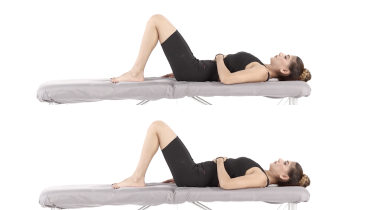 Diaphragmatic breathing
Stop signs and precautions for the diaphragmatic breathing
Before you start
- If lying flat makes you more short of breath, do not lie flat for this. Sit upright in a chair or prop yourself on pillows instead, which works just as well for learning the pattern. Being short of breath when you lie down, waking at night needing to sit up to breathe, more swelling in your ankles or legs, or gaining weight quickly over a few days are all reasons to get medical advice the same day rather than to practice through, because the NHS lists breathlessness when lying down among the reasons to get urgent advice.
- If you are pregnant and past the first three months, check with your physio before exercising flat on your back.
When to stop and get help
- Your fingers or the skin around your mouth start to tingle, or you feel light-headed or spaced out. This can mean you are breathing too fast or too deeply, so stop and let your breathing go back to normal. If it has not settled within a few minutes, get medical advice the same day. If you faint, or the numbness or tingling is on one side of your face or body, call emergency services, even if it goes away.
- You suddenly become short of breath, your chest feels tight or heavy, or you are far more short of breath than usual. Stop, rest and use your breathing control. Call emergency services if the breathlessness came on suddenly, your chest feels tight or heavy, your breathing does not go back to normal, you are gasping, choking or cannot get your words out, you have pain that spreads to your arms, back, neck or jaw, you feel suddenly confused or very drowsy, or your lips or skin turn very pale, blue or gray (on brown or black skin this can be easier to see on the palms of the hands). If everything settles quickly, get medical advice the same day before you do these exercises again.
- Chest pain or pressure, dizziness or feeling faint, a racing or irregular heartbeat, or being far more out of breath than the effort should cause.
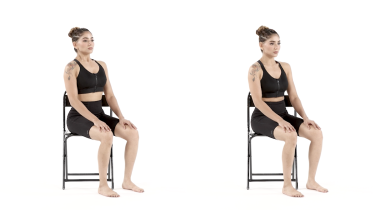 Breathing control
Stop signs and precautions for the breathing control
Before you start
- If you are pregnant and past the first three months, check with your physio before exercising flat on your back.
When to stop and get help
- Your fingers or the skin around your mouth start to tingle, or you feel light-headed or spaced out. This can mean you are breathing too fast or too deeply, so stop and let your breathing go back to normal. If it has not settled within a few minutes, get medical advice the same day. If you faint, or the numbness or tingling is on one side of your face or body, call emergency services, even if it goes away.
- You suddenly become short of breath, your chest feels tight or heavy, or you are far more short of breath than usual. Stop, rest and use your breathing control. Call emergency services if the breathlessness came on suddenly, your chest feels tight or heavy, your breathing does not go back to normal, you are gasping, choking or cannot get your words out, you have pain that spreads to your arms, back, neck or jaw, you feel suddenly confused or very drowsy, or your lips or skin turn very pale, blue or gray (on brown or black skin this can be easier to see on the palms of the hands). If everything settles quickly, get medical advice the same day before you do these exercises again.
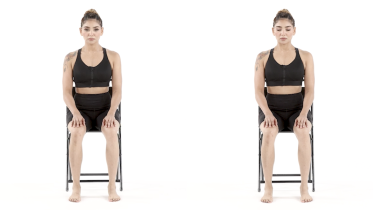 Body scan relaxation
Stop signs and precautions for the body scan relaxation
When to stop and get help
- Your fingers or the skin around your mouth start to tingle, or you feel light-headed or spaced out. This can mean you are breathing too fast or too deeply, so stop and let your breathing go back to normal. If it has not settled within a few minutes, get medical advice the same day. If you faint, or the numbness or tingling is on one side of your face or body, call emergency services, even if it goes away.
- You feel faint, dizzy or unwell. Open your eyes, stay seated and get medical advice if it does not pass quickly. If you faint while exercising, call emergency services, even if you feel fine again quickly.
- Upsetting thoughts, memories or feelings come up and keep building. Open your eyes, look around the room and stop for now, and talk to your doctor or therapist if it keeps happening.
- Chest pain or pressure, dizziness or feeling faint, a racing or irregular heartbeat, or being far more out of breath than the effort should cause.
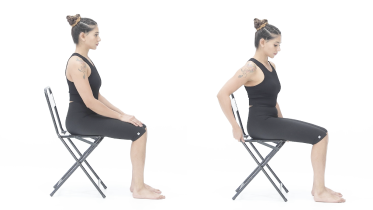 Progressive muscle relaxation for the thighs
Stop signs and precautions for the progressive muscle relaxation for the thighs
When to stop and get help
- Cramp in your thigh. Let go and gently stretch the muscle until it eases: straighten the knee for a cramp at the back of the thigh, or bend it for one at the front.
- You feel dizzy, light-headed or unwell. Stay in the chair until it passes, and get medical advice the same day if it does not settle within a few minutes. If you faint while exercising, call emergency services, even if you feel fine again quickly.
- Distressing thoughts or feelings rise up and do not settle. Stop, look around the room, and speak to your doctor or therapist if it happens again.
Stage 2: Opening the hips and the pelvis
Added when stage 1 feels natural rather than like a chore, usually after a couple of weeks. The muscles that reproduced these men's pain most often in the research sit inside the pelvis and in the abdominal wall, and releasing either is a pelvic health physiotherapist's work rather than an exercise page's. What this stage reaches is the hip and adductor muscles around the outside. Take the adductor and deep hip stretches to a mild, easy stretch and no further, because pushing into a painful end range tends to raise the tension you are trying to drop. The seated pelvic tilt is here for lumbopelvic movement rather than as a pelvic floor exercise, and it is a slow roll between slouched and upright, not a hold. The lying pelvic tilt is left out on purpose, because its own instructions ask you to draw the belly button in and squeeze the buttocks, which is the bracing pattern this program exists to unwind. If a stretch reproduces your pain rather than easing it, leave that one out and tell your physio which one it was.
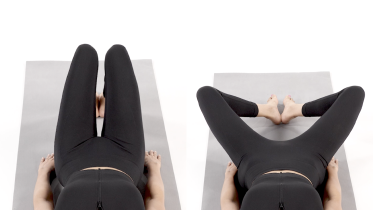 Reclined butterfly stretch
Stop signs and precautions for the reclined butterfly stretch
Before you start
- If you have had a hip replacement, get the go-ahead from your surgeon or physio before you try the reclined butterfly stretch. Letting the knees fall apart turns both thighs outward, and many surgeons ask you to avoid that for the first months after some operations. Getting down to the floor and back up also bends the hip deeply, so ask whether a firm bed is a better place to start. If you are pregnant and past the first three months, check with your physio before exercising flat on your back.
When to stop and get help
- Sharp or pinching pain in the groin or at the front of the hip.
- Pain on the inside of the knees.
- Numbness, tingling or pain that travels into your lower back or down a leg.
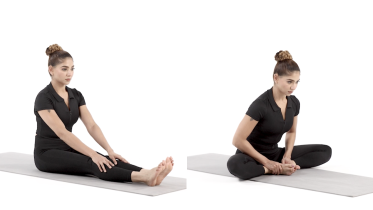 Butterfly stretch
Stop signs and precautions for the butterfly stretch
Before you start
- If you have had a hip replacement or other hip surgery, get the go-ahead from your surgeon or physio before you try the butterfly stretch. Getting down to the floor and back up bends the hip well past a right angle, and many surgeons ask you to avoid that for the first months after some operations. The stretch also turns the thigh outward, which some operations limit in that time too. If you have a recent groin strain, ask your physio when to start stretching and how hard to press.
When to stop and get help
- Sharp or pinching pain in the groin or the front of the hip.
- Pain in or around the knees.
- Pain spreads into the lower back or down the leg, or you get numbness or tingling.
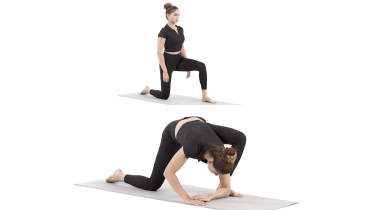 Half kneeling adductor stretch
Stop signs and precautions for the half kneeling adductor stretch
Before you start
- If you have had a hip replacement, get the go-ahead from your surgeon or physio before you try the half kneeling adductor stretch. Taking your elbows down beside the front foot folds that hip far beyond a right angle, and many surgeons ask you to avoid that for the first months after some operations. The kneeling hip is also taken back behind you, which some surgeons limit after a replacement done from the front of the hip.
- If you have had knee surgery or a knee replacement, check with your surgeon or physio before you kneel on that knee. Getting down to the floor and up again takes strength and balance, so have a sturdy chair next to you to lean on as you rise, and if you have fallen in the past year, ask your physio first.
- If you have high blood pressure, a heart condition, glaucoma or recent eye surgery, check with your doctor or physio first, keep breathing and come up slowly. If you have low bone density (osteoporosis), stay up on your hands with your back long rather than curling down to your elbows, and ask your physio whether this stretch suits you.
- If you are pregnant and have pain at the front or back of your pelvis, ask your physio first.
When to stop and get help
- Sharp or pinching pain deep in the groin or at the front of the hip.
- Pain, numbness or tingling that travels down the back of the leg as you straighten the knee.
- You feel dizzy, lightheaded or faint as you get up. Stay down or sit on the chair and wait for it to pass. If it does not pass within a minute or two, or it keeps happening, get medical advice the same day before you practice again. If you faint, or it does not settle within a few minutes of keeping still, call emergency services.
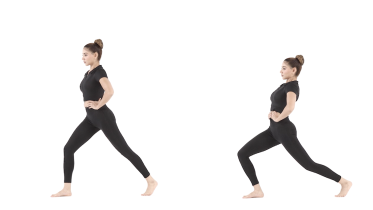 Hip flexor stretch
Stop signs and precautions for the hip flexor stretch
Before you start
- If you have had a hip replacement, get the go-ahead from your surgeon or physio before you try this stretch. Taking the back leg behind the line of your body stretches the front of that hip, and many surgeons ask you to avoid that for the first months after some operations, especially when the hip was replaced from the front.
When to stop and get help
- You feel a sharp or pinching pain in the front of the hip or the groin.
- Your lower back aches or pinches as you push your hips forward.
- Pain, numbness or tingling spreads down the front of the thigh.
- Your front knee hurts as you bend it and push your hips forward.
- You feel dizzy, lightheaded, faint or sick, or the room seems to spin. Stop, sit down and get medical advice the same day before you exercise again. If you faint, it does not settle within a few minutes of sitting still, your vision suddenly blurs or goes double, or you cannot stand or walk steadily, call emergency services.
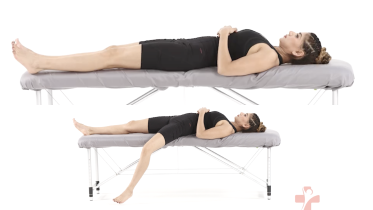 Lying hip flexor stretch
Stop signs and precautions for the lying hip flexor stretch
Before you start
- If you have had a hip replacement, get the go-ahead from your surgeon or physio before you try this stretch. Letting the leg hang below the edge of the bed takes that hip back past straight, and many surgeons ask you to avoid that for the first months after some operations. If you are pregnant and past the first three months, check with your physio before exercising flat on your back.
When to stop and get help
- Pinching in the groin, or sharp pain where the thigh meets the body.
- Your lower back starts to ache or pinch while the leg hangs.
- Pins and needles, numbness or a burning feeling over the front of the thigh.
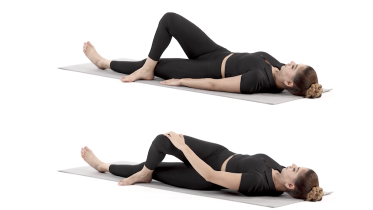 Piriformis stretch
Stop signs and precautions for the piriformis stretch
Before you start
- If you have had a hip replacement, get the go-ahead from your surgeon or physio before you try the piriformis stretch. Pulling the bent knee across your body bends the hip and brings the leg over the middle of your body at the same time, and many surgeons ask you to avoid that for the first months after some operations.
When to stop and get help
- Pain spreads down your leg, or you get numbness or tingling in the leg or foot.
- You feel sharp or pinching pain in the front of the hip or groin.
- Your knee or lower back hurts in this position.
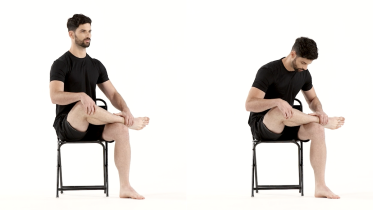 Seated figure 4 stretch
Stop signs and precautions for the seated figure 4 stretch
Before you start
- If you have had a hip replacement, get the go-ahead from your surgeon or physio before you try this exercise. With the ankle on the other knee and a lean forward, the hip bends past a right angle, and many surgeons ask you to avoid that for the first months after some operations.
When to stop and get help
- Pain spreads down your leg, or you get numbness or tingling in the leg or foot.
- You feel a sharp or pinching pain in the front of the hip or the groin.
- The knee of the crossed leg hurts.
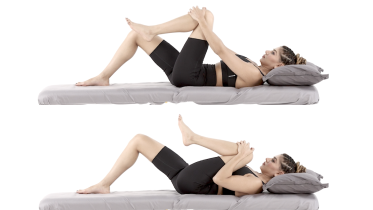 Knee to chest stretch
Stop signs and precautions for the knee to chest stretch
Before you start
- If you have had a hip replacement, get the go-ahead from your surgeon or physio before you try this stretch. Pulling the knee in bends the hip well past a right angle, and many surgeons ask you to avoid that for the first months after some operations. From the second trimester of pregnancy on, check with your physio about lying flat on your back.
- If bending forward makes your symptoms worse, or you have low bone density (osteoporosis), check with your physio before you carry on. Repeated or long held forward bending of the spine is usually limited with osteoporosis. In either case your physio may choose a different movement for you.
When to stop and get help
- Pain spreads down the leg or you get numbness or tingling.
- Your back pain gets sharper or worse during the stretch instead of easing.
- You feel pinching in the front of the hip or groin as the knee comes in. Hold the knee less close.
 Seated pelvic tilt
Stop signs and precautions for the seated pelvic tilt
Before you start
- If you have had surgery on your spine in recent months, get the go-ahead from your surgical team or physio first.
- If you have osteoporosis or have had a fracture in your spine, keep the slouch small and ask your physio how far to go.
- If you are pregnant, check with your midwife or physio before you start.
When to stop and get help
- Pain travels into your buttock or leg, or numbness or tingling starts.
- You feel sharp or pinching pain in your lower back at either end of the movement.
- Numbness around your genitals or bottom, new trouble with your bladder or bowels, pain, tingling, numbness or weakness in both legs, or loss of feeling in one leg. Call emergency services or go to an emergency department straight away, and do not drive yourself.
- Your leg or foot gets weaker, for example your foot drags, catches on the ground or slaps down when you walk (foot drop). Get medical advice the same day. If the weakness is getting worse by the hour, go to an emergency department.
- You are pregnant and notice bleeding or fluid leaking from your vagina, regular painful tightenings, tummy pain that does not settle when you rest or comes with lower back pain, or a change in your baby's usual movements, such as moving less than usual. Stop and contact your midwife or maternity unit straight away. Do the same for a severe headache, problems with your vision such as blurring or flashing lights, pain just below your ribs, or sudden swelling of your face, hands or feet, which can be signs of pre-eclampsia. Call emergency services if the bleeding is heavy, the tummy pain is severe, bleeding or tummy pain comes with pain in your shoulder or feeling sick, faint or dizzy, or a headache comes on suddenly and is very severe.
Stage 3: Getting moving again
The last stage is general activity rather than anything aimed at the pelvis, and the reason is in the evidence section below: the intervention in the Cochrane review closest to this stage was a physical activity program, in a single study of 85 men, at low quality of evidence. Most men with months of pelvic pain have cut their activity right back, often sitting more and walking less, and that is worth reversing on its own terms. Build walking up by time before speed, and judge it by how you are the next day rather than during. Cycling is the one to be careful with, because a saddle loads exactly the area that hurts, so raise it with your physio rather than assuming it is fine. Keep stage 1 going underneath all of it.
 Brisk walking
Stop signs and precautions for the brisk walking
Before you start
- With a heart or lung condition, high blood pressure, or after a recent operation, ask your doctor or physio how much to walk and how fast before you start. If you are pregnant, check with your midwife or physio before you start.
When to stop and get help
- Chest pain or pressure, dizziness or feeling faint, a racing or irregular heartbeat, or being far more out of breath than the effort should cause.
- You feel dizzy, lightheaded, faint or sick, or the room seems to spin. Stop, sit down and get medical advice the same day before you exercise again. If you faint, it does not settle within a few minutes of sitting still, your vision suddenly blurs or goes double, or you cannot stand or walk steadily, call emergency services.
- A sharp pain in a foot, ankle, knee or hip that changes the way you walk.
- Aching, cramping or tightness in a calf, thigh or buttock that comes on at about the same walking distance every time and clears within a few minutes of standing still, and a doctor has not checked it yet. Keep the walk gentle and book an appointment with your doctor before you build up any further, as narrowed arteries in the legs (peripheral arterial disease) can cause this and are managed differently. If leg pain carries on while you are resting or in bed, or wakes you at night, get medical advice the same day. If a foot or leg suddenly turns cold, pale or blue, or suddenly becomes very painful, numb or weak, call emergency services and do not drive yourself, because the blood supply to the leg may be blocked and a leg that has gone numb or weak with it can be impossible to save if it is not treated within about six hours.
- Your calf or thigh becomes swollen, warm, tender, red or darker than usual, or has a throbbing or cramping pain that feels different from normal muscle ache. Stop and get medical advice the same day, as this can be a blood clot. If you are also short of breath or have chest pain, call emergency services.
- You feel unsteady on your feet or close to falling.
- You are pregnant and notice bleeding or fluid leaking from your vagina, regular painful tightenings, tummy pain that does not settle when you rest or comes with lower back pain, or a change in your baby's usual movements, such as moving less than usual. Stop and contact your midwife or maternity unit straight away. Do the same for a severe headache, problems with your vision such as blurring or flashing lights, pain just below your ribs, or sudden swelling of your face, hands or feet, which can be signs of pre-eclampsia. Call emergency services if the bleeding is heavy, the tummy pain is severe, bleeding or tummy pain comes with pain in your shoulder or feeling sick, faint or dizzy, or a headache comes on suddenly and is very severe.
Where this program stops and a clinician starts
Three parts of the treatment for this cannot be done from a page, and together they are most of it.
Hands-on release of the painful muscles, inside and outside, which is the treatment the European guideline recommends first for pelvic floor dysfunction, at a strength it itself rates Weak, and which is done by a clinician. Biofeedback, which the same guideline recommends as an addition to muscle exercises in people whose anal pain comes from an overactive floor, at Strong, and which needs equipment and someone trained in it. Those two ratings are worth reading together: the stronger recommendation of the pair is the one that needs a clinic, which is the honest shape of this subject rather than a reason to stop reading. And the decision about whether your floor is overactive or weak, which needs an examination, because getting that fork wrong is how months get wasted.
The NHS names four treatments for chronic prostatitis, and physiotherapy is third of the four: antibiotics and other medicines to help with symptoms, then cognitive behavioral therapy or counseling, then physiotherapy, then alternative therapies such as acupuncture where they are available. This page will not pretend it is first. What it is, is low risk, reversible, and aimed at a mechanism that has actually been measured in men with this diagnosis, which is a reasonable thing to try while the rest is sorted out.
When to see a physio or doctor
If your pelvic, perineal or testicular pain started in the last few weeks, this page is not for you yet. Pain that new has not had anything on the warning list ruled out, so see a doctor first.
For pain that has lasted three months or more and has already been investigated, ask to be referred to a physiotherapist with pelvic health training, and say that your problem is pain rather than leaking. Go back sooner if your pain is getting worse rather than slowly settling, if a new symptom turns up, if squeezing or any exercise here brings the pain on, or if anything on the warning list applies. Being told once that this is a muscle problem does not cover a symptom that is new or different now.
Lumbopelvic and hip problems sit next door to this and sometimes share the pain: low back pain, sacroiliac joint pain and groin pain are the pages for those. Red flags in physiotherapy explains how the urgency tiers in that list work. Nothing on this page is personal advice.
For physiotherapists
This page is deliberately narrow. The subject matter, the differential and the guideline recommendations live at pelvic pain in men, and this is the staged program and the treatment-evidence layer that page does not carry.
Three sourcing notes. The 57 against 21 percent figure is reported here with all three of its limits because it is routinely presented as a men's figure and it is not one. The Cochrane review's own null estimate for pelvic floor physical therapy, 1.00 points worse on the symptom index at 12 weeks with a confidence interval running a long way either side of nothing, is stated rather than skipped, because a patient who later finds it should not feel misled by us. Note which trial it comes from: Cochrane's Fitzgerald 2013 is the same study as the FitzGerald 2009 trial cited here, reprinted in a Journal of Urology supplement, so the encouraging global response figure and the null symptom index result are one trial read two ways. And no claim is made anywhere on the page that relaxation has beaten strengthening head to head, because no trial we can read has tested that, however strongly the mechanism points that way.
Warning signs
Get emergency help now
- Emergency: sudden, severe pain in a testicle, testicle pain that comes with feeling sick, being sick or pain in your tummy, or testicle pain that has lasted more than an hour or carries on while you rest. Go to an emergency department straight away or call emergency services, and do not drive yourself.
- Emergency: pain in your scrotum, between your legs (perineum) or your genitals that is far worse than the redness or swelling looks, or that is spreading over hours, especially with a high temperature or feeling hot, cold or shivery, or with black, purple or gray blotches or blisters on the skin. Redness can be harder to see on brown or black skin. Call emergency services or go to an emergency department straight away, and do not drive yourself. This can be a fast-spreading infection of the deeper tissue (necrotizing fasciitis, which is called Fournier gangrene when it starts in this area), and it needs hospital treatment the same hour and usually an operation. It can start from a small cut, a wound, an abscess or a urine infection, and men with diabetes or a weakened immune system are more at risk.
- Emergency: you cannot pee at all, especially if your lower tummy feels full and painful. Call emergency services or go to an emergency department straight away, and do not drive yourself.
- Emergency: numbness, tingling or altered feeling around or under your genitals, between your inner thighs, or around your bottom (anus), for example it feels different when you wipe after using the toilet. Call emergency services or go to an emergency department straight away, and do not drive yourself. This can be a sign of pressure on the bundle of nerves at the base of the spine (cauda equina syndrome), which needs emergency treatment.
- Emergency: you suddenly cannot control your bladder or bowels at all. The same applies to new leaking of pee or poo, new trouble starting to pee, not being able to feel yourself peeing, not noticing when you need to poo, a new change in how your genitals feel during sex, new trouble getting or keeping an erection, new trouble ejaculating, or new trouble reaching orgasm, if it comes with back pain, sciatica, or pain, tingling, numbness or weakness in one or both legs. Call emergency services or go to an emergency department straight away, and do not drive yourself. These can also be signs of cauda equina syndrome.
- Emergency: sciatica in both legs, or pain, tingling, numbness or weakness in both legs. The same applies if you lose feeling in one leg. Call emergency services or go to an emergency department straight away, and do not drive yourself.
- Emergency: you have had cancer, now or in the past, and your back or neck pain feels like a tight band around your body, or you have new or worsening pain spreading down an arm or leg, weakness, numbness, pins and needles or a loss of feeling in your arms or legs, trouble walking, or trouble controlling your bladder or bowels. Those symptoms count on their own, with or without back or neck pain. Call your cancer team's emergency number straight away, or go to an emergency department if you do not have one or cannot get through, and do not drive yourself. This can be cancer pressing on the spinal cord (metastatic spinal cord compression), which needs treatment straight away.
- Emergency: sudden, severe pain in your lower back or tummy that is not like your usual back pain, if you have been told you have a swelling of the main blood vessel in your tummy (abdominal aortic aneurysm), you are over 60, you smoke or used to smoke, or you have high blood pressure. The same applies if sudden, severe back or tummy pain comes with feeling faint or passing out, pale, sweaty or clammy skin (on brown or black skin this can be easier to see on the palms of the hands or soles of the feet), a racing heartbeat or being short of breath. Call emergency services straight away. This can be a sign of an aneurysm bursting, which needs treatment in hospital at once.
- Emergency: a lump or bulge in your groin or upper thigh, together with pain that is severe or came on suddenly, a lump that has suddenly become hard or tender and will not go back in when you lie down, not being able to poo or pass wind at all, vomiting blood or vomit that looks like coffee grounds, or suddenly becoming confused. Call emergency services or go to an emergency department straight away, and do not try to push the lump back in yourself. This can be a hernia with bowel trapped inside it, which can lose its blood supply within hours and needs an operation.
Get help today
- Same day: aching or discomfort in a testicle that worries you, a lump or swelling in a testicle, a change in its shape or in how it feels, or one testicle that has become bigger than the other. Get an urgent appointment with your doctor the same day.
- Same day: a lump or bulge in your groin or upper thigh has become painful or tender, or you have a groin lump and a bloated tummy, you feel or are being sick, you are constipated, or you have a high temperature or feel hot, cold or shivery. This can be a hernia that has become trapped. Get medical help straight away, the same day, for example at urgent care or an emergency department. If the pain is severe or came on suddenly, you cannot poo or pass wind at all, you are vomiting blood or your vomit looks like coffee grounds, or you have suddenly become confused, call emergency services or go to an emergency department straight away.
- Same day: a fever, or feeling hot, cold or shivery, together with pain in your pelvis, perineum, genitals or back passage, or with pain when you pee. Get medical advice the same day and say how quickly it came on. Do not treat this with exercise, and if you feel very unwell, go to an emergency department. If you also become confused, very drowsy or have trouble speaking, your speech is slurred, you are breathing very fast or finding it hard to breathe, you have shivering you cannot control, a very high or very low temperature, skin, lips or a tongue that look blue, gray, pale or blotchy (on brown or black skin this can be easier to see on the palms of the hands or soles of the feet), or a rash that does not fade when you press it, call emergency services or go to an emergency department straight away, as this can be sepsis.
- Same day: you have been taking antibiotics for prostatitis for 48 hours and your symptoms have not got better, or they have got worse. Get medical advice the same day, or from NHS 111 in the UK, and do not stop the antibiotics on your own. The NHS names this as a reason to ask for an urgent appointment rather than to wait and see.
- Pain or burning when you pee together with a high or very low temperature, feeling hot or cold and shivery, or pain in your back just under the ribs. Get medical advice the same day, as this can be a kidney infection. If you also become confused, very drowsy or have trouble speaking, your speech is slurred, you are breathing very fast or finding it hard to breathe, you have shivering you cannot control, a very high or very low temperature, skin, lips or a tongue that look blue, gray, pale or blotchy (on brown or black skin this can be easier to see on the palms of the hands or soles of the feet), or a rash that does not fade when you press it, call emergency services or go to an emergency department straight away, as this can be sepsis.
- Blood in your pee, which may look pink, red or dark brown, even a small amount, even once, and even with no pain. Get medical advice the same day. It needs checking even if it goes away.
- Same day: since an operation in your pelvis for any other reason, for example removal of the prostate gland (prostatectomy), a hernia repair in your groin or a vasectomy, you have a fever or feel hot, cold or shivery, heavy bleeding, discharge that smells, a wound from the operation that is oozing or whose edges are coming apart, or pain in your pelvis that is new or getting worse quickly. Stop the exercises on this page, including any pelvic floor exercises, and contact your surgical team, or the ward you went home from, the same day, and if you cannot reach them get medical help the same day anyway, for example at urgent care or an emergency department. These can be signs of an infection or of bleeding. If the pain becomes severe or comes on suddenly, a wound from the operation opens up, the bleeding suddenly becomes much heavier, or you feel faint, dizzy, breathless or very unwell, call emergency services or go to an emergency department straight away rather than waiting for a call back, and do not drive yourself.
- Same day: since any operation in your pelvis, a calf or thigh that is newly swollen or getting more swollen, warm, tender, red or darker than usual, has swollen veins that are sore to touch, or has a throbbing or cramping pain that does not fit your injury or condition, or that feels different from normal muscle soreness. Stop the exercises on this page, including any pelvic floor exercises, and get medical advice the same day, because surgery in the pelvis raises the risk of a blood clot (deep vein thrombosis). If you are also short of breath or have chest pain, call emergency services.
- Same day: new back, hip or pelvic pain and you have had cancer, now or in the past. Get medical advice the same day and mention your cancer history. If you are being treated for cancer now, contact your cancer team the same day.
- Pain at night or at rest that keeps getting worse. If you are being treated for cancer now, contact your cancer team the same day.
- Same day: pain at night or at rest that keeps getting worse. If you have had cancer, now or in the past, get medical advice the same day and mention it, even if the pain is not getting worse. Do the same if you have back, hip or pelvic pain and are losing weight without trying, even if it does not hurt at night.
Book an appointment
- Pain at night or at rest that keeps getting worse. See your doctor within a few days.
- Routine: blood in your semen, even if it happened only once. Book an appointment with your doctor so that it can be looked at. It is not something to wait out and it is not something this page can explain.
- Within 2 weeks: a lump in your groin or upper thigh that is not painful, especially one that gets bigger when you cough or sneeze and smaller when you lie down. This can be a hernia. Book an appointment with your doctor.
- Within 2 weeks: a lump in your groin or upper thigh that does not hurt and does not behave like a hernia, meaning it does not get bigger when you cough or sneeze, it does not get smaller when you lie down, it feels hard or fixed in place, or it is slowly growing. A painless groin lump is not always a hernia, and a swollen gland with no explanation needs looking at in its own right. Book an appointment with your doctor and ask for the lump itself to be examined rather than treated as a hernia on the history alone. Say when you book if you also have night sweats, an unexplained fever, itching, shortness of breath or weight loss you did not intend, because those change how quickly it should be looked at.
- Routine: new trouble emptying your bladder or your bowels, a weak or stop-start stream, dribbling after you think you have finished, or a feeling that you have not emptied. Book an appointment with your doctor rather than doing more pelvic floor squeezes, because a flow or emptying problem has its own causes. If you are passing only small amounts and your lower tummy feels full or swollen, or you are leaking all the time without feeling the need to go, get medical advice the same day.
- Routine: pain in your pelvis, perineum, testicles or back passage that squeezing brings on or makes worse, or a feeling that you can never fully let go down there. Stop the squeezes and book an appointment with a pelvic health physiotherapist or your doctor, because an overactive pelvic floor needs the opposite treatment from a weak one.
Common questions
What exercises help pelvic pain in men?
Relaxation and mobility work rather than strengthening, for most men with this pattern. The program on this page starts with breathing and whole-body relaxation, adds hip, adductor and lumbopelvic mobility, and finishes with general activity. Be straight about the standing of it: no trial establishes this exact program, and in the Cochrane review of 38 studies in 3,290 men with chronic prostatitis or chronic pelvic pain syndrome the one trial of hands-on myofascial physical therapy in men showed little to no difference against a general massage, on very low quality evidence (Franco 2018). What it is built on is the direction of treatment the European guideline points at for an overactive pelvic floor, plus a relaxation deficit that has been measured in men with this diagnosis (Yani 2022), and it is low cost, low risk and worth a fair trial alongside a proper assessment.
Which exercises should I avoid?
Three things rather than a banned list. Pelvic floor squeezes, until somebody has examined you and said which pattern you have, because the same program helps one pattern and winds the other one up. The exception is prostate surgery: squeezes given to you by the team that operated, or by a continence physiotherapist afterward, are part of that recovery and this page is not a reason to stop them. Anything that makes you brace your abdomen or hold your breath, which includes most hard core work, planks and heavy lifting while the pain is active. And long spells of sitting on a bike saddle, which loads the exact area that hurts. Beyond those, let the next day be your guide: a stretch or a walk that leaves you worse the following morning was too much, not forbidden.
Am I meant to be doing kegels or not?
Not as a starting point, and that is the single most common mistake on this subject. A floor that is already short and tender can test as weak, which is how men end up with a strengthening program for an overactivity problem, and our page on pelvic pain in men sets out why in full. There are two exceptions, and both are real. The first is prostate surgery: if your surgical team or a continence physiotherapist gave you squeezes after that operation, they are part of your recovery, the timings and the numbers come from them, and the pelvic floor after prostate surgery is the page for you rather than this one. Nothing here is a reason to stop them. The second is this: if a clinician has examined you and found a genuinely weak floor rather than an overactive one, the squeeze work is the right work, and pelvic floor exercise lying down is the exercise for it, at the dose that page gives. Without that examination, leave it out and start at stage 1. If squeezing brings your pain on, the warning list on this page tells you what to do.
How do I relax the pelvic floor?
Indirectly, which is why there is no single exercise for it. The floor drops as you breathe in and the belly softens, so unhurried breathing with a loose abdomen is where most programs start, and letting the jaw, buttocks and thighs go matters because men with this pain usually hold all of them. The honest limit is worth knowing: our exercise library has no filmed down-training or reverse kegel exercise, so stage 1 uses general relaxation and breathing to get at the same thing. Direct release work, including internal work, is done by a pelvic health physiotherapist, and that part cannot be learned from a page or a video.
How long before it helps?
Think in months rather than weeks, and in small changes rather than a switch. Give stage 1 two to three weeks before you judge it, and the whole program eight to twelve weeks before you decide whether it is doing anything, which is roughly the span over which retraining a long-standing tension pattern is usually assessed. Progress often shows up first as fewer bad days, or as a shorter flare after a long drive, rather than as less pain on an average day. If nothing at all has shifted in that time, that is information worth taking back for reassessment rather than a reason to try harder.
Can I do this on my own, or do I need a pelvic health physio?
Stage 1 is safe to start on your own once the warning list has been read and your pain has already been looked at. The parts that need a clinician are the ones a page cannot do: deciding whether your floor is overactive or weak, which needs an examination; hands-on release of the muscles that are actually tender, which is the treatment the European guideline recommends first, at a strength it itself rates Weak; and biofeedback, which needs equipment. Ask for a physiotherapist with pelvic health training, and say when you book that your problem is pain rather than leaking, because it changes who you are given.
References
- Franco JV, Turk T, Jung JH, Xiao YT, Iakhno S, Garrote V, Vietto V. Non-pharmacological interventions for treating chronic prostatitis/chronic pelvic pain syndrome. Cochrane Database of Systematic Reviews. 2018;5(5):CD012551. https://doi.org/10.1002/14651858.CD012551.pub3
- FitzGerald MP, Anderson RU, Potts J, et al. Randomized multicenter feasibility trial of myofascial physical therapy for the treatment of urological chronic pelvic pain syndromes. The Journal of Urology. 2009;182(2):570-580. https://doi.org/10.1016/j.juro.2009.04.022
- Anderson RU, Sawyer T, Wise D, Morey A, Nathanson BH. Painful myofascial trigger points and pain sites in men with chronic prostatitis/chronic pelvic pain syndrome. The Journal of Urology. 2009;182(6):2753-2758. https://doi.org/10.1016/j.juro.2009.08.033
- Anderson RU, Wise D, Sawyer T, Glowe P, Orenberg EK. 6-day intensive treatment protocol for refractory chronic prostatitis/chronic pelvic pain syndrome using myofascial release and paradoxical relaxation training. The Journal of Urology. 2011;185(4):1294-1299. https://doi.org/10.1016/j.juro.2010.11.076
- Yani MS, Eckel SP, Kirages DJ, Rodriguez LV, Corcos DM, Kutch JJ. Impaired ability to relax pelvic floor muscles in men with chronic prostatitis/chronic pelvic pain syndrome. Physical Therapy. 2022;102(7):pzac059. https://doi.org/10.1093/ptj/pzac059
- European Association of Urology. EAU Guidelines on Chronic Pelvic Pain. Limited update March 2026, section 5.4.10 on management of pelvic floor dysfunction. https://d56bochluxqnz.cloudfront.net/documents/full-guideline/EAU-Guidelines-on-Chronic-Pelvic-Pain-2026.pdf
- NHS. Prostatitis. Page last reviewed 19 February 2024. https://www.nhs.uk/conditions/prostatitis/
- NHS. Necrotising fasciitis. Page last reviewed 02 February 2026. https://www.nhs.uk/conditions/necrotising-fasciitis/
- NHS. Hernia. Page last reviewed 19 May 2026. https://www.nhs.uk/conditions/hernia/
- NHS. Sepsis. Page last reviewed 14 May 2026. https://www.nhs.uk/conditions/sepsis/
- NHS. Testicle pain. Page last reviewed 26 June 2025. https://www.nhs.uk/symptoms/testicle-pain/
- Continence Health Australia. Pelvic floor exercises for men. https://www.continence.org.au/living-with-incontinence/pelvic-floor-exercises/pelvic-floor-exercises-for-men/
Written and checked by the PocketPhysio editorial team. Last updated 2026-11-06.
This page is general education, not a diagnosis or a personal treatment plan. See a physiotherapist or doctor for advice about your own situation.