Progressive muscle relaxation for the thighs
This is the thigh step of progressive muscle relaxation, a method where you tighten one group of muscles at a time and then release it. Sitting on a chair, you tense the muscles of both thighs for about 5 seconds, then let them go for about 15 seconds and notice the tension drain away. You do it twice, then move your attention up to the pelvis, the next area in the full sequence. People use it to wind down and to get better at noticing where they hold tension.
How to do the progressive muscle relaxation for the thighs
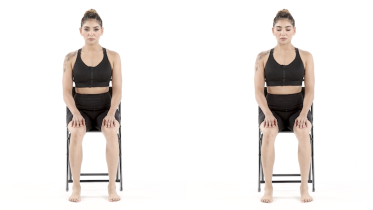
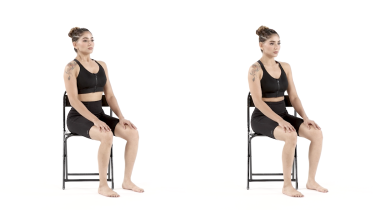
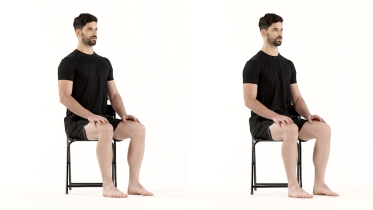
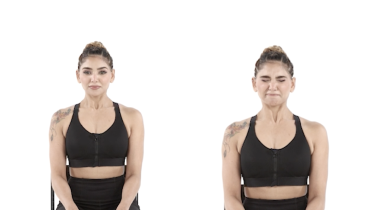
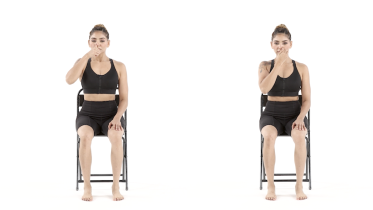
- Sit upright on a firm chair, both feet on the floor and knees roughly hip width apart. Rest your hands wherever is comfortable. In the video they hold the back edge of the seat just behind the hips, with the head gently bowed.
- Bring your attention to your thighs. Tighten the muscles in both thighs firmly, short of cramping, and hold for about 5 seconds. Pressing your heels lightly down into the floor is one simple way to feel them tighten.
- Keep your stomach soft while you do it, as the voice guide says, and keep breathing gently.
- Let go all at once. Rest for about 15 seconds and notice the tightness fade. Your thighs may start to feel heavier or warmer.
- Tighten and hold for 5 seconds once more, then relax again. Move your attention up to your pelvis, ready for the next area.
What you should feel
A firm tightening in the front and back of the thighs during the hold, then a loose, heavy or warm feeling as you let go. It should never cramp or hurt.
Common mistakes
- Tensing so hard that a muscle cramps.
- Tightening your stomach, buttocks or shoulders along with the thighs.
- Stopping your breathing while you tense.
- Cutting the 15 second rest short.
How often
The video shows 2 rounds of tensing and relaxing. In a full routine, many people do 1 or 2 rounds for each muscle group, once a day or whenever they want to unwind. Your physio will adjust this.
Stop and check with your physio if
- Cramp in your thigh. Let go and gently stretch the muscle until it eases: straighten the knee for a cramp at the back of the thigh, or bend it for one at the front.
- You feel dizzy, light-headed or unwell. Stay in the chair until it passes, and get medical advice the same day if it does not settle within a few minutes. If you faint while exercising, call emergency services, even if you feel fine again quickly.
- Distressing thoughts or feelings rise up and do not settle. Stop, look around the room, and speak to your doctor or therapist if it happens again.
From the clinic
Progressive muscle relaxation works through the body one area at a time, and the thighs usually come between the lower legs and the pelvis. So the voice guide ends by moving your attention up to the pelvis. For the face, see facial muscle relaxation. Some people prefer body scan relaxation, which relaxes the body without any tensing.
If you have high blood pressure, breathe steadily through every hold and never hold your breath. After a recent thigh injury, or surgery on your hip or knee, tense only as firmly as your physio has said is fine. This page explains the technique only. If you are being treated for anxiety or another mental health condition, ask your doctor or therapist how it fits with your care.
Written and checked by the PocketPhysio editorial team. Last updated 2026-09-28.
This page is general education, not a diagnosis or a personal treatment plan. If you have pain, an injury or a health condition, see a physiotherapist or doctor before starting new exercises.