Breathing with shoulder blade movement
This exercise links slow breathing with a small movement of the shoulder blades. Sitting upright, you breathe in as your shoulders round forward a little and your shoulder blades slide apart, so your upper back widens. Then you breathe out as you draw them gently back. The movement keeps your upper back and shoulders moving, and it sets the pace for each breath.
How to do the breathing with shoulder blade movement
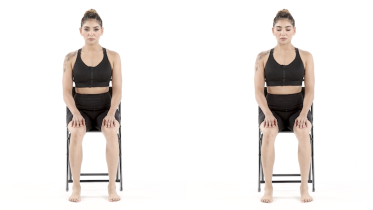
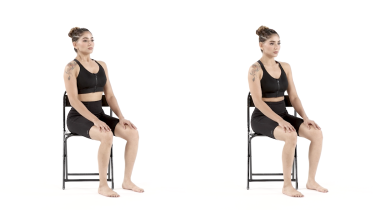
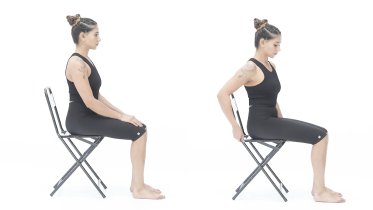
- Sit forward on a firm chair, feet flat, with your hands on your thighs just above the knees. Look ahead.
- Breathe in slowly through your nose as you let your shoulders round forward a little, so your shoulder blades slide apart and your upper back widens.
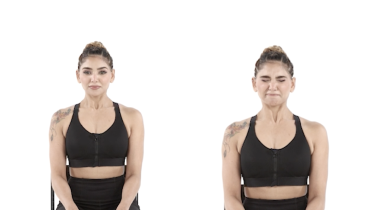
- Only a small movement is needed. Your head stays level and does not drop forward.
- Breathe out gently as you draw your shoulder blades back and slightly together, bringing your shoulders back over your hips.
- Once you are upright again, pause briefly before the next breath in.
What you should feel
A gentle widening across your upper back as you breathe in, and light work between your shoulder blades as you breathe out. The whole thing should feel easy.
Common mistakes
- Hitching the shoulders up toward your ears as you breathe in.
- Slumping your whole spine forward instead of moving mainly the shoulder blades.
- Squeezing the shoulder blades back hard or arching your lower back.
- Taking faster or bigger breaths than you need.
How often
5 to 10 slow breaths is a common range, 1 to 3 times a day or whenever you take a break from sitting. Your physio will adjust this.
Stop and check with your physio if
- Sharp pain in your shoulder, neck or upper back, or tingling or numbness that runs down an arm.
- Your fingers or the skin around your mouth start to tingle, or you feel light-headed or spaced out. This can mean you are breathing too fast or too deeply, so stop and let your breathing go back to normal. If it has not settled within a few minutes, get medical advice the same day. If you faint, or the numbness or tingling is on one side of your face or body, call emergency services, even if it goes away.
- You suddenly become short of breath, your chest feels tight or heavy, or you are far more short of breath than usual. Stop, rest and use your breathing control. Call emergency services if the breathlessness came on suddenly, your chest feels tight or heavy, your breathing does not go back to normal, you are gasping, choking or cannot get your words out, you have pain that spreads to your arms, back, neck or jaw, you feel suddenly confused or very drowsy, or your lips or skin turn very pale, blue or gray (on brown or black skin this can be easier to see on the palms of the hands). If everything settles quickly, get medical advice the same day before you do these exercises again.
- Chest pain or pressure, dizziness or feeling faint, a racing or irregular heartbeat, or being far more out of breath than the effort should cause.
From the clinic
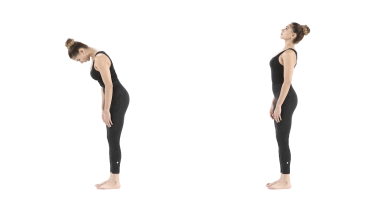
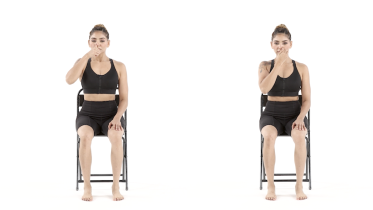
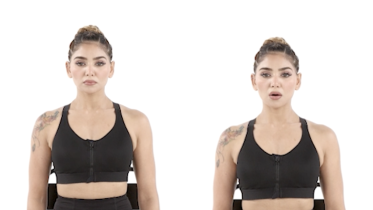
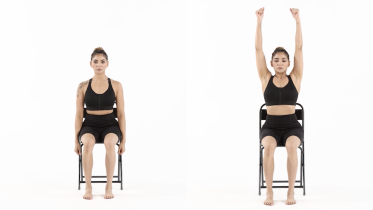
The voice guide says you can sit or stand. The video shows sitting, hands resting near the knees, and that is steadier if you tire easily. In the voice guide you breathe in as the shoulder blades move forward and out as they move back, and the video matches this with a small, slow movement. If your physio has shown you a different pairing, follow theirs. For a version that lifts the arms as you breathe, see breathing with arm raises.
If you live with COPD or another lung or heart condition, ask your physio whether this belongs in your routine. After shoulder surgery, your surgeon or physio will tell you when the shoulder blade can move freely. If chest pain, pressure or tightness does not ease quickly when you rest, spreads to your arm, neck, jaw, stomach or back, or comes with sweating, feeling sick, feeling light-headed or being short of breath, call emergency services straight away, as this can be a heart attack. If it eases quickly and none of these happen, get medical advice the same day, and do not exercise again until you have been checked. If you faint while exercising, call emergency services, even if you feel fine again quickly.
Written and checked by the PocketPhysio editorial team. Last updated 2026-09-26.
This page is general education, not a diagnosis or a personal treatment plan. If you have pain, an injury or a health condition, see a physiotherapist or doctor before starting new exercises.