Lymphedema breathing
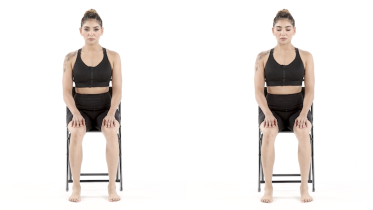
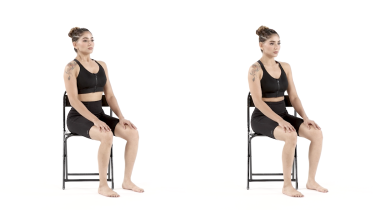
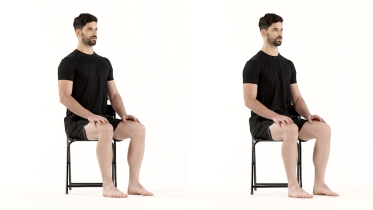
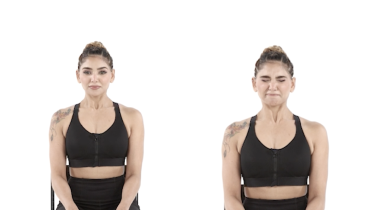
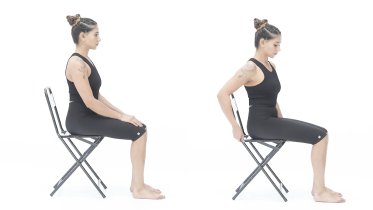
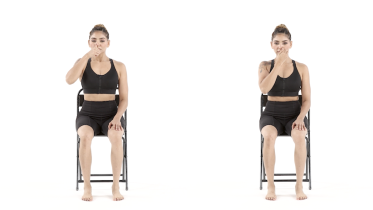
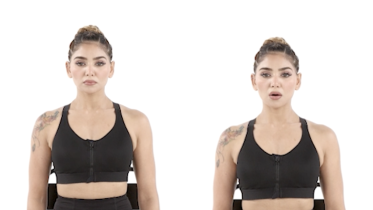
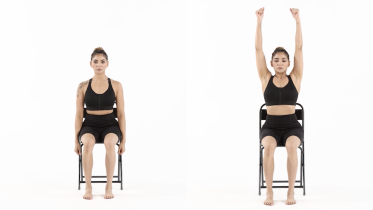
Lymphedema breathing pairs slow breathing with a gentle movement of the upper back. Standing tall with your arms loose, you breathe out through your mouth as you curl your head and upper back forward, then breathe in through your nose as you straighten up again. The movement comes from the upper back only. The app files it under lymphedema, where a care team usually sets the plan, so read this as the general technique.
How to do the lymphedema breathing
- Stand tall with your feet about hip width apart and your arms hanging loosely by your sides. Have a chair or counter within reach.
- Breathe out slowly through your mouth as you let your head drop and curl your upper back forward. Your hips and lower back stay where they are, so you are rounding, not bending at the hips.
- Breathe in slowly through your nose as you uncurl and straighten up, letting your chest lift and your head come up last.
- At the top, stand fully tall for a moment. In the video she lifts her chest and eyes slightly before the next breath out.
- Keep going at a slow, even pace, letting the movement follow your breathing.
What you should feel
Your upper back gently rounding and then opening, with your ribs and stomach moving easily as you breathe. It should feel relaxed and unhurried.
Common mistakes
- Bending forward from the hips so your whole trunk tips toward the floor.
- Taking big, fast breaths, which can leave you lightheaded or tingly.
- Letting your head hang heavily, or tipping it far back at the top.
- Rushing the movement ahead of your breath.
How often
Many routines use 5 to 10 slow breaths like this, once or a few times a day, or as your lymphedema team suggests. Your physio will adjust this.
Stop and check with your physio if
- Your fingers or the skin around your mouth start to tingle, or you feel light-headed or spaced out. This can mean you are breathing too fast or too deeply, so stop and let your breathing go back to normal. If it has not settled within a few minutes, get medical advice the same day. If you faint, or the numbness or tingling is on one side of your face or body, call emergency services, even if it goes away.
- You suddenly become short of breath, your chest feels tight or heavy, or you are far more short of breath than usual. Stop, rest and use your breathing control. Call emergency services if the breathlessness came on suddenly, your chest feels tight or heavy, your breathing does not go back to normal, you are gasping, choking or cannot get your words out, you have pain that spreads to your arms, back, neck or jaw, you feel suddenly confused or very drowsy, or your lips or skin turn very pale, blue or gray (on brown or black skin this can be easier to see on the palms of the hands). If everything settles quickly, get medical advice the same day before you do these exercises again.
- An electric shock feeling runs down your back or into your arms or legs as your head bends forward. Stop and get medical advice the same day.
- Your swollen arm or leg looks puffier, or feels heavier or tighter, during or after the exercise. Stop for today, and tell your lymphedema team if it has not settled by the next day. If the swelling comes on quickly, or the arm or leg becomes painful, warm, red or darker than usual, get medical advice the same day.
From the clinic
Lymphedema is long-term swelling in the body's tissues that happens when the lymphatic system does not work properly (NHS lymphoedema). Cancer treatment is one cause on the NHS list. Infection, an injury, inflammation or reduced movement can also lead to it, and some people are born with a lymphatic system that does not drain well.
A lymphedema care team usually sets an exercise and movement plan for the affected area, along with compression and skin care. This page explains the general technique, not a lymphedema treatment plan. If your team has given you a routine, follow theirs.
Keep each breath slow and comfortable, only a little fuller than usual. If the breathing part is new to you, diaphragmatic breathing teaches the belly breath on its own, and breathing control shows a seated relaxation version. Follow your lymphedema team's advice about wearing compression garments while you exercise.
Watch the swollen area for signs of a skin infection (cellulitis), which the NHS says often affects people with lymphedema. If the skin there becomes painful, hot or swollen, or turns red or darker than usual, get medical advice the same day, as early treatment can stop it becoming more serious. Do the same for a high temperature, or if you feel hot, cold or shivery. If the skin changes come with a very high temperature or feeling hot, cold or shivery, a fast heartbeat or fast breathing, purple patches on the skin, feeling dizzy or faint, confusion, or cold, clammy or pale skin, or you feel very unwell, call emergency services or go to an emergency department straight away, and do not drive yourself.
New swelling that nobody has checked yet needs a doctor's assessment before you start, and the same day if it is in one arm or leg and you do not know the cause, or it is severe, painful or came on very suddenly. If an arm or leg suddenly becomes more swollen, or warm, tender, red or darker than usual, has swollen veins that are sore to touch, or has a new throbbing or cramping pain, get medical advice the same day, as this can be a blood clot. Call emergency services if swelling comes with shortness of breath, a chest that feels tight, heavy or painful, coughing up blood, a pounding heartbeat, or feeling lightheaded, faint, confused, sick or clammy. Sudden shortness of breath, chest pain or coughing up blood also needs emergency services when the swelling looks no different, as these can be signs of a blood clot in the lungs.
Uncurl gently, especially if standing up quickly tends to make you lightheaded. If you have low bone density (osteoporosis), ask your physio how far to curl, as repeated forward rounding of the spine is often limited. If you have had a fracture in your spine, check with your physio before you begin. If you have had surgery on your spine, chest or heart in recent months, get the go-ahead from your surgical team or physio first. Ask them as well if you have had lymph nodes removed or other cancer surgery in recent months.
Written and checked by the PocketPhysio editorial team. Last updated 2026-09-28.
This page is general education, not a diagnosis or a personal treatment plan. If you have pain, an injury or a health condition, see a physiotherapist or doctor before starting new exercises.