Diaphragmatic breathing
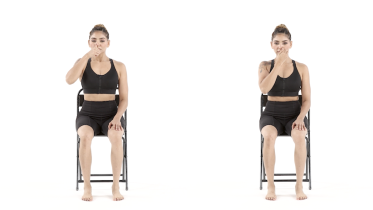
Diaphragmatic breathing, sometimes called belly breathing, means breathing in so your stomach rises while your chest stays fairly still. The breathing muscle under your ribs (diaphragm) does most of the work. This version is done lying on your back with your knees bent (crook lying) and your hands on your stomach. It is commonly used for relaxation, and physios also teach it to help people notice how they breathe.
How to do the diaphragmatic breathing
- Lie on your back on a firm bed or mat with your knees bent and feet flat. Let your lower back keep its natural small curve rather than pressing it flat.
- Rest both hands on your stomach, just below your ribs, and let your shoulders go loose.
- Breathe in slowly and let your stomach rise under your hands, while your chest and shoulders stay quiet.
- Let the breath out without pushing, so your stomach sinks back down on its own.
- Pause briefly at the end of each breath out, then start the next breath in.
What you should feel
Your hands rising and falling with each breath, and a slow, easy rhythm. Nothing should feel strained.
Common mistakes
- Lifting the chest and shoulders to breathe in.
- Pushing the stomach out with your muscles instead of letting the breath fill it.
- Forcing the air out at the end of the breath.
- Breathing too fast or too deep, which can leave you light-headed.
How often
Many programs use 5 to 10 slow breaths, or a few minutes, 1 to 3 times a day. Your physio will adjust this.
Stop and check with your physio if
- Your fingers or the skin around your mouth start to tingle, or you feel light-headed or spaced out. This can mean you are breathing too fast or too deeply, so stop and let your breathing go back to normal. If it has not settled within a few minutes, get medical advice the same day. If you faint, or the numbness or tingling is on one side of your face or body, call emergency services, even if it goes away.
- You suddenly become short of breath, your chest feels tight or heavy, or you are far more short of breath than usual. Stop, rest and use your breathing control. Call emergency services if the breathlessness came on suddenly, your chest feels tight or heavy, your breathing does not go back to normal, you are gasping, choking or cannot get your words out, you have pain that spreads to your arms, back, neck or jaw, you feel suddenly confused or very drowsy, or your lips or skin turn very pale, blue or gray (on brown or black skin this can be easier to see on the palms of the hands). If everything settles quickly, get medical advice the same day before you do these exercises again.
- Chest pain or pressure, dizziness or feeling faint, a racing or irregular heartbeat, or being far more out of breath than the effort should cause.
From the clinic
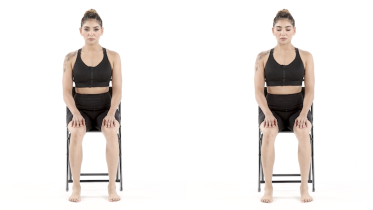
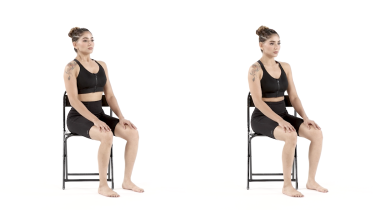
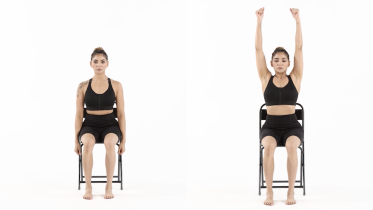
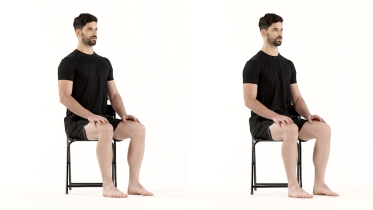
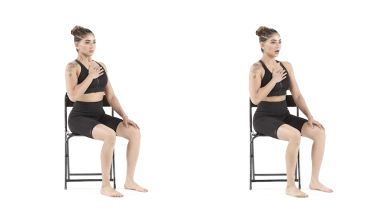
Small breaths are fine. You are not trying to fill your lungs as much as you can, only to let the stomach lead each breath. If lying down is uncomfortable, the same breathing works sitting upright in a chair with your hands in the same place. When you finish, roll onto your side and push up to sitting, then sit for a moment before you stand. Once it feels natural, you can follow it with body scan relaxation.
If you have a lung condition such as COPD, or a heart condition, ask your physio or doctor how breathing exercises fit your own plan, as the approach can be quite different. If chest pain, pressure or tightness does not ease quickly when you rest, spreads to your arm, neck, jaw, stomach or back, or comes with sweating, feeling sick, feeling light-headed or being short of breath, call emergency services straight away, as this can be a heart attack. If it eases quickly and none of these happen, get medical advice the same day, and do not exercise again until you have been checked. If you faint while exercising, call emergency services, even if you feel fine again quickly. If you are pregnant and past the first three months, check with your physio before exercising flat on your back.
Written and checked by the PocketPhysio editorial team. Last updated 2026-09-26.
This page is general education, not a diagnosis or a personal treatment plan. If you have pain, an injury or a health condition, see a physiotherapist or doctor before starting new exercises.