
Bell's palsy: recovery, eye care and gentle facial exercises
What is Bell's palsy?
Bell's palsy is weakness, or loss of movement, on one side of your face that usually comes on over a few days with no clear cause. It happens when the nerve that moves the muscles of facial expression (the facial nerve) stops working properly, and swelling of the nerve is thought to be part of it (Madhok 2016). The NHS lists a drooping eyelid or corner of the mouth, drooling, a dry mouth, a change in taste, and an eye that is dry or waters. MedlinePlus says it most often affects people aged 15 to 45, and lists pregnancy and diabetes among the risk factors. It usually affects the whole of one side of the face, forehead included, and it does not weaken the arms or legs (Facial Palsy UK).
Is it Bell's palsy or a stroke?
A stroke can also make one side of the face droop, and it needs emergency treatment. The NHS Bell's palsy page tells you to call 999 if somebody's face droops on one side, they cannot lift both arms and keep them there, or they have trouble speaking. Doctors look for clues, such as whether the forehead is weak too, but that needs an examination and cannot be judged at home. So treat any new drooping or weakness of the face as a possible stroke and call emergency services straight away. Once a stroke has been ruled out, the doctor can confirm Bell's palsy and start treatment.
How is it different from TMJ disorder?
TMJ disorder is a jaw problem, not a nerve problem. It causes pain and stiffness in the jaw joint and the chewing muscles, and those muscles get their nerve supply from a different nerve (the trigeminal nerve), so Bell's palsy does not weaken them. The jaw opening and jaw stretching exercises in the TMJ disorder program are for a sore, stiff jaw, not for Bell's palsy.
Why the first 72 hours matter
Steroid tablets are the main treatment. A Cochrane review of 7 trials with 895 people found that 17% of those given steroids had not fully recovered facial movement 6 months or more later, compared with 28% of those who were not given steroids (Madhok 2016). Steroids also led to fewer unwanted linked face movements (synkinesis). The American Academy of Otolaryngology guideline strongly recommends steroid tablets within 72 hours of the first symptoms for people aged 16 and over (Baugh 2013), and the NHS says treatment works better when started within 72 hours. Doctors may add an antiviral medicine alongside the steroids, but not on its own (Baugh 2013).
Look after your eye
If your eyelid does not close fully, the front of the eye can dry out and get damaged, and eye protection is one of the strong recommendations in the American guideline (Baugh 2013). The NHS lists eye drops and ointment to stop the eye drying out, and surgical tape to keep the eye closed at bedtime. Use the drops as often as your doctor or pharmacist advises, and keep using them even if the eye waters, because watering can be a sign the eye is too dry (Facial Palsy UK). Ointment is often kept for night time, as it blurs your vision for a while.
Facial Palsy UK also suggests wraparound sunglasses in the sun, plain glasses on windy days, blinking often and taking breaks at a screen, and less air conditioning and central heating at home. Ask your doctor or eye team to show you how to tape the eye before you try it. A sore, red eye needs checking, and the warning signs below say how quickly.
Do facial exercises help Bell's palsy?
They may help, but the evidence is weak, and the type of exercise and when you start both matter. A Cochrane review of 12 trials found no high quality evidence of real benefit or harm from any physical therapy for Bell's palsy (Teixeira 2011). It found low quality evidence that facial exercises tailored to the person can improve facial movement, mainly for moderate weakness and long-lasting cases, and that they may reduce after-effects when started early. A later review added 7 trials and found support for facial exercise early in recovery and in long-lasting cases (Khan 2022). A 2024 analysis found that physical therapy might lower the number of people who do not recover, but the certainty of that finding is low (Nakano 2024).
The American guideline made no recommendation for or against physical therapy, because the evidence was not strong enough (Baugh 2013). In practice, the exercises that seem to help are tailored to your face by a specialist, not a general list. That is why this page keeps the home program small and points you to a physio or specialist facial therapist for the movement work.
Gentle, not forced
As the nerve recovers, its signals can reach the wrong muscles, so moving one part of the face sets off another, for example the eye narrowing when you smile (Facial Palsy UK). This is called synkinesis. In a Danish study of 1,701 people with untreated Bell's palsy, 16% were left with linked movements like this (Peitersen 2002). Facial Palsy UK warns that force and over-effort on muscles that are too weak can cause tightness and involuntary movements, and it advises against facial exercises in the early stages. Once synkinesis has started, it also advises against general face strengthening exercises and chewing gum.
So this program has no big grimaces, no exercises against resistance and no whole-face squeezes. The squeeze in facial muscle relaxation is left out for the same reason. Electrical stimulation is not part of it either: the Cochrane review found it gave no benefit over a placebo (Teixeira 2011), and Facial Palsy UK says experts do not generally advise it and that it may make synkinesis more likely. Do not use a stimulation machine on your face unless a facial palsy specialist has advised it.
How to use this program
The program is short on purpose. If your doctor, physio or facial therapist has given you a plan, follow theirs first. For Bell's palsy, most of the work is eye care, gentle massage and, once movement returns, a movement plan tailored to your face by a physio or specialist facial therapist. Only one face movement in the exercise library fits Bell's palsy: the lip pucker. Facial Palsy UK also has a calming practice audio for the face and neck.
Stage 1 starts in the first days, once a doctor has checked you. Move to stage 2 only if your face is still weak about 3 months after it started, some movement has come back on the weak side, and a physio or therapist who specializes in facial palsy agrees.
The full dose for each exercise is on its own page. Roughly, diaphragmatic breathing often starts at 5 to 10 slow breaths, or a few minutes, 1 to 3 times a day, and the body scan takes a few minutes, once or twice a day. The lip pucker often starts with 5 to 10 slow puckers, once or twice a day. Facial Palsy UK suggests working on each movement for only about a minute at a time, with low effort, spread through the day. Your physio will adjust this.
For massage, use your fingertips gently over the weak side of your face. Facial Palsy UK says there is no limit to how often you massage, as long as it is gentle and never causes pain or discomfort, and its videos show the technique. Research on massage for Bell's palsy is thin, so think of it as care for the muscles rather than a proven treatment.
Stop if a movement hurts, if your face feels tighter afterward or if you notice new linked movements, and do not start again until your physio or therapist has checked your face. The lip pucker page lists a face that droops or goes numb on one side among the signs to call emergency services, and the diaphragmatic breathing page lists numbness or tingling on one side of your face or body. If one side of your face is already weak from Bell's palsy or an earlier stroke, and a doctor has checked it, that known droop is not a new sign. New drooping on the other side, weakness that suddenly gets worse, and every other sign in the stop list still mean calling emergency services, even if they go away.
The exercise program
Stage 1: Protect the eye, massage gently and relax
From the first days, once a doctor has checked you, while the face is floppy and moves little or not at all. Facial Palsy UK advises against facial exercises at this stage, so the work is eye care, gentle massage and relaxation. Massage the weak side lightly with your fingertips, as often as you like, as long as it never hurts. Do not massage over a rash, blisters or broken skin. A face that suddenly stops moving is frightening, and a few minutes of diaphragmatic breathing or the body scan can take the edge off that. They are for feeling calmer. They do not speed up the nerve, and nothing in this stage should be forced.
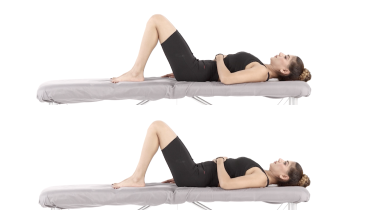 Diaphragmatic breathing
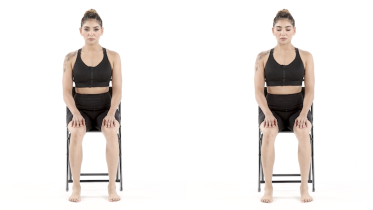 Body scan relaxation
Stage 2: Small, even movements from about 3 months
Most people recover well before this stage is needed. Start only if your face is still weak about 3 months after it started, some movement has come back on the weak side, and a physio or therapist who specializes in facial palsy has checked your face and agreed. Facial Palsy UK advises against basic movement exercises at home before 3 months, even if movement comes back sooner. Start earlier only if a specialist facial therapist gives you a plan. Push your lips forward only as far as the weak side can go, so the two sides stay even, and use a mirror to check. Use very little effort: Facial Palsy UK suggests about 2 out of 10, because the face muscles are small and light. Stop the exercise if your face feels tighter afterward or if another part of your face starts to move with your lips, and do not start it again until your physio or therapist has checked your face. Keep up the massage and relaxation from stage 1 alongside.
 Lip pucker exercise
How long does Bell's palsy take to get better?
The NHS says symptoms should get better within 6 months, although it can take longer for some people. It advises going back to your GP if there is no improvement after 3 weeks. In a large Danish study of people who had no treatment, some movement had come back within 3 weeks for 85%, and 71% got back normal facial movement (Peitersen 2002). MedlinePlus notes that you are more likely to get back all or most of the strength in your face if the nerve did not stop working completely and improvement began within 3 weeks. If your face has not fully recovered 3 months after it started, the American guideline advises a referral to a facial nerve specialist (Baugh 2013).
Living with Bell's palsy
The NHS notes that Bell's palsy can make you feel depressed, stressed or anxious. Talk to your doctor if your mood is low, and look at the support groups Facial Palsy UK runs, including one for Bell's palsy in pregnancy.
If you are pregnant or have just had a baby, tell your midwife or doctor the same day. In one study, Bell's palsy late in pregnancy was linked with pre-eclampsia, a blood pressure problem in pregnancy, so they may want to check your blood pressure (Shmorgun 2002). Contact your maternity unit straight away if you also get any of the pre-eclampsia signs in the warning signs below (NHS). Check with your midwife or doctor before you start this program.
The program here is meant for adults. If a child or teenager has new weakness on one side of their face, call emergency services, as you would for an adult, and follow the plan from their doctor.
When to see a doctor, physio or specialist
See a doctor straight away for any new face weakness, as above. After that, go back to your doctor if there is no improvement after 3 weeks (NHS), if the eye becomes sore or red, or if your face is not fully better by 3 months (Baugh 2013). Ask about a referral to a physical therapist (physiotherapist) or a specialist facial therapist if movement is slow to come back, or if your face feels tight or moves in linked ways. Facial Palsy UK advises working with a therapist who specializes in facial rehabilitation, because not every exercise suits every person. Some problems cannot wait for a routine appointment, and the warning signs below list them.
For physiotherapists
Baugh 2013 (AAO-HNSF) makes strong recommendations to exclude identifiable causes by history and examination, to prescribe oral steroids within 72 hours of onset for patients aged 16 and over, not to prescribe antiviral therapy alone, and to implement eye protection for impaired eye closure. It recommends against routine laboratory testing, routine imaging and electrodiagnostic testing in incomplete paralysis, and offers antivirals with steroids within 72 hours and electrodiagnostic testing in complete paralysis as options. It makes no recommendation on surgical decompression, acupuncture or physical therapy, and advises reassessment or referral for new or worsening neurologic findings, ocular symptoms or incomplete recovery at 3 months. The SFORL guideline advises steroids ideally within 72 hours at 1 mg/kg/day for 7 to 10 days, with antivirals added for severe early-onset disease and Ramsay Hunt syndrome (Fieux 2020).
Madhok 2016 (7 RCTs, 895 participants) found incomplete recovery at 6 months or more in 17% with corticosteroids against 28% with control, a reduction in motor synkinesis, and no significant difference in adverse effects, rating the evidence moderate to high quality. In the untreated Copenhagen cohort (Peitersen 2002; 1,701 Bell's palsy cases among 2,570 peripheral palsies), 70% were complete palsies at first examination, 71% regained normal function, and contracture and associated movements were found in 17% and 16%.
Teixeira 2011 (12 randomized or quasi-randomized trials, 872 participants) found that electrical stimulation gave no benefit over placebo for incomplete recovery at 6 months (one trial, 86 participants, moderate quality), with one low quality trial reporting worse function at 3 months, and low quality evidence that tailored facial exercises improve function, mainly in moderate and chronic cases, and reduce sequelae in acute cases. Khan 2022 added 7 RCTs, 9 observational and 3 quasi-experimental or pilot studies (854 participants), with all 4 high-quality trials reporting positive effects, but did not pool data. Nakano 2024 (peripheral facial palsy, including Ramsay Hunt and traumatic palsy) found that physical therapy might reduce non-recovery (RR 0.51, 95% CI 0.31 to 0.83; 4 studies, 418 participants; low quality) and increase the Sunnybrook composite score (MD 12.1, 95% CI 3.11 to 21.0; 3 studies, 166 participants; low quality), with a very uncertain effect on sequelae (RR 0.64, 95% CI 0.07 to 5.95; very low quality).
The home program follows the Facial Palsy UK specialist advice: no movement exercises in the flaccid stage, gentle massage, then, not before 3 months from onset even if paresis appears sooner, slow, symmetrical, low-effort practice (about 2 out of 10), matching the strong side to the weak side, for about a minute per movement spread through the day. Only one library exercise fits (lip pucker). The early exercise benefit in Teixeira 2011 and Khan 2022 comes from therapist-led, tailored programs, so earlier movement work is a specialist decision rather than a home program.
Bell's palsy in late pregnancy was associated with pre-eclampsia and gestational hypertension in a case series of 41 women (Shmorgun 2002), so check that blood pressure has been monitored. Add tailored movement retraining, soft tissue work and synkinesis management from your own assessment, and refer to specialist facial therapy where synkinesis or poor recovery develops. The whole-face maximal squeeze in facial muscle relaxation is left out, as it conflicts with this advice.
See a doctor promptly if
- Emergency: any sign of a stroke, even if it goes away. That means a face that droops on one side, an arm you cannot lift or keep up, slurred or muddled speech, weakness or numbness on one side of your body or face, sudden blurred vision, double vision or loss of sight, trouble swallowing, sudden dizziness with unsteadiness or falling over, a sudden severe headache, or a sudden fall where your legs give way but you do not black out (a drop attack). Call emergency services straight away.
- Emergency: new drooping or weakness on one side of your face that a doctor has not checked yet, even if it came on over a day or two and you feel well otherwise. Call emergency services straight away. A stroke has to be ruled out first, and if it is Bell's palsy, steroid tablets work best when started within 72 hours.
- Emergency: both sides of your face become weak, weakness or numbness spreads to an arm or leg, or you have new trouble speaking, swallowing or breathing. Call emergency services straight away. A face that is already weak from Bell's palsy does not make any other sign of a stroke less urgent.
- Emergency: a red eye with a change in your sight, such as wavy lines, flashing or loss of vision, that is more than the short blur from eye ointment, or it hurts to look at light, the eye is very dark red, one pupil is bigger than the other, you have a severe headache and feel sick, or you have injured the eye or something is stuck in it. Call emergency services or go to an emergency department straight away, and do not drive yourself.
- Same day: the eye on the weak side becomes very painful and red, or keeps getting sorer or redder even though you use your drops, or the eye is red and you wear contact lenses. Get medical advice the same day from your doctor, an optician or an eye unit. An eye that does not close fully can dry out, and the clear front of the eye (cornea) can be damaged.
- Same day: ear pain with a rash or blisters in or around your ear or in your mouth, or new hearing loss or a spinning feeling, along with the face weakness. Get medical advice the same day and mention the rash. This can be Ramsay Hunt syndrome, caused by the shingles virus, which is usually treated with antiviral medicine as well as steroids, and recovery is more likely when treatment starts within 3 days. If you suddenly lose hearing and feel very dizzy or cannot stand or walk steadily, or you become confused or very drowsy, call emergency services.
- Same day: you have been bitten by a tick, or have had a round or oval rash, in the past 3 months. Tell your doctor the same day, even if they have already seen your face. Lyme disease, which ticks can spread, can also weaken the face, sometimes on both sides, and it is treated with antibiotics.
- Urgent: you are pregnant or had a baby in the last few weeks and have a severe headache that does not go away with simple painkillers, problems with your vision such as blurring or flashing lights, pain just below your ribs, vomiting, heartburn that does not go away with heartburn medicines, sudden swelling of your face, hands or feet, or you feel very unwell. Contact your maternity unit straight away, or get urgent medical help if you cannot reach them. These can be signs of pre-eclampsia, which has been linked with Bell's palsy late in pregnancy. Call emergency services if you have a fit (seizure) or a headache that came on suddenly and is very severe.
- Same day: the face weakness is still getting worse more than 3 days after it started, or you notice any other new symptom, without any of the emergency signs above. Get medical advice the same day.
- Within a day or two: the weakness came on slowly over weeks rather than over a few days, you have a lump in your cheek, in front of your ear or in your neck, or you have had cancer, now or in the past, or have lost weight without trying. See your doctor within a day or two and mention it, as a slow start can have other causes that need checking.
- Within a few days: no sign of improvement at all 3 weeks after the weakness started. Book an appointment with your doctor within a few days.
- Routine: your face has not fully recovered 3 months after it started, or it feels tight, twitches, or one part moves when you move another, for example your eye narrows when you smile (synkinesis). Book an appointment with your doctor and ask about a referral to a facial nerve specialist or a specialist facial therapist.
Common questions
How long does Bell's palsy last?
The NHS says symptoms should get better within 6 months, although it can take longer for some people, and advises going back to your GP if there is no improvement after 3 weeks. In a large Danish study of people who had no treatment, some movement had come back within 3 weeks for 85%, and 71% got back normal facial movement (Peitersen 2002). Steroid tablets started early raise the chance of a full recovery (Madhok 2016).
How can you tell Bell's palsy from a stroke?
You cannot tell safely at home. Both can make one side of the face droop, and the NHS Bell's palsy page says to call 999 if somebody's face droops on one side, they cannot lift both arms and keep them there, or they have trouble speaking. Doctors look for clues such as whether the forehead is weak too and whether the arms and legs are affected, but that needs an examination. Treat any new face weakness as a possible stroke and call emergency services.
Do facial exercises help Bell's palsy?
They may, but the evidence is low quality. A Cochrane review found low quality evidence that facial exercises tailored to the person can improve facial movement, mainly for moderate weakness and long-lasting cases (Teixeira 2011), and later reviews came to similar conclusions (Khan 2022; Nakano 2024). The American Academy of Otolaryngology guideline made no recommendation for or against physical therapy (Baugh 2013). Facial Palsy UK advises no facial exercises while the face is floppy, no basic movement exercises at home until 3 months after it started, and keeping every movement gentle, ideally with a specialist facial therapist.
Should I use electrical stimulation for Bell's palsy?
Not unless a facial palsy specialist has advised it. A Cochrane review found electrical stimulation gave no benefit over a placebo (Teixeira 2011). Facial Palsy UK says experts in facial palsy do not generally advise it and that it may make unwanted linked face movements (synkinesis) more likely.
Should I tape my eye shut at night with Bell's palsy?
If your eye does not close fully, your doctor may suggest surgical tape to keep it closed at bedtime, along with eye drops in the day and ointment to stop the eye drying out (NHS). Ask your doctor or eye team to show you how to tape it before you try. Facial Palsy UK has a step-by-step guide.
What causes Bell's palsy?
Nobody knows exactly. Swelling of the facial nerve is thought to be part of it (Madhok 2016), and MedlinePlus says a herpes virus infection might be involved. MedlinePlus lists pregnancy and diabetes among the risk factors.
Can Bell's palsy come back?
It can, but it is not common. Facial Palsy UK says about 7% of people have Bell's palsy again, on average about 10 years after the first time. Any new face weakness, even if you have had Bell's palsy before, needs a doctor straight away, as a stroke has to be ruled out.
References
- Baugh RF, Basura GJ, Ishii LE, Schwartz SR, Drumheller CM, Burkholder R, et al. Clinical practice guideline: Bell's palsy. Otolaryngology-Head and Neck Surgery. 2013;149(3 Suppl):S1-S27. https://doi.org/10.1177/0194599813505967
- Madhok VB, Gagyor I, Daly F, Somasundara D, Sullivan M, Gammie F, Sullivan F. Corticosteroids for Bell's palsy (idiopathic facial paralysis). Cochrane Database of Systematic Reviews. 2016;(7):CD001942. https://doi.org/10.1002/14651858.CD001942.pub5
- Teixeira LJ, Valbuza JS, Prado GF. Physical therapy for Bell's palsy (idiopathic facial paralysis). Cochrane Database of Systematic Reviews. 2011;(12):CD006283. https://doi.org/10.1002/14651858.CD006283.pub3
- Khan AJ, Szczepura A, Palmer S, Bark C, Neville C, Thomson D, Martin H, Nduka C. Physical therapy for facial nerve paralysis (Bell's palsy): an updated and extended systematic review of the evidence for facial exercise therapy. Clinical Rehabilitation. 2022;36(11):1424-1449. https://doi.org/10.1177/02692155221110727
- Nakano H, Fujiwara T, Tsujimoto Y, Morishima N, Kasahara T, Ameya M, et al. Physical therapy for peripheral facial palsy: a systematic review and meta-analysis. Auris Nasus Larynx. 2024;51(1):154-160. https://doi.org/10.1016/j.anl.2023.04.007
- Peitersen E. Bell's palsy: the spontaneous course of 2,500 peripheral facial nerve palsies of different etiologies. Acta Oto-Laryngologica Supplementum. 2002;(549):4-30. https://pubmed.ncbi.nlm.nih.gov/12482166/
- Fieux M, Franco-Vidal V, Devic P, et al. French Society of ENT (SFORL) guidelines. Management of acute Bell's palsy. European Annals of Otorhinolaryngology, Head and Neck Diseases. 2020;137(6):483-488. https://doi.org/10.1016/j.anorl.2020.06.004
- Shmorgun D, Chan WS, Ray JG. Association between Bell's palsy in pregnancy and pre-eclampsia. QJM. 2002;95(6):359-362. https://doi.org/10.1093/qjmed/95.6.359
- NHS. Bell's palsy. https://www.nhs.uk/conditions/bells-palsy/
- NHS. Stroke: symptoms. https://www.nhs.uk/conditions/stroke/symptoms/
- NHS. Red eye. https://www.nhs.uk/conditions/red-eye/
- NHS. Guillain-Barre syndrome. https://www.nhs.uk/conditions/guillain-barre-syndrome/
- NHS. Pre-eclampsia. https://www.nhs.uk/conditions/pre-eclampsia/
- NHS. Lyme disease. Page last reviewed 3 June 2025. https://www.nhs.uk/conditions/lyme-disease/
- Centers for Disease Control and Prevention. Signs and symptoms of untreated Lyme disease. https://www.cdc.gov/lyme/signs-symptoms/index.html
- National Institute for Health and Care Excellence. Lyme disease. NICE guideline NG95. Published 11 April 2018. https://www.nice.org.uk/guidance/ng95
- MedlinePlus. Bell palsy. US National Library of Medicine. https://medlineplus.gov/ency/article/000773.htm
- MedlinePlus. Ramsay Hunt syndrome. US National Library of Medicine. https://medlineplus.gov/ency/article/001647.htm
- Facial Palsy UK. Bell's palsy. https://www.facialpalsy.org.uk/causesanddiagnoses/bells-palsy/
- Facial Palsy UK. Facial rehabilitation. https://www.facialpalsy.org.uk/support/treatments-therapies/facial-rehabilitation/
- Facial Palsy UK. Management of flaccid facial paralysis (floppy face). https://www.facialpalsy.org.uk/support/self-help-videos/management-of-flaccid-facial-paralysis-floppy-face/
- Facial Palsy UK. Management of paresis. https://www.facialpalsy.org.uk/support/self-help-videos/management-of-paresis/
- Facial Palsy UK. Synkinesis advice. https://www.facialpalsy.org.uk/support/patient-guides/synkinesis-advice/
- Facial Palsy UK. Electrical stimulation. https://www.facialpalsy.org.uk/support/treatments-therapies/electrical-stimulation/
- Facial Palsy UK. Dry eye advice. https://www.facialpalsy.org.uk/support/patient-guides/dry-eye-advice/
- Facial Palsy UK. How to tape the eye closed (adults). https://www.facialpalsy.org.uk/support/patient-guides/how-to-tape-eye-closed-adults/
- Facial Palsy UK. Calming practice for the face and neck. https://www.facialpalsy.org.uk/support/self-help-videos/calming-practice-for-the-face-and-neck/
Written and checked by the PocketPhysio editorial team. Last updated 2026-09-29.
This page is general education, not a diagnosis or a personal treatment plan. See a physiotherapist or doctor for advice about your own situation.