Lip pucker exercise
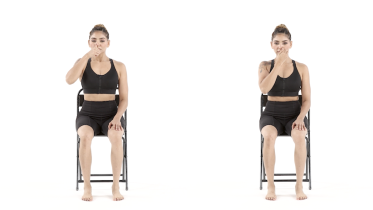
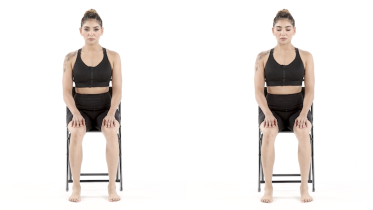
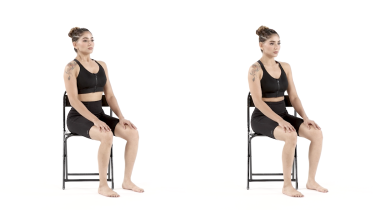
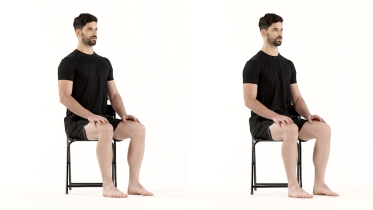
The lip pucker is a small face exercise. You push your closed lips forward into a rounded pucker, as if about to give a kiss, hold it for a moment, then let them relax. The muscle doing the work is the ring around your mouth (orbicularis oris). Physios and speech therapists sometimes include it in face and mouth exercise programs. In the video it is done sitting in a chair, looking straight ahead.
How to do the lip pucker exercise
- Sit up tall in a chair with both feet on the floor and your hands on your thighs. Keep your eyes on a point straight ahead.
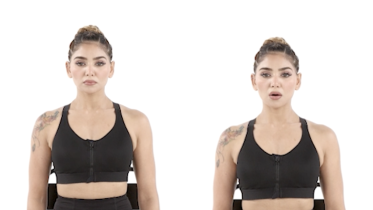
- Close your lips gently, then push them forward into a small, rounded pucker, as if you were about to give a kiss.
- Hold the pucker for about 2 seconds, breathing normally through your nose.
- Let the lips go soft again, back to how they rest normally.
- Rest for a moment, then repeat.
What you should feel
A light, even squeeze around your lips, while your jaw, cheeks and neck stay loose. It should not hurt.
Common mistakes
- Squeezing as hard as you can, or holding your breath while you do it.
- Clenching your teeth or pushing your jaw forward with the lips.
- Letting the pucker pull more to one side. A mirror helps you keep it even.
- Tensing your neck or lifting your shoulders.
How often
Many programs use 5 to 10 slow puckers, once or twice a day. Your physio or therapist will adjust this.
Stop and check with your physio if
- Pain in your lips, face or jaw. Stop, and get it checked by your physio, dentist or doctor if it keeps coming back.
- Things look double, your vision suddenly blurs or goes, your speech slurs or becomes muddled, swallowing becomes hard, your face or lips go numb, one side of your face droops or one side of your body goes weak or numb, you suddenly become so dizzy or unsteady that you fall or cannot stand or walk, your legs suddenly give way but you do not black out (a drop attack), or you get a sudden severe headache. Stop and call emergency services, even if it goes away.
From the clinic
Both the app video and the voice guide show only the lips moving: pushed forward into a pucker, then relaxed, with no change in breathing. So this is not pursed lip breathing, which is a breathing technique often taught for shortness of breath. If your physio has taught you that one, follow their instructions for it. For a tense and relax exercise for the whole face, see facial muscle relaxation.
If one side of your face is weak from Bell's palsy or another facial nerve problem, do face exercises only if a specialist facial therapist has advised them. Strong or exaggerated movements can encourage unwanted linked movements of the face (synkinesis) while the facial nerve recovers, so these exercises are kept small, slow and gentle. If your face is weak after a stroke, check with your stroke team first. If one side of your face is already weak from Bell's palsy or an earlier stroke, and a doctor has checked it, that known droop is not a new sign. New drooping on the other side, weakness that suddenly gets worse, and every other sign in the stop list still mean calling emergency services, even if they go away.
After surgery or an injury to your mouth, lips or jaw, check with your surgical team before you start.
Written and checked by the PocketPhysio editorial team. Last updated 2026-09-28.
This page is general education, not a diagnosis or a personal treatment plan. If you have pain, an injury or a health condition, see a physiotherapist or doctor before starting new exercises.