
TMJ disorder exercises and self-care
What is TMJ disorder?
Your jaw joints (temporomandibular joints, or TMJs) sit just in front of each ear, where the lower jaw hinges on the skull. TMJ disorder, or TMD, is the name for problems with those joints and the chewing muscles that move them. The NHS lists pain around the jaw, the ear or the temple, and headaches around the temples. Other signs are clicking, popping or grinding noises when you move your jaw, trouble opening your mouth fully, or a jaw that locks. Pain is often worse when you chew or feel stressed, and it can disturb your sleep.
The NIDCR describes TMD as a group of more than 30 conditions, some mainly in the joint and some mainly in the muscles. It estimates that about 5% of adults in the US have it, and that it is twice as common in women as in men. The NHS lists teeth grinding and wear and tear in the joint among the causes. A blow to the head or face can start it too, and so can stress or an uneven bite.
How is it different from tension-type headache and neck pain?
The three often overlap. TMD can cause headaches at the temples, and tight neck and shoulder muscles often come with it. This page is about the jaw itself. That means pain in the joint or the chewing muscles, clicking, or trouble opening your mouth. If headaches are your main problem, the tension-type headache program is the better fit, and if the pain is mostly in your neck, start with the neck pain program.
What can you do yourself for TMJ pain?
Self-care is the first step. The NHS suggests eating soft food, such as pasta, omelettes or soup, and taking paracetamol or ibuprofen. It suggests massaging the painful jaw muscles and finding ways to relax. For a cold pack, it suggests a pack of frozen peas wrapped in a tea towel for no more than 5 minutes at a time. For warmth, a hot water bottle wrapped in a tea towel, twice a day for 15 to 20 minutes.
The NHS also lists things to stop doing. Do not chew gum or pen tops, bite food with your front teeth, bite your nails or yawn too wide. Do not clench your teeth: apart from when you are eating, your teeth should be apart. Checking a few times a day that your teeth are apart and your jaw feels loose is a simple place to start.
For grinding at night, the NHS suggests ways to relax, such as breathing exercises or music, and getting regular exercise. Sleep habits matter too: go to bed at the same time every night, wind down before bed and keep the bedroom dark and quiet.
Do exercises and physio help TMJ disorder?
They can, but the evidence has limits. A 2023 clinical practice guideline in the BMJ looked at treatments for jaw pain lasting 3 months or more (Busse 2023). It made strong recommendations for cognitive behavioral therapy (with or without relaxation or biofeedback), hands-on mobilization by a therapist, manual trigger point therapy, supervised posture exercise, supervised jaw exercise and stretching, and usual care such as home exercises, stretching, reassurance and education. It made conditional recommendations for manipulation and acupuncture.
It did not recommend relaxation therapy or biofeedback on their own. In this program, relaxation supports the self-care steps and the habit of keeping your teeth apart, rather than being a treatment by itself.
A 2016 review of 48 trials of exercise and hands-on therapy for TMD found mostly small to moderate effects, and no clear sign that exercise worked better than other conservative treatments (Armijo-Olivo 2016). Hands-on therapy alone or with jaw or neck exercises gave the more encouraging results. The reviewers found no high-quality evidence, so there is real uncertainty about how well these treatments work.
Jaw opening and stretching exercises are best learned in person from a physio or dentist. They can check how your jaw moves, whether it deviates to one side or clicks, and set a range that suits you. This program keeps the jaw work small and gentle: one controlled opening exercise in a pain-free range and one mild stretch for the chewing muscles. The rest is relaxation and neck and shoulder work. If your jaw clicks painfully, catches or has ever locked, have it checked in person before you start the jaw exercises.
Do mouth guards and splints help?
A dentist may suggest a mouth guard or splint worn at night if you grind your teeth, mainly to protect your teeth from damage (NHS). For long-lasting jaw pain, the 2023 BMJ guideline made a conditional recommendation against removable splints and a strong recommendation against splints or dental work that permanently change your bite. The NIDCR also advises avoiding treatments that permanently change the jaw joints, teeth or bite, or involve surgery.
How to use this program
Start at stage 1, and add stage 2 once the relaxation exercises feel familiar and a flare-up has settled. Stage 3 comes once the jaw opening is comfortable. It adds a mild stretch for the chewing muscles, and if your neck and shoulders feel tight too, it has stretches for those. Between jaw movements, and during every other exercise, keep your teeth apart and your jaw loose.
Each exercise page gives its own starting dose. As a rough guide, many programs use 5 to 10 slow breaths or a few minutes of diaphragmatic breathing, 1 to 3 times a day, and a few minutes of the body scan once or twice a day. Facial muscle relaxation is often 3 to 5 squeezes, once or twice a day or whenever you notice tension. The chin tuck often starts with 8 to 10 holds of 3 to 5 seconds, a few times a day, and the deep neck flexor exercise with holds of 5 to 10 seconds, repeated 5 to 10 times, once or twice a day. The posture check is something to come back to a few times a day.
Jaw opening with your tongue on the roof of your mouth often starts with 5 to 10 slow openings, each held for a few seconds, a few times a day. The temporalis stretch is shorter and gentler: often a 5 to 10 second hold, 3 to 5 times, once or twice a day. The neck and shoulder stretches are often held for 15 to 30 seconds, once or twice a day. The upper trapezius and levator scapulae stretches are usually repeated 2 to 3 times on each side, and the suboccipital stretch 2 to 4 times. Your physio will adjust this.
Mild aching in the jaw, neck or shoulders that settles soon after and is no worse the next morning is usually fine. Pain that builds up during the day, a jaw that starts to catch or lock, or pain, numbness or tingling spreading into your arm are reasons to stop and tell your physio. Check the warning signs below if anything new appears.
The exercise program
Stage 1: Rest the jaw and let go of tension
For a flare-up, or when you notice you clench your teeth through the day. Diaphragmatic breathing and the body scan are calm ways to wind down, and many people use them at set times each day rather than only when the jaw is sore. Facial muscle relaxation teaches you the difference between a tight face and a loose one. With a jaw problem, do it with your teeth slightly apart and squeeze only around your eyes and cheeks, not your jaw. Keep the soft food and the other self-care steps going alongside.
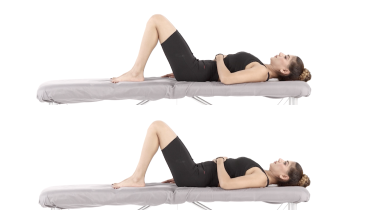 Diaphragmatic breathing
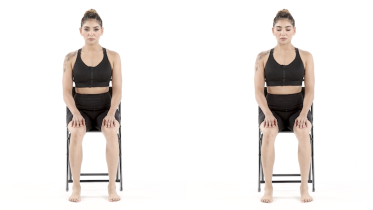 Body scan relaxation
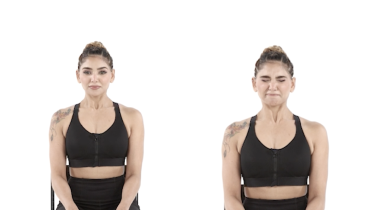 Facial muscle relaxation
Stage 2: Gentle jaw opening and neck control
Once stage 1 feels familiar and the worst of a flare-up has settled. Jaw opening with your tongue on the roof of your mouth is a small, controlled movement: open only as far as the tongue allows and only while it stays pain free, and stop if your jaw catches, locks or clicks painfully. If your jaw has ever got stuck open, check with your dentist or physio before you start it. The chin tuck and the deep neck flexor exercise train the small muscles at the front of the neck, and the standing posture check is a position to come back to a few times a day, not one to hold. Posture exercise is one of the treatments the 2023 guideline recommends for long-lasting jaw pain, although that recommendation is for posture exercise supervised by a therapist. Keep your teeth apart and your jaw loose while you do these. If a neck movement makes you dizzy, stop, sit still until it settles, and get medical advice the same day before you try again.
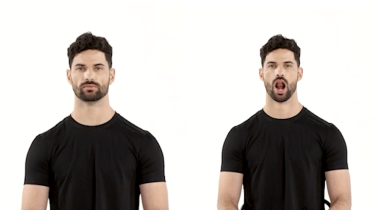 Jaw opening with the tongue on the roof of the mouth
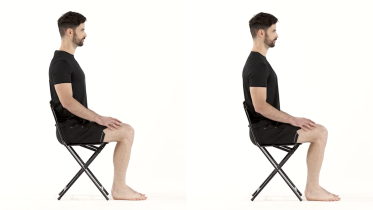 Chin tuck
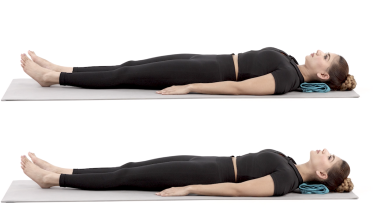 Deep neck flexor exercise
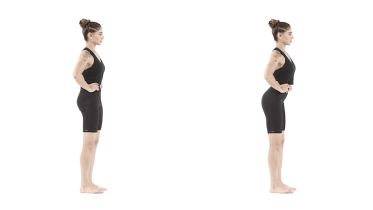 Correct standing posture
Stage 3: Ease jaw, neck and shoulder tension
The temporalis stretch is for tight, sore chewing muscles at the temple or the side of the jaw. Start it only once the jaw opening in stage 2 is comfortable, keep the block small so your teeth are only slightly apart, and never bite down. The neck and shoulder stretches are for people whose jaw pain comes with tight, sore muscles at the top of the shoulders, the side of the neck or the base of the skull. All of these are for comfort alongside stages 1 and 2, not instead of them, and there is little research on neck stretches for TMD on their own. Stretch gently, without pushing into pain. If it makes you dizzy, stop and get medical advice the same day, as in stage 2.
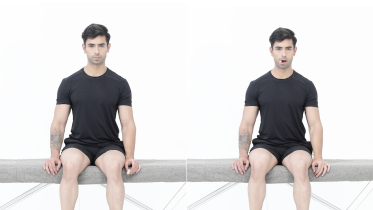 Temporalis stretch
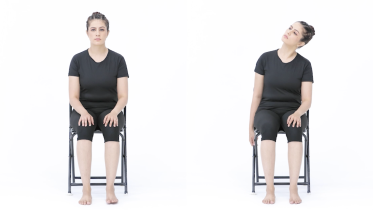 Upper trapezius stretch
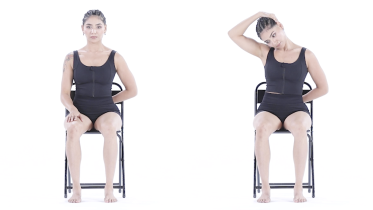 Levator scapulae stretch
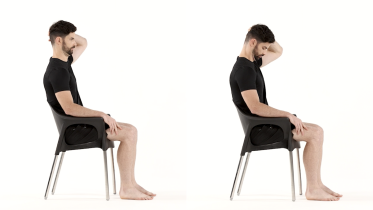 Suboccipital stretch
What to avoid or change
While the jaw is sore, stick to soft food and cut it into small pieces, so you do not need to bite with your front teeth or open wide. When you feel a yawn coming, keep it small. Skip chewing gum. If you have high blood pressure, breathe steadily through every hold and never hold your breath.
This program is written for adults. If a child or teenager has jaw pain, clicking or trouble opening their mouth, get them checked by a doctor or dentist first. If you are pregnant, check with your midwife or doctor before you take painkillers or start this program. After jaw surgery or a broken jaw, follow your surgeon's program.
If you have rheumatoid arthritis, or you have been told the spaces around the nerves or spinal cord in your neck are narrowed, check with your physio or doctor before you start. Some of the neck stretches may need to be changed or left out.
When to see a dentist, physio or doctor
See your dentist, doctor or a physio if your jaw pain is not settling with self-care, if it keeps coming back, or if you think you grind your teeth. The NHS advises an urgent GP appointment or a call to 111 for several jaw problems. These include not being able to eat or drink, trouble opening your mouth fully or a jaw that is locking, frequent, severe headaches, pain or tenderness at the side of your head or on your scalp, and vision problems. A physio can check your jaw and neck, teach you jaw exercises and set a dose that fits you. The warning signs below need faster help.
For physiotherapists
This page gives patients a starting framework, not a full plan. The DC/TMD (Schiffman 2014) gives validated Axis I criteria for the common pain-related TMDs (sensitivity 0.86 or more, specificity 0.98 or more) and for one intra-articular disorder, disc displacement without reduction with limited opening (sensitivity 0.80, specificity 0.97). The other intra-articular criteria are for screening only. Axis II adds screening tools for pain-related disability and psychosocial status. Axis II screening is worth doing, given the guideline weight on cognitive behavioral approaches.
Busse 2023 (chronic TMD pain of 3 months or more) made strong recommendations for CBT with or without biofeedback or relaxation, therapist-assisted mobilization, manual trigger point therapy, supervised postural exercise, supervised jaw exercise and stretching with or without manual trigger point therapy, and usual care. Conditional recommendations in favor went to manipulation, supervised jaw exercise with mobilization, CBT with NSAIDs, manipulation with postural exercise, and acupuncture. Reversible occlusal splints, arthrocentesis, low-level laser therapy, TENS, botulinum toxin, gabapentin, corticosteroid injection, relaxation therapy alone, biofeedback alone and several other options received conditional recommendations against. The relaxation work in stage 1 here is self-care support, not a stand-alone treatment. Irreversible oral splints, discectomy and NSAIDs with opioids received strong recommendations against.
Armijo-Olivo 2016 (48 RCTs) found low to moderate effect sizes with no clear superiority of exercise over other conservative treatments, and more promising results for manual therapy alone or combined with jaw or cervical exercise, with no high-quality evidence overall. The home program includes one jaw exercise in stage 2 (controlled opening with the tongue on the palate, in a pain-free range) and a low-load temporalis stretch in stage 3, which is added only once opening is comfortable. Add further jaw range of motion, coordination and stretching from your own assessment, and adapt or leave out the jaw exercises for an acute closed lock or a history of open lock.
For red flags, Ong 2026 names giant cell arteritis (jaw claudication, especially over 50), acute angle-closure glaucoma and malignancy as the main red flags in facial pain, and notes that neurological deficits suggest more sinister causes. Consider exertional jaw pain as possible angina (NHS Angina lists jaw pain brought on by exercise, stress, emotion or cold, settling with rest). Ong 2026 also lists carotid or vertebral dissection (sudden one-sided pain with ipsilateral ptosis and miosis) for same-day emergency referral. An open lock that cannot be reduced, or a jaw that looks out of place after trauma, needs emergency assessment.
See a doctor promptly if
- Emergency: any sign of a stroke, even if it goes away. That means a face that droops on one side, an arm you cannot lift or keep up, slurred or muddled speech, weakness or numbness on one side of your body or face, sudden blurred vision, double vision or loss of sight, trouble swallowing, sudden dizziness with unsteadiness or falling over, a sudden severe headache, or a sudden fall where your legs give way but you do not black out (a drop attack). Call emergency services straight away. With neck pain, these can rarely come from a tear in an artery in the neck.
- Emergency: neck, jaw or arm pain that comes with chest pain, shortness of breath, sweating or feeling sick. Call emergency services.
- Emergency: jaw, neck, shoulder or arm pain that comes on when you exert yourself, feel stressed or go out in the cold, and does not ease within a few minutes of rest, or comes with sweating, feeling sick, feeling light-headed or being short of breath. Call emergency services straight away, as this can be a heart attack. If it eases quickly with rest and none of these happen, get medical advice the same day, and do not exercise again until you have been checked. Jaw pain that comes with effort and goes with rest can be a sign of angina, a heart problem, rather than TMD.
- Emergency: your mouth is stuck open and you cannot close it, for example after a big yawn, or after a blow to your face your jaw looks out of place, your teeth no longer meet as they did or you cannot bite together. Go to an emergency department straight away, supporting your jaw gently with your hand, and do not drive yourself. Call emergency services if you also find it hard to breathe or are bleeding heavily.
- Emergency: you think you have a tooth infection, or your face or jaw is swollen, and you find it hard to breathe, speak, swallow or open your mouth, have a lot of swelling in your mouth, or have a swollen or painful eye or sudden problems with your eyesight. Call emergency services or go to an emergency department straight away. This can be a spreading infection, for example from a tooth abscess.
- Emergency: a new headache, or new pain on one side of your face, jaw or neck, with a drooping eyelid or a smaller pupil on the same side, or with a new pulsing or whooshing sound in one ear that keeps time with your heartbeat. Call emergency services or go to an emergency department straight away, and do not drive yourself. This can be a tear in an artery in the neck (cervical artery dissection), which can lead to a stroke.
- Emergency: a headache or face pain with sudden, intense eye pain, a red eye, blurred vision or rainbow-colored rings around lights, often with feeling or being sick. Call emergency services or go to an emergency department straight away, and do not drive yourself. This can be a sudden rise in pressure inside the eye (acute glaucoma).
- New, frequent headaches with pain or tenderness at your temples or on your scalp, or, if you are 50 or over, new jaw pain or aching that comes on as you chew or talk and eases when you stop. Get medical advice the same day. These can be signs of inflamed arteries in the head (temporal arteritis, also called giant cell arteritis). If your vision changes, call emergency services.
- Your jaw suddenly locks so you cannot open your mouth fully, or the pain or stiffness stops you eating or drinking, without any of the emergency signs above. Get medical advice the same day from your doctor or dentist.
- Frequent, severe headaches alongside your jaw problem, without any of the emergency signs above. Get medical advice the same day.
- Numbness, tingling or a dead feeling in part of your face, lips, tongue or chin, or weakness in the muscles of your face, that has come on gradually, without any of the emergency signs above. Get medical advice the same day. Changes like these point to a nerve problem rather than TMD and need checking.
- Jaw or face pain with a high temperature, a swollen face or gum, or you feel hot, cold, shivery or generally unwell, without any of the emergency signs above. Get medical advice the same day. If you think a tooth is the cause, contact a dentist for an urgent appointment.
- New jaw or face pain and you have had cancer, now or in the past, or you have lost weight without trying. Get medical advice the same day and mention it. If you are being treated for cancer now, contact your cancer team the same day.
- Jaw or face pain that is there all the time and does not ease with rest, or pain at night that keeps getting worse. See your doctor within a few days. If you have had cancer, now or in the past, or you have lost weight without trying, get medical advice the same day. If you are being treated for cancer now, contact your cancer team the same day.
- A mouth ulcer that has lasted more than 3 weeks, a lump in your mouth, on your lip, in your neck or in your throat, a red or white patch in your mouth, or a hoarse voice that does not go away. See your doctor or dentist within a few days. These are usually caused by something else, but they need checking for mouth cancer.
- Dizziness, a spinning feeling or feeling sick that comes on when you turn or tip your head, without any of the emergency signs above. Stop the exercises and get medical advice the same day. If you faint, it does not settle within a few minutes of sitting still, or you cannot stand or walk steadily, call emergency services.
Common questions
How long does TMJ disorder last?
The NHS says TMD is not usually serious and generally gets better on its own. The US National Institute of Dental and Craniofacial Research (NIDCR) adds that many jaw joint and muscle problems are temporary and do not get worse. See a doctor, dentist or physio if it is not settling with self-care, or if it keeps coming back.
Is jaw clicking a problem?
Not on its own. The NIDCR says clicking or popping in the jaw joint without pain is common, is considered normal and does not need treatment. Get it checked if the clicking comes with pain, if your jaw catches or locks, or if you cannot open your mouth fully.
Should I wear a mouth guard for TMJ?
A dentist may suggest a mouth guard or splint worn at night if you grind your teeth, mainly to protect the teeth (NHS). For long-lasting jaw pain, the 2023 BMJ guideline made a conditional recommendation against removable splints, because the evidence did not show a clear benefit for pain, and a strong recommendation against splints or treatments that permanently change your bite (Busse 2023). Talk it through with your dentist.
Can a physio help with TMJ pain?
Yes, it is one of the usual routes. The NHS says a GP may refer you to a physiotherapist for jaw exercises. The 2023 BMJ guideline strongly recommends supervised jaw exercise and stretching, hands-on therapy (mobilization and trigger point therapy) and posture exercise for jaw pain lasting 3 months or more. A review of 48 trials found the evidence for exercise and hands-on therapy of low quality, so results vary (Armijo-Olivo 2016).
Can TMJ cause ear pain and headaches?
It can. The NHS lists pain around the jaw, ear and temple, and headaches around the temples, among the symptoms of TMD. Pain in the ear can have other causes too, so get it checked if it does not fit the pattern of your jaw pain. If your headaches are the main problem, see the tension-type headache page.
Can stress cause TMJ pain?
The NHS lists stress among the causes of TMD, along with teeth grinding. It also says stress and anxiety are the most common cause of teeth grinding. That is why the NHS suggests ways to relax and better sleep habits, and why, for long-lasting pain, the 2023 BMJ guideline strongly recommends cognitive behavioral therapy.
References
- Busse JW, Casassus R, Carrasco-Labra A, Durham J, Mock D, Zakrzewska JM, et al. Management of chronic pain associated with temporomandibular disorders: a clinical practice guideline. BMJ. 2023;383:e076227. https://doi.org/10.1136/bmj-2023-076227
- Armijo-Olivo S, Pitance L, Singh V, Neto F, Thie N, Michelotti A. Effectiveness of manual therapy and therapeutic exercise for temporomandibular disorders: systematic review and meta-analysis. Physical Therapy. 2016;96(1):9-25. https://doi.org/10.2522/ptj.20140548
- Schiffman E, Ohrbach R, Truelove E, Look J, Anderson G, Goulet JP, et al. Diagnostic Criteria for Temporomandibular Disorders (DC/TMD) for clinical and research applications. Journal of Oral and Facial Pain and Headache. 2014;28(1):6-27. https://doi.org/10.11607/jop.1151
- Ong DSM, Ramireddi GK, Lim ZV, Lim MW, Leong AZ. Approach to facial pain. Singapore Medical Journal. 2026;67(6):387-392. https://doi.org/10.4103/singaporemedj.SMJ-2025-198
- NHS. Temporomandibular disorder (TMD). https://www.nhs.uk/conditions/temporomandibular-disorder-tmd/
- National Institute of Dental and Craniofacial Research (NIDCR). Temporomandibular disorders (TMD). https://www.nidcr.nih.gov/health-info/tmd
- NHS. Teeth grinding (bruxism). https://www.nhs.uk/conditions/teeth-grinding/
- NHS. Temporal arteritis. https://www.nhs.uk/conditions/temporal-arteritis/
- NHS. Angina. https://www.nhs.uk/conditions/angina/
- NHS. Heart attack: symptoms. https://www.nhs.uk/conditions/heart-attack/symptoms/
- NHS. Dental abscess. https://www.nhs.uk/conditions/dental-abscess/
- NHS. Mouth cancer: symptoms. https://www.nhs.uk/conditions/mouth-cancer/symptoms/
- NHS. Symptoms of a stroke. https://www.nhs.uk/conditions/stroke/symptoms/
- MedlinePlus. Broken or dislocated jaw. US National Library of Medicine. https://medlineplus.gov/ency/article/000019.htm
Written and checked by the PocketPhysio editorial team. Last updated 2026-09-28.
This page is general education, not a diagnosis or a personal treatment plan. See a physiotherapist or doctor for advice about your own situation.