
Tension-type headache exercises and physiotherapy
What is tension-type headache?
Tension-type headache is a headache that usually feels like pressure or a tight band around the head. The NHS describes pain on both sides of the head, face or neck, and a feeling that something is pressing on your head or being tightened around it. It is usually mild to moderate, and walking about or climbing stairs does not tend to make it worse (ICHD-3). Episodes last from 30 minutes to several days.
The NHS lists stress and sleep problems among the causes, along with caffeine. Some people also have tender muscles around the head and neck (pericranial tenderness in the ICHD-3 criteria). When the headaches come on 15 or more days a month for more than 3 months, it is called chronic tension-type headache (ICHD-3).
How is it different from migraine and cervicogenic headache?
Migraine usually behaves differently. It is often throbbing and on one side, can be severe, gets worse when you move around, and comes with feeling sick or being very sensitive to light and sound (NHS). Attacks usually last from 4 hours to 3 days. A tension-type headache can bring mild sensitivity to light or to sound, but it does not usually do both at once or make you feel sick (ICHD-3).
A cervicogenic headache comes from a problem in the neck itself. The international headache classification (ICHD-3) groups it with headaches caused by another condition. It usually comes with neck pain, starts alongside the neck problem and eases as the neck settles. Neck movement is often reduced and certain movements bring the headache on. If that sounds more like you, the neck pain program and a physio assessment are the better starting point.
Medication-overuse headache
Painkillers help a tension-type headache. Taken too often, or for a long time, they can cause headaches of their own (NHS). NICE advises doctors to watch for this medication overuse headache in anyone taking paracetamol, aspirin or anti-inflammatory painkillers on 15 or more days a month for 3 months or more. The limit is lower, 10 or more days a month, for codeine-type painkillers, triptans and combination painkillers.
The treatment is to stop the overused medicines. NICE advises stopping all of them for at least 1 month, all at once rather than cutting down slowly, and warns that headaches are likely to get worse for a while before they improve. Do this with your doctor, not on your own, so you have a plan for the first few weeks. Codeine-type painkillers (opioids) need their own plan for stopping safely, which NICE covers in separate guidance, so never stop them suddenly without advice. NICE does not recommend opioids for treating tension-type headache.
Do exercise and physio help tension-type headache?
They may help, but the evidence is thin and you should know that before you start. A review of 19 studies in migraine and tension-type headache found that strength training had a moderate effect on headache pain in tension-type headache, compared with no active treatment (Varangot-Reille 2022). The quality of that evidence was very low, and the reviewers found a high risk of bias across the studies.
A 2025 review of 9 trials in chronic tension-type headache found that neck and shoulder strength exercises and treatments aimed at muscle relaxation reduced how strong and how frequent the headaches were (Onan 2025). Only 3 of those trials measured how often headaches came, and the pooled result for how strong they were also included electroacupuncture. In one trial of 60 people, 10 weeks of neck and shoulder strength training did no better than advice on posture and workstation set-up (Madsen 2018). Both groups improved a little, and the authors judged the changes too small to matter clinically.
A review of physical therapy for headache found the evidence conflicting (Fernández-de-las-Peñas 2016). Its authors suggested that approaches combining several treatments, such as exercise with hands-on therapy, seem more effective for tension-type headache. This program puts relaxation and stretching together with strength work, and a physio may add other treatment on top. For preventing chronic tension-type headache, NICE advises considering a course of up to 10 sessions of acupuncture over 5 to 8 weeks.
Can better sleep and less stress help?
They are worth working on. The NHS suggests things that help you relax, such as exercise, yoga or massage, and a change in sleep habits if poor sleep or insomnia may be behind your headaches. It also suggests avoiding drinks with caffeine, such as tea, coffee or cola. The NHS headache page adds drinking plenty of water, not skipping meals, not sleeping more than you usually would and not straining your eyes for long spells. It lists bad posture and eyesight problems among common causes of headache.
If you work at a screen for hours, start simply: take regular breaks, and book an eye test if your last one was a while ago. A headache diary helps too. NICE suggests keeping one for at least 8 weeks, noting how often headaches come, how long they last, how bad they are, what you took and anything that seemed to set them off.
How to use this program
Pick the stage that matches where you are, and start at stage 1 if you are not sure. Stage 1 can be done on a headache day if it feels comfortable. Stages 2 and 3 are better on days when your head is clear. Move up a stage when the current one feels easy and your neck settles well afterward.
Each exercise page gives its own starting dose. As a rough guide, many programs use 5 to 10 slow breaths or a few minutes of diaphragmatic breathing, 1 to 3 times a day, and a few minutes of the body scan once or twice a day. The chin tuck often starts with 8 to 10 holds of 3 to 5 seconds, a few times a day, and the deep neck flexor exercise with holds of 5 to 10 seconds, repeated 5 to 10 times, once or twice a day. The posture check is something to come back to a few times a day.
The stretches are often held for 15 to 30 seconds, once or twice a day. The upper trapezius and levator scapulae stretches are usually repeated 2 to 3 times on each side, the SCM stretch 2 to 3 times on the tight side, and the suboccipital, chest opener and neck and upper back stretches 2 to 4 times. The side bend with band often starts at 1 to 3 sets of 8 to 12 on each side, and the band row and pull-apart at 2 to 3 sets of 10 to 15, once a day or every other day. Wall angels are often 1 to 3 sets of 8 to 12, once or twice a day. Your physio will adjust this.
A little aching in the neck and shoulder muscles during or after exercise is common and usually fine if it settles within a day. Exercise should not bring on a severe headache. A sudden, severe headache during exercise needs emergency help: stop and call emergency services. Stop and check the warning signs below if exercise brings on a milder headache, or if you feel dizzy or sick or notice a change in your vision. Pain, numbness or tingling spreading into your arm is also a reason to stop and tell your physio.
The exercise program
Stage 1: Wind down and loosen up
For days when a headache is building or has just eased, and for learning to let go of tension in your neck and shoulders. Diaphragmatic breathing and the body scan are calm ways to wind down, and many people use them at a set time each day rather than only once a headache has started. The chin tuck is a small, gentle neck movement, and the three stretches ease the top of the shoulder, the side of the neck and the base of the skull. Use the stretches for comfort alongside the rest of the program, not instead of it. If a neck movement makes you dizzy, stop, sit still until it settles, and get medical advice the same day before you try again.
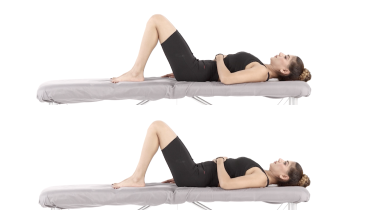 Diaphragmatic breathing
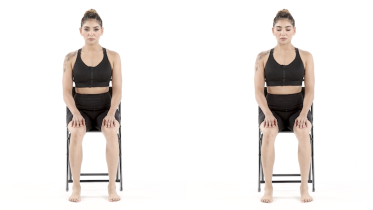 Body scan relaxation
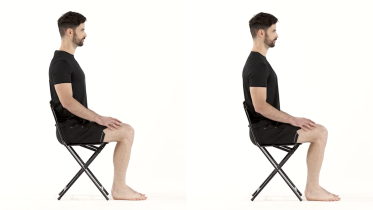 Chin tuck
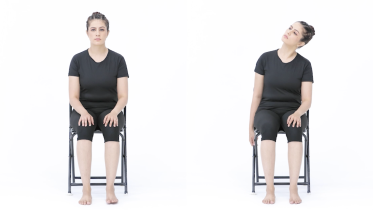 Upper trapezius stretch
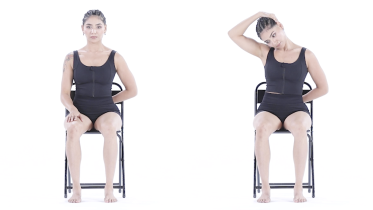 Levator scapulae stretch
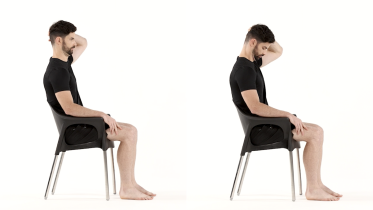 Suboccipital stretch
Stage 2: Build neck control and change position often
Once stage 1 feels easy and familiar, move on to the deep neck flexor exercise, which trains the small muscles at the front of your neck. The standing posture check is a position to come back to a few times a day, not one to hold, because there is no single right posture. The chest opener stretches the front of the chest, the SCM stretch the front of the neck, and the neck and upper back stretch the back of both. Leave out the SCM stretch if tipping your head back while it is turned brings on tingling in your arm. If it makes you dizzy, stop and get medical advice the same day, as in stage 1.
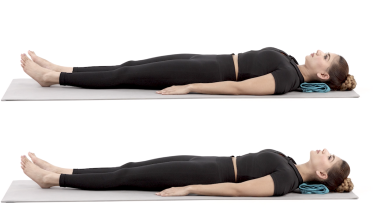 Deep neck flexor exercise
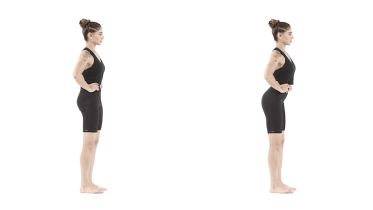 Correct standing posture
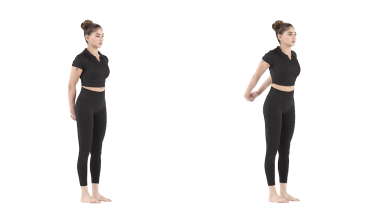 Chest opener stretch
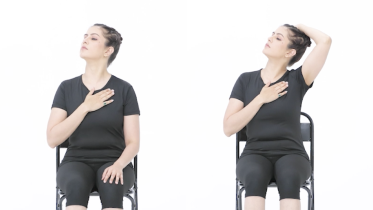 SCM stretch
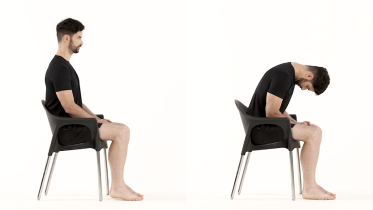 Neck and upper back stretch
Stage 3: Build neck and shoulder strength
Research reviews show some benefit from neck and shoulder strength work for tension-type headache, but the studies are few and the evidence is of very low quality. One trial found it no better than advice on posture and workstation set-up. Start with a light band and slow, controlled movements, and drop to a lighter band or fewer sets if a session leaves your neck sore into the next day. The side bend with band works the muscles at the side of your neck, and the row, pull-apart and wall angels work the muscles around and below your shoulder blades. Keep the breathing and relaxation exercises going on the days you do these.
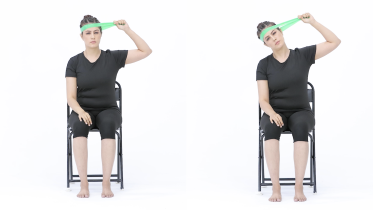 Neck side bend with band
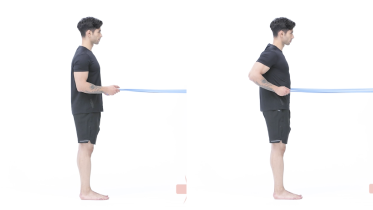 Resistance band row
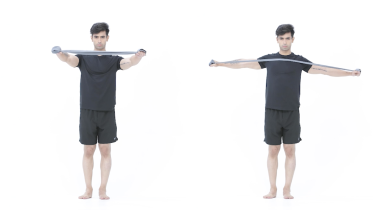 Band pull-apart
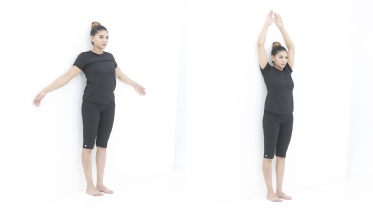 Wall angels
What to avoid or change
Keep an eye on how many days a month you take painkillers, and write them in your headache diary. Cut down on drinks with caffeine. Avoid staying in one position at a desk for hours without a break. If you have high blood pressure, breathe steadily through every repetition and never hold your breath.
This program is written for adults. If a child or teenager has frequent headaches, get them checked by a doctor first. If you are pregnant, check with your midwife or doctor before you take painkillers for headaches or start this program. After neck surgery or a broken bone in the neck, check with your surgeon or physio before you start.
If you have rheumatoid arthritis, or you have been told the spaces around the nerves or spinal cord in your neck are narrowed, check with your physio or doctor before you start. Some of the stretches that tip or turn the head may need to be changed or left out.
When to see a physio or doctor
The NHS advises seeing a GP if you get headaches several times a week, if they are severe, or if painkillers and relaxation do not help. See a doctor, too, if you think you might be having migraines, or if you are taking painkillers for headaches on 10 or more days a month. A physio can check your neck and shoulders, help you tell a tension-type headache from a headache coming from the neck, and set an exercise dose that fits you. The warning signs below need faster help. If neck pain is your main problem, or your headaches started after an accident, the warning signs on the neck pain and whiplash pages apply too.
For physiotherapists
This page gives patients a starting framework, not a full plan. ICHD-3 defines tension-type headache as at least two of bilateral location, pressing or tightening quality, mild or moderate intensity and no aggravation by routine physical activity, with no nausea or vomiting and no more than one of photophobia or phonophobia in the episodic forms. Frequent episodic tension-type headache occurs on 1 to 14 days a month for more than 3 months and chronic on 15 or more days a month for more than 3 months. ICHD-3 subdivides each form by whether pericranial tenderness is present.
Cervicogenic headache (ICHD-3 11.2.1) needs clinical or imaging evidence of a cervical disorder able to cause headache, plus at least two of four lines of evidence of causation: onset in temporal relation to the cervical disorder, improvement in parallel with it, reduced cervical range of motion with headache made significantly worse by provocative maneuvers, or abolition after diagnostic blockade. ICHD-3 notes that headache from cervical myofascial pain should probably be coded as tension-type headache.
NICE CG150 asks clinicians to evaluate and consider investigation or referral for headache with worsening headache and fever, sudden onset reaching maximum intensity within 5 minutes, new neurological deficit, new cognitive dysfunction, personality change, impaired consciousness, head trauma typically within the past 3 months, headache triggered by cough, Valsalva, sneeze or exercise, orthostatic headache, symptoms of giant cell arteritis or acute narrow angle glaucoma, or a substantial change in headache characteristics. For new-onset headache it adds compromised immunity, age under 20 with a history of malignancy, a history of malignancy known to metastasize to the brain, and vomiting without another obvious cause. The SNNOOP10 list (Do 2019) also flags onset after 65, pregnancy or the puerperium, and painkiller overuse or a new drug at onset. Giant cell arteritis classification requires age 50 or over at diagnosis (Ponte 2022), which is why a new headache after 50 is treated with suspicion here.
For medication overuse headache, NICE advises withdrawal of all overused acute medication for at least 1 month, abruptly rather than gradually, with review 4 to 8 weeks after withdrawal starts, and refers to its guideline on medicines associated with dependence or withdrawal symptoms for opioid withdrawal. It advises against referring people with tension-type headache for neuroimaging solely for reassurance, and suggests a headache diary for at least 8 weeks.
On exercise, Varangot-Reille 2022 reported a moderate effect of strength training on pain intensity in tension-type headache compared with non-active treatment (SMD -0.84, 95% CI -1.68 to -0.01) with very low quality evidence and low transparency and replicability. Madsen 2018 found no between-group difference when neck and shoulder strength training was compared with ergonomic and posture correction, so a strength program is best framed as one option within multimodal care (Fernández-de-las-Peñas 2016), not a proven stand-alone treatment. Onan 2025 supports neck and shoulder strengthening and relaxation-based approaches in chronic tension-type headache, from 9 RCTs; the pooled estimate for intensity also included electroacupuncture, and only 3 trials reported frequency.
See a doctor promptly if
- Emergency: any sign of a stroke, even if it goes away. That means a face that droops on one side, an arm you cannot lift or keep up, slurred or muddled speech, weakness or numbness on one side of your body or face, sudden blurred vision, double vision or loss of sight, trouble swallowing, sudden dizziness with unsteadiness or falling over, a sudden severe headache, or a sudden fall where your legs give way but you do not black out (a drop attack). Call emergency services straight away. With neck pain, these can rarely come from a tear in an artery in the neck.
- Emergency: a new headache, or new pain on one side of your face, jaw or neck, with a drooping eyelid or a smaller pupil on the same side, or with a new pulsing or whooshing sound in one ear that keeps time with your heartbeat. Call emergency services or go to an emergency department straight away, and do not drive yourself. This can be a tear in an artery in the neck (cervical artery dissection), which can lead to a stroke.
- Emergency: a sudden, severe headache or neck pain that feels new and unlike anything you have had before. Call emergency services straight away.
- Emergency: a stiff neck with a fever, a severe headache that is getting worse, pain when you look at bright lights, confusion, or a rash that does not fade when you press a glass on it. Call emergency services. These can be signs of meningitis.
- Emergency: a headache with a fit (seizure), drowsiness, confusion, new memory problems, a change in personality or behavior, or new trouble walking or keeping your balance. Call emergency services straight away.
- Emergency: after a knock to the head, being very drowsy or finding it hard to keep your eyes open, confusion, a fit (seizure), new weakness or numbness anywhere in your body, new trouble understanding, speaking, walking or keeping your balance, new problems seeing or hearing, clear fluid coming from your ears or nose, bleeding from your ears or bruising behind them, a black eye when your eye was not hit, a dent in your head or a wound with something stuck in it, or a change in behavior. Call emergency services straight away. These can be signs of an injury to the brain.
- Emergency: after a knock to the head, you were knocked out, even for a moment, you cannot remember what happened just before or after, you have had a headache ever since, or you are being sick (vomiting). The same applies, even if you feel fine, if you take medicine that thins your blood, other than aspirin on its own, have a bleeding or clotting condition, have had brain surgery in the past, or had been drinking alcohol or taking drugs when it happened. Go to an emergency department straight away, and do not drive yourself.
- Emergency: a headache and you have had a head injury in the last 3 months. Go to an emergency department straight away, and do not drive yourself.
- Emergency: a headache with sudden, intense eye pain, a red eye, blurred vision or rainbow-colored rings around lights, often with feeling or being sick. Call emergency services or go to an emergency department straight away, and do not drive yourself. This can be a sudden rise in pressure inside the eye (acute glaucoma).
- Emergency: neck, jaw or arm pain that comes with chest pain, shortness of breath, sweating or feeling sick. Call emergency services.
- New, frequent headaches with pain or tenderness at your temples or on your scalp, or jaw pain when you eat or talk. Get medical advice the same day. These can be signs of inflamed arteries in the head (temporal arteritis, also called giant cell arteritis). If your vision changes, call emergency services.
- A new kind of headache that starts after the age of 50, even without the signs in the line above. Get medical advice the same day. Inflamed arteries in the head (temporal arteritis) mainly affect people aged 50 and over, and need treating quickly to protect your sight.
- You are pregnant or had a baby in the last few weeks and have a severe headache that does not go away with simple painkillers, problems with your vision such as blurring or flashing lights, pain just below your ribs, vomiting, or sudden swelling of your face, hands or feet. Contact your maternity unit straight away, or get urgent medical help if you cannot reach them. These can be signs of pre-eclampsia.
- A headache that keeps getting worse and comes with a fever, or you feel generally unwell, without any of the emergency signs above. Get medical advice the same day. If your temperature is very high, call emergency services.
- A headache that is much worse when you lie down, or much worse when you sit or stand up and eases when you lie flat. Get medical advice the same day.
- Headaches that have started to wake you from sleep, or a headache with being sick (vomiting) that has no other obvious cause. Get medical advice the same day.
- A headache that comes on or gets worse when you cough, sneeze, strain, bend down or exercise. Get medical advice the same day.
- A headache with eye or vision problems, without any of the emergency signs above. Get medical advice the same day.
- A new headache and you have had cancer, now or in the past, or your immune system is weakened, for example by HIV or by medicines that suppress it. Get medical advice the same day and mention it. If you are being treated for cancer now, contact your cancer team the same day.
- Emergency: you have had cancer, now or in the past, and your back or neck pain feels like a tight band around your body, or comes with pain spreading down an arm or leg, weakness, numbness or pins and needles in your arms or legs, trouble walking, or trouble controlling your bladder or bowels. Call your cancer team's emergency number straight away, or go to an emergency department if you do not have one or cannot get through. This can be cancer pressing on the spinal cord (metastatic spinal cord compression), which needs treatment straight away.
- Your usual headaches change: they come more often, feel different, or keep getting worse over days or weeks. See your doctor within a few days. If they are getting worse quickly, get medical advice the same day.
- Dizziness, a spinning feeling or feeling sick that comes on when you turn or tip your head, without any of the emergency signs above. Stop the exercises and get medical advice the same day. If you faint, it does not settle within a few minutes of sitting still, or you cannot stand or walk steadily, call emergency services.
Common questions
What is the difference between a tension headache and a migraine?
A tension-type headache is usually a pressing or tight ache on both sides of the head, mild to moderate, and not made worse by walking about or climbing stairs. A migraine is usually a throbbing headache, often on one side, that can be severe, gets worse when you move around, and comes with feeling sick or being very sensitive to light and sound (NHS, ICHD-3). Some people have both, and a headache diary helps a doctor tell them apart.
How long does a tension headache last?
The NHS says tension headaches last at least 30 minutes and can last much longer. The international headache classification describes episodes lasting from 30 minutes to 7 days (ICHD-3). When headaches like this happen on 15 or more days a month for more than 3 months, doctors call it chronic tension-type headache.
Can taking painkillers too often cause headaches?
Yes. The NHS says taking painkillers for headaches too often or for a long time can cause headaches. NICE advises doctors to watch for this medication overuse headache in people taking paracetamol, aspirin or anti-inflammatory painkillers on 15 or more days a month, or codeine-type painkillers, triptans or combination painkillers on 10 or more days a month, for 3 months or more. If that sounds like you, talk to your doctor before you change anything.
Can neck problems cause headaches?
Yes, but that is a different headache from tension-type headache. A cervicogenic headache is caused by a problem in the neck, usually comes with neck pain, and tends to start alongside the neck problem and ease as it settles (ICHD-3). Moving your neck is often reduced and certain neck movements make the headache worse. A physio or doctor can help sort out which one you have.
Can stress and poor sleep cause tension headaches?
The NHS lists stress, sleep problems and caffeine among the causes of tension headaches. It suggests activities that help you relax, such as exercise, yoga and massage, and changing your sleep habits if sleep problems such as insomnia may be causing your headaches.
Does acupuncture help tension headaches?
For chronic tension-type headache, NICE advises considering a course of up to 10 sessions of acupuncture over 5 to 8 weeks to help prevent headaches. It does not recommend codeine-type painkillers (opioids) for treating a tension-type headache.
Do I need a scan for tension headaches?
Usually not. NICE advises doctors not to send people with tension-type headache for brain scans only for reassurance. A scan or referral is considered when there are warning signs, such as the ones listed on this page.
References
- Headache Classification Committee of the International Headache Society (IHS). The International Classification of Headache Disorders, 3rd edition. Cephalalgia. 2018;38(1):1-211. https://doi.org/10.1177/0333102417738202
- National Institute for Health and Care Excellence (NICE). Headaches in over 12s: diagnosis and management. Clinical guideline CG150. 2012, last updated 2025. https://www.nice.org.uk/guidance/cg150
- Varangot-Reille C, Suso-Martí L, Romero-Palau M, Suárez-Pastor P, Cuenca-Martínez F. Effects of different therapeutic exercise modalities on migraine or tension-type headache: a systematic review and meta-analysis with a replicability analysis. The Journal of Pain. 2022;23(7):1099-1122. https://doi.org/10.1016/j.jpain.2021.12.003
- Onan D, Arıkan H, Ekizoğlu E, Taşdelen B, Özge A, Martelletti P. The efficacy of physiotherapy approaches in chronic tension-type headache: a systematic review and meta-analysis. Journal of Oral and Facial Pain and Headache. 2025;39(1):34-48. https://doi.org/10.22514/jofph.2025.003
- Madsen BK, Søgaard K, Andersen LL, Tornøe B, Jensen RH. Efficacy of strength training on tension-type headache: a randomised controlled study. Cephalalgia. 2018;38(6):1071-1080. https://doi.org/10.1177/0333102417722521
- Fernández-de-las-Peñas C, Cuadrado ML. Physical therapy for headaches. Cephalalgia. 2016;36(12):1134-1142. https://doi.org/10.1177/0333102415596445
- Do TP, Remmers A, Schytz HW, et al. Red and orange flags for secondary headaches in clinical practice: SNNOOP10 list. Neurology. 2019;92(3):134-144. https://doi.org/10.1212/WNL.0000000000006697
- Ponte C, Grayson PC, Robson JC, et al. 2022 American College of Rheumatology/EULAR classification criteria for giant cell arteritis. Arthritis and Rheumatology. 2022;74(12):1881-1889. https://doi.org/10.1002/art.42325
- National Institute for Health and Care Excellence (NICE). Medicines associated with dependence or withdrawal symptoms: safe prescribing and withdrawal management for adults. NICE guideline NG215. 2022. https://www.nice.org.uk/guidance/ng215
- National Institute for Health and Care Excellence (NICE). Head injury: assessment and early management. NICE guideline NG232. 2023. https://www.nice.org.uk/guidance/ng232
- NHS. Tension headaches. https://www.nhs.uk/conditions/tension-headaches/
- NHS. Headaches. https://www.nhs.uk/symptoms/headaches/
- NHS. Migraine. https://www.nhs.uk/conditions/migraine/
- NHS. Temporal arteritis. https://www.nhs.uk/conditions/temporal-arteritis/
- NHS. Meningitis. https://www.nhs.uk/conditions/meningitis/
- NHS. Symptoms of a stroke. https://www.nhs.uk/conditions/stroke/symptoms/
- NHS. Head injury and concussion. https://www.nhs.uk/conditions/head-injury-and-concussion/
- NHS. Glaucoma. https://www.nhs.uk/conditions/glaucoma/
- NHS. Pre-eclampsia. https://www.nhs.uk/conditions/pre-eclampsia/
- NHS. Headaches in pregnancy. https://www.nhs.uk/pregnancy/common-symptoms/headaches/
Written and checked by the PocketPhysio editorial team. Last updated 2026-09-28.
This page is general education, not a diagnosis or a personal treatment plan. See a physiotherapist or doctor for advice about your own situation.