
Whiplash exercises and physiotherapy
What is whiplash?
Whiplash is a neck injury caused by a sudden movement of the head. It usually happens in a car accident, although any sudden jolt of the head can cause it. The NHS lists neck pain and stiffness, trouble moving your head, headaches, and pain and muscle spasms in the shoulders and arms as the usual symptoms. It can take several hours for them to start, so you may feel fine at the scene and sore later that day or the next morning.
In research and guidelines it is called whiplash-associated disorder (WAD). If your pain stays in the neck and did not start with a jolt or an accident, the neck pain program is the better starting point. If the main problem is pain, numbness or tingling running down one arm, see the cervical radiculopathy program and get it checked.
When does your neck need checking or a scan after an accident?
Straight after an accident, the first question is whether a bone in the neck or the spinal cord has been hurt. One checklist emergency doctors use for adults who are alert and stable is the Canadian C-spine rule (Stiell 2001). It is a check for a doctor to do. Do not try it on yourself.
The doctor first looks for features that mean you need an X-ray or scan: being 65 or older, a dangerous type of accident, or tingling in your arms or legs. Dangerous accidents include a fall from more than 91 cm (3 feet) or down five stairs, a blow down through the top of the head such as a diving injury, a crash at over 100 km/h, a rollover or being thrown from a vehicle, an accident on a motorized recreational vehicle, and a cyclist being hit or crashing (Stiell 2010).
If none of those apply, the doctor looks for signs that make it safe to test how your neck moves. These include a simple rear-end crash, sitting up comfortably in the emergency department, having walked at any time since the accident, neck pain that came on later rather than straight away, and no tenderness over the bony middle of the back of the neck. A crash where you were pushed into oncoming traffic, hit by a bus, a large truck or a fast vehicle, or rolled over does not count as simple. If you have one of the low-risk signs, the doctor asks you to turn your head 45 degrees each way, and if you can, you usually do not need an X-ray.
In the study that developed the rule, 151 of 8,924 adults (1.7%) had an important neck injury, and the rule picked up every one of them (Stiell 2001). If you were not checked at the time and you are worried, or any of the warning signs below apply, see a doctor before you start the exercises.
Should you rest your neck or wear a collar?
Neither, for ordinary whiplash. The NHS advises carrying on with your everyday activities: it might hurt a little, but it will speed up your recovery. It also says not to use a neck brace or collar, because it does not help, and not to rest your neck for long periods. It suggests painkillers such as paracetamol or ibuprofen to help with the pain.
The US physical therapy guideline for neck pain says the same for a recent whiplash injury (Blanpied 2017). It recommends getting back to your normal activities from before the accident as soon as you can, starting with the ones that do not stir your neck up. It also recommends posture and movement exercises to ease pain and bring back range, and keeping collar use to a minimum. And it advises reassuring people that recovery is expected within the first 2 to 3 months.
How long does whiplash take to get better?
The NHS says whiplash usually gets better within 2 to 3 months, but some people have symptoms for longer. A review that pooled 38 groups of people followed after whiplash found that much of the recovery happens in the first 3 months (Kamper 2008). After that, recovery levels off. Pain and disability change little from then on.
Longer-term figures vary. A task force review estimated that about half of people with whiplash still report some neck pain a year after the injury (Carroll 2008). People who had more pain, more symptoms or more disability at the start tended to recover more slowly. So did people who felt low, coped passively or were afraid to move. That last one matters, because gentle, regular movement is something you can start straight away.
Do exercises help whiplash?
Exercise is part of the guideline advice, but the evidence on how much it adds is mixed. For a recent injury, the JOSPT guideline recommends posture and movement exercises, and for people who are recovering slowly, exercise combined with hands-on treatment (Blanpied 2017). A review of 15 trials in recent whiplash found that conservative and active treatments may help reduce pain, but all the trials had a high risk of bias and the evidence was rated low or very low quality (Wiangkham 2015).
Two large trials are less encouraging. In a UK trial of 599 people whose symptoms had not settled after a visit to the emergency department, a package of up to 6 physio sessions eased disability a little more than a single advice session at 4 months, but not at 8 or 12 months (Lamb 2013). In an Australian trial of 172 people with whiplash lasting more than 3 months, 20 sessions of physio-led exercise did no better for pain than one advice session with phone support (Michaleff 2014).
For lasting neck pain and whiplash, a review found that combined programs of strengthening, range of motion and flexibility exercise did better than being on a waiting list (Southerst 2016). Most of the effects in that review were small, and more sessions have not been shown to give a better result (Southerst 2016, Michaleff 2014).
How to use this program
Pick the stage that matches how your neck feels today, and start at stage 1 if you are not sure. Move slowly and keep breathing normally. In stage 1, keep every movement inside a pain-free range. From stage 2 on, mild discomfort is fine if it settles soon after you finish and your neck is no worse the next morning. Move up a stage when the current one feels easy and your neck settles well afterward.
Each exercise page gives its own starting dose. As a rough guide, many programs use 5 to 10 slow turns or tilts to each side for the movement exercises, from once a day to a few times a day. The eye movement exercise is often 5 to 10 rounds, a few times a day, and the chin tuck often starts with 8 to 10 holds of 3 to 5 seconds. The deep neck flexor exercise and the isometrics usually start with gentle holds of 5 to 10 seconds, repeated 5 to 10 times, once or twice a day.
The shoulder blade squeezes are often 10 to 15 squeezes with a short hold, and the head lifts in stage 3 usually start at 5 to 10 lifts. The band exercises are often done as 2 to 3 sets of 8 to 15, once a day or every other day, with the bent-over row 2 to 3 times a week. The prone scapular retraction is often 2 to 3 sets of 10 to 15. Your physio will adjust this.
Some aching in the neck and shoulders is common after whiplash, and a little more after exercise is usually fine if it follows the rule above. Pain, numbness or tingling spreading into your arm or hand is different: stop and tell your physio. Dizziness, feeling sick or a change in your vision means stopping and getting medical advice the same day. Check the warning signs below as well. In the first days after the accident, new numbness, tingling or weakness in your arms or legs needs emergency help. Keep walking and doing your normal activities alongside the exercises.
The exercise program
Stage 1: Get your neck moving gently
For the first days to weeks after the injury, once your neck has been checked if it needed to be. The first three exercises are done lying down, so your neck does not have to hold up the weight of your head, and the chin tuck, neck rotation and side-lying shoulder blade squeeze add easy movement from there. Keep every movement slow and pain free, and turn or tilt only as far as feels easy. Moving your eyes can make some people dizzy after a knock to the head, so if the eye movement exercise does that, stop it and get medical advice the same day. Keep up your everyday activities alongside these.
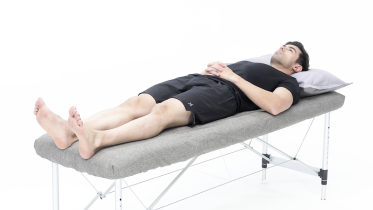 Neck activation with eye movements
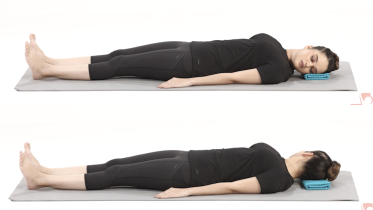 Lying neck rotation
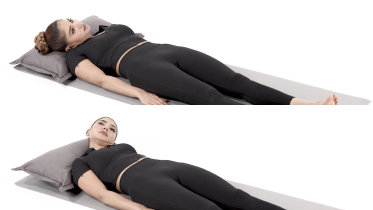 Lying neck side bend
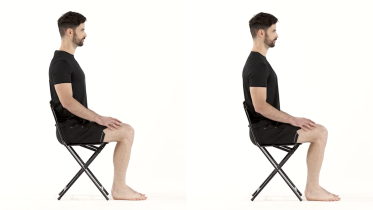 Chin tuck
 Neck rotation
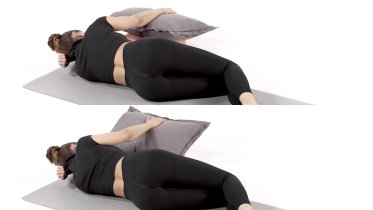 Side-lying shoulder blade squeeze
Stage 2: Build control
When turning your head is easier and everyday tasks feel less sore, which takes a few days for some people and a few weeks for others. The deep neck flexor exercise trains the small muscles at the front of your neck, and the two isometric exercises work the neck muscles without moving your neck. Neck rotation on elbows asks your neck to hold the weight of your head as it turns. The scapular squeeze and the band row start the strength work for the muscles around your shoulder blades. From this stage, mild discomfort is fine if it settles soon after you finish and your neck is no worse the next morning.
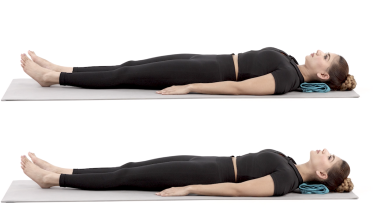 Deep neck flexor exercise
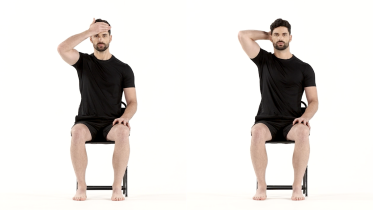 Neck isometric exercises
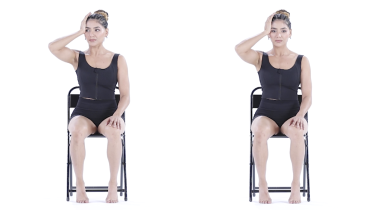 Isometric neck rotation
 Neck rotation on elbows
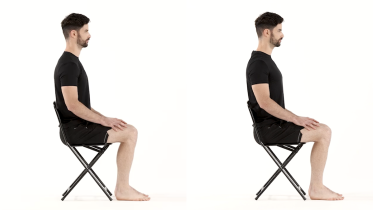 Scapular squeeze
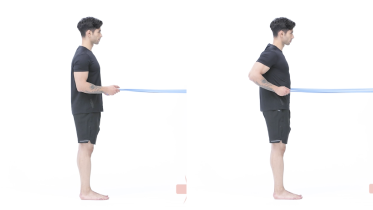 Resistance band row
Stage 3: Build strength and endurance
For getting back to driving, work, lifting and sport, or when pain is lingering past the first few weeks. These make the muscles at the front and back of your neck, and between your shoulder blades, work harder and for longer. Keep the band row from stage 2 going. The bent-over band row adds a forward lean, so stay with the upright band row if leaning forward bothers your back. If your neck flares up and is not settled by the next morning, drop back a stage for a few days.
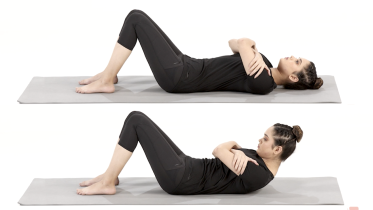 Chin tuck head lift
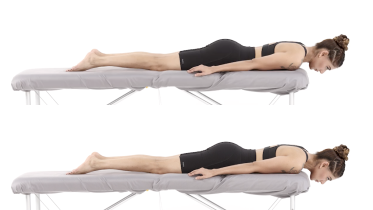 Prone chin tuck
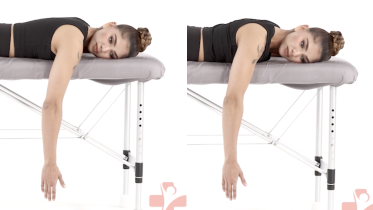 Prone scapular retraction
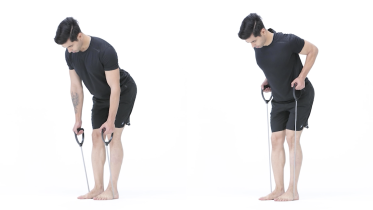 Bent-over band row
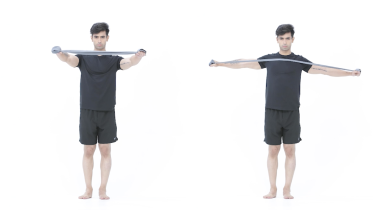 Band pull-apart
What to avoid or change
Skip the collar and avoid long spells of resting your neck. Do not drive until you can turn your head to check over your shoulder and react quickly.
This program is for whiplash after the neck has been checked where needed. It is not for a broken bone in the neck, and it is not for rehab after neck surgery: follow your surgeon's program. If you have rheumatoid arthritis, or you have been told the spaces around the nerves or spinal cord in your neck are narrowed, check with your physio or doctor before you start.
If you are pregnant and have been in an accident, contact your midwife or maternity unit straight away, even if it was minor and you feel fine, and check with them or your physio before starting. The program is written for adults, so if a child or teenager has neck pain after an accident, get them checked by a doctor first.
When to see a physio or doctor
The NHS advises seeing a GP if your whiplash has not improved after 1 week, if paracetamol or ibuprofen have not worked, or if you are worried about the pain. It says a GP may offer check-ups every few weeks while you recover, and if your symptoms are not getting better, a referral to a physiotherapist, a pain specialist or for psychological support. See a physio or doctor, too, if the pain stops you sleeping or working, or if you are avoiding normal activities because you are afraid of hurting your neck. The warning signs below need faster help.
For physiotherapists
This page gives patients a starting framework, not a full plan. The 2017 JOSPT guideline classes whiplash-associated disorder as neck pain with movement coordination impairments (Blanpied 2017). For the acute stage it recommends postural and mobility exercise, minimal collar use, education on returning to normal, non-provocative pre-accident activities as soon as possible, and reassurance that recovery is expected within the first 2 to 3 months. It recommends manual mobilization plus multimodal exercise for patients expected to have a moderate to slow recovery. For patients at low risk of chronicity it gives two options: a single session of early advice plus exercise instruction and education, or a full exercise program with strength or endurance work.
The same guideline asks clinicians to monitor recovery, so patients with delayed recovery can be identified early for more intensive rehabilitation and an early pain education program. For chronic WAD it lists education focused on assurance, encouragement, prognosis and pain management, and mobilization combined with an individualized, progressive submaximal exercise program using cognitive behavioral principles. Set this against the trials. MINT found only a modest short-term benefit of a physio package over one advice session (Lamb 2013), and PROMISE found no difference between 20 exercise sessions and advice in chronic WAD (Michaleff 2014). Wiangkham 2015 found no significant difference between starting treatment early (under 4 days) and late (over 10 days).
In the Stiell 2001 derivation study, the Canadian C-spine rule had 100% sensitivity (95% CI 98% to 100%) and 42.5% specificity for clinically important injury in alert, stable adults after blunt trauma. Stiell 2010 lists the full definitions of dangerous mechanism and simple rear-end collision.
NICE NG232 uses the same high-risk factors (age 65 or over, dangerous mechanism, paraesthesia in the upper or lower limbs), plus focal peripheral neurological deficit, for CT of the cervical spine within 1 hour after head injury, including in people who present late. NICE NG41 applies the Canadian C-spine rule to suspected spinal injury without a head injury. NG232 refers people to an emergency department after any loss of consciousness, amnesia, persistent headache, vomiting, anticoagulant or antiplatelet treatment other than aspirin alone, a bleeding or clotting disorder, previous brain surgery, or drug or alcohol intoxication. The head injury warning signs on this page follow it.
Carroll 2008 links greater initial pain, more symptoms, greater initial disability, passive coping, depressed mood and fear of movement to slower recovery, so they are worth asking about early. Lamb 2013 measured outcome with the Neck Disability Index, which also works for tracking change in clinic.
Screen for spinal cord involvement after any neck injury, and keep degenerative cervical myelopathy in mind (Davies 2018): ask about hand dexterity, gait, balance, bilateral symptoms and bladder or bowel change, and refer promptly if you suspect it. The Finucane 2020 red flags framework notes that high-quality evidence for the diagnostic accuracy of most red flags is lacking, so use them as prompts for clinical reasoning rather than a checklist.
See a doctor promptly if
- Emergency: any sign of a stroke, even if it goes away. That means a face that droops on one side, an arm you cannot lift or keep up, slurred or muddled speech, weakness or numbness on one side of your body or face, sudden blurred vision, double vision or loss of sight, trouble swallowing, sudden dizziness with unsteadiness or falling over, a sudden severe headache, or a sudden fall where your legs give way but you do not black out (a drop attack). Call emergency services straight away. With neck pain, these can rarely come from a tear in an artery in the neck.
- Emergency: a new headache, or new pain on one side of your face, jaw or neck, with a drooping eyelid or a smaller pupil on the same side, or with a new pulsing or whooshing sound in one ear that keeps time with your heartbeat. Call emergency services or go to an emergency department straight away, and do not drive yourself. This can be a tear in an artery in the neck (cervical artery dissection), which can lead to a stroke.
- Emergency: a sudden, severe headache or neck pain that feels new and unlike anything you have had before. Call emergency services straight away.
- Emergency: neck pain straight after a high-energy accident, such as a crash at high speed, a car that rolled over, being thrown from a vehicle, being hit by a vehicle while walking or cycling, a motorbike or quad bike accident, a horse riding accident, a diving injury, or a fall from a height or down several stairs. Keep still and call emergency services. If the neck pain only starts later and nobody has checked your neck since, go to an emergency department straight away, and do not drive yourself.
- Emergency: in the first days after the accident, numbness, tingling, pins and needles or weakness in your arms or legs, or a sudden electric shock feeling in your neck and back that runs into your arms or legs. If it starts straight after the accident, keep still and call emergency services. If it starts later, call emergency services or go to an emergency department straight away, and do not drive yourself.
- Emergency: after a knock to the head, being very drowsy or finding it hard to keep your eyes open, confusion, a fit (seizure), new weakness or numbness anywhere in your body, new trouble understanding, speaking, walking or keeping your balance, new problems seeing or hearing, clear fluid coming from your ears or nose, bleeding from your ears or bruising behind them, a black eye when your eye was not hit, a dent in your head or a wound with something stuck in it, or a change in behavior. Call emergency services straight away. These can be signs of an injury to the brain.
- Emergency: after a knock to the head, you were knocked out, even for a moment, you cannot remember what happened just before or after, you have had a headache ever since, or you are being sick (vomiting). The same applies, even if you feel fine, if you take medicine that thins your blood, other than aspirin on its own, have a bleeding or clotting condition, have had brain surgery in the past, or had been drinking alcohol or taking drugs when it happened. Go to an emergency department straight away, and do not drive yourself.
- Emergency: a stiff neck with a fever, a severe headache that is getting worse, pain when you look at bright lights, confusion, or a rash that does not fade when you press a glass on it. Call emergency services. These can be signs of meningitis.
- Emergency: neck, jaw or arm pain that comes with chest pain, shortness of breath, sweating or feeling sick. Call emergency services.
- Emergency: new problems walking, for example your legs feel stiff, heavy or weak or you have become unsteady on your feet, new trouble controlling your bladder or bowels, or hands that suddenly become clumsy, for example you can no longer do up buttons. Call emergency services straight away. These can be signs of pressure on the spinal cord in the neck.
- Hands that have slowly become clumsy, for example trouble doing up buttons or dropping things, or numbness in both hands. Get medical advice the same day. These can be signs of pressure on the spinal cord in the neck (cervical myelopathy). If the clumsiness or numbness gets worse quickly, call emergency services straight away.
- Pain or tingling in both arms at the same time, rather than in one. Get medical advice the same day. This can also be a sign of pressure on the spinal cord in the neck.
- An arm or hand that is getting weaker. Get medical advice the same day.
- Pins and needles in an arm together with neck or arm pain, or an arm that feels heavy or weak, and nobody has checked it yet. Get medical advice the same day.
- Severe pain that paracetamol or ibuprofen do not ease, or trouble sitting upright, without any of the emergency signs above. Get medical advice the same day.
- Nobody has checked your neck since the accident, and your neck pain is severe, you cannot turn your head halfway toward each shoulder, or the bony middle of the back of your neck is sore when pressed. Get checked by a doctor the same day, before you start these exercises.
- Emergency: new neck or back pain after a fall, a knock or a jolt, even a minor one such as a trip or a sudden stop in a car, if you have a condition that stiffens the spine, such as ankylosing spondylitis. Call emergency services or go to an emergency department straight away, do not drive yourself, and tell the staff about your spine condition, so they keep your neck and back in their usual position. A stiff spine can break after a small injury, and the break is easy to miss at first. If the pain started straight after the injury, or you also have numbness, tingling or weakness in your arms or legs, keep still and call emergency services.
- Neck pain after a car accident or a fall, even a minor one, if you are 65 or older, have low bone density (osteoporosis) or have taken steroid tablets for a long time. Get your neck checked by a doctor the same day, for example at an emergency department, before you start these exercises. At 65 or older, doctors usually want an X-ray or scan of the neck after an accident.
- Dizziness, a spinning feeling or feeling sick that comes on when you turn or tip your head, without any of the emergency signs above. Stop the exercises and get medical advice the same day. If you faint, it does not settle within a few minutes of sitting still, or you cannot stand or walk steadily, call emergency services.
- Feeling dizzy after a knock to the head, without any of the emergency signs above. Get medical advice the same day.
- Neck pain with a fever or chills, or you feel generally unwell. Get medical advice the same day, and go to an emergency department if you feel very unwell.
- New neck pain and you have had cancer, now or in the past, or you have lost weight without trying. Get medical advice the same day and mention it. If you are being treated for cancer now, contact your cancer team the same day.
- Emergency: you have had cancer, now or in the past, and your back or neck pain feels like a tight band around your body, or comes with pain spreading down an arm or leg, weakness, numbness or pins and needles in your arms or legs, trouble walking, or trouble controlling your bladder or bowels. Call your cancer team's emergency number straight away, or go to an emergency department if you do not have one or cannot get through. This can be cancer pressing on the spinal cord (metastatic spinal cord compression), which needs treatment straight away.
- Pain that is there all the time and does not ease with rest or changing position, or pain at night that keeps getting worse. See your doctor within a few days. If you have had cancer, now or in the past, or you have lost weight without trying, get medical advice the same day. If you are being treated for cancer now, contact your cancer team the same day.
- You have rheumatoid arthritis and get new neck pain, or a new headache at the back of your head that keeps coming back. If it comes with tingling or numbness in your hands or arms, get medical advice the same day. If you also feel unsteady on your feet or your legs feel stiff, heavy or weak, call emergency services straight away. Without any of those, tell your doctor or rheumatology team within a few days, and leave out any neck exercises until you have been checked.
Common questions
How long does whiplash last?
The NHS says whiplash usually gets better within 2 to 3 months, although some people have symptoms for longer. A review of 38 groups of people followed after whiplash found that much of the recovery happens in the first 3 months, and that pain and disability improve little after that (Kamper 2008). A task force review estimated that about half of people with whiplash still report some neck pain a year after the injury (Carroll 2008). That is why it is worth getting help if your neck is not clearly improving in the first few weeks.
Should I wear a neck brace or collar for whiplash?
No, not for ordinary whiplash. The NHS advises against a neck brace or collar because it does not help, and the US physical therapy guideline for neck pain advises keeping collar use to a minimum (Blanpied 2017). The exception is when a doctor suspects a more serious injury, such as a broken bone in the neck. Then follow the hospital's advice.
Do I need an X-ray after whiplash?
Often not. Emergency doctors can use a checklist called the Canadian C-spine rule to decide whether an alert, stable adult needs an X-ray or scan after a neck injury (Stiell 2001). Being 65 or older, a dangerous type of accident, or tingling in the arms or legs points toward a scan. This is a check for a doctor to do, not a test to try on yourself.
Can whiplash symptoms appear later?
Yes. The NHS says it can take several hours for symptoms to start after you injure your neck, so you may feel fine at the scene and stiff and sore that evening or the next morning. Neck pain that comes on later, rather than straight away, is one of the features doctors treat as lower risk when they decide whether you need an X-ray (Stiell 2001). New tingling, weakness or problems walking are different: see the warning signs on this page.
Can whiplash cause headaches?
Yes. The NHS lists headaches among the symptoms of whiplash, along with neck pain and stiffness, trouble moving your head, and pain and muscle spasms in the shoulders and arms. After a knock to the head, a headache that has not gone away since, or one that comes with vomiting, confusion or drowsiness, needs emergency help. So does a sudden, severe headache unlike anything you have had before.
When can I drive after whiplash?
When you can turn your head to check over your shoulder and react quickly, for example to brake hard, without pain holding you back. If you have any of the warning signs on this page, the NHS advises not driving or cycling until you have spoken to a doctor. Your physio can check your neck movement with you if you are unsure.
References
- NHS. Whiplash. https://www.nhs.uk/conditions/whiplash/
- Blanpied PR, Gross AR, Elliott JM, et al. Neck pain: revision 2017. Clinical practice guidelines linked to the International Classification of Functioning, Disability and Health from the Orthopaedic Section of the American Physical Therapy Association. Journal of Orthopaedic and Sports Physical Therapy. 2017;47(7):A1-A83. https://doi.org/10.2519/jospt.2017.0302
- Stiell IG, Wells GA, Vandemheen KL, et al. The Canadian C-spine rule for radiography in alert and stable trauma patients. JAMA. 2001;286(15):1841-1848. https://doi.org/10.1001/jama.286.15.1841
- Stiell IG, Clement CM, O'Connor A, et al. Multicentre prospective validation of use of the Canadian C-Spine Rule by triage nurses in the emergency department. CMAJ. 2010;182(11):1173-1179. https://doi.org/10.1503/cmaj.091430
- Kamper SJ, Rebbeck TJ, Maher CG, McAuley JH, Sterling M. Course and prognostic factors of whiplash: a systematic review and meta-analysis. Pain. 2008;138(3):617-629. https://doi.org/10.1016/j.pain.2008.02.019
- Carroll LJ, Holm LW, Hogg-Johnson S, et al. Course and prognostic factors for neck pain in whiplash-associated disorders (WAD): results of the Bone and Joint Decade 2000-2010 Task Force on Neck Pain and Its Associated Disorders. Spine. 2008;33(4 Suppl):S83-S92. https://doi.org/10.1097/BRS.0b013e3181643eb8
- Wiangkham T, Duda J, Haque S, Madi M, Rushton A. The effectiveness of conservative management for acute whiplash associated disorder (WAD) II: a systematic review and meta-analysis of randomised controlled trials. PLoS One. 2015;10(7):e0133415. https://doi.org/10.1371/journal.pone.0133415
- Lamb SE, Gates S, Williams MA, et al. Emergency department treatments and physiotherapy for acute whiplash: a pragmatic, two-step, randomised controlled trial. The Lancet. 2013;381(9866):546-556. https://doi.org/10.1016/S0140-6736(12)61304-X
- Michaleff ZA, Maher CG, Lin CW, et al. Comprehensive physiotherapy exercise programme or advice for chronic whiplash (PROMISE): a pragmatic randomised controlled trial. The Lancet. 2014;384(9938):133-141. https://doi.org/10.1016/S0140-6736(14)60457-8
- Southerst D, Nordin MC, Côté P, et al. Is exercise effective for the management of neck pain and associated disorders or whiplash-associated disorders? A systematic review by the Ontario Protocol for Traffic Injury Management (OPTIMa) Collaboration. The Spine Journal. 2016;16(12):1503-1523. https://doi.org/10.1016/j.spinee.2014.02.014
- Davies BM, Mowforth OD, Smith EK, Kotter MR. Degenerative cervical myelopathy. BMJ. 2018;360:k186. https://doi.org/10.1136/bmj.k186
- Finucane LM, Downie A, Mercer C, et al. International framework for red flags for potential serious spinal pathologies. Journal of Orthopaedic and Sports Physical Therapy. 2020;50(7):350-372. https://doi.org/10.2519/jospt.2020.9971
- NHS. Neck pain. https://www.nhs.uk/symptoms/neck-pain-and-stiff-neck/
- NHS. Head injury and concussion. https://www.nhs.uk/conditions/head-injury-and-concussion/
- National Institute for Health and Care Excellence (NICE). Head injury: assessment and early management. NICE guideline NG232. 2023. https://www.nice.org.uk/guidance/ng232
- National Institute for Health and Care Excellence (NICE). Spinal injury: assessment and initial management. NICE guideline NG41. 2016. https://www.nice.org.uk/guidance/ng41
- NHS. Symptoms of a stroke. https://www.nhs.uk/conditions/stroke/symptoms/
- NHS. Meningitis. https://www.nhs.uk/conditions/meningitis/
Written and checked by the PocketPhysio editorial team. Last updated 2026-09-28.
This page is general education, not a diagnosis or a personal treatment plan. See a physiotherapist or doctor for advice about your own situation.