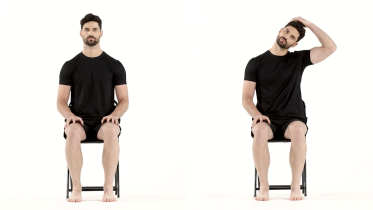
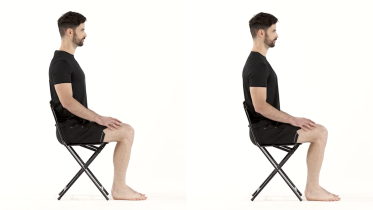
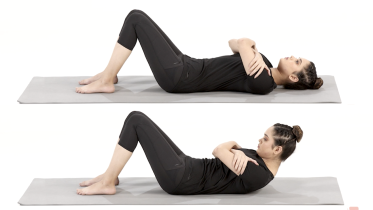
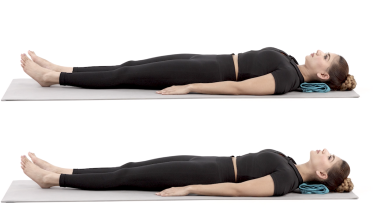
Neck rotation
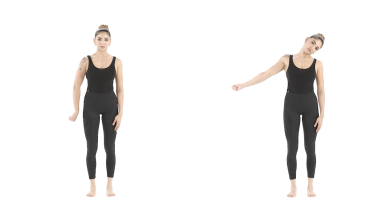
Neck rotation is a simple mobility exercise: you slowly turn your head to look one way, then the other (cervical rotation). The video shows it standing tall with the feet together. It is a common way to keep a stiff neck moving.
How to do the neck rotation
- Stand tall with your feet together and your arms relaxed by your sides.
- Look straight ahead with your chin level and your shoulders loose.
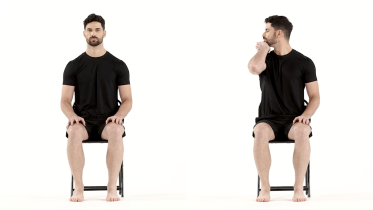
- Slowly turn your head to one side, as if looking over your shoulder. Go only as far as feels comfortable.
- Come back through the middle and turn to the other side.
- Keep your shoulders and body facing forward the whole time. Only your head turns.
What you should feel
Easy movement in the neck, and perhaps a mild stretch at the end of each turn, but no pain.
Common mistakes
- Tipping the chin up or down as you turn. Keep it level.
- Twisting the shoulders or upper body to see further round.
- Going fast or forcing the end of the turn.
How often
A common dose is 5 to 10 slow turns to each side, a few times a day. It also works as a short break after a long spell at a screen. Your physio can change the numbers to suit your neck.
Stop and check with your physio if
- You feel dizzy, faint or unsteady. Stop and get medical advice the same day. If you faint, it does not settle within a few minutes of sitting still, or you cannot stand or walk steadily, call emergency services.
- Things look double, your vision suddenly blurs or goes, your speech slurs or becomes muddled, swallowing becomes hard, your face or lips go numb, one side of your face droops or one side of your body goes weak or numb, you suddenly become so dizzy or unsteady that you fall or cannot stand or walk, your legs suddenly give way but you do not black out (a drop attack), or you get a sudden severe headache. Stop and call emergency services, even if it goes away.
- Your arm or hand goes numb, tingles or starts to hurt.
- Something catches in the neck, or you get a sharp pain, partway through the turn.
From the clinic
Copy the video. The turn is small and gentle. Many people find the range opens up a little over the first few repetitions. There is no need to chase it.
Feet together makes your balance work a bit harder than usual. If that feels unsteady, stand with your feet slightly apart, or do the same turns sitting in a chair. After neck surgery or a broken bone in the neck, check with your surgeon or physio before you start.
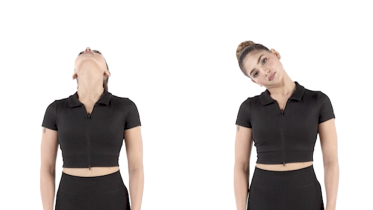
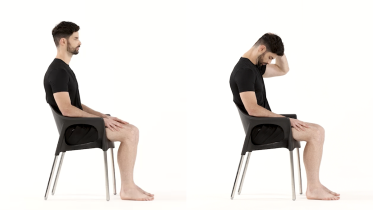
The neck side bend and neck flexion and extension take the neck through its other directions at the same easy pace.
Reviewed by the PocketPhysio by VirtueLife expert physiotherapy team. Last reviewed 2026-09-25.
This page is general education, not a diagnosis or a personal treatment plan. If you have pain, an injury or a health condition, see a physiotherapist or doctor before starting new exercises.