Radial nerve glide
The radial nerve glide is a slow, gentle movement that slides the radial nerve, which runs down the back of the arm to the thumb side of the back of the hand. You stand with a fist, a bent wrist and the arm turned inward, then pair a head tilt with a small turn of the arm so the nerve moves without being pulled tight at both ends. Physios sometimes give it when arm symptoms, such as pain along the outside of the forearm, look like they involve this nerve.
How to do the radial nerve glide
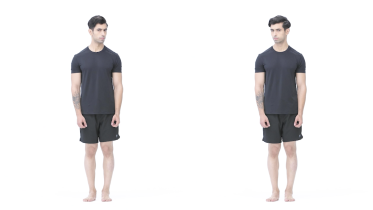
- Stand tall with the arm you are working hanging relaxed by your side. Make a soft fist and bend the wrist so the fist curls in toward the inside of your forearm.
- Keep the fist and the bent wrist, and turn the whole arm inward so your palm ends up facing behind you. The elbow stays straight.
- Slowly move the arm out to the side, keeping the shoulder down, until you feel a light pull along the arm. Stop there and do not push farther. In the video the arm stays well below shoulder height.
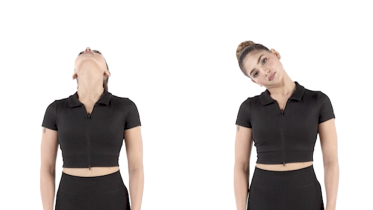
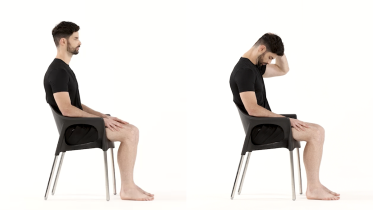
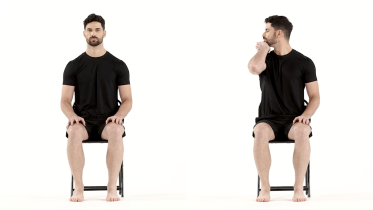
- From here, let your head tip sideways away from the working arm, and at the same moment turn the arm a little outward.
- As your head comes back to the middle, turn the arm inward again. Keep moving between the two in one smooth, slow rhythm. When the set is done, bring the arm back down by your side.
What you should feel
A light pull along the back or outside of the forearm, or over the back of the wrist, is fine. Aim for no tingling. If a faint tingle shows up over the back of the hand or thumb, make the glide smaller; it should be gone within a few seconds. If it builds or lingers, stop.
Common mistakes
- Tipping the head away while the arm is still turned fully inward. Both ends of the nerve get stretched together, and the point is to let one end relax while the other moves.
- Raising the arm higher to feel more of a pull. Keep the whole movement in the easy part of the range.
- Hunching the shoulder up toward the ear, or letting the elbow bend.
- Rushing, or bouncing at the far point.
How often
A typical range is 5 to 10 unhurried glides per session, done 1 to 3 times a day, beginning at the lower end. Your physio will adjust this.
Stop and check with your physio if
- Tingling, numbness or pain that builds with each glide or lasts more than a few seconds after you stop.
- You feel dizzy, faint or unsteady. Stop and get medical advice the same day. If you faint, it does not settle within a few minutes of sitting still, or you cannot stand or walk steadily, call emergency services.
- Pain spreading from the neck down the arm, or new weakness in the hand or wrist.
- Hand or arm symptoms that are clearly worse later that day or the next morning.
- Things look double, your vision suddenly blurs or goes, your speech slurs or becomes muddled, swallowing becomes hard, your face or lips go numb, one side of your face droops or one side of your body goes weak or numb, you suddenly become so dizzy or unsteady that you fall or cannot stand or walk, your legs suddenly give way but you do not black out (a drop attack), or you get a sudden severe headache. Stop and call emergency services, even if it goes away.
From the clinic
The whole glide should feel easy. If just getting into the start position brings on a tingle, don't take the arm so far out to the side, or leave out the head tilt and move only the arm. If the head tilt makes you dizzy, stop, sit down and get medical advice the same day before you try it again. How big the glide should be depends on how irritable the nerve is, and your physio can set that for you.
If you suddenly find it hard to lift your wrist or straighten your fingers (wrist drop), get medical advice the same day. See a doctor soon if numbness on the back of your hand is there all the time. After surgery on the arm, elbow or neck, or a recent fracture, get the go-ahead from your surgeon or physio before you start nerve glides. The median nerve glide works the same way for the nerve that runs to the palm side of the hand.
Written and checked by the PocketPhysio editorial team. Last updated 2026-09-26.
This page is general education, not a diagnosis or a personal treatment plan. If you have pain, an injury or a health condition, see a physiotherapist or doctor before starting new exercises.