Isometric neck rotation
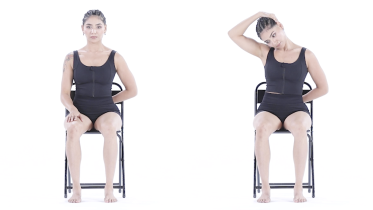
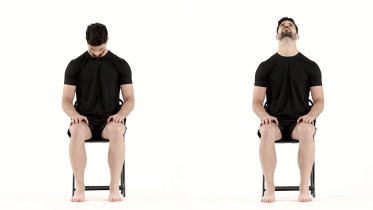
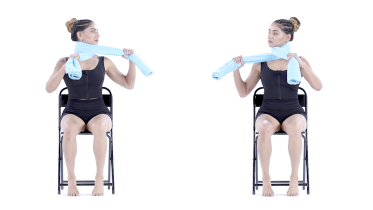
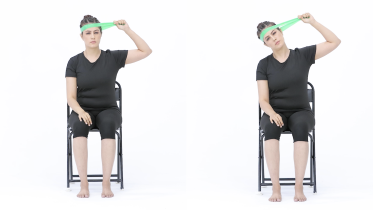
Isometric neck rotation is a seated exercise where you try to turn your head against your own hand, and your hand stops it from moving. The muscles that turn the neck work without the neck changing position (isometric exercise). Physios often use it early on, while turning the head all the way is still sore.
How to do the isometric neck rotation
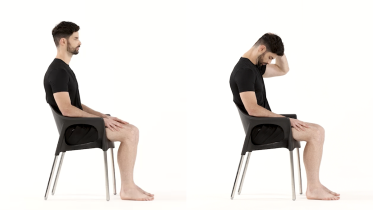
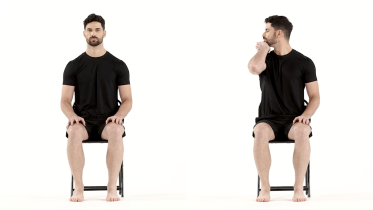
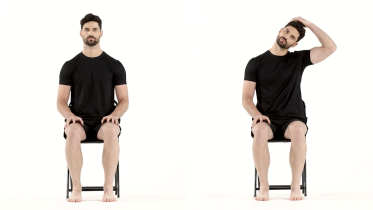
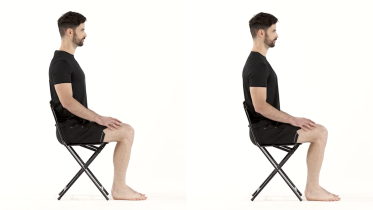
- Sit upright in a firm chair, both feet on the floor, shoulders loose and eyes looking forward.
- Place your right palm flat on the right side of your head, at the temple just in front of your ear.
- Try to turn your head to the right, into your hand. Your hand meets the push with equal force, so your head stays still. Let the effort build slowly rather than all at once.
- Keep the press going for a few seconds, breathing steadily, then ease off slowly and relax.
- Repeat on the other side with your left hand on the left side of your head, trying to turn to the left. The video shows the right side.
What you should feel
The neck muscles switch on but your head stays exactly where it is. Keep the effort steady and moderate. No pain.
Common mistakes
- Letting your head turn or tilt. Any movement means the hand is pushing harder or softer than the neck.
- Starting with a big push. Begin gently and increase only once it feels easy.
- Hunching the shoulder on the side of the pressing hand.
- Holding your breath while you press.
How often
Many programs use 5 to 10 holds of 5 to 10 seconds to each side, with a gentle to moderate effort, once or twice a day. Your physio will adjust this.
Stop and check with your physio if
- Pressing gives sharp neck pain, or sends pain, numbness or tingling into your arm or hand.
- You feel dizzy, faint or unsteady. Stop and get medical advice the same day. If you faint, it does not settle within a few minutes of sitting still, or you cannot stand or walk steadily, call emergency services.
- Things look double, your vision suddenly blurs or goes, your speech slurs or becomes muddled, swallowing becomes hard, your face or lips go numb, one side of your face droops or one side of your body goes weak or numb, you suddenly become so dizzy or unsteady that you fall or cannot stand or walk, your legs suddenly give way but you do not black out (a drop attack), or you get a sudden severe headache. Stop and call emergency services, even if it goes away.
From the clinic
Think of it as leaning your head into your hand rather than fighting it. Sit facing a mirror and you will spot small turns you can't feel. If one side is more sore than the other, keep the effort lower on that side and tell your physio. Breathe steadily through every press, all the more if you have high blood pressure.
This works the turning muscles only. The neck isometric exercises page covers pressing forward, back and to each side, and many programs combine the two. Once your neck turns more freely, neck rotation adds the movement back in. If your neck was injured recently or you have had neck surgery, check with your doctor or physio before starting.
Written and checked by the PocketPhysio editorial team. Last updated 2026-09-26.
This page is general education, not a diagnosis or a personal treatment plan. If you have pain, an injury or a health condition, see a physiotherapist or doctor before starting new exercises.