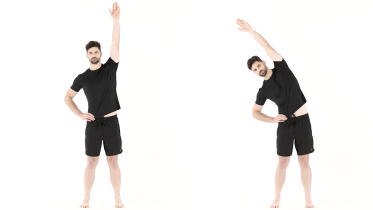
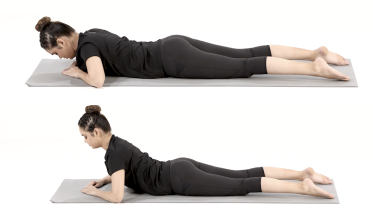
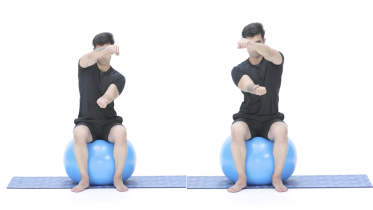
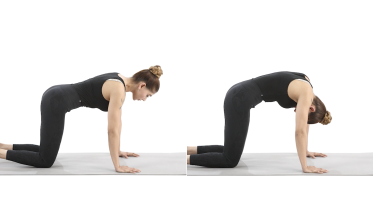
Correct standing posture
Correct standing posture, as taught in this video, is a relaxed and balanced way to stand: knees straight but soft, pelvis halfway between tipping forward and back, shoulder blades resting back and down, and your head stacked over your spine. It is a position you check in with a few times a day, not a pose to hold. There is no single right posture, and it helps to change position often rather than hold any one stance.
How to do the correct standing posture
- Stand with your feet roughly hip width apart and your weight spread evenly between them. Straighten your knees without pushing them back until they lock.
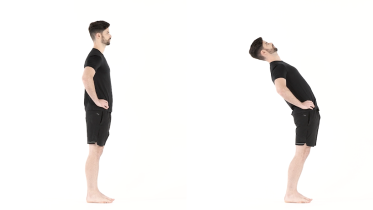
- Put your hands on your hips if that helps. Tip your pelvis forward, as if pouring water out of the front of a bucket, then backward, as if pouring it out of the back. Keep both movements small and easy.
- Settle at the point halfway between the two, where your lower back feels neither arched nor flattened.
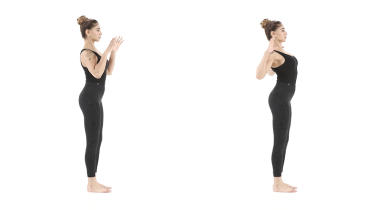
- Circle your shoulder blades forward, up, back and down, then let them rest in that back and down position without squeezing.
- Let your arms hang relaxed at your sides. Draw your chin gently back so your head sits over your shoulders rather than in front of them. Keep your eyes level and breathe normally.
What you should feel
Balanced and close to effortless, with your weight over the middle of your feet. You should be able to breathe and talk easily. If you feel braced or stiff, you have probably gone too far, so soften everything by about half.
Common mistakes
- Pressing the knees back until they lock.
- Tipping the pelvis all the way forward or all the way back instead of settling in the middle.
- Squeezing the shoulder blades together hard or pushing the chest up like a soldier on parade.
- Pulling the chin in so far that your eyes drop toward the floor.
- Trying to hold the position stiffly all day.
How often
Check in with this position a few times a day, for example while you wait for the kettle, brush your teeth or stand in a queue. Take a few easy breaths there, then go back to moving normally. Your physio will adjust this.
Stop and check with your physio if
- Tingling, numbness or pain that travels down an arm or a leg.
- Adjusting how you stand brings on sharp pain in your back or neck, or makes existing pain steadily worse.
- You feel dizzy, faint or unsteady. Stop and get medical advice the same day. If you faint, it does not settle within a few minutes of sitting still, or you cannot stand or walk steadily, call emergency services.
- Things look double, your vision suddenly blurs or goes, your speech slurs or becomes muddled, swallowing becomes hard, your face or lips go numb, one side of your face droops or one side of your body goes weak or numb, you suddenly become so dizzy or unsteady that you fall or cannot stand or walk, your legs suddenly give way but you do not black out (a drop attack), or you get a sudden severe headache. Stop and call emergency services, even if it goes away.
From the clinic
People stand comfortably in many different ways, and there is no single right posture. Your build and the work you do shape how you stand, and so can an old injury, so a stance that looks different from the one in the video is not a problem in itself. What many people do notice is stiffness after standing still in one position for a long time. Treat this as a place to come back to now and then, in between shifting your weight and walking about.
Practicing side on to a mirror lets you see your pelvis and head move. A similar check works in a chair, and correct sitting posture walks through it. The chin movement is taught on its own in the chin tuck, and if tipping the pelvis feels awkward on your feet, the seated pelvic tilt is an easier way to learn it first.
Written and checked by the PocketPhysio editorial team. Last updated 2026-09-26.
This page is general education, not a diagnosis or a personal treatment plan. If you have pain, an injury or a health condition, see a physiotherapist or doctor before starting new exercises.