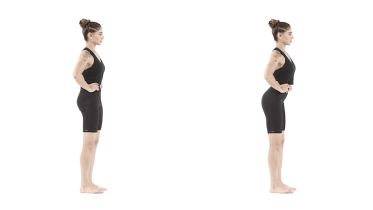
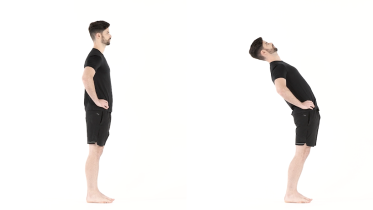
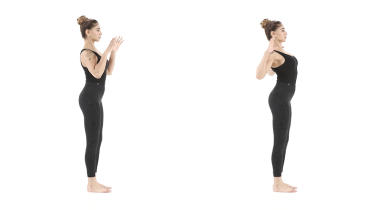
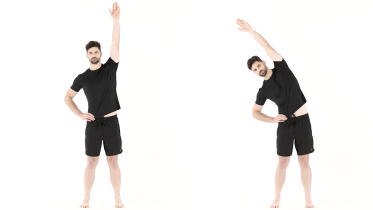
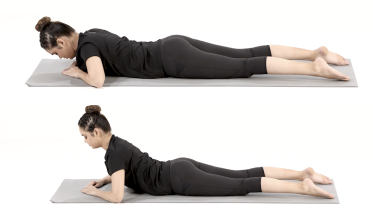
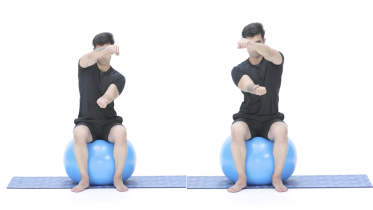
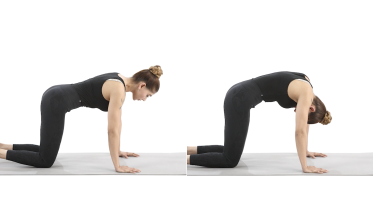
Standing clap with rotation
The standing clap with rotation is a turning and reaching exercise done on your feet. You turn your upper body to one side while bending forward and a little over to that side, bring both straight arms together so your palms meet out to that side, then come back up to face the front with your arms opening wide before you lower them. Then you turn the other way. Most of the twist happens in the middle of your back. The muscles along your waist steady your trunk, and your shoulders hold the arms out straight.
How to do the standing clap with rotation
- Stand tall on a clear floor with your feet about hip width apart and your arms by your sides.
- Turn your upper body to the left and bend forward and a little over to that side from your hips. As you turn, sweep both arms round with your elbows straight until your palms meet, one hand on top of the other, out past your left side, in line with your shoulders.
- Pause there for a moment with your weight even on both feet.
- Come back up to face the front, letting your arms open out wide to the sides at shoulder height, then lower them to your sides.
- Turn to the right in the same way, and keep alternating sides at a slow, steady pace.
What you should feel
A twist through the middle of your back and along the sides of your waist, with light work in your shoulders while your arms are out. It should feel smooth, not strained.
Common mistakes
- Bending so far forward that your back rounds and takes the strain.
- Flinging the arms round to get more turn instead of moving under control.
- Letting the elbows bend or the arms droop as they come together.
- Pivoting on your feet or lifting a heel instead of turning from your trunk.
How often
Many programs use 5 to 10 slow turns each way, done once or twice a day. Your physio will adjust this.
Stop and check with your physio if
- Sharp pain in your back, or pain, tingling or numbness spreading down a leg or into an arm.
- Pins and needles in your arm or hand that do not go away after you stop, or part of your arm or hand goes numb. Get medical advice the same day. If one side of your face or body suddenly goes numb or weak, or your speech becomes slurred or muddled, call emergency services, even if it goes away.
- Pain at the front or top of a shoulder as your arms come together or open out.
- You feel dizzy, lightheaded, faint or sick, or the room seems to spin. Stop, sit down and get medical advice the same day before you exercise again. If you faint, it does not settle within a few minutes of sitting still, your vision suddenly blurs or goes double, or you cannot stand or walk steadily, call emergency services.
From the clinic
The voice guide describes a plain turn with the hands meeting at shoulder height. In the video the woman also bends forward and to the side as she turns, and her arms sweep open to the sides as she straightens up, so this page follows the video. If bending forward bothers your back, stay upright and simply turn, which is closer to the voice guide. Seated trunk rotation and thoracic rotation work the same twist without standing.
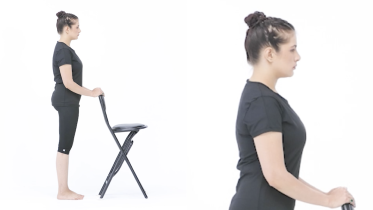
Keep a sturdy chair or counter within reach in case the turn makes you wobble. Bending forward while you twist is a combination many physios limit when the bones are thin (osteoporosis). If that applies to you, use the upright version and ask your physio how far to turn. If you have had a fracture in your spine, check with your physio before you begin. If you have had surgery on your spine, chest or heart in recent months, get the go-ahead from your surgical team or physio first.
If you have had a hip replacement, get the go-ahead from your surgeon or physio before you try the standing clap with rotation. Turning and bending forward with your feet planted twists and bends the hip joints, and many surgeons ask you to avoid that for the first months after some operations.
Written and checked by the PocketPhysio editorial team. Last updated 2026-09-28.
This page is general education, not a diagnosis or a personal treatment plan. If you have pain, an injury or a health condition, see a physiotherapist or doctor before starting new exercises.